
‘Got to do it.’ Columbus, Phenix City first responders adjust to COVID-19 ‘battlefield’
When a contagious disease spreads through the air, paramedics working in the tight space of an ambulance know that intubation can pose a deadly risk.
“Intubation” means helping a patient breathe by inserting a tube through the mouth and down the esophagus, to pump air to the lungs. It helps ease respiratory distress, particularly during cardiac arrest, with one medic using intubation to breathe for the patient as a second presses the chest to pump the heart.
It can cause vomiting, spewing infectious agents onto the medics and into the air they breathe.
That’s when medics treating a patient with the novel coronavirus that causes COVID-19 need extra protection — not just an M-95 mask over the nose and mouth and disposable gloves, but shoe coverings and a splash gown with a hood and a plastic face shield.
They also need intense concentration, to ensure those barriers against infection are not compromised by a careless act.
Were they to become infected, they could spread the disease to coworkers in a fire station, where workers are housed in tight quarters, or take it home to their families.
They know the dangers of the job when they sign up, said Columbus Fire Marshal Ricky Shores: “They’ve been risking their lives the whole time,” he said. But endangering their families is different.
“Do you sign up to get your family sick when you sign up to risk your life?” Shores asked.
The threat
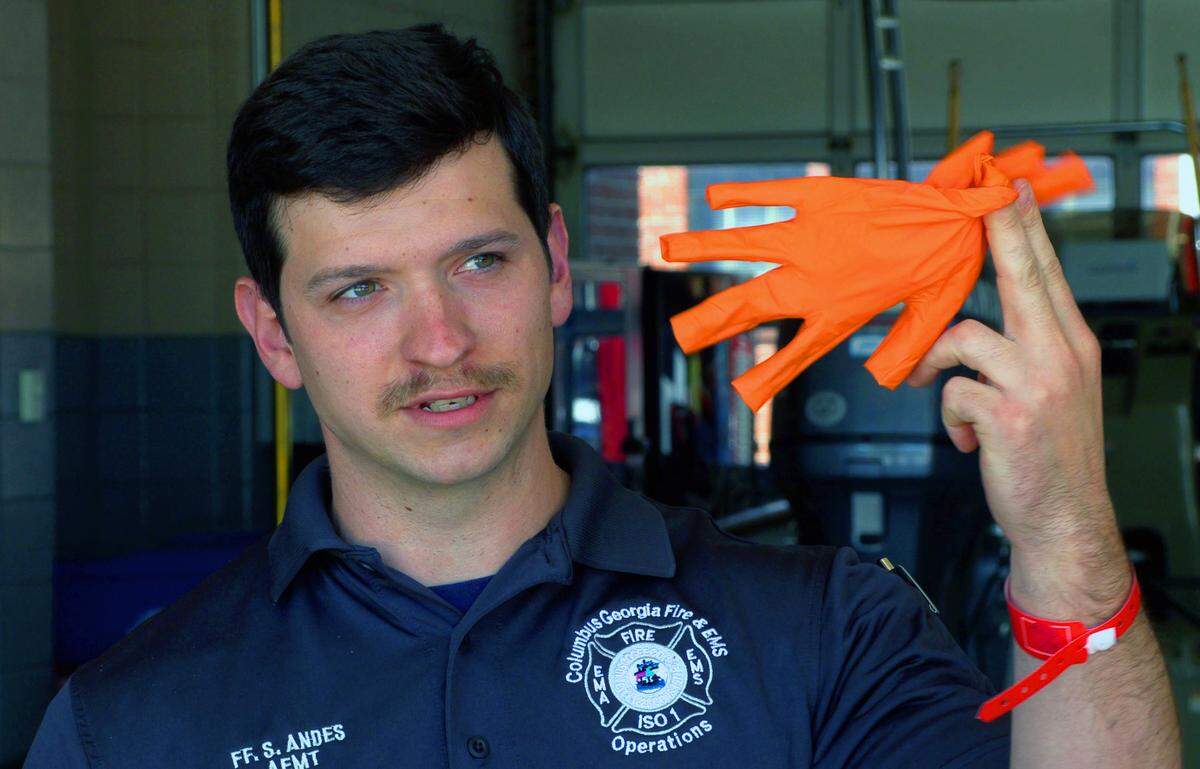
Recently while assigned as an ambulance crew to Columbus Fire Station 1 downtown, Lt. Chase Kinsman and advanced EMT Shawn Andes showed reporters some of the gear they have to don if they suspect a sick patient has the new coronavirus.
“That’s why we have these isolation kits right here,” Kinsman said, pulling out a plastic bag marked with a biohazard symbol. “And we’ll don a gown. We have booties. We have an M-95 mask, gloves, and we also have a face shield for splash protection.”
Wearing the mask and gloves is more common now, he said: “We take standard precautions on every call…. Unfortunately, we have limited supplies. For somebody that’s calling 911, they should know that if they have a fever, they need to relay that to the dispatcher to let us prepare for it.”
People who call 911 in a medical emergency should expect to be asked an array of questions, to get the details those responding need to know.
“The dispatcher has a series of questions that they ask — whether the person has a cough, whether there’s a fever, and then dispatch of course will relay that information to us before we go on the call,” Kinsman said. “They’ll ask us to give them a call, and then they’ll advise us of certain things that are going on.”
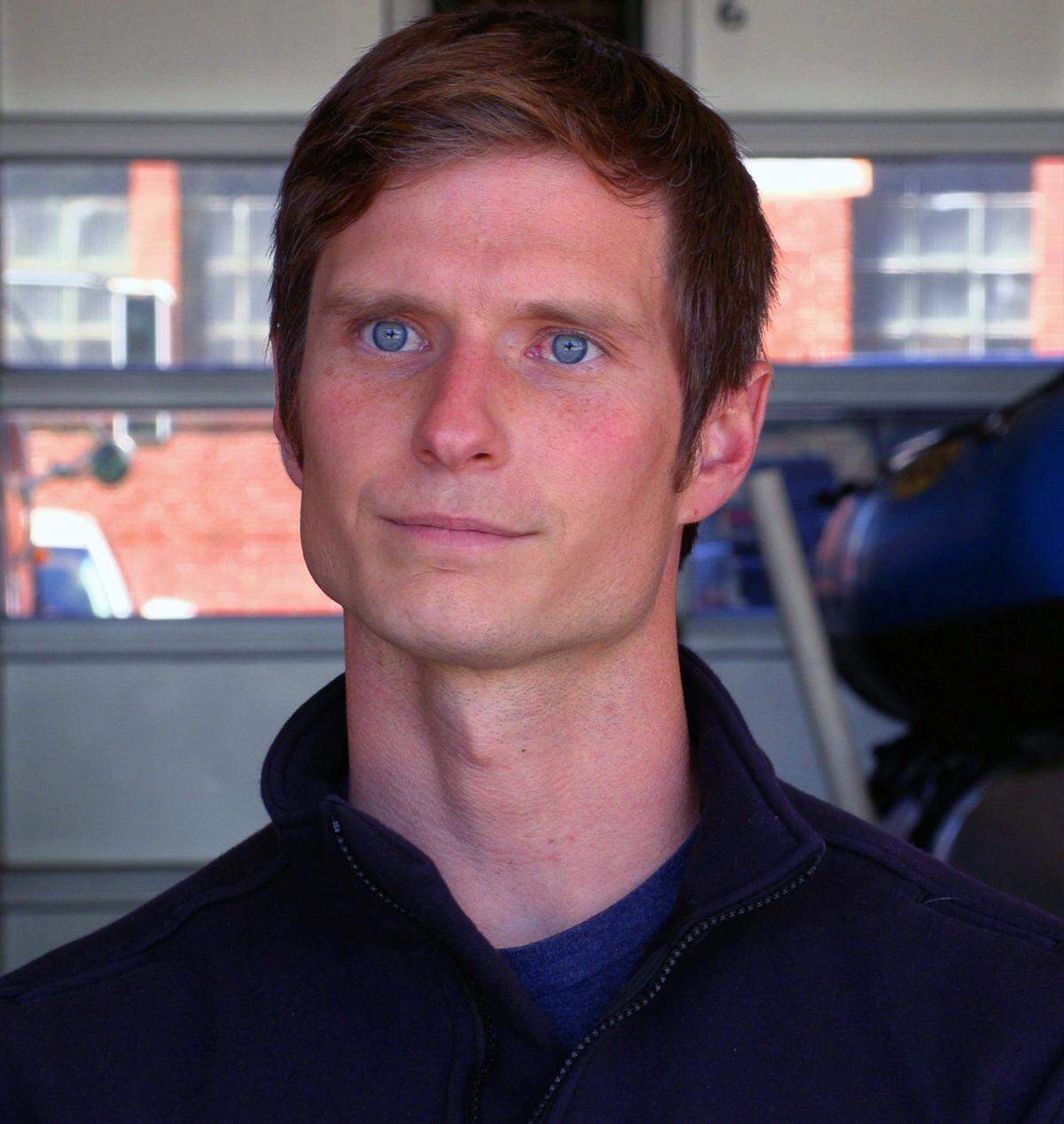
Like police officers, medics now are wary about entering a dwelling, and if possible will talk first to a 911 caller outside a home, to keep a safe distance as they decide what to do next.
If they don the personal protective equipment commonly called PPE, they’ll keep it on until the call’s over — “until we get to the hospital, and we transfer patient care to the nurse at the hospital, the nursing staff, then we take all of our gear off and wash up,” Kinsman said.
Though the department’s stock of PPE is adequate, it has no guarantee that gear quickly can be replaced, with so much demand on the market: “We’re asking firefighters to be judicious with their equipment,” Shores said. “Let’s face it: There’s a shortage out there.”
Before they could finish an interview with the Ledger-Enquirer, Kinsman and Andes had to grab their gear and go on an ambulance call. Kinsman later fell ill and ran a fever, and had to avoid contact with his wife and infant son until he could be tested for the coronavirus.
The test came back negative.
Call to duty
Despite such risks, the COVID-19 threat has boosted morale among Columbus Fire & Emergency Medical Services workers, as fewer are calling out sick, said Chief Shores.
“They feel like they’ve got to do it,” he said. “They consider it in their mind like a battlefield.”
Infectious disease is nothing new to them, he said. They’ve long had to deal with tuberculosis, hepatitis, HIV, seasonal flu and other contagions.
But COVID-19 is a particularly insidious threat, because it can infect people who show no symptoms: “We haven’t had to deal with such an infectious pathogen in a while,” he said. “We can’t see it coming, a lot of the time.”
Its threat to firefighters comes not just from treating the sick, but from living together in fire stations, where social distancing is difficult.
“They’re stuck in there for 24 hours,” Shores said, referring to standard work shifts of 24 hours on, 48 off. “They do their best to social-distance.”
They also disinfect the stations and vehicles constantly, and have their temperatures checked every 12 hours.
Around 18% of the force has top-level paramedic training. Most of the others are intermediate or advanced EMTs.
So far no one has tested positive for the virus, and only a few have had to self-quarantine because of flu-like symptoms, which eventually cleared up, Shores said.
The department has a total staff of 383, eight of them civilians. Every 24 hours, it fields about 100 first-responders divided into three battalion. With the alternating schedule of 24 hours on and 48 off, it daily rotates three squads designated A, B and C.
Among them now are 26 recruits who were deployed early, having nearly finished their training to become advanced emergency medical technicians before the outbreak began. Not yet added are 17 more who were not far enough along before their instruction was suspended because of the crisis.
Across the Chattahoochee River in Phenix City, Fire Chief Kristin Kennedy said her force of around 60 firefighters and medics also has fared well, during the emergency. No one has tested positive for the new coronavirus, though some have encountered patients who claimed to have it.
No one in her department has had to be quarantined, Kennedy said.
Unlike Columbus, the Phenix City Fire Department doesn’t handle hospital transport: That’s left to private ambulance companies, Kennedy said, though a city rescue worker may ride along if the ambulance crew needs help with cardiopulmonary resuscitation or other procedures.
In Columbus, city medics regularly take people to the emergency room at Piedmont Columbus Regional, though lately they’ve not had to do that as often as they used to.
Calls decline
Columbus EMS has experienced a drop in calls for service, during the outbreak. It had 3,262 calls in March 2019, and 2,803 calls this past March, a decline of 14%, Shores said.
Figures for the past few weeks show some fluctuation in that decline:
- For March 1-7, the department had 668 calls.
- For March 8-14, it had 691.
- For March 15-21, it had 635.
- For March 22-28, it had 574.
- For March 29-April 4, it had 554.
- For April 5-11, it had 588.
- For April 12-18, it had 565.
For April 19-25, it had 561.
Any drop off is notable, because calls overall have been increasing steadily over the past few years, Shores said.
Piedmont said it also has noticed a drop in ER visits during the outbreak.
One reason for that may be authorities’ advising people not to go to the emergency room if they have flu-like symptoms, but instead to self-quarantine and call a doctor. Another theory among those in the field is that in the midst of a pandemic, no one wants to go to the hospital unless they absolutely have to, because no one wants to risk catching the disease.
That saves time and expense for patients and medical services, when a trip to the ER isn’t necessary. But that decline in calls could mean some people who should have gone to the hospital chose not to, and may face worse issues later on, Shores said: “Some people truly are getting sicker.”
In Phenix City, Kennedy said some patients are refusing hospital treatment after calling 911, reflecting a more cautious attitude.
“Some people view it as a taxicab to the hospital,” she said of ambulance services, but they aren’t willing to take that ride now. They refuse to go, though the emergency response they solicited may have wasted limited medical supplies, as rescue workers donned PPE that wasn’t necessary, Kennedy said.
She believes her department’s calls also have declined. “I feel confident we all are facing the same thing,” she said.
That includes making the most of the PPE they have.
She said her department was fortunate to have stocked up on M-95 masks, because firefighters wear them for what’s called “salvage and overhaul,” the mop-up work that follows a structure fire.
Mask and gloves
Now a lot of people who aren’t trained to use PPE are wearing masks and gloves, during the outbreak, and medics like Kinsman and Andes regularly see the gear being mishandled.
Some folks let masks hang loosely off their ears or down around their necks. For a mask to be effective, it must fit tightly over the face, Kinsman said: “You definitely want to make sure you get a good face mask seal that’s tight,” he said. “You want it to fit tight, you want it to conform to your face.”
It also has to be made of the proper material, if it’s to work in a dangerous environment.
While homemade surgical masks, scarves or bandannas may help, they are not the same as an M-95 mask that’s designed and regulated to meet specific standards, the medics said. A piece of cloth tied around the face may offer a false sense of security.
Those wearing gloves forget to treat the gloves as if they’re contaminated. They rub their faces with their gloved hands, or fish around in their bags looking for keys or wallets, possibly contaminating everything they touch.
“The moment, let’s say, you touch an apple at the grocery store and you touch your face, well, if there was something on the apple, now your face has it,” Andes said. “So that’s something you need to be mindful of…. If you’ve got gloves on, just don’t touch anything else. If you’ve got a mask over your face, you don’t want to touch your face.”
For the gloves to be removed safely, each should be peeled back from the wrist and discarded inside-out.
“Take one off, take the other one, ball them up, and just make sure you wash your hands, right after you take them off, or use hand sanitizer,” Kinsman said.
Then he and Andes had to run, rushing to their ambulance and heading out on another call, checking with dispatch to determine what precautions were next.