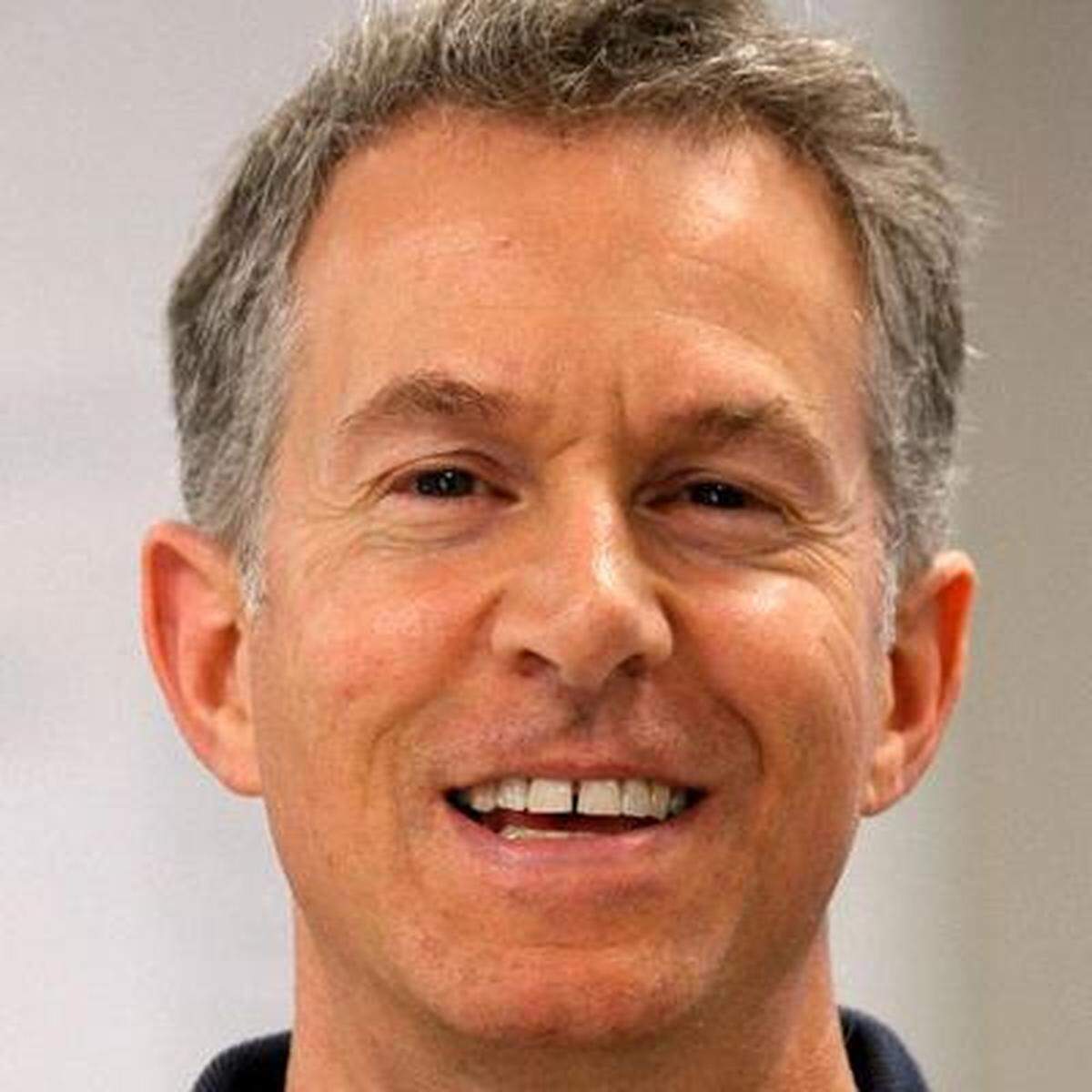
He saw history at Kent State shootings. Now, retired Columbus architect sees similar unrest.
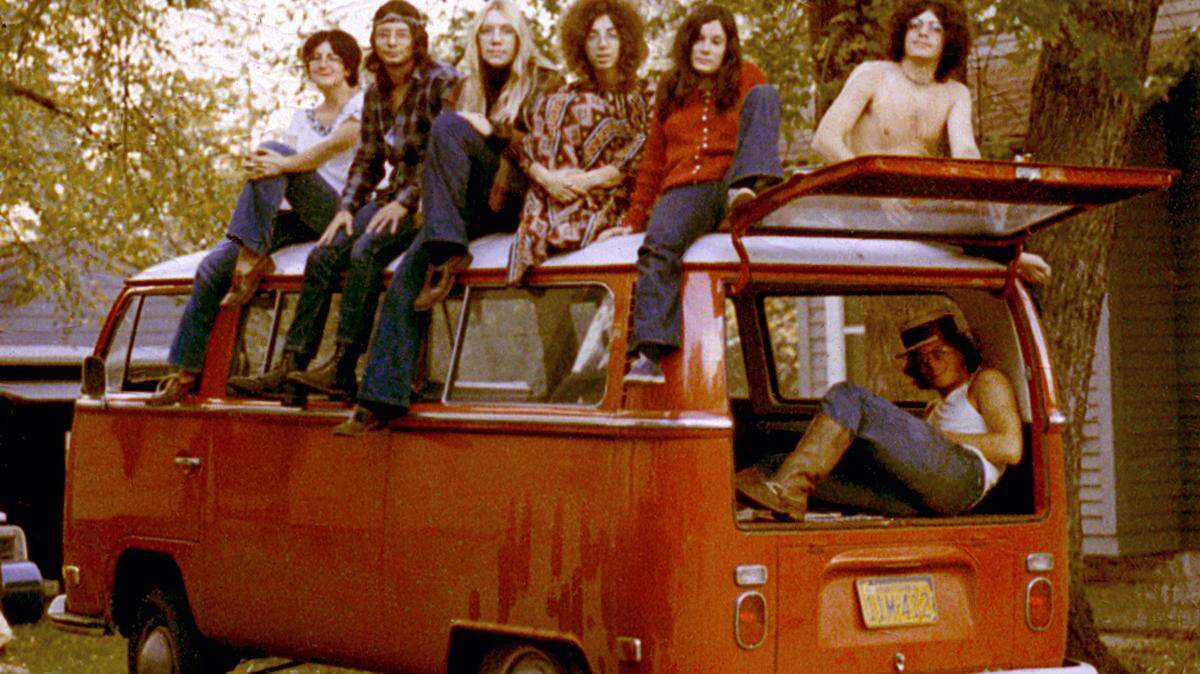
A photo on permanent display in the May 4 Visitors Center at Kent State University depicts six hippies sitting atop a Volkswagen bus and another one lounging in the open hatch. That long-haired man in a tank top is retired Columbus architect Ken Levy.
Fifty years later, he has upgraded his shirt to a polo, and his long hair is a gray beard.
A lot has changed since Levy was a student at Kent State, but too much hasn’t changed, he told the Ledger-Enquirer.
Although the reasons are different, the protests of police brutality and racial injustice for nearly four weeks across the nation in the wake of George Floyd’s murder in Minneapolis prompted Levy to reflect on the antiwar demonstration at Kent State a half century ago.
It was another time when National Guardsmen were deployed against Americans. And that time, they fired real bullets — killing four students and wounding nine.
In an essay he wrote for Kent State’s library and in an interview with the L-E, Levy shared his experience, his perspective and the insight he gained to inform his opinion about our country’s quest for balance between peace and protest.
In the spring of 1970, Levy was finishing his freshman year at Kent State. The Vietnam War was raging.
On May 4, after his morning class, Levy went to the bookstore to buy film so he could take photos of the antiwar rally that was scheduled for noon on the commons. As he walked back to his dorm to get his camera, he averted that area.
“Noon was fast approaching,” he wrote, “and something told me to not be there when armed troops and protesting students confronted each other when the rally started.”
Levy estimated the crowd was around 2,500 people.
Confrontation
From the picture window of his seventh-floor dorm room, “I saw a lone individual out on the field who picked up a smoking tear gas canister and throw it back toward the troops, and another who defiantly waved a flag on a pole in the same area,” he wrote.
Levy heard what he thought were firecrackers and saw “the large group of protesters bolt en masse away from the troops into an adjacent parking lot,” he wrote.
He rushed to the scene.
Levy saw a female student “putting the stem end of a flower into the muzzle of the guardsman’s rife that he had protruded through the fence,” he wrote.
She told Levy students had been shot and possibly killed.
According to research from Kent State professors Jerry M. Lewis and Thomas R. Hensley, “As they arrived at the top of the hill, 28 of the more than 70 Guardsmen turned suddenly and fired their rifles and pistols. Many guardsmen fired into the air or the ground. However, a small portion fired directly into the crowd. Altogether between 61 and 67 shots were fired in a 13-second period.”
At Taylor Hall, Levy saw bodies on stretchers being loaded into ambulances. He joined several hundred students “sitting and huddled together” on Blanket Hill “as professors and others implored us not to move toward the troops,” he wrote.
After the crowd dispersed, “I did not know what to do,” Levy wrote, “and found myself walking over to the fraternity house where I had recently been inducted as a member, and a brother was crying.”
Levy found out weeks later that one of his architecture classmates, John Cleary, was among the nine wounded students and lost a lung. One of the four killed students was Jeffrey Miller, from the north shore of Long Island, where Levy also grew up, although he didn’t know him.
“But for the grace of God, or whatever you want to call it,” he told the L-E, “it wasn’t me.”
Impact
The Lake Oliver Marina, the Capri Medical Group office and the Road America call center are among the prominent local construction projects Levy designed during his 30 years as an architect in Columbus.
In September 2018, Levy moved with his wife, Karen, from Columbus to Blairsville in the north Georgia mountains.
An optic nerve disorder called NAION has robbed about 85% of his vision, but Levy still clearly recalls what he saw that infamous day 50 years ago. Here are excerpts from his interview with the L-E:
What was your reaction to the shootings that day?
“I wasn’t all that surprised, to be honest with you. It was dismaying, but having lived for several days that weekend with an occupation of our campus, with military going all over the place and whatnot, I didn’t think it was going to come to any good.”
How did that experience affect you then?
“I saw it as a watershed moment in American history. … I was happy I didn’t get shot. I wasn’t a supporter of the Vietnam War, but I wasn’t exactly a wild activist trying to create havoc. I was just sorry that people got killed and wounded, and I realized I experienced a very important event, and I felt somewhat privileged to be a part of it but also sorry it was something I experienced.”
What was life like for you and the university after that trauma?
“Within hours after the shootings, everyone was told to leave the campus and the university was shut down. If memory serves me correct, I had to pack up and leave that day, getting a ride home with a friend. Spring semester only had a few weeks left before summer break, and pretty much everyone was given a pass on their courses. When I returned in the fall, I was at Costley Court (in a house near downtown Kent), and my essay pretty much describes what life was like there.”
What are the lessons from the Kent State shootings?
“We sure learned how to do crowd control after that. People did a lot of soul searching, ‘Oh, well, maybe real ammunition isn’t the greatest idea.’ I mean, all of the confrontations between rioters and police since then have been modified to recognize that we don’t need to have as much military equipment. People are shot with rubber bullets now. … The whole idea of our country’s involvement as being the policemen of the world has come into much more serious debate, questioning. I think that certainly was a turning point, and I think we’ve done a lot of soul searching since then. Maybe we didn’t learn as much as we should, because we kept on getting involved in all these other wars.”
Understanding your Kent State experience, what was your reaction when you first watched video or read news reports about George Floyd’s death and the National Guard troops responding to the protests across the nation?
“The National Guard’s involvement in the current nationwide protests has made me reflect upon my experience at Kent State 50 years ago. There are similarities in the scenario of armed forces confronting unarmed protesters, but the causes are quite different. Back then, the issue was both our country’s involvement in what many considered to be an unjust war and what was called ‘The Generation Gap.’ Now, it is about the need to finally confront the conflict between the soul of our country, which is a nation of immigrants and diversity, and the pervasive racism, bigotry and economic disparity that has been allowed to exist, and fostered by many, for centuries.
“I have also been thinking about the National Guardsmen, police officers and the questionable involvement of our military, whose young men and women proudly serve our nation but are put in a position where they have to confront their own people, most of whom are peaceful demonstrators.”
Considering what you witnessed 50 years ago at Kent State and the unrest our country is going through now, what makes you most concerned? What makes you most hopeful?
“Fifty years ago, the conflict epitomized by what I experienced at Kent State was more of a generational divide, with the Vietnam War providing the powder keg. The unrest of today is much more of a societal problem. Now, we are living in an ‘Information Epoch’ that has divided us into camps and tribes that use information in ways that often warp what is true. But it also gives us the opportunity to connect in ways that our founding fathers never dreamed of. Nothing ever stays the same, but our greatest challenge is to accommodate change in ways that do not rely on antagonism to communicate with each other. My hope is that we learn to use our given gifts and technology for unification, allowing us to come together as one human family.”
This story was originally published June 18, 2020 at 7:00 AM.