
From Harris Co. kid to top Columbus defense attorney, this is Stacey Jackson’s story
The prosecutor was baffled.
He had an open-and-shut case, he thought: A homicide by vehicle and DUI case involving a defendant with a previous conviction for vehicular homicide, and another DUI arrest while he was out on bond in the pending case.
The prosecutor was Pete Temesgen, who since has gone into civil law. Back in 2016, he was an assistant district attorney handling this horrific DUI crash that killed a 26-year-old woman.
Temesgen had offered a plea deal, but the defense attorney, Stacey Jackson, had turned it down, and threatened to go to trial.
Frustrated, Temesgen went to Jackson to ask what he was missing: Why go to trial on this?
“Pigs get fed. Hogs get slaughtered,” Jackson told him.
Unfamiliar with this country metaphor, Temesgen had to ask what it meant.
It means don’t get greedy, Jackson told him: Be reasonable, or risk losing at trial.
Jackson’s client got 13 years in the final negotiated plea, but Jackson argued until the end, aiming for the best deal possible in a seemingly hopeless case.
It fit the reputation Jackson has built in 20 years of practicing law.
Rural values
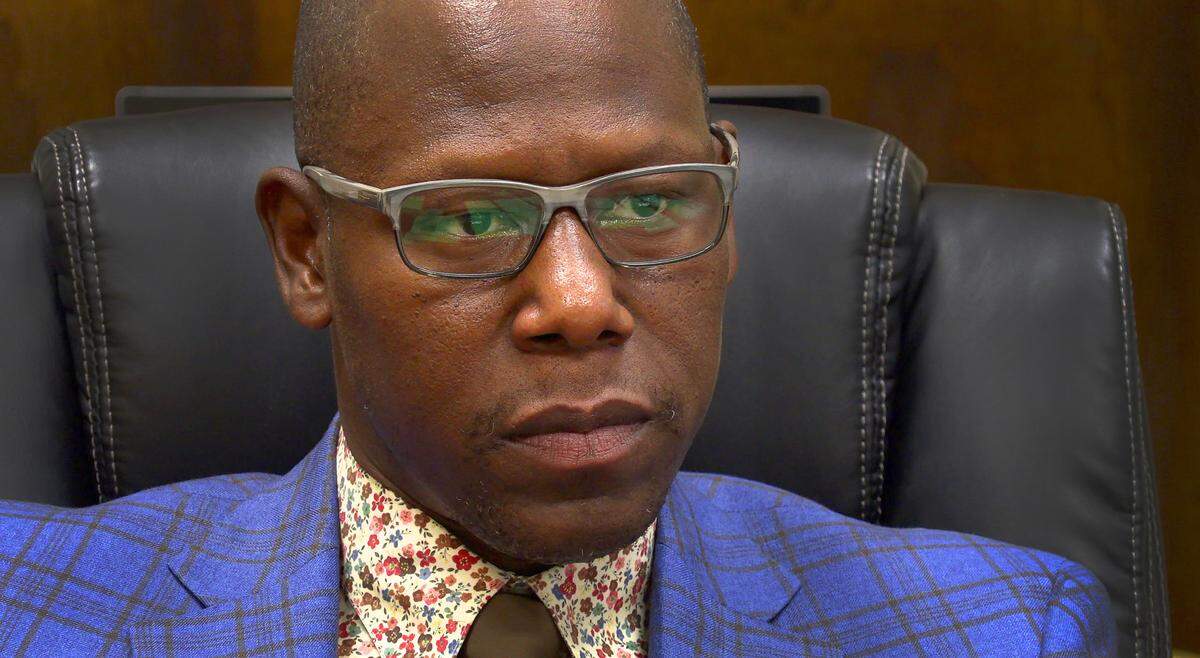
His persistence and agrarian analogy illustrate two aspects of the lawyer thought to be one of the Chattahoochee Judicial Circuit’s best criminal defense attorneys, known for winning acquittals and for fighting long odds, a former prosecutor who can spot weaknesses in a case his adversaries overlook.
Combative in court, and and determined to give each client his best shot, the 46-year-old father of two is a reflection of his upbringing in rural Harris County, where his parents were teachers who grew up in the segregated South and went on to become school administrators.
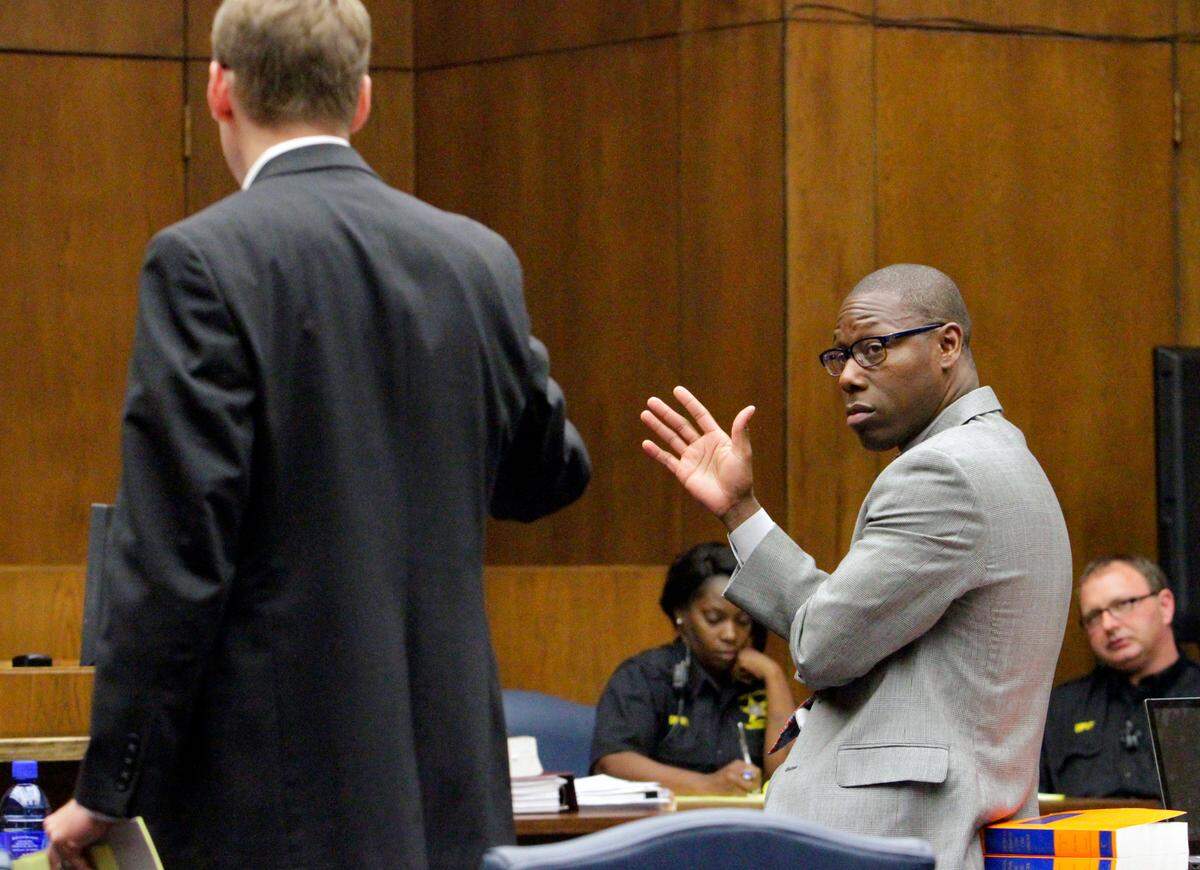
Jackson today operates in a world much different than the one he knew as a child, and understands that to his youngest clients, his youth might have seemed alien, lacking cell phones and internet and cable TV.
When summoned Aug. 14 to represent a 14-year-old accused of murder in a fatal shooting outside a Columbus nightclub, he told reporters outside the courtroom that amid the COVID-19 shutdowns and school closures, kids lacked the structure and organized activities they once had, and were left adrift.
“So I would think with all that going on, it may be that you will see unusual circumstances such as this, and obviously … outside the criminal arena, this is a time in everyone’s life that we’ve never seen before,” he said.
In an Aug. 25 interview with the Ledger-Enquirer for this profile, he talked about some of the issues he sees with teenagers today.
“You’ve got to understand that even though you’ve got a lot of smart teenagers, their decision-making skills haven’t matured yet,” said Jackson, who with wife Mitzi has two sons, ages 13 and 20.
Kids don’t think through the consequences of their actions, he said. They may think an armed robbery will get them quick cash, and not consider that with “the twitch of a finger” on a trigger that requires only 3.5 pounds of pressure to pull, a robbery becomes a murder case.
Handguns are readily available to teenagers today, when it’s “as easy to get a firearm as to get marijuana on the street,” he said.
Kids now also are influenced by social media, where they may be bombarded with sometimes false images of a lucrative lifestyle involving guns and drugs, and try to emulate that.
Mental illness may be another issue, either with a teen or with parents who aren’t capable of caring for a child, he said.
As he talks about the socioeconomic issues affecting youth and crime, he repeatedly mentions one factor in particular: Parents who are trying to raise their kids alone, without a spouse to help.
“I’d have to say that a good majority of my clients are from single-parent households,” Jackson said. “That is a reality that can’t be ignored.”
He cites his parents as the guiding forces that forged his character, and he still carries the rural values of growing up in the country in the 1980s and 1990s with strong family ties and few city distractions.
Back then guns were for hunting game, not for settling disputes, he said: If two teens had an argument at school, they’d go down to the old dump in Hamilton and have a fistfight.
“That’s about the worst thing that you had to deal with as a teenager,” he said. “You didn’t have to worry about someone who lost a fight coming by your house and firing shots into where you live. Those things just did not happen.”
Different world
When Jackson was a child, his media influences were characters on TV shows such as “L.A. Law” and “Law & Order,” some of whom looked like him.
On “Law & Order,” the district attorney had an assistant prosecutor who handled many of the trials.
“He was a Black male, and he was a really good prosecutor on the show,” Jackson recalled. “That was a particular character that I kind of keyed in on, because it was one of the few shows where you saw a Black male attorney and then also a prosecutor…. It would just be something that as a young Black male, young teenager, being able to see that and say, ‘Well, that’s what I want to be.’”
It was not what his mother wanted him to be: “My mom wanted me to go to medical school, but I didn’t like all the blood and guts and stuff. That wasn’t my thing.”
His younger brother William is in medical school at Emory.
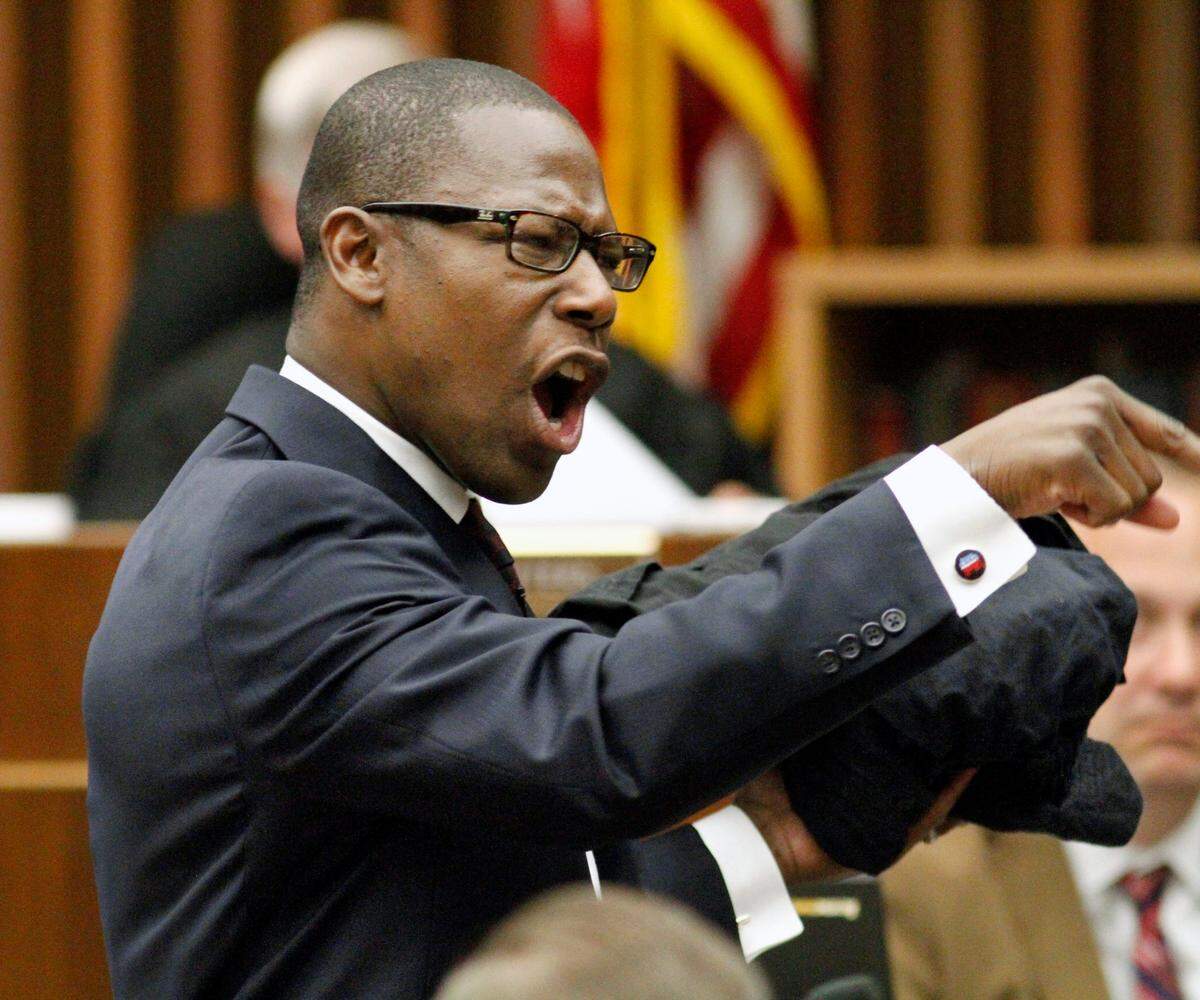
Jackson still deals with blood and guts, in the murder cases he takes on, and he has learned a lot about how such evidence is handled, and how to spot incongruities in it.
He once represented a murder suspect who claimed self-defense, arguing the victim fired at his client first. He noticed police had “bagged” the victim’s hands, covering and sealing them for a gunshot residue test, to determine whether he had fired a weapon. But no test results were in evidence.
Jackson used its absence to show jurors police never followed through on what they had intended to do, though it may have proved his client’s innocence.
The verdict was not guilty.
Lessons learned
Jackson learned how to dissect police investigations while he was a prosecutor for then-District Attorney Gray Conger in the years 2000 to 2008, after serving as a law clerk for Superior Court Judge Bill Pullen and Judge Bill Smith, both former DAs.
He graduated from law school in 1999 at the University of Dayton, after getting a 1996 undergraduate degree in criminal justice from Albany State University, where he played baseball for two years.
He graduated high school in 1992 in Harris County, where his parents by example taught him that hard work proves character, and sometimes that proof overcomes racial prejudice, in some people’s minds.
Asked for a favorite childhood memory, he recalls when his father Arnold Jackson became the first post-integration Black school principal in Harris County, when the son was in seventh grade — about the age Stacey Jackson’s youngest son is now.
“My father, when he became the principal of a middle school, he was the first Black principal ever…. There were people who didn’t think too kindly of that,” he recalled.
His father negotiated this prejudice by proving himself, professionally. Jackson watched as his father’s hard work changed the minds of those around him, and helped him earn respect and admiration.
“...when they see you and say, ‘OK, this is a hard working person; this is a smart person, and he’s great at his job.’ So they look at those aspects first, and then they see color last,” he said.
That inspiration drives him to work as hard as he can, he said: “You have to give 110 percent for your client. You can leave no stone unturned.”
He decided as a young prosecutor that the courtroom was his arena. He never wanted to be a corporate lawyer, and he still won’t take cases on appeal. He doesn’t want to sit in an office, but to look jurors in the eye and argue.
“That’s just where I feel comfortable, in front of a jury, arguing a case, in front of a judge, versus just being behind a computer, typing and reading transcripts,” he said.
He compares it to being a boxer: “The system is adversarial. It’s set up that way,” he said. “It’s just like two boxers. When you go in the ring, you try to hurt each other. That’s the sport. But outside the ring, you know, you’re cool.”
‘Tough skin’
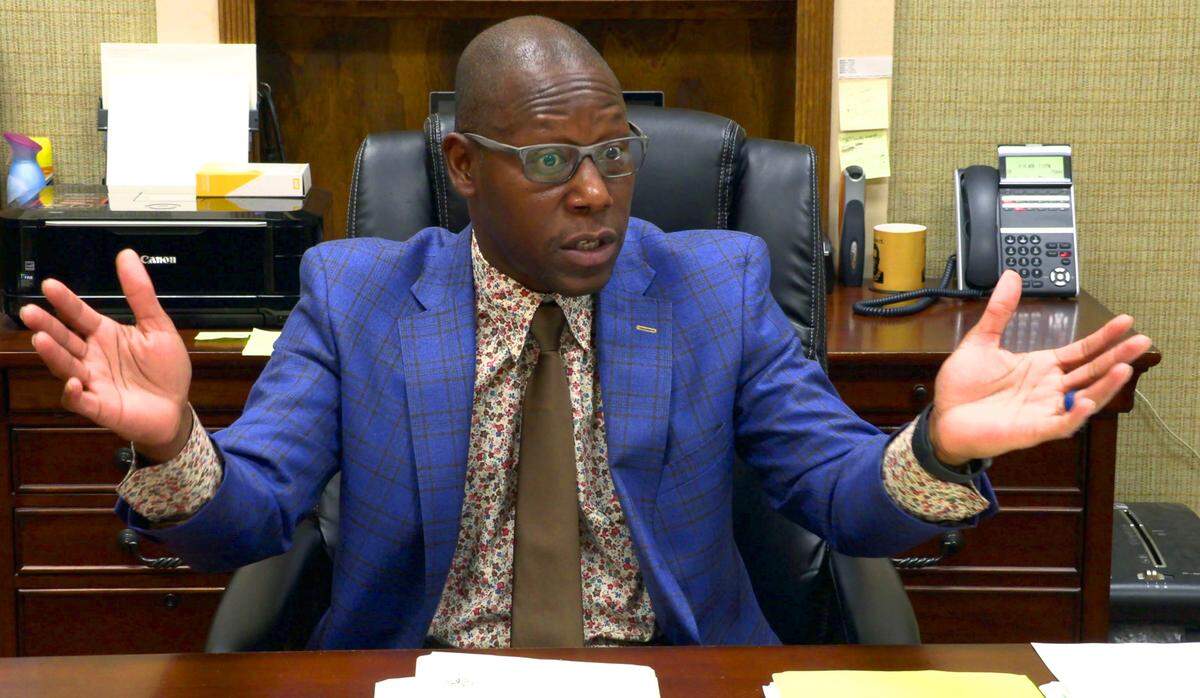
It takes a thick skin, but having been a Black youth growing up in the rural South, he already had that, having encountered the kind of casual racism most kids who looked like him did.
“Especially as young man in the South from the country, you learn how to control your temper. You have to learn how to use this, here,” he said, pointing to his head, “versus this,” he added, balling his fists. “And that’s a hard lesson to learn, and a hard lesson to teach as well.”
He still remembers what his baseball coach in college used to say: “ ‘...you can say anything you want to say about me, or to me, just don’t put your hands on me.’ He said it all the time. He was kind of a country boy from South Georgia himself.”
He had learned to face racism, and not let it define him.
“When you see something that’s blatantly racist, or being a victim of it, it teaches you to have tough skin,” Jackson said. “But also you have to figure out a way mentally to attack it, because you just can’t attack it all the time with force.”
Though blatant racism persists today, Jackson has hope that it will fade, over time, if leaders act.
“There’s a certain segment of the population whose minds have not progressed,” he said. “You just hope that as each generation goes on, it will get better…. I think that the hope and the goal is, tailing it back to criminal justice, you just hope you do the best you can to weed out those people from positions of power.”
High standards and a winning record
Randy Robertson, formerly Columbus’ local Fraternal Order of Police president and now a state senator, also grew up in Harris County, where Jackson’s mother Laura was among his high school teachers.
“She didn’t cut my sense of humor a whole lot of slack,” Robertson recalled.
He believes the rural values Jackson grew up with are evident in his character, and law enforcement officers respect that.
“Stacey stays between the lines,” Robertson said. “He provides his clients exactly what they’re paying for…. He holds law enforcement to a high standard that law enforcement should hold itself to.”
Rarely seen at work without an immaculate suit and tie, Jackson has the aura of a big-city lawyer. But inside he’s “still that Harris County kid that grew up with those values,” said Robertson.
Though his office is in downtown Columbus, Jackson still lives in Harris County. He’s a Republican, unlike his parents, and holds to conservative principles of limited government.
“My parents are both Democrats,” he said. “We have some spirited debates.”
Like his parents, he has worked to gain the reputation he has, and still believes a strong work ethic earns respect.
“If you go in, you do the work, you do it well, you do it honestly, and you give 110 percent, people recognize that, and people don’t have a choice but to recognize you as a person, first, and then they see your color last,” he said. “Not that they’re going to ignore it, I mean … I look like what I look like, but it’s not the first part of the conversation.”
He doesn’t want to be known as a Black person who happens to be an attorney, but “an attorney with a winning record, who also happens to be Black,” he said.
“I want you to recognize who I am as a professional, as a person, first.”
This story was originally published September 2, 2020 at 10:28 AM.