
Meet the men in a ‘race against time’ to save a forgotten Black cemetery in Columbus
As best as Dan Bruner can tell, the last body at Shippey Cemetery was buried two days before the 9/11 terrorist attacks.
His name was Joe Cephus Biggers. He was 62.
Two decades later, most folks traveling along Willett Drive don’t realize the heavily wooded area in north Columbus is the final resting place for generations of Black families. There are no markers or a formal entrance.
Weaving through brush and over a fallen tree, the headstones appear. Some are broken. Some are unmarked, and others are handmade. Some are military veterans, and others died as infants. It used to be harder to get to most of those graves before Bruner started his work.
Bruner, who works in the city’s streets department, and retired Army Sgt. James Hutchins have cleaned the privately-owned cemetery for a year and a half, clearing paths to headstones and removing the pine straw, branches and foliage in the way.
The goal is to get others to come out and help restore the property — to honor these people’s final resting place. Bruner hopes the help comes before it’s too late.
“I feel like I’m basically in a race against time trying to get something done,” he said. ”I don’t know if I’m gonna succeed, but I pray that I will. There’s so much out here that needs to be done, and one or two people alone can’t do it all.”
What is Shippey Cemetery?
By the early 20th century, Black families were burying their loved ones at Shippey. Headstones on the property bear last names like Biggers, Hawkins, Hardaway, Taylor and Shipp. Veterans from World War I to the Vietnam War are buried here.
It’s possible the cemetery is older. Bruner, Hutchins and several online sources connect the burial ground to the mid-to-late 1800s and the Shippey Plantation.
Mentions of Shippey and a plantation appear in Columbus newspapers before the Civil War. Family members of the deceased Joseph Shippey bought an ad in the Columbus Enquirer in 1852 announcing that 16 slaves and other belongings were up for sale at Shippey’s old 600-acre plantation about 5 and a half miles north of town. Present-day Willett Drive could fit that location.
Inside the iron gates of the Shippey-Cummings Cemetery (a small white burial ground just across the road from Shippey) there’s a grave bearing the name Joseph Shippey. He died July 2, 1849.
Columbus State University houses a few records on Shippey Cemetery. June Hanna, a Texas native who moved to Columbus in the 1960s and died in 1989, surveyed cemeteries in the Columbus-Phenix City area. Hanna’s survey listed 144 graves at Shippey, which she identifies as a Black cemetery. The oldest headstone belonged to Lester E. Hardaway, who died at the age of 3 in 1904.
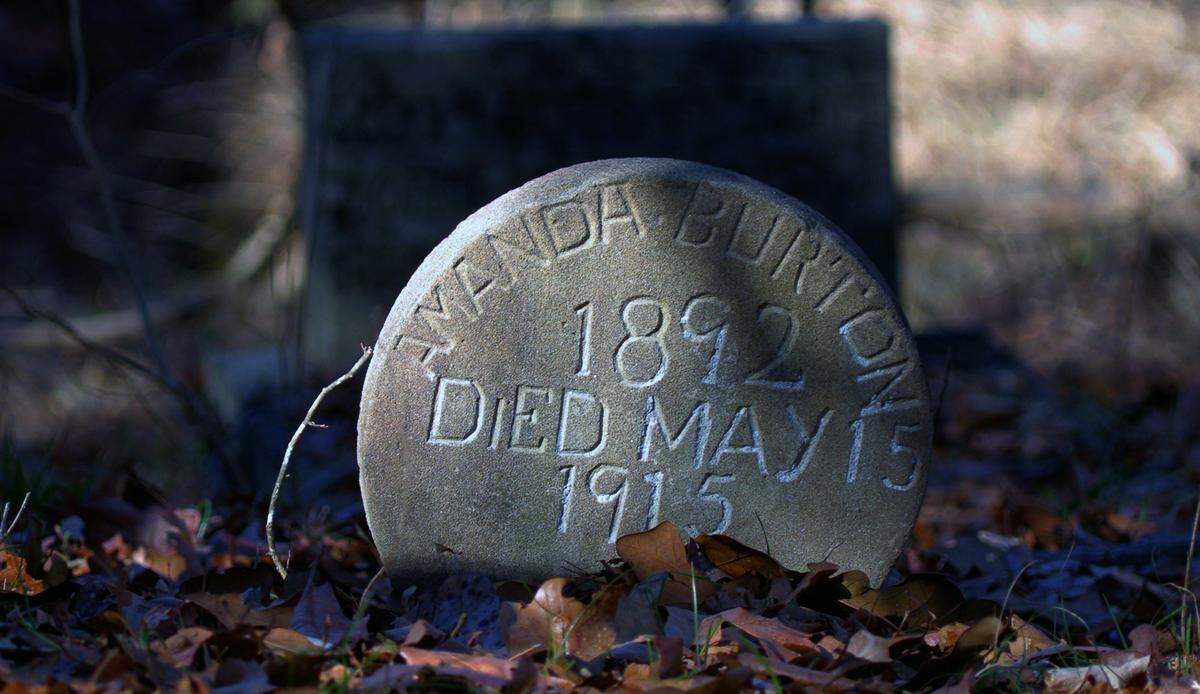
The oldest headstone Bruner found dates back to 1915. Older ones may not have survived the conditions, and slaves likely would have been buried in unmarked graves, meaning they’d be harder to find if Shippey was their final resting place.
But Bruner’s interest in the property didn’t come from combing through cemetery surveys and old newspapers. He came across Shippey by accident on YouTube.
The first visit to Shippey
A video titled “The Sad and Creepy Cemetery” caught Bruner’s attention one day while browsing the website. He thought it was in Columbus, and reached out to the YouTuber to confirm. Bruner wanted to see the place for himself.
He first visited the property in September 2019, having to hike, duck and dodge to even get back to the headstones. All he wanted to do was take a look around in person and leave. What he saw made him stay.
Nature was trying to take the land back. The ground slopes, and erosion threatens the graves. Glass bottles and trash from decades ago were strewn across the property.
“When I got here, I started looking around, and I started thinking,” he said. “I wonder what happened to cause so many people just to be abandoned. I guess that kind of hit home.”
After his initial encounter, Bruner asked Hutchins to help him. The two used to work together for the city before Hutchins retired, and Bruner said he thought the Army veteran would love to be a part of the project. Hutchins immediately agreed.
“To me, it lets people know that veterans, all of them, are not forgotten,” Hutchins said. “People do remember you. We’re trying to honor your memory.”
Bruner tried to get answers from government officials about who owns the property. Eventually, the pair got the blessing from the owner to work on the land.
In a January 2020 interview with the Ledger-Enquirer, Bruner said the property looked like a “war zone,” except for a section of graves near the tombstone of Alva Mae Hawkins.
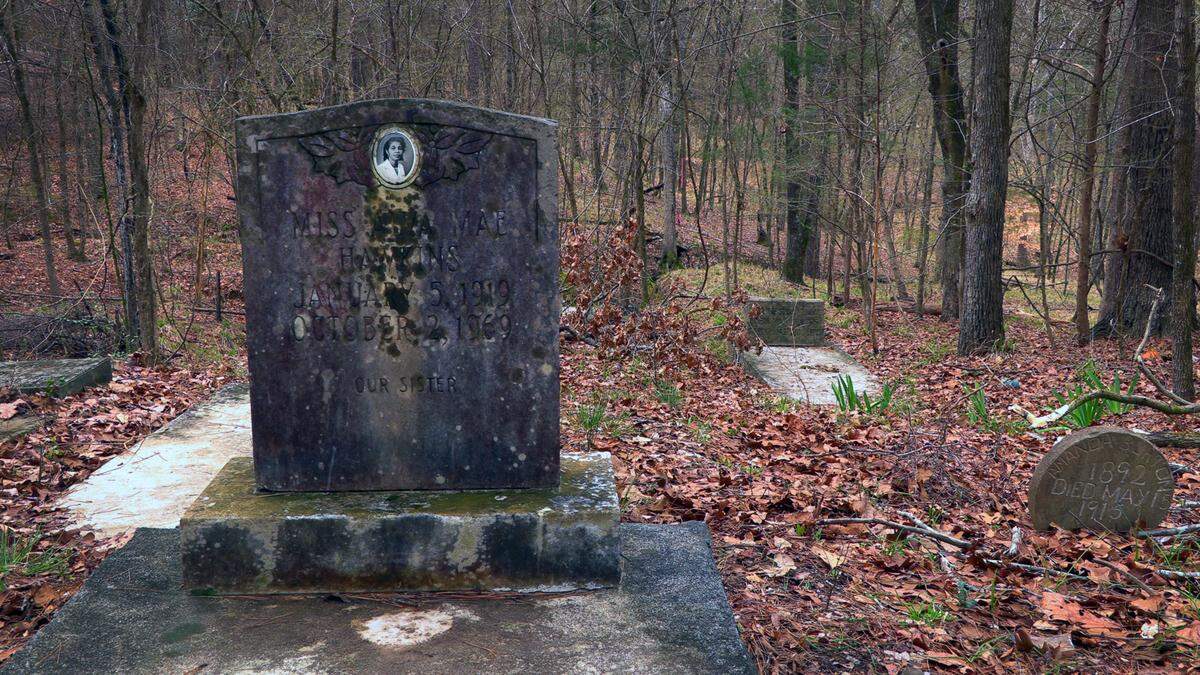
Hawkins, who died in 1969, is the only headstone with a picture on it. Her grave first caught Bruner’s attention in the video. It’s the main reason that Bruner first visited. It caught Hutchins’ attention when he first ventured out, too. They think she is the cemetery’s spiritual caretaker.
“To me, she is the angel of the cemetery because she is the only picture that is left,” Hutchins said. “And it’s like she’s watching over the whole place.”
The COVID-19 pandemic and recent work
The Ledger-Enquirer first toured the cemetery grounds with Bruner and Hutchins in early March 2020, a week after health officials confirmed the first cases of COVID-19 in Georgia. At the time, the duo wanted to form a group to restore the cemetery.
Eight days after that tour, Muscogee County reported its first COVID-19 case. Not long after, Columbus Mayor Skip Henderson issued a stay-at-home order. Georgia Gov. Brian Kemp followed suit in April.
While the COVID-19 pandemic limited larger gatherings of people in tightly confined spaces, the cemetery work offered an escape for Bruner.
He used the good weather of Spring to work on improving the cemetery. Bruner tended to the land, cutting grass and clearing the driveway. Hutchins helped when he was able.
“I’m glad this article didn’t run last year,” Bruner said. “I don’t think anybody back at that time with all the unknowns. ...People would have scattered and probably said we can’t do this and we can’t do that. ... Our efforts probably would have collapsed.”
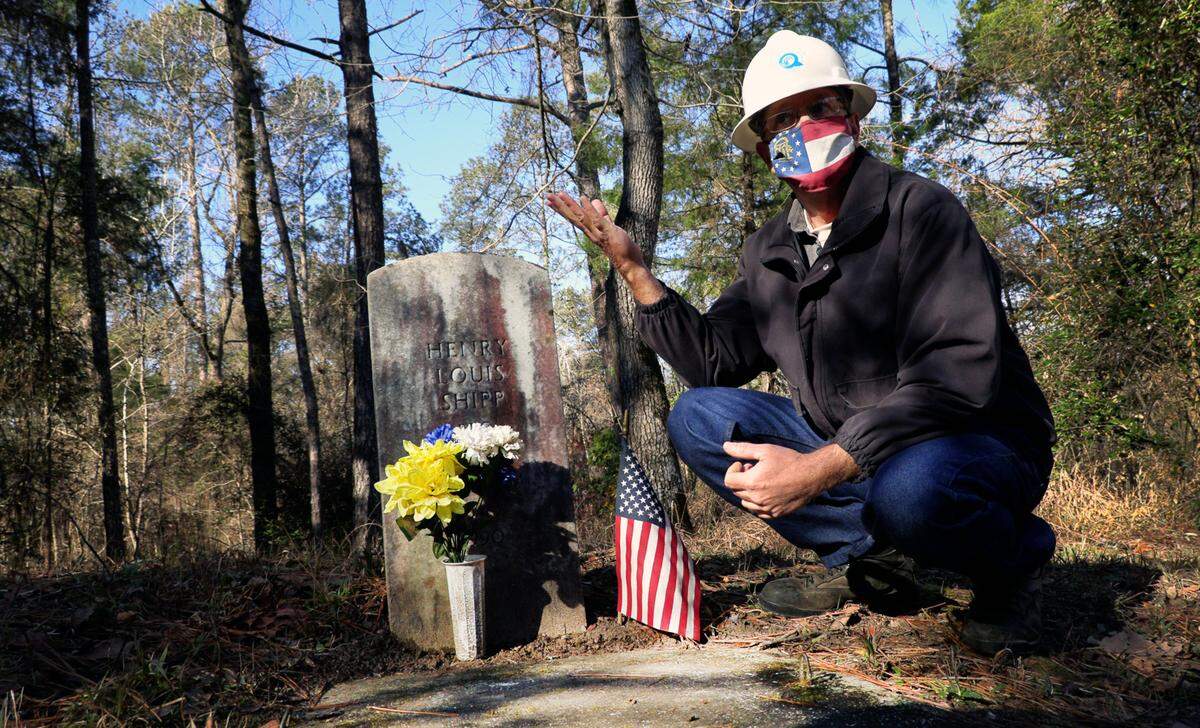
In July, Bruner met family members who have a loved one buried at Shippey. As Bruner was using his weed eater, he saw movement out of the corner of his eye. It was a family coming to lay flowers on the grave of a U.S. Army veteran, Private First Class Henry Louis Shipp. It was the first time Bruner met anyone with family buried at the cemetery.
Henry died in 1990, and his daughter, Vickie Shipp, said family members came to visit his grave until five or six years ago, when vines, bugs and foliage finally stopped them from entering the cemetery. Her father is one of several family members buried at Shippey.
“We started getting fleas and ticks and stuff,” she said. “We stopped going back there. ... We had to put down bushes to get through there. It was nothing like how it is now.”
Henry died in 1990, when Vickie was 20 years old. He and a first cousin joined the military right out of school. Henry served in the Vietnam War, Vickie said.
Bruner and Vickie kept in touch but haven’t seen each other since that one cemetery meeting, she said.
“He’s done an awesome job,” Vickie said. “He needs an award or something. He doesn’t have to do this. That place had been forgotten for a long period of time.”
The challenges, and how you can help
The biggest threat to this effort are the trees that fill the land. Vines have killed many that remain standing, but each storm that comes brings branches and sometimes trees down on graves.
A spot that was cleared out a year ago now is covered by a recently fallen tree. Bruner estimated, even with the proper equipment and companies lined up to help, that it would take at least a year of steady work to clear areas.
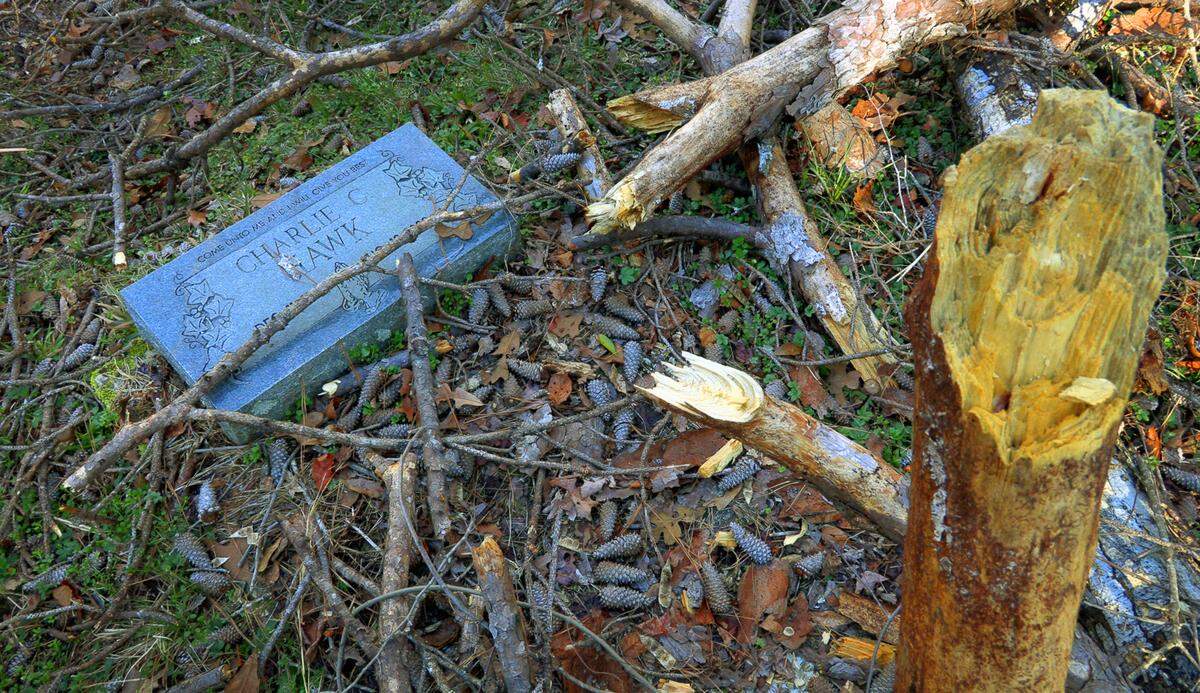
“It’s just a matter of time before they all fall,” Bruner said as he pointed upwards. “It’s like the old saying — you take one step forward and you fly like one or two steps back.”
Bruner and Hutchins want volunteers to help them with their continued cleanup. Some of the work includes tree services, landscaping and heavy equipment operators.
But not all of the work is physical. The men said they’d like to set up a website for the cemetery and have photographers and videographers document the work. Maybe a donation account will be set up soon to help maintain Shippey Cemetery.
“I don’t want to see anyone forgotten — not even in death,” Bruner said.
If you’d like to help restore Shippey Cemetery, please contact Dan Bruner at up40141959@aol.com.
This story was originally published February 26, 2021 at 6:30 AM.