
As the Springer celebrates 150 years, a look back at the immigrants who started it all
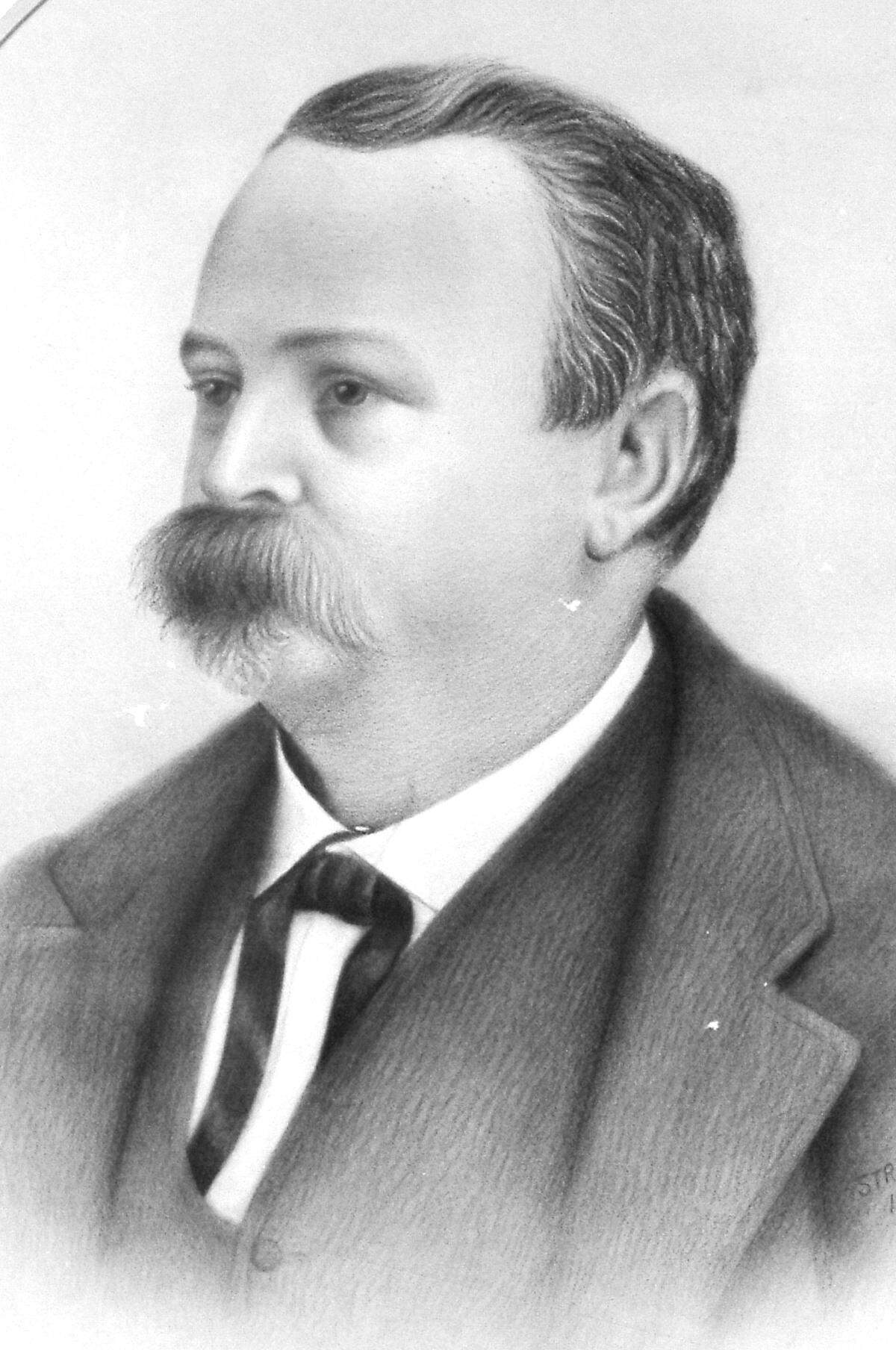
It all started with a funeral in Marlenheim, Alsace, France, January of 1856. Barbe Springer, a mother of five children, was dead and her youngest child, François, was now alone.
The picturesque village along the Rhine River had fallen on hard times after France stationed 280,000 troops and 90,000 horses in Alsace to protect the border from German invasion. This disrupted farming and the ancient overland trade route between Paris, Vienna and the Orient that had kept Alsace prosperous since the days of Julius Caesar. Young people were fleeing and the 22 year old François Joseph Springer was next.
François’ older siblings had already left Marlenheim and his older half-brothers, Charles and George Burrus, were prospering in an American river town in Georgia — Columbus.
By summer, François was in Columbus, too. In addition to his half-brothers, a network of families from Marlenheim had already planted roots in the growing city. One of them, Phillip Güttinger, had a grocery business on the corner of Tenth Street and First Avenue and François went into partnership with him. A few years later, he married Phillip’s daughter, Emilie.
When Phillip died, François became the sole owner and he brought his half-brothers into the business, eventually expanding their operations to Eufaula, Alabama, and west to St. Louis, Missouri.
When Wilson’s Raiders destroyed Columbus’ mills and foundries in the final days of the Civil War, the city was confronted with the necessity of reinventing itself.
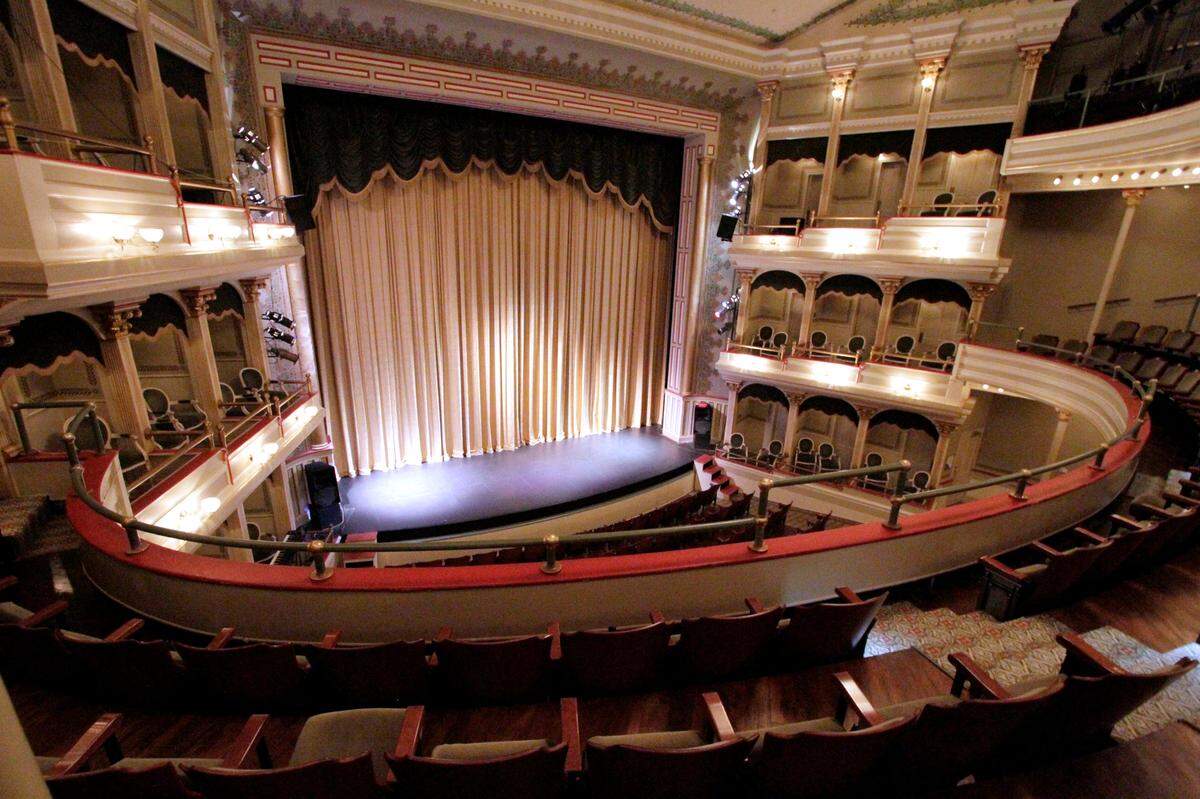
Since François came from a part of the world where even tiny towns had exquisite jewel box theatres, he hatched a big idea: He decided to build a world-class opera house and invite the greatest artists of Europe and America to perform on its stage.
Columbus’ Eiffel Tower
The Springer Opera House opened for its first performance on February 21, 1871. When the Springer looked out upon the world that day, there was no Eiffel Tower in Paris, no Statue of Liberty in New York, no Washington Monument. The Wright Brothers hadn’t been born yet. The internal combustion engine had not been invented. Neither had basketball. Or the zipper.
The Springer was Columbus’ Eiffel Tower. Once it opened, Columbus began to think of itself as an international destination for business and the arts. And the people came.
Just two blocks from the riverboat landing, the Springer hosted international visitors who rested up from their voyages for a few days before taking a train or stage coach to other locales. François wanted all of their money. Besides entertainment, the Springer housed a hotel, saloon, pharmacy and, of course, a grocery store.
It is difficult for us to grasp the public sensation that erupted in Columbus when celebrities like Lily Langtry, Edwin Booth, Oscar Wilde and Buffalo Bill Cody performed on the Springer stage. Imagine if Lady Gaga, Beyonce, Ed Sheeran, Jay-Z and Drake appeared today and you’ll come close.
America was Shakespeare-crazy in those days and the appearance of Edwin Booth in Columbus was earth-shaking. François squeezed in extra chairs and benches and sold standing-room tickets for Booth’s signature performance as “Hamlet.” Some seats went for the unheard of price of $10. In that year, 1876, Booth was making $10,000 a week.
By its twenty-fifth birthday in 1896, the Springer Opera House had recorded over six million admissions.
The parade of stars is breathtaking: Ma Rainey, Victor Herbert, W.C. Fields, Tyrone Power, Lillian Russell, Martha Graham, Agnes DeMille, Ethel Barrymore, Ruth Gordon, Will Rogers and Jeanette McDonald in the early days, with more recent appearances by Truman Capote, Burt Reynolds, Hal Holbrook, Chet Atkins, Branford Marsalis and Stephen Tobolowski. Two presidents — Franklin Roosevelt and Jimmy Carter — delivered speeches on the Springer stage as well as two presidential hopefuls, Eugene V. Debs and William Jennings Bryan.
A New Life
The Springer Opera House adopted new technology — movies — first with silent pictures in the 1920’s and then with “talkies.” One popular pianist for the silent movies was a hapless safe-cracker named Red who lost both thumbs attempting to dynamite a safe.
Sadly, the gradual disintegration of downtown Columbus resulted in the shuttering of the theatre in the 1950s. Plans for the new high-rise Government Center put the Springer in danger of being slated for demolition to make room for a massive parking lot.
However, a group of idealistic youngsters recognized the theatre as a cultural treasure. While many of those original board members have passed away, some (including Janice P. Biggers, F. Clason Kyle and Edward Neal) are still Springer trustees and supporters. They were so young and naive that they didn’t know that it couldn’t be done — therefore, they did it.
There were few performers in that leadership group. They came mostly from the ranks of architecture, banking, law, publishing, broadcasting and public relations. There was even a talented actress who happened to be a Coca-Cola heiress newly returned to Columbus from Hollywood — Emily Woodruff.
The Springer reopened for live theatre in September 1965 with a beautiful Phase One restoration and performances provided by the Columbus Little Theatre.
What followed was a cascade of transformation and prosperity.
Theatre-lovers flooded into downtown at nighttime for dining and entertainment. New businesses began springing up along Broadway and surrounding streets. The Historic Columbus Foundation was founded to save and renovate other architectural treasures. The Springer was designated the official State Theatre of Georgia and a National Historic Landmark. Cultural tourism became one of Columbus’ most powerful economic engines.
In 1998, the Springer conducted a comprehensive $12 million renovation and restoration project. In 2013, it raised another $12 million to build the 300-seat Dorothy McClure Theatre expansion and education center.
Today, the Springer has the second-largest theatre audience in the state of Georgia with more than 112,000 admissions every year. It produces five mainstage shows, three children’s theatre shows, three studio productions and the ground-breaking Theatre for the Very Young. The Springer Theatre Academy boasts over 1,000 student registrations per year and another 15,000 students are served annually through the theatre’s arts-in-education program, ArtServe.
Because the Springer is a producing theatre, its technicians, artisans and designers build all of its shows from the ground up. Local lumber companies, hardware stores, fabric shops, electrical suppliers and hundreds of other local businesses amplify the economic impact that produces jobs, generates tax revenue and attracts capital investment to our city.
Prospects for the Springer’s future are bright. The board of directors has established this goal: “To become America’s Premier Regional Theatre.” To that end, citizens can expect to see more plays by local playwrights telling local stories. They can expect to see the Springer more integrated into public school curriculum and serving more children in every neighborhood. They can expect to see the Springer partnering with businesses to produce jobs, attract capital investment and share Columbus’ fascinating stories with the world.
This month, we celebrate 150 years of the Springer Opera House, which stands on the very spot of François Springer’s grocery business. The wave of immigrants from Marlenheim, Alsace brought their love of music, dance, theatre and opera to the Chattahoochee Valley when Columbus was still very much in its infancy.
Here’s to the immigrants who enrich our culture and use it to create prosperity and quality-of-life in our city.
Paul Pierce is in his 33rd season as producing artistic director of the Springer Opera House. A native of Rome, Georgia he is a graduate of the University of Georgia with a Bachelor of Fine Arts Degree in Drama and Theatre. In 2013, Governor Nation Deal presented Pierce with the Governor’s Award for the Arts for his service to the cultural life of Georgia.
This story was originally published February 28, 2021 at 7:00 AM.