Mother’s Day a joy for Columbus family after heart surgery on mom, baby by same doctor
It will be a momentous Mother’s Day for Summer Head.
Not only will it be the first time this Columbus resident can celebrate the holiday as a mom, but she shares a special connection with her infant daughter, Ansley: Twenty-six years apart, they had heart surgery performed by the same doctor.
So this weekend, Summer and her husband, Jeremy, will have hearts full of gratitude for Dr. Kirk Kanter and their medical team, for support from family and friends, and for each other.
The story they told the Ledger-Enquirer to document their family’s perseverance — from the trouble getting pregnant to the surprise of an additional heart defect found during Ansley’s surgery. They want to encourage others to seek light amid darkness.
“She is the product of hope, of prayer, of faith,” Summer said.
“There’s always a path to move forward when you get put in a situation like that,” Jeremy said. “Just always keep your head up.”
‘Hit both of us like a ton of bricks’
Summer grew up in Columbus and graduated from Hardaway High School in 2012. Jeremy grew up in Phenix City and graduated from Central High School the same year. Both are 27.
Jeremy works in the sales department at Triangle Wholesalers. Summer works in the credentialing department at Hughston Clinic.
Dr. Kanter, a cardiothoracic surgeon at Children’s Healthcare of Atlanta at Egleston Hospital and a professor at the Emory University School of Medicine, operated on Summer when she was 1-and-a-half years old. He fixed her heart’s coarctation, a congenital narrowing of the aorta (the main artery), which brings oxygenated blood to the body’s circulation system.
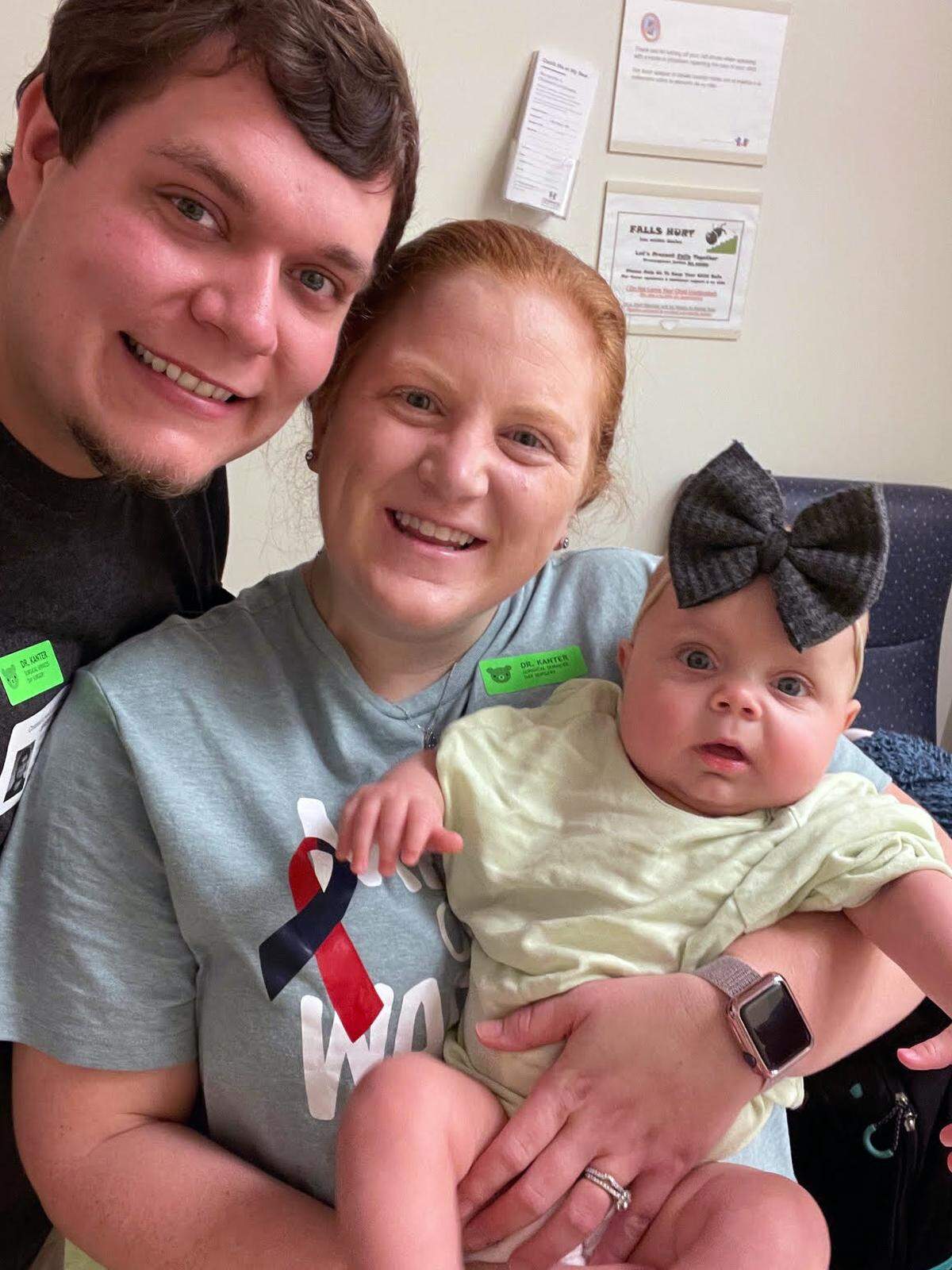
Other than yearly checkups with a cardiologist to ensure her heart is doing well, Summer’s birth defect hasn’t hindered her life. Trying to have a baby, however, was complicated.
After a miscarriage — and taking 10 months to conceive again — the cardiology appointments increased to every trimester while she was pregnant.
“Then we hit a pandemic in the middle of all of this,” she said, “so it was just awful.”
At the 19th week of the pregnancy, Summer and Jeremy heard Dr. Erik Michelfelder, a cardiologist in Newnan, say that a fetal echocardiogram indicated their baby has “a rather large” ventricular septal defect. A VSD also is known as a hole in the heart.
Hearing those words, Summer said, “hit both of us like a ton of bricks. … I felt like I was swallowing rocks. It was that devastating. … I was just hoping and praying that she was going to be fine.”
Jeremy added, “It kind of kills you on the inside.”
Summer’s heart condition isn’t related to Ansley’s, they were told, and they took solace in hearing the cardiologist say Ansley’s condition wouldn’t affect her ability to be born. The only complication would be abnormal breathing.
At the 27th week of the pregnancy, the diagnosis was confirmed, so Summer and Jeremy mentally prepared themselves for the probability that Ansley would need heart surgery.
‘Very, very emotional’
At home after the Aug. 20 birth, while Ansley struggled to breathe, Summer and Jeremy struggled to adjust like any new parents, but their daughter’s condition exacerbated their concerns.
“Every waking moment was difficult because we didn’t know what was normal for her,” she said. “… It was very, very emotional, very stressful and just very anxious all the time.”
Ansley’s breaths were rapid.
“She retracted, like her lungs pulled in a lot,” Summer said. “She was never blue, never turned blue, never stopped breathing or anything, but she just did not breathe nor feed like a normal newborn.”
When Ansley was 11 weeks old, Summer asked the cardiologist what options they had for a surgeon. Lo and behold, Dr. Kanter was one of the two he recommended.
Without a doubt, Summer said, she chose Dr. Kanter.
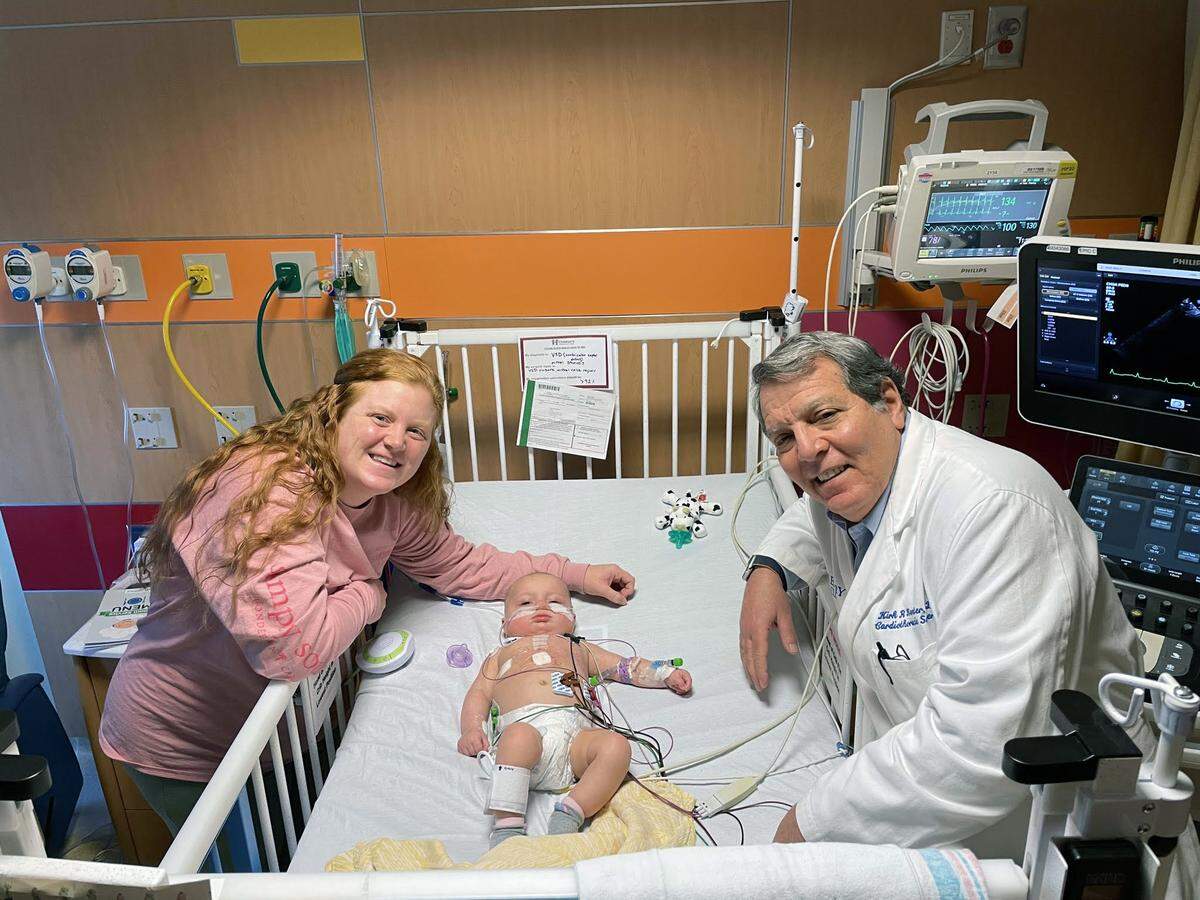
“Knowing a physician that has been in thousands of hearts and has the knowledge and education and just experience, I knew that she was in the best hands,” Summer said. “That alone was reassuring to me.”
The surgery was scheduled for January, when Ansley was 5 months old.
‘It’s always amazing to me’
As they waited for surgery day to come, Summer said, “I was a wreck.”
While meeting with Dr. Kanter before the surgery, Summer told him that he had operated on her when she was a toddler.
“He was just in awe,” she said.
Dr. Kanter, in a phone interview with the L-E, said out of the more than 10,000 heart surgeries he has performed in about 35 years, less than a dozen have been on a patient’s child.
“It’s always amazing to me that any parent lets us take their child to the operating room because it’s such a big deal,” he said.
Congenital heart disease is the most common birth defect, Dr. Kanter said, but it’s still rare: about 1 in 200 (0.5%).
“We don’t know the statistics if the mother has had heart disease,” he said. “There are some defects that run in families, but what Summer had and Ansley had don’t run in families.”
‘Her whole world is about to be rocked’
Summer and Jeremy didn’t talk much as they drove to the hospital the morning of the surgery.
“Her whole world is about to be rocked,” Summer recalled thinking. “… I’m handing my baby over, and she has no idea that mommy and daddy are not who she’s going to be looking up at.”
Jeremy also alternated between distress and reassurance.
“I knew she was going to be in good hands,” he said. “The surgery was for a good purpose, and it was going to help better her. … But at the moment, you’re thinking about all the negatives, not because you want to, just because you naturally do.”
Nonetheless, they steeled themselves and each other to not show Ansley they were worried. As she gave Ansley to a nurse, Summer told her daughter, “Mommy loves you. Daddy loves you. You are strong. You are fierce.”
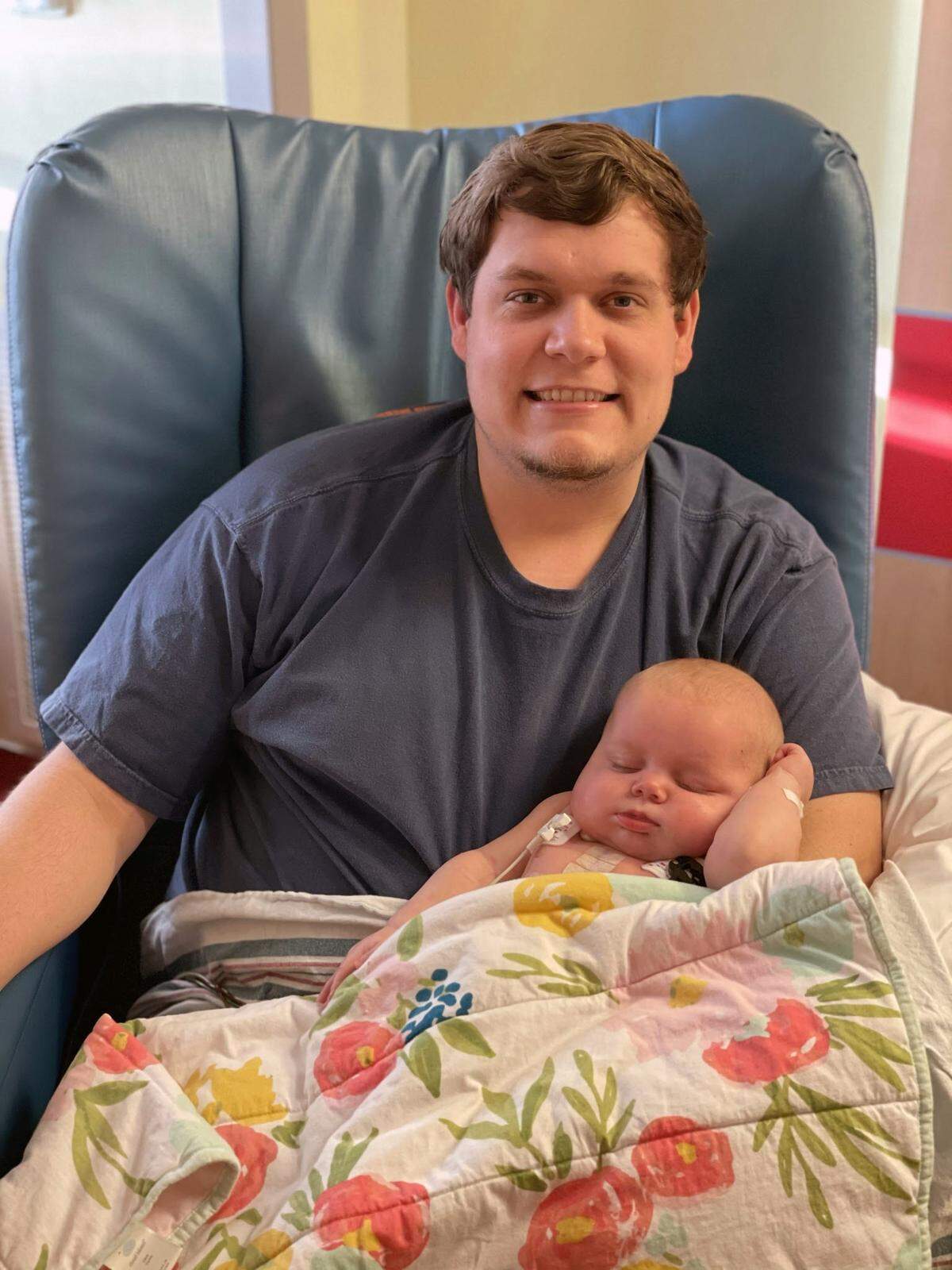
Jeremy reminded himself that Dr. Kanter already had been a hero for his wife.
“Knowing that he repaired her when she was younger, and she’s living a normal, happy, healthy life,” Jeremy said, “that in itself makes me feel grateful for having him there. … It’s one thing it was the same doctor, but it being 26 years difference makes it even more incredible.”
‘What the hell did you just say?’
Summer and Jeremy were told it would take about 4 hours before they could see Ansley again. Although they received periodic updates, the surgery lasted about 45 minutes longer than expected.
“Time felt so slow,” Summer said.
They went to the hospital cafeteria for breakfast, but they didn’t feel like eating. They walked around to get fresh air, but they still were stressed.
Although the surgery was successful, Summer and Jeremy heard some bad news while Dr. Kanter briefed them: During the operation, he found that Ansley’s mitral valve was deformed.
The mitral valve, between the left atrium and the left ventricle, prevents blood from backing up in the heart.
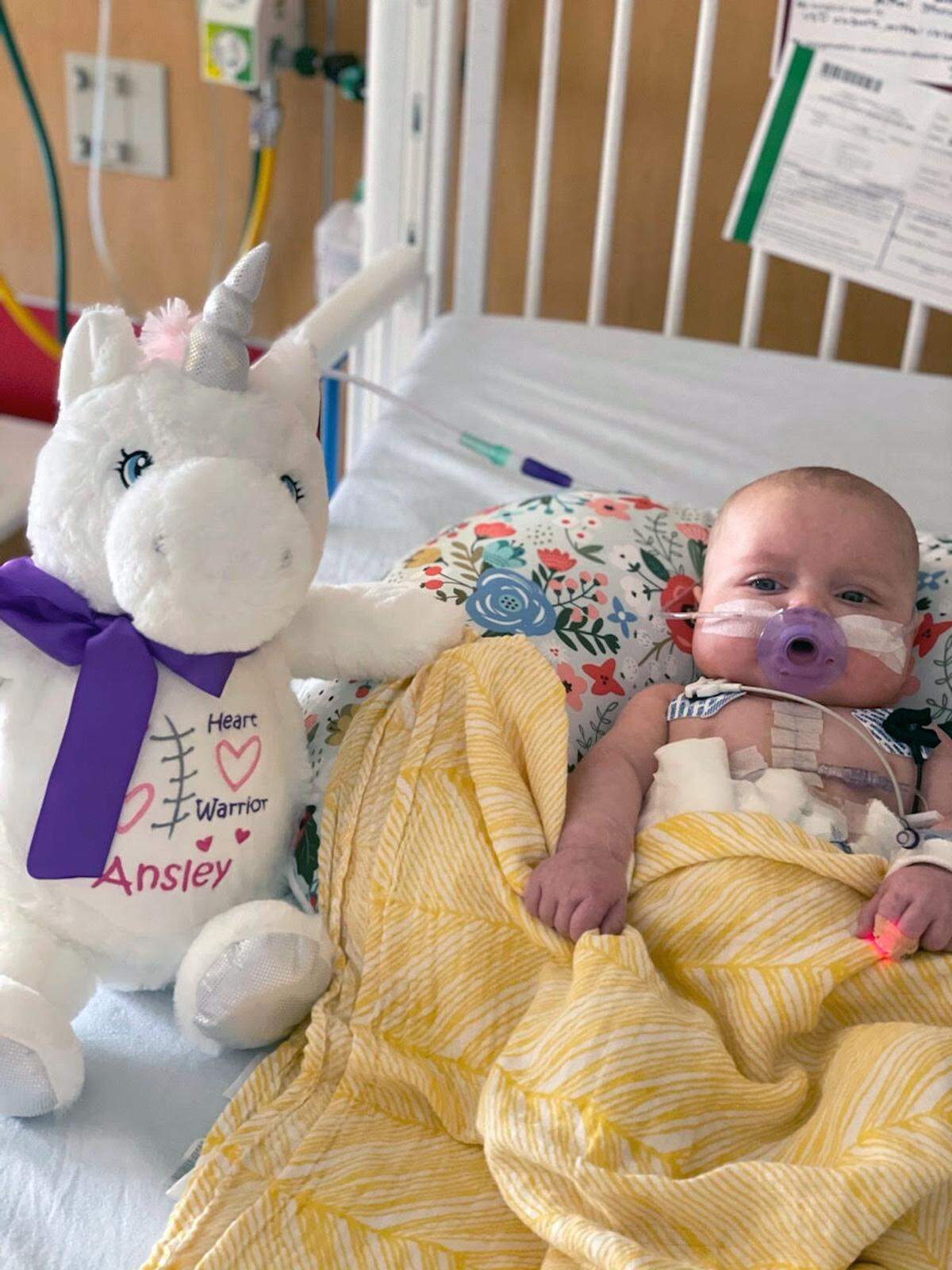
“My mouth was probably on the floor,” Summer said. “My exact words to him were, ‘I’m sorry. What the hell did you just say?’ I was that flabbergasted.”
Jeremy said he was “just kind of astonished. Leading up to it, we thought we knew everything we needed to know.”
They calmed themselves by changing their focus.
“I was just thankful he was actually able to repair it at that point,” Summer said, “versus having to wait or her having to stay longer in the hospital to have it done.”
‘She’s thriving’
The family returned home four days later. Ansley clearly was healthier.
“She was happy before,” Summer said, “but I mean, she’s just out of this world, just remarkable difference.”
Ansley might need surgery to replace her repaired mitral valve.
“For now, we’re just watching it,” Dr. Kanter said. “There’s a small chance she’ll never need anything more done with that. There is a chance, however, we’ll need to do something more surgically to that valve.”
Ansley has been going to a cardiologist every three or four weeks and probably will need checkups every six months, Summer said. When she’s older, Ansley might get winded sooner than normal while exercising or playing sports, Summer said.
“But right now,” Summer said, “she shows no issues and has no reason to have one. … She’s thriving.”
In fact, Summer recalled the cardiologist saying, “As far as I’m concerned, she’s a normal child.”
No wonder Summer calls Ansley “a miracle.”
“If it wasn’t for faith and strong belief and the word of God,” Summer said, “I don’t think we would be where we are. … I look at her every day and just thank God.”
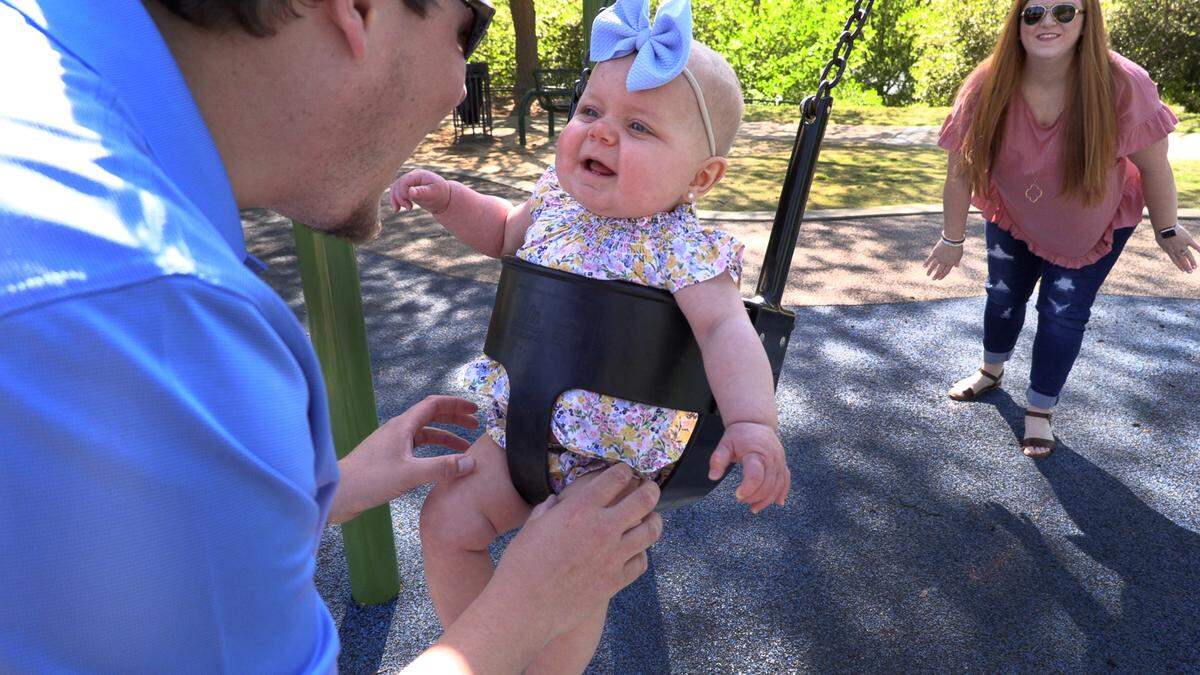
She also praised the prayers from family and friends, many of them at Smiths Station Baptist Church.
And the medical team.
“CHOA was phenomenal,” Summer said. “The physicians were phenomenal.”
“This is a great job to have,” Dr. Kanter said. “It’s very gratifying. Around this time of year, it’s nice to know that these mothers are celebrating their children.”
Through this crisis, Summer said, she learned that “you have to advocate for your kids. You have to be educated enough to be able to advocate for them because they can’t speak for themselves. … Because she did have this minor setback, she does have a major comeback.”
So when Ansley is old enough to understand her medical journey, Summer hopes she knows what her mother tells her every day: She is proud of her.
Jeremy described the message this way: “She already has done something a lot harder than (most) anybody will ever go through and just kind of use that as motivation to keep pushing through life to get where she wants to be. Wherever that may be, we’ll be there to back her up.”
Now, Mother’s Day “has a totally different meaning,” Summer said. “One day, she’s going to know that.”
Asked how they plan to celebrate the holiday, Summer said, “We’ll probably spend it snuggled up on the couch.”
Summer laughed after Jeremy declined to disclose his plan and said, “I guess with it being the first one, I’ve got to go big or go home.”
This story was originally published May 6, 2021 at 6:00 AM.