
Columbus mom lost one daughter to a rare disease. A new drug is helping another
A decade apart, Guadalupe Marin gave birth to two baby girls afflicted by the same debilitating and incurable rare disease.
The first, Jazmín Suarez-Marin, was born in 2006, shortly after the family moved from Mexico to Columbus. At that time, there weren’t any disease-modifying treatments for spinal muscular atrophy.
The genetic condition affects the central nervous system, peripheral nervous system and voluntary muscle movement. Motor neurons — nerve cells in the brain stem and spinal cord that control skeletal muscle activity for essential tasks like breathing, speaking, walking and swallowing — are destroyed.
It’s found in approximately one in 10,000 babies. The disease can be fatal and is the leading genetic cause of infant mortality.
Jazmín did not live to see her second birthday. But the second girl, Sofia Suarez-Marin, born in 2016, is hitting major milestones.
The young girl has made incredible progress over the last five months after taking Evrysdi, a new treatment approved by the U.S. Food and Drug Administration in late 2020.
That progress gives Gualadupe hope that Sofia will be able to attend school in person this fall and, perhaps, she’ll even be able to eat without the assistance of a feeding tube.
“It is very important,” Guadalupe said during a Zoom interview with the Ledger-Enquirer. “And I hope someday (Sofia) can eat normally and taste very good food.”
Sofia and SMA
In some ways, Sofia is like most five-year-old girls.
She’s smiley and happy. She loves to watch Sofia the First, an animated Disney television series for children, from the comfort of her Columbus home. One of her favorite characters is Clover, a sassy yet helpful lop-eared gray bunny.
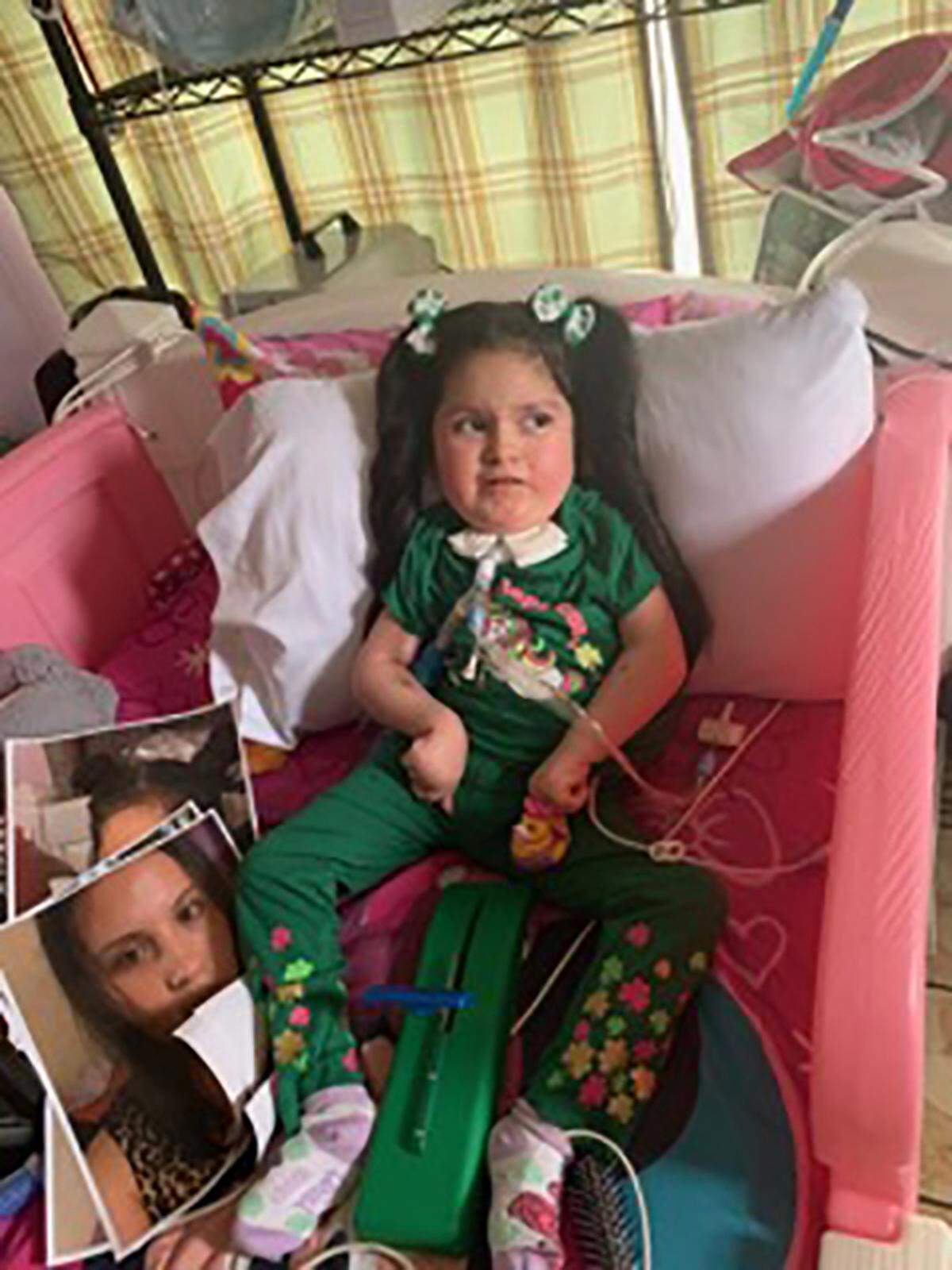
But Sofia struggles with basic muscle activity. She can’t walk. She can’t talk like other 5-year-olds can. She has trouble breathing on her own.
Sofia’s morning routine begins around 8 a.m. with a breathing treatment. She’s put into a vest hooked up to a machine that vibrates at high frequencies to break up lung secretions. After a few other treatments, Sofia eats via her feeding tube.
She spends more time in bed. Sometimes Guadalupe will put Sofia in a wheelchair, but she can’t stay in the device for more than a couple of hours because of her scoliosis. From the bed, Guadalupe stretches Sofia’s legs to build strength and flexibility.
Guadalupe gets help taking care of Sofia from her three other daughters — 13-year-old Fatima Suarez-Marin; 12-year-old Valeria Suarez-Marin; and 10-year-old Carla Suarez-Marin. Carla will sometimes read to Sofia, and all three of them play with their youngest sister. A visiting nurse also helps take care of the five-year-old.
“(Sofia) doesn’t have a normal life,” Guadalupe said.
But it wasn’t always like this. For the first six months of Sofia’s life, Guadalupe thought her little girl was healthy.
How was Sofia diagnosed?
Things changed when Guadalupe noticed that her daughter was losing some strength and movement.
Sofia was tested for SMA, but Guadalupe said she never received the test results. As she noticed the changes in her daughter and remembered Jazmín’s struggles, Guadalupe asked about the screening.
A second test was ordered, and it confirmed Sofia had SMA. (As of 2019, Spinal Muscular Atrophy is part of Georgia’s Newborn Screening Program.)
Both of her girls suffered from Type 1 — the most serious and common type of the disease when symptoms appear in the first six months after birth. However, Guadalupe said her older daughter had more severe symptoms.
Doctors, she said, never referred Jazmín to specialists to help with the disease. The mother was unable to help.
“I just wait until she passed away,” Guadalupe said. “With Sofia is very different because I know a little bit more.”
Jazmín was born before there were any disease-modifying treatments for SMA. Sofia was able to get help. Guadalupe and her daughter traveled to Orlando, Florida, for treatment in 2016 and have taken many visits to Atlanta specialists over the years.
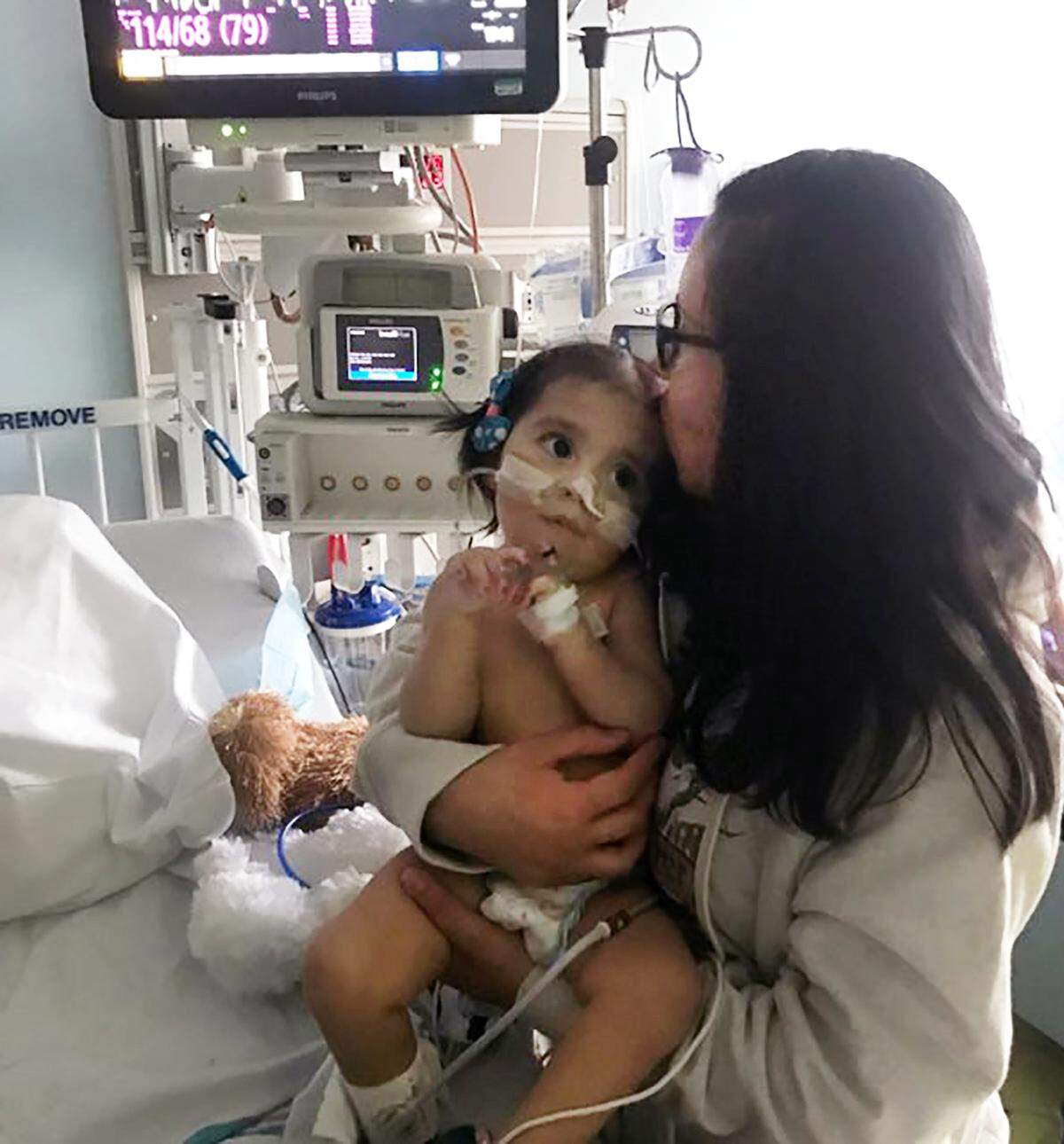
The family had a scare in 2017 as complications from the flu left Sofia in the hospital for nine months and clinging to life. A ventilator kept her alive and breathed for her. Her parents made the difficult decision to have doctors insert a tracheostomy tube, and Sofia survived.
“It was the only way to save (Sofia’s) life,” said Ann-Marie Brooks, a pediatric pulmonologist at Children’s Healthcare of Atlanta who treated Sofia. “I hope people understand ... how much strength it takes as a parent to be able to advocate for your child when the medical field makes that so difficult. At the time, Guadalupe spoke very little English. She lived so far away and had the other children. Her strength is really being Sofia’s advocate and it paid off in an enormous way.”
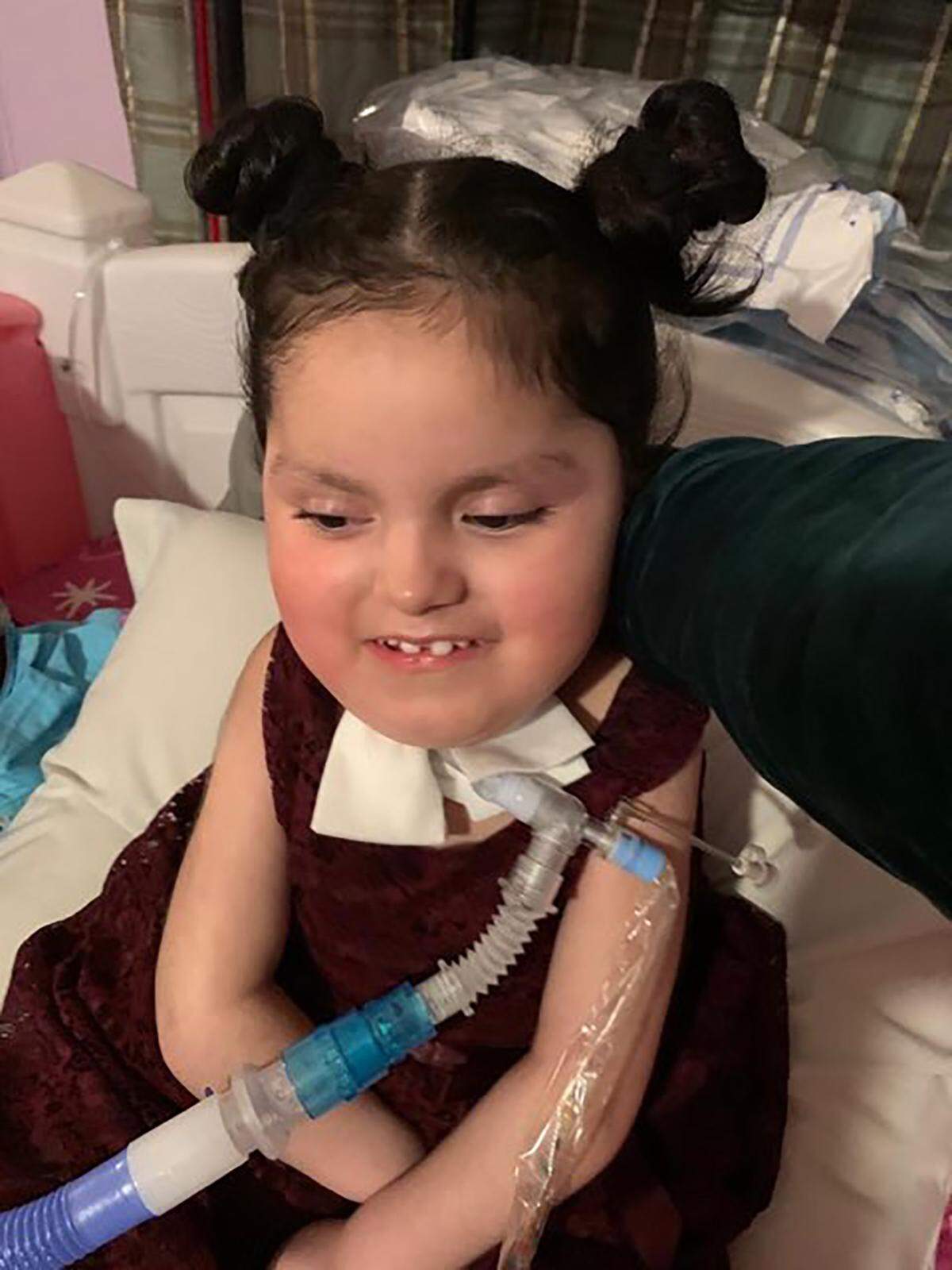
Sofia recovered, but the damage done to her lungs by the flu complicates her treatment. Her diagnosis means she’ll be attached to a ventilator for the rest of her life, Brooks said.
In August 2020, her fortunes changed when the FDA approved Evrysdi for the treatment of spinal muscular atrophy in adults and children 2 months of age and older. It is the first and only at-home treatment for the disorder.
Clinical trials found the drug helped infants sit without support for at least 5 seconds, a key motor milestone not seen in the course of the disease.
The drug was recommended to Guadalupe by a neurologist, and Sofia began taking the drug in January 2021. She was previously taking Spinraza, approved by the FDA in 2016 which is administered via injection into fluid surrounding the spinal cord.
“We don’t have to go to the hospital every three or four months to get an injection in her back. It was so painful and she was very uncomfortable,” Guadalupe said.
What’s next for Sofia and Guadalupe?
A patient’s progress depends on the state of their disease when they receive treatment. The earlier they receive it, the better, Brooks said.
Zolgenzma, a gene therapy drug approved by the FDA in 2019 for children under the age of 2, coupled with Georgia’s newborn screening program gives the state potential to catch patients when there’s been minimal nerve loss, she said.
For cases that occurred before gene therapy treatments or when the condition is caught later, the goal is to maintain their current abilities and prevent deterioration.
The goal for patients like Sofia is to improve their quality of life, Brooks said, and Evrysdi offers her that.
Now, Sofia can breathe and swallow more easily. She’s making more noise, and sometimes, she’ll speak. Guadalupe said she’s heard Sofia say “Mama” and “duele,” the Spanish word for hurt or pain.
“Now, I can hear her voice,” Guadalupe said. “She has a beautiful voice.”
Teachers came to the family home to teach Sofia last year, but Guadalupe hopes her daughter will be able to attend class in person at Rigdon Road Elementary. She’ll be there this fall if surgery to fix her spinal curvature goes well.
“(Sofia) needs to meet more children and more people,” Guadalupe said. “It’s very important. I’m excited.”
The improvements in Sofia’s condition give the family more time to spend together. There’s less equipment to carry on trips to the park or the beach, and Guadalupe said the progress over the last five months has been incredible to witness.
Her brushes with spinal muscular atrophy led Guadalupe to a new profession. She hopes to complete the respiratory therapist program at Columbus Technical College, and she’s on pace to graduate in 2023.
“I can help more (children) like her,” Guadalupe said. “That is my goal.”
This story was originally published June 12, 2021 at 6:00 AM.