
Marker for 1896 double lynching on Broadway is moving forward. An apology should come with it, activist says
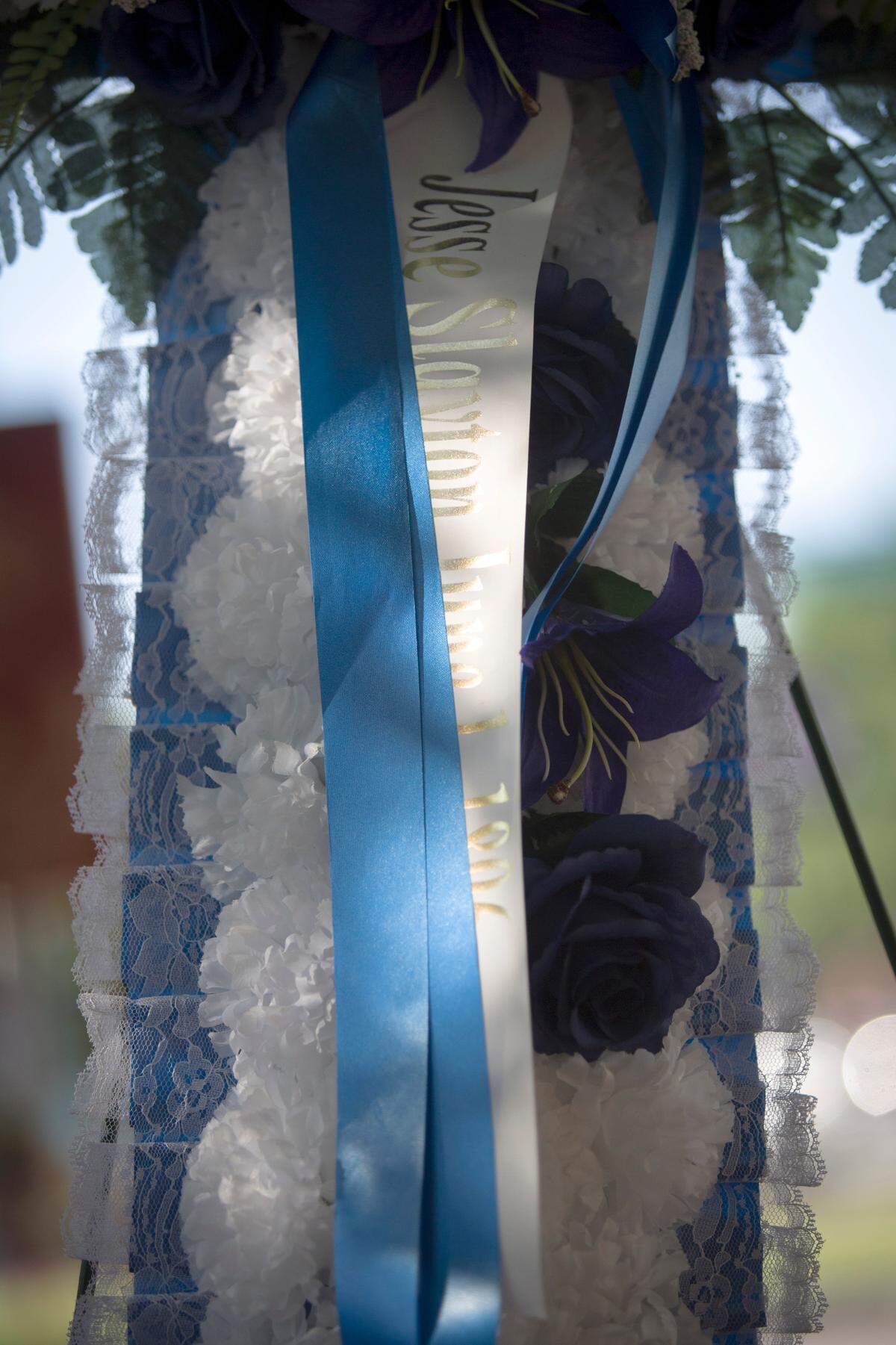
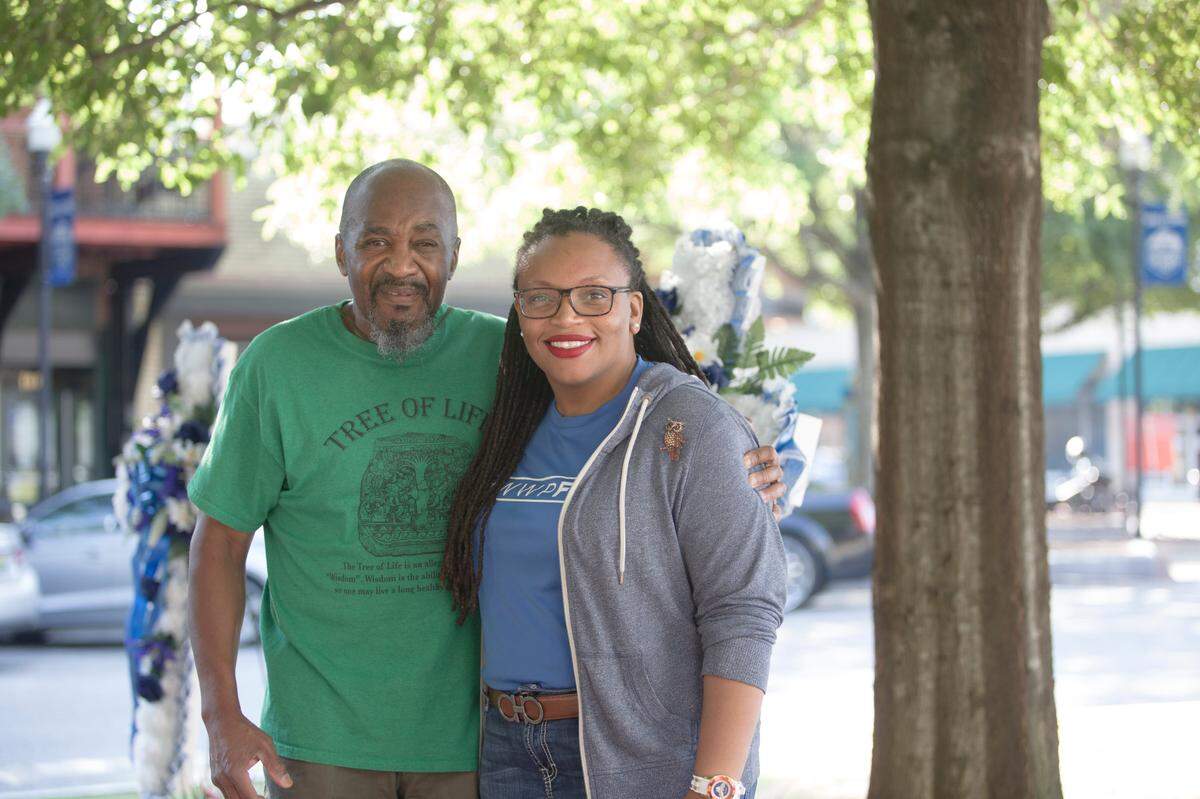
For nearly a decade, Johnnie Warner has placed wreaths on a median near the busy intersection of Broadway and 11th Street in downtown Columbus to memorialize the June 1896 lynching of two Black men.
The activist and former head of the Columbus Black History Museum & Archives has asked for two things over those years — a historical marker at the site and an apology from the Columbus Consolidated Government for its role in the men’s deaths.
Warner, local supporters, the Historic Columbus Foundation and the Mayor’s Commission on Unity, Diversity and Prosperity are working with the Alabama-based non-profit the Equal Justice Initiative to erect and dedicate a marker sometime next year.
It’s the first step toward realizing his goal, but previous efforts by Warner have come up empty. He says he won’t feel any progress has been made until the marker is in the ground.
Columbus Mayor Skip Henderson would not say if the city will apologize for the 1896 double lynching, citing a previous statement made by former Mayor Teresa Tomlinson on the matter in 2013.
“In this city here, it can move but so far,” Warner said. “I’m used to things getting to a certain spot and then it drops.”
The double lynching of Jesse Slayton and Will Miles
More than 125 years ago, Jesse Slayton and Will Miles were lynched after they were accused of assaulting white women, according to multiple newspaper accounts.
Slayton was accused of rape just four days before he was lynched.
Alleged rapes were often used as a false justification for lynchings. Charges of rape were often fabricated, and the allegations were used to advance stereotypes of Black men as “violent, hypersexual aggressors,” according to the NAACP.
The first night following Slayton’s arrest passed without incident, according to an 1896 Columbus Enquirer-Sun article. By the next night, then-Gov. William Yates Atkinson had sent the Columbus Guards and Browne Fencibles, a military company, to control the situation.
But the men did not stay for Slayton’s trial, which was set for the coming Monday. City leaders met with the military on Sunday, reaching an agreement that they were not needed.
The morning of the lynchings, Slayton was in court when the proceedings were interrupted. The Atlanta Constitution published a lengthy account of the double lynching on the front page of its June 2 issue.
According to the newspaper, they were “scenes unparalleled in the history of the state of Georgia.”
A mob of hundreds overpowered guards and entered the courtroom. Slayton attempted to hide under the judge’s stand, but the mob placed a rope on his neck.
The Enquirer-Sun reported that this is when the mob first shot Slayton. He was removed from the building, dragged down the street and shot repeatedly.
The mob hung Slayton from an elm tree and continued to fire bullets. Several hundred shots were fired, according to the Constitution.
The mob then went to the Muscogee County jail where the jailer surrendered the keys on the condition that the mob only harm Miles, who was accused of previously assaulting a white woman. His case had been in court for two or three years.
The mob marched Miles to the same tree. As soon as he was hung, the mob began to shoot. Signs placed on the bodies read: “Any Negroes who committed a similar crime would be treated likewise!”
A photo of the lynchings shows a crowd of mostly white, unmasked men gathered around the bodies. A blog entry from Warner on the Columbus Black History Museum’s website drew attention to men in the crowd wearing clothing nearly identical to police uniforms of the era.
“They made postcards out of it like it was a festival,” Warner said. “If you see the picture, Blacks were in the picture. They had made them stay there. Why? ... Because once you see this here Black man — take this (memory) to your friends and your family and you tell them, ‘Don’t you put your hands near and don’t even look at white women.’”
Coroner A.R. Martin had Slayton and Miles taken down and buried in unmarked paupers’ graves in Porterdale Cemetery, Warner said. Gov. Atkinson offered a $5,000 reward for the arrest and conviction of the first 10 lynchers, but nothing came of it. No indictments, no trials.
Karen Branan, a Columbus native and freelance journalist, identified Edgar Stripling as the lynch mob’s leader and alleged that he was protected by the highest levels of county government in a 2016 article in the Ledger-Enquirer.
Stripling’s involvement with the lynching was known, Branan wrote. However, he was “old boyhood friends” with then-Muscogee County Sheriff Gus Bowles, and Stripling also served as a substitute Columbus policeman.
Why the marker and apology are important
Warner and Columbus resident LaKesha Stringer, a Navy veteran who is helping with Warner’s efforts, say the apology is necessary because the city failed to protect the two men.
The men were in the city’s custody when they were lynched, and Columbus authorities played a role in removing possible military protection for Slayton and Miles, they said.
Warner and representatives with the local Black history museum first made their appeals for the marker and apology in 2013 before then-Mayor Teresa Tomlinson and members of the Columbus Council. Henderson, the city’s current mayor, served as a councilor at the time.
Tomlinson, while expressing outrage for the lynchings, said the city was not responsible. She suggested the group reach out to the Georgia Historical Society and the Historic Chattahoochee Commission for a possible marker. Nothing came of it.
“As far as any formal apology for the acts of the city ... the only references to public officials were them putting up resistance,” she said during the May 28 meeting. “There’s just no indication ... that there was official (city) activity in this heinous crime.”
Warner says his renewed desire for the request is not a novel concept. In 2017, LaGrange Police Chief Lou Dekmar apologized for his department’s role in the 1940 lynching of teenager Austin Callaway. Like Slayton and Miles, he was accused of assaulting a white woman.
“I am not asking the mayor personally for an apology. We are asking the position to make an apology,” Warner said. “If the city of LaGrange can do it, why are you sitting on your high pedestal if you can’t do it?
“Our youth needs to see how our ancestors were treated. They need to understand that we’ve been there.”
The plans for a lynching marker
Henderson told the Ledger-Enquirer that he was not prepared to say if he would offer an apology on behalf of the city for the 1896 double lynching.
“The short answer is I don’t know,” he said. “... I’m not prepared to say we would or we wouldn’t. Obviously, it is something that is horrific, and I’m sorry that it ever happened. But I just need to make sure from a legal perspective that we are responding in the appropriate manner.”
But plans for the marker to memorialize Slayton and Miles are in motion.
Historic Columbus Director Elizabeth Walden told the Ledger-Enquirer that she, Warner, marker supporter Sherricka Day and members of the Mayor’s Commission on Diversity, Unity, and Prosperity will soon meet to discuss the marker’s wording and the coordination with the Equal Justice Initiative.
“The development of the marker itself is in the early stages, but we hope to have it dedicated next year,” Walden said.
The Equal Justice Initiative’s Community Remembrance projects honor the victims of lynchings by collecting soil from lynching sites and erecting historical markers.
Researchers with the institute have documented 4,075 racial terror lynchings of African Americans in Alabama, Arkansas, Florida, Georgia, Kentucky, Louisiana, Mississippi, North Carolina, South Carolina, Tennessee, Texas and Virginia between 1877 and 1950. An interactive map maintained by the institute documents six reported lynchings in Muscogee County.
“Our intent is to satisfy all the prerequisites so that we’ll have an opportunity to claim our (history) by buying those monuments and placing them in the community,” Henderson said.
It’s unclear if the marker will mention other documented Columbus lynchings or if there will be additional markers in the future, Walden said.
“There will hopefully be further opportunities to tell all of the victims’ stories,” she said.
This story was originally published June 24, 2021 at 2:57 PM.