Granddaughter of iconic Columbus leader has a new book that’s lighting up Amazon
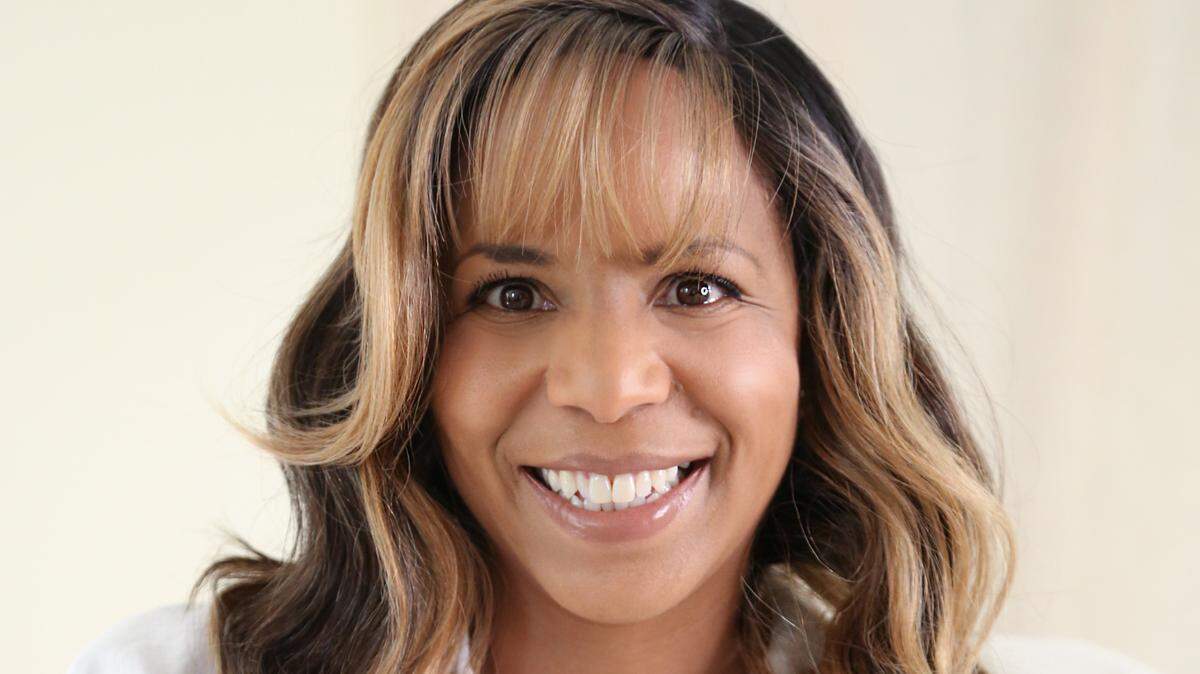
Spending childhood summers in Columbus while visiting from San Francisco in the 1970s and 1980s, Candace Clark Trinchieri attended the YMCA named after her maternal grandfather, the late Mayor Pro Tem A.J. McClung, who was the first Black politician to win a citywide seat on the Columbus Council.
Trinchieri, 50, also spent one school year in Columbus, as a fifth-grader at Brookstone, and lived in the city as an adult from 1999-2003. She was director of the local Big Brothers Big Sisters chapter at The Family Center and volunteered for the Open Door Community House, Columbus Symphony Orchestra, Junior League and Anne Elizabeth Shepherd Home before moving to Los Angeles. So she understands and appreciates McClung’s impact.
“Especially with my grandfather’s legacy, it shaped me to be an advocate,” she told the Ledger-Enquirer. “I would say service and social justice and servant leadership, that’s part of the family DNA. It’s not just making life better for yourself but for others too.”
Trinchieri has continued that legacy by authoring the book “Dream Redefined: The Struggle and Success Through Infertility as a Woman of Color” (Golden Brick Road Publishing House, 2021).
It was an Amazon No. 1 Hot New Release for books about fertility, and it has led her to coauthor two more books, also published by Golden Brick Road:
- “Mama’s Gotta Grow: Inspiring Conscious Growth in Motherhood, Adapting to Change, Shifting Lifestyles, Pandemic Pivoting and Embracing New Normals,” scheduled to be released this fall.
- “We Rise in Power: Amplifying Women of Color and Her Voices for Change,” scheduled to be released next spring.
She was diagnosed with infertility in 2010. In four years, she had nine in vitro fertilizations, three miscarriages, two surgeries, one egg donor and a failed surrogacy. Then she and her husband adopted a baby boy.
Trinchieri has worked for more than a decade as an advocate for improving infertility treatment access and affordability. She cofounded Infertility Warriors, a support group for women of color, in partnership with Resolve: The National Infertility Association. She has testified during Congressional hearings about infertility and adoption issues. With her husband, she raised more than $20,000 in two years as an organizer for the Walk of Hope to support Resolve. Their story is one of four featured in “One More Shot,” a documentary film about infertility struggles toward parenthood.
In a phone interview with the L-E, Trinchieri discussed “Dream Redefined,” its message and her journey. Here are excerpts, edited for brevity and clarity:
How would you describe what the book is about?
“It’s being told from the perspective of women of color. … The stories are told in their voice, so no one else is giving the narrative. … But I also think what’s important to know is that there’s such universality in infertility that, no matter what color you are, no matter how you identify, you will be able to see yourself in the stories these women tell because the overriding thing about infertility is that all of us who are suffering just have slightly different versions of the exact same story, and we all have the same pain, … and the struggle and the triumph is universal.”
You also tell your story in the book. What do you want people to understand about infertility?
“Although infertility is usually seen as a wealthy, white kind of disease, the fact of the matter is, women of color are twice as likely to be infertile as women that are white, but that doesn’t match the stereotype that women of color are seen as hyperfertile. … Culturally, there’s the stereotype that we can’t stop having babies. The reality is we’re twice as likely to struggle, and the experience tends to be very isolating, very lonely. … So I think this book is a great way to kind of open that veil and break through that stereotype.”
What prevents women of color from going to fertility clinics?
“A lot of it is very cultural. … If you’re coming from this culture, it’s expected that not only are you going to be fertile, but you’ll be able to have lots of children, … I think it’s very easy to hide (infertility) and to not want to share that because you are afraid of the shame and the stigma. Of course, there’s no shame or stigma to it, but it feels that way. … I wasn’t thinking of it in terms of, ‘I have a disease.’ I was thinking of, ‘I can’t have a child because there’s something wrong with me. Am I being punished? What am I doing wrong?’”
What were you doing before you became an author?
“I had just been laid off. I had been a legislative analyst. … My job was to read the bills that were introduced, and the summaries I wrote were given to members of Congress and Senate and lobbies.”
So you suddenly had time to write this book, right?
“It was a complete convergence of a lot of things: I had been laid off; I was at the crossroads of, ‘OK, my son’s now in school. What do I want to do?’ … I’ve always written. I didn’t know I was a writer, but I love it, and I’m now a writer.”
What’s the meaning behind the book’s title?
“‘Dream Redefined’ means I have to completely redefine, re-evaluate, the dream I’ve had since I was a little girl. I always had the expectation I would grow up, get married and have a child. And not once did I really think what that would entail if there was some difficulty. So the ‘Dream Redefined’ means, when you’re infertile, you’re constantly going through a redefinition of what success is. … At first, it was, ‘I want to get pregnant. I want to get pregnant. I want to get pregnant.’ I was able to get pregnant several times with IVF (in vitro fertilization), but I never was able to carry the child past the first trimester. Then success was, ‘I just want to get pregnant and have the baby.’ When that wasn’t a possibility, I literally woke up one morning and told my husband I was done with IVF. What was important was to be a mom.”
How is the infertility experience different for women of color compared to white women?
“There already is an existing health disparity for people of color, let alone women of color, in the medical field. That’s historical. … There are several factors that go into that. It’s access to healthcare, access to prenatal care, existing bias in the health field. As a woman of color, talking about your issues is culturally hard. It’s also hard if you’re not listened to. A lot of women of color in the book talk about being misdiagnosed for several years before getting an infertility diagnosis, and that costs money. Financially, it’s a huge struggle. It’s so expensive to have any kind of infertility treatment. I acknowledge my privilege in being able to move through each step of infertility when a door closed in our face.”
What solutions and hope do you offer in the book?
“Sometimes you can have all the money in the world, you can have the best medical care, you can do everything right, and, unfortunately, it just comes down to blind luck. … Wherever you are in the journey, we talk about the difference between letting go and giving up. That’s the hardest thing. My husband and I had a point where I was done, just physically and mentally exhausted, and he wanted to keep going because we still had some frozen embryos. We were really at this crossroads, which was so painful because we wanted the same thing, but I was letting go, and he felt we were giving up. We had to have a discussion about the real difference. If you’re looking at it as giving up, you’re always going to feel incomplete. But letting go has a period at the end of it.”
What is the most common misconception about infertility in general?
“I think the biggest misconception is that it’s rare. You know someone who’s infertile, whether you know it or not. … One in eight couples in the United States alone are infertile. … With women getting married later or wanting to start families later, that’s going to be one of the biggest drivers (of infertility). … I married my husband at 38. That’s definitely not the time to start thinking about freezing eggs. … I suffered from endometriosis and fibroids. Had someone told me in college, when I was first having surgery, these issues increase infertility, I would have frozen my eggs in college. … So another misconception is that there’s always time, always a way.”
What advice would you give couples struggling to conceive?
“For women in general, start advocating for yourself early. … Both partners, get tested (for fertility) immediately. If your doctor refers one of you for tests, the other (partner) should get tested too. And always keep an open mind. There is more than one way to have a family. There’s no right way; there’s the way that works best for you. … My biggest wish is that through this book, through normalizing discussions about infertility, I wish nobody else has to have my story or the stories in this book.”
What resources about infertility do you recommend?
“The biggest resource is going to be Resolve.org. That’s the National Infertility Association. From there, you are able to access a lot of different resources, whether it’s support groups in your area or foundations and grants you can access, information, doctor recommendations.”