
Enslaved people are buried in a forgotten Georgia lot. A descendant fights for it to be restored
When Yamona Pierce and her family saw the plot of land where her great, great, great grandparents were buried, they wept.
Pierce Chapel African American Cemetery in Midland is the final resting place of enslaved persons, Harris County’s first Black landowners in the years after emancipation and the generations that followed. At least 500 people are buried there, but it did not look like a cemetery during Pierce’s first visits.
Above the bones and caskets were busted-up car parts and trash. Utility companies drove heavy equipment over the graves to run cable and power lines above the cemetery, crushing box tombs and destroying headstones, Pierce said.
Pierce and her two daughters traveled from Washington D.C. to Harris County for the visit. They only spent about 5 minutes in the cemetery.
“It appeared to be a place of chaos instead of a place of commemoration,” she said.
In the years that followed, Pierce vowed to reclaim the cemetery and make it as a local landmark. Now, she and other volunteers have run into problems. The land is privately owned. While the current landowner allows the volunteers to clean up the cemetery, she has not sold or deeded the property to Pierce or her nonprofit.
Pierce says the owner insists that she approve of the plans because the owner doesn’t want to offend members of the Pierce United Methodist Church across the street.
In interviews and statements provided to the Ledger-Enquirer, the landowner and two utility companies disputed portions of Pierce’s allegations.
The goal is to give Pierce’s ancestors and the others who are buried there a dignified resting place. Pierce and other volunteers are combing through genealogical records and hoping the public will share stories about their long-gone ancestors.
“That’s why we are doing what we are doing, so we can become more educated on our ancestors … and have more of a deeper understanding of just who we are and where we come from,” she said. “(We) want to ensure that this cemetery is more visible in the historic and cultural landscape in Harris County.”
‘I couldn’t understand how someone could do that.’
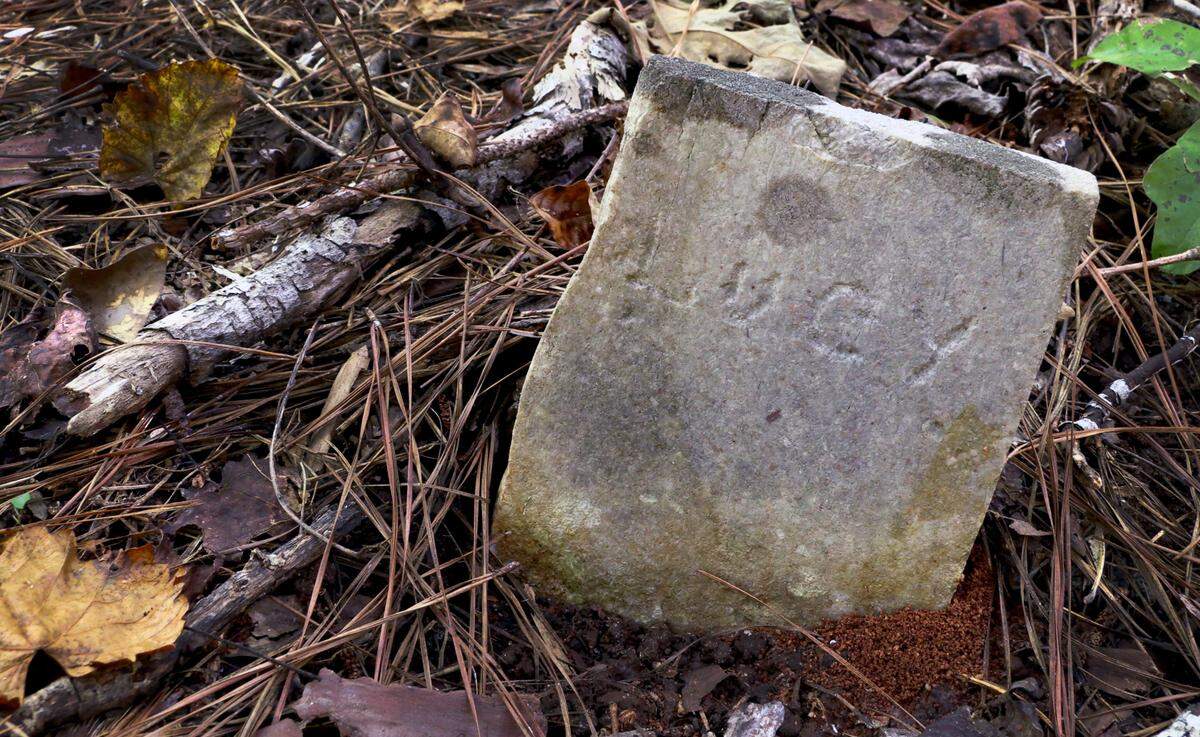
Pierce first learned about the cemetery through her family’s genealogical research and her older cousin Susie Warfield, who Pierce affectionately called the family “griot.” Warfield, who was in her late 90s when she died in 2007, was responsible for keeping track of and preserving the family history.
Warfield went as far back as she could remember. It started with Pierce’s great, great, great grandparents: Jane Hamilton and Owen Hood. Both were born into slavery. Hamilton was born in 1840 or 1845, and records for Hood show he was born around 1836 — less than a decade after Harris County was formed.
The pair remained in Harris County as sharecroppers after the end of the Civil War. They lived in a two-room cabin given to them by a plantation owner. It was likely just up the road from the cemetery. Their children eventually became some of the county’s first Black landowners, Pierce said.
Harris County court records show the land has been a burial ground since at least 1840, and Pierce said some records suggest the first person could have been buried there as early as 1834.
A small creek further back in the woods likely marks the property line, and Warfield told Pierce stories of how Hamilton and the family ate berries and watermelon near the water’s edge. Warfield remembered going to the cemetery as a young girl twice a year to clean it up. Hamilton died around 1915, and Hood died around 1910, Pierce said.
Pierce, her daughters and other family members met with Sara Rozier, a cousin in her 90s who grew up close to the cemetery, when they traveled to Columbus. Rosier led them to a wooded lot catty-corner from Pierce Chapel United Methodist Church.
The cemetery was locked. Employees who greeted the family members when they entered the church said had no connection to the African-American cemetery. The church does maintain a white cemetery directly across the street.
When Pierce and her family left the building, a young man in a pickup truck pulled up and lead them over to the burial ground. Pierce later learned that he was the nephew of the current landowner.
That’s when they saw the car parts and trash.
“It shook me to my core,” she said. “It took me months just to get myself grounded and centered. I simply couldn’t understand how someone could do that to a cemetery.”
Chester Fontenot, the director of Mercer University’s Africana Studies Department, said the conditions Pierce described reflect the disregard and disdain that Black bodies were subjected to throughout history.
Enslaved persons were often buried on undesirable land not being used by the plantation owner. Generations and generations of community members were buried on the same plot of land. The end of segregation in the South offered African Americans more opportunities to bury their dead on better land, he said.
Recovering these ties to their ancestors offers Black Americans some peace and closure, Fontenot added.
“To be a person of African descent in this county is to carry the constant pain of being disconnected from your ancestors,” he said. “It’s kind of like trying to navigate through a storm without a map.”
Restoration efforts
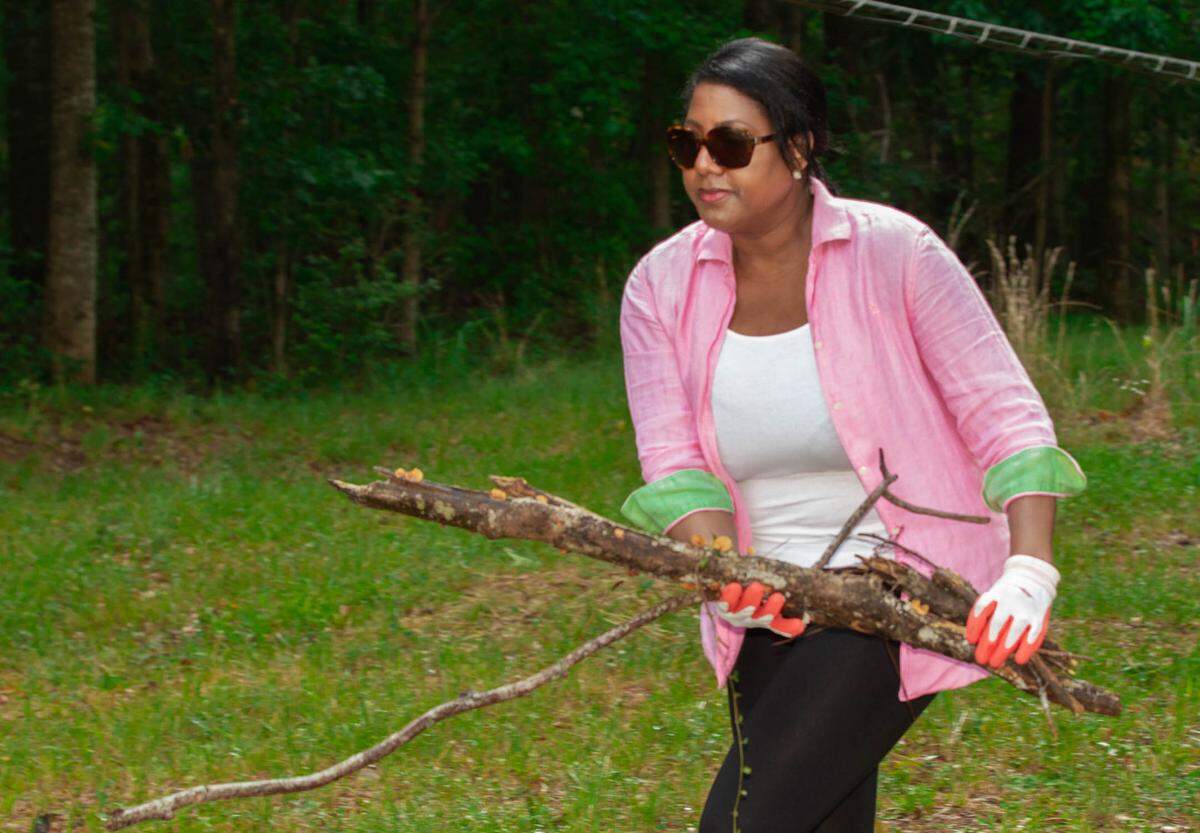
Soon after, Pierce attempted to get in contact with the landowner to avoid any potential issues.
There’s no Georgia law that addresses the right of entry to cemeteries on private property, but state case law has been interpreted to give heirs of those buried in the cemetery an implied easement on the property. They’re allowed to care for the burial plots, according to the Georgia Department of Natural Resources.
Harris County tax assessor records list Sara Bankhead as the owner of the cemetery property. After multiple attempts to reach Bankhead, Pierce finally got a response. Pierce and her family members toured the cemetery with an archaeologist in 2020. Bankhead and other family members were also in attendance, Pierce said.
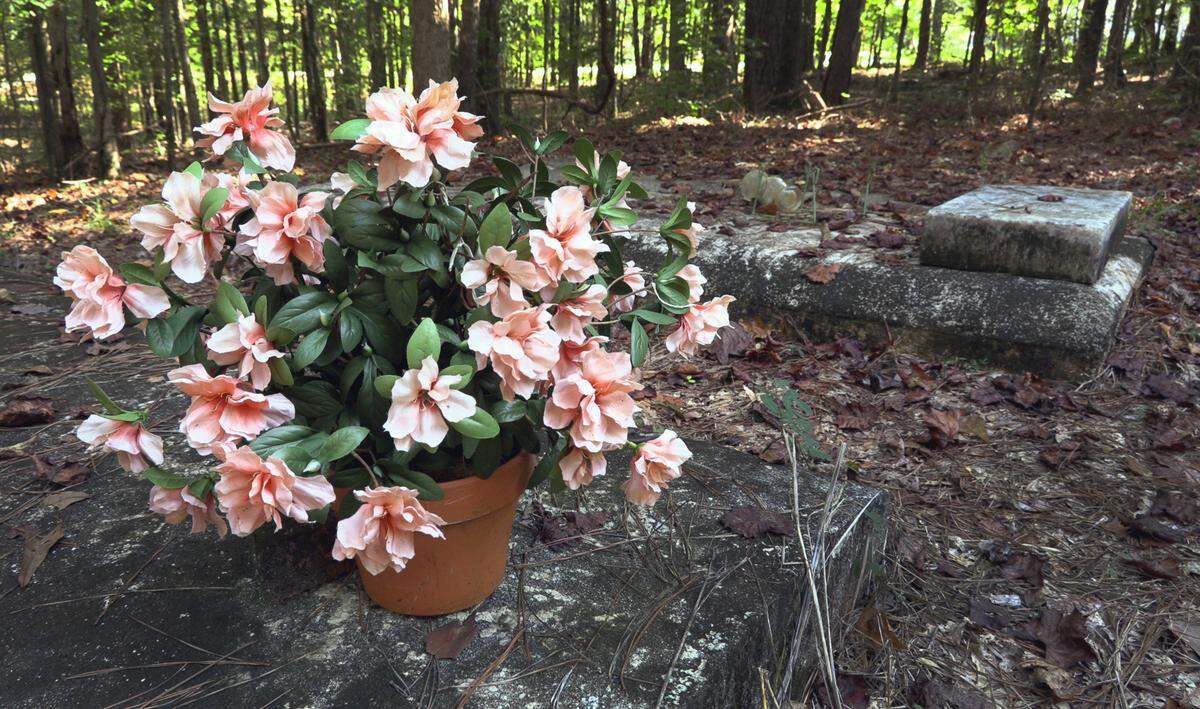
The archaeologist’s preliminary efforts uncovered evidence that those interred at Pierce Chapel were laid rest to rest using West African burial traditions. When the Ledger-Enquirer toured the cemetery with Pierce in October 2021, shards of old, white pottery were scattered on the ground, and small, white quartzite markers were visible. White is a traditional burial color in Africa. Periwinkle and yucca plants covered graves. Pierce said the bodies were buried from east to west.
The visit also revealed the condition of the graves and tombs. A family member had to tell Pierce that the dips in the ground were gravesites. They noticed the power and internet lines for the first time too.
Pierce said the archaeologist told her heavy machinery likely caused the damage, and he advised Pierce on how to best preserve the property without damaging the graves. Pierce and other supporters then worked to learn more about the individuals buried on the property and get the utility lines removed. Pierce has also asked the utility companies to help with rehabilitation efforts.
Georgia Power removed its overhead power line in late 2021. Company spokesperson John Kraft said the line that crossed over the cemetery was installed more than 80 years ago, and the company moved the line when it became aware the property was a burial ground. The company found no evidence that it damaged the property.
“The property was not well known or marked as a cemetery and, over the decades, it became overgrown and returned to a largely natural and forested state,” Kraft said. “We have been actively engaged with this descendant group, so we can better understand the work needed to preserve and restore the cemetery, and have also discussed providing support to assist with cleanup and preservation efforts, but there are access and ownership issues that they must work through with the owners of the property before Georgia Power is able to proceed.”
Pierce maintains that state law requires Georgia Power to repair any damage they caused to the cemetery.
What’s next?
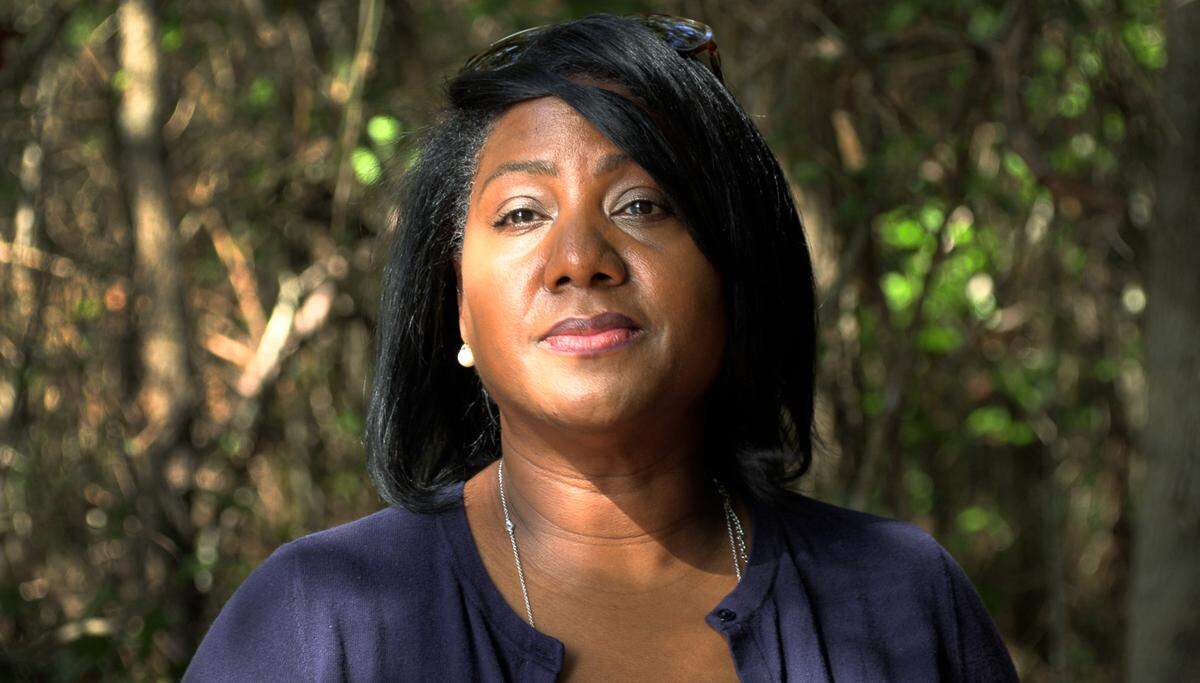
Pierce and other descendants hope to expand their efforts soon. Pierce has offered to purchase the cemetery land. Bankhead could also deed the property to the Hamilton Hood Foundation, a nonprofit Pierce formed to support historic preservation, genealogical research and health education. It’s named in honor of her great, great, great grandparents.
“My reason for (offering to buy the land) is to protect the burials there and protect the land from any other development or destruction,” she said.
Bankhead spoke with a Ledger-Enquirer reporter on the phone for five minutes before she hung up. She said she was unsure what year she gained ownership of the land but that the utility lines were already on the property.
Bankhead said that her brother-in-law kept areas of the cemetery near the roadway clean. She’s also continued to allow the volunteers to visit and clean the burial ground.
“I’m not going to keep them out,” she said. “I think that’s wonderful and admirable.”
Bankhead said she is not unwilling to sell or deed the land, but she hasn’t come to a decision yet.
“They have not said anything to me in over a year about it,” she said before ending the phone call. “And until I make a decision, I’m not going to say ‘Yes, I’m going to do it, or No, I won’t.’ And I think that’s all I need to say.”
Mediacom’s line above the cemetery is still there, but it will be removed next week. A separate aerial line has already been rerouted, company spokesperson Thomas J. Larsen told the Ledger-Enquirer. Those lines are nearly three decades old and predated Mediacom’s arrival in the county.
“We have tried to be very respectful in the way we have gone about re-routing our lines and will continue to be respectful in the removal process. We also offered to make a financial contribution to assist the descendants of those buried at the Pierce Chapel African American Cemetery with their restoration efforts,” he said. “To date, our offer has not been accepted.”
Pierce said the proposed contribution was not enough to replace a single headstone.
Pierce has also assisted in other national efforts to protect African American burial grounds. She’s collaborated with the African American Cemetery Coalition and The Black Cemetery Network.
She’s also a supporter of the African American Burial Grounds Preservation Act introduced earlier this month by U.S. Sens. Sherrod Brown and Mitt Romney. The bipartisan bill would establish a program at the National Park Service that provides grant opportunities and technical assistance to local partners to research, identify, survey and preserve these cemeteries.
The task of uncovering the stories of those buried at Pierce Chapel continues. To date, Pierce and her team have identified close to 100 people buried at the site.
Some are formerly enslaved persons. Some were landowners. Some were baptized in the creek that runs at the back of the cemetery’s property. Some were military veterans. The most recent burial took place in 2000, but the site is separated from the primary cemetery.
She hopes to find more descendants of those buried at Pierce Chapel so she can learn more about their histories. Pierce hasn’t found the exact spots where Hood and Hamilton are buried. They used to have a marker, but she knows they’re somewhere on that land.
She hopes to find them one day.
“I’m happy to be in this space right now and to have the resources that I have to help me do the research and to bring to light these untold stories,” she said. “Everything that we’re doing is a game changer when it comes to preserving historic, Black cemeteries. …We’re trying to paint this diverse tapestry that’s going to illuminate this part of American history.”
This story was originally published February 27, 2022 at 7:00 AM.