
A goat stranded in the Chattahoochee River captured our hearts. Where is she now?
Well, way down yonder on the Chattahoochee, you might see a bald eagle, some blue herons and maybe ospreys.
But goats? You don’t usually see goats.
Perhaps that’s why Chattahoochee Valley residents were captivated by the social media saga of a white goat who found itself out on the rocks in Georgia’s largest river. The 3-year-old female was rescued twice from its waters in a week.
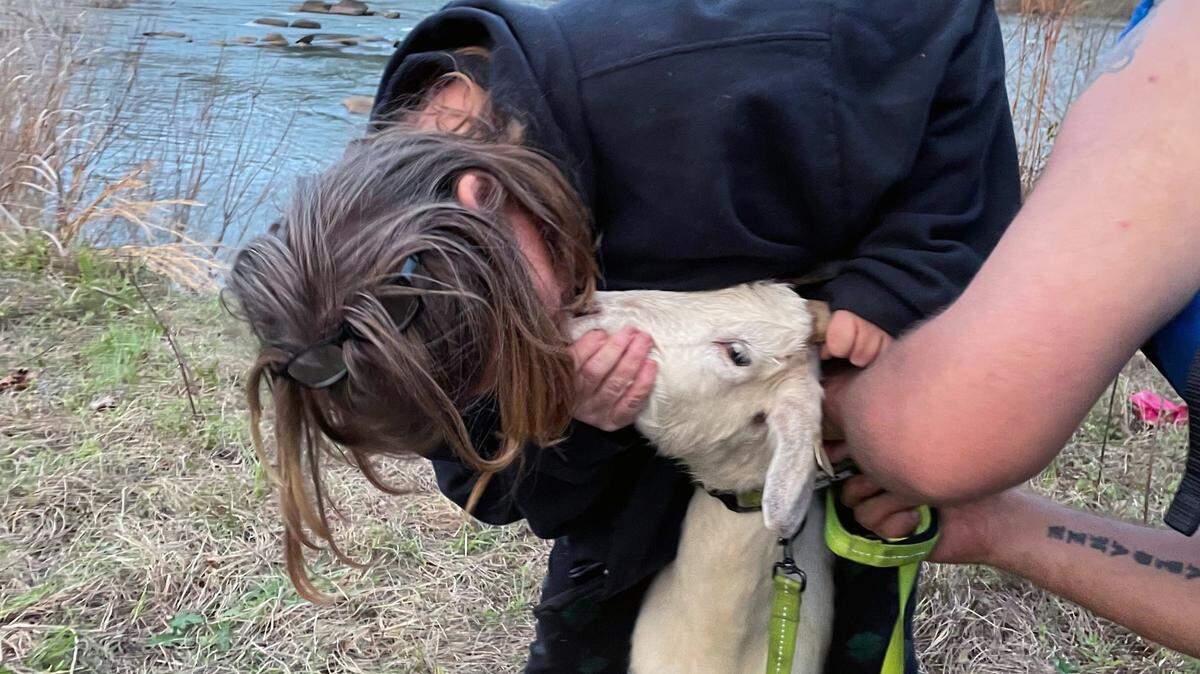
When Columbus resident Kortnee Abram and a team of volunteers finally rescued the goat, the animal was scared and in need of medical attention.
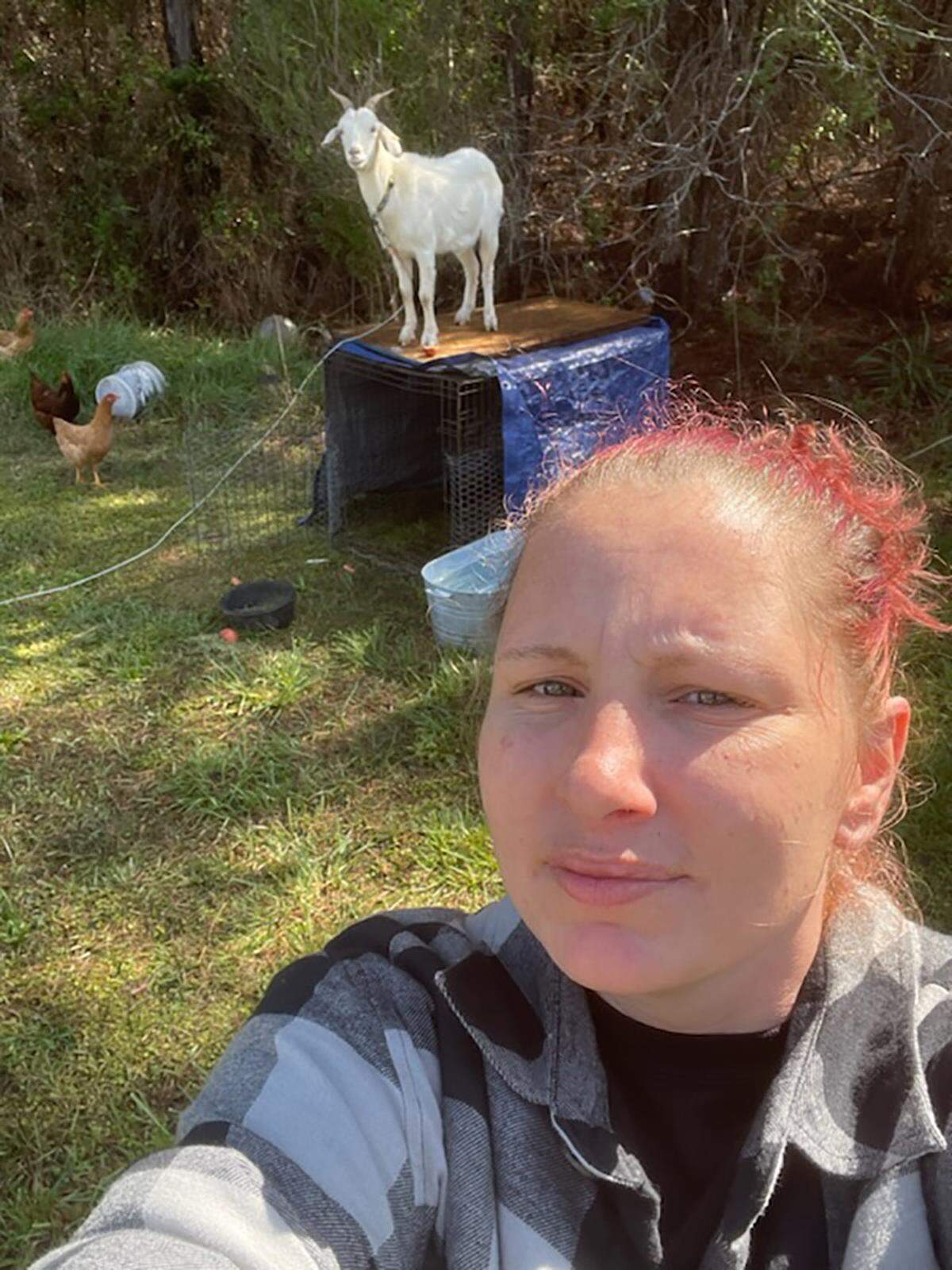
Now, the creature affectionately called Hoochee the Aquatic Goat is resting and recovering in Seale, Alabama on a small farm belonging to one of Abram’s family members.
“She’s very sweet,” Abram said just after she finished feeding Hoochee an apple. “She craves attention but she’s still scared. ...If I walk up to her, she’ll run. But if I stand here, she’ll come right to me. (Hoochee) will come right up to you, especially if you have food in your hands. She like carrots and apples.
The rescue attempts
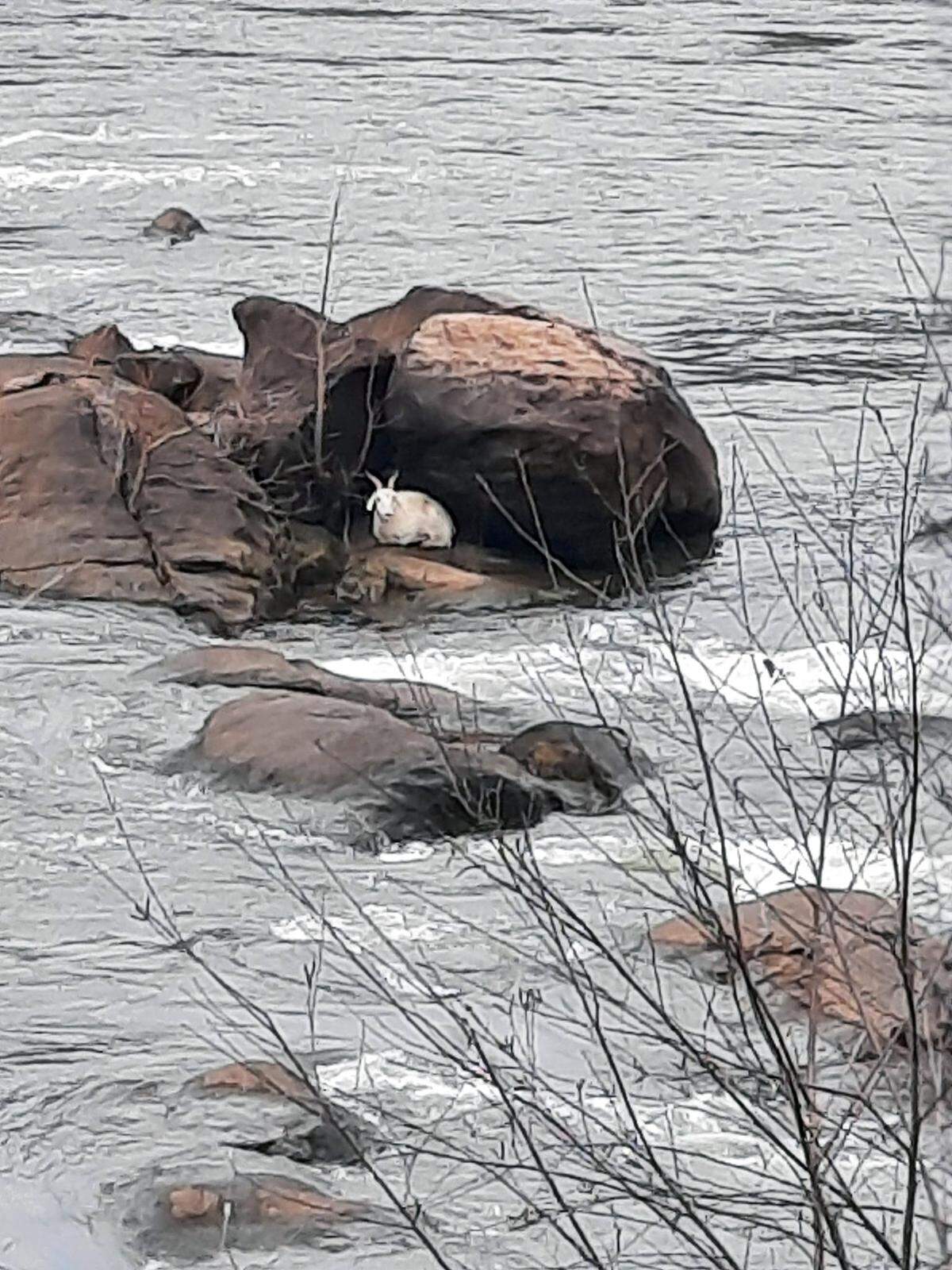
The first known attempt to rescue Hoochee occurred in early March. Columbus resident Lisa Pyburn told the Ledger-Enquirer she saw the goat stranded in the middle of the river just outside her back door in the City Mills neighborhood. Someone called the police.
An hour went by. The sun started to set, and the water began to rise. Emergency personnel determined the water wouldn’t rise any further, and the goat remained on the river but out of harm’s way, Pyburn said in an email.
The next day water levels were down, and it appeared that Hoochee could make safely over to Phenix City. Pyburn watched as members of Columbus Animal Control attempted to capture the goat. Seeing her would-be rescuers approaching, Hoochee quickly ran away and hopped over to Phenix City.
She didn’t stay out of the river for long.
“A little while later I see a group of uniformed people surround the goat on the banks of the river,” Pyburn said. “The goat scampered back out onto the rocks. I saw it grazing on the bank later on. (The next day) (s)he is back out on the rocks.”
Abram and her husband wanted to assist the first time but didn’t go out after learning that rescue efforts were underway. They didn’t take any chances the second time around.
“We just decided that we were going to go out there and get her,” Abram said. “I refused to leave until she was off the rock.”
It took a while to get her out. Rescue efforts started around 4 p.m., and Abram said they didn’t leave until around 8:30 p.m. Cops gave them the okay to proceed. The rescue team started at four, eventually growing to seven or eight people.
Abram and her husband entered the river from the Phenix City side. The current was swift and strong, and their rafts popped before they were able to get in the water.
Plans changed when a bystander said the volunteers could use his boat to get the goat. It took an hour to reach Hoochee, and Abram said the goat’s legs had to be tied before she could be placed on the vessel. About halfway across the river, the boat stopped running, Abram said.
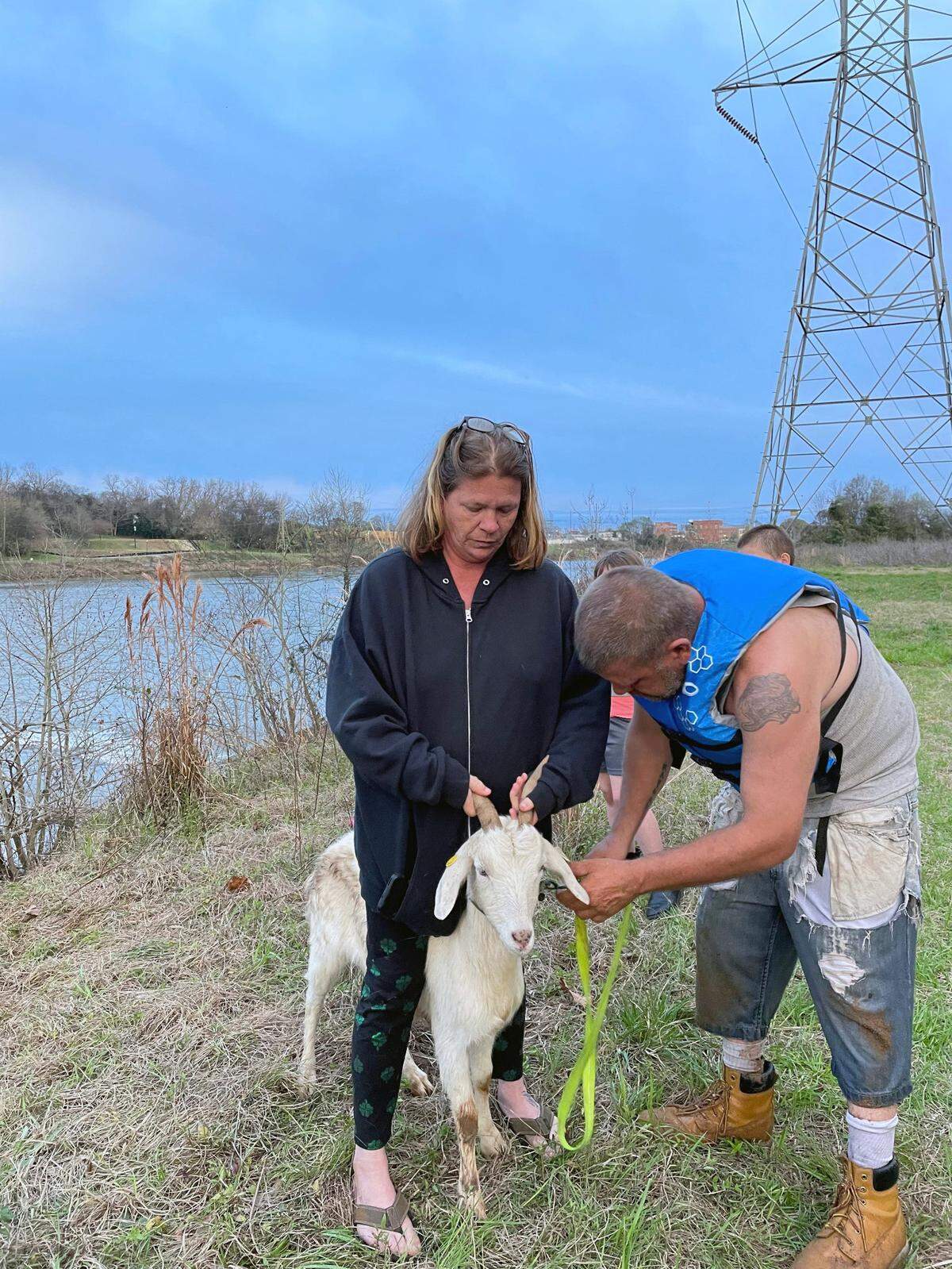
Volunteers on the shore threw a rope out to the stranded boat, pulling the rescue team and goat the rest of the way. Then, they had to get Hoochee up the embankment.
“There’s probably about a seven-foot drop — kind of like a cliff — on the side of the riverwalk that goes down into this flat area. You had to go across the water there to get to the goat,” she said. “It took a lot of us to be able to lift her up that seven feet to get her up to dry land.”
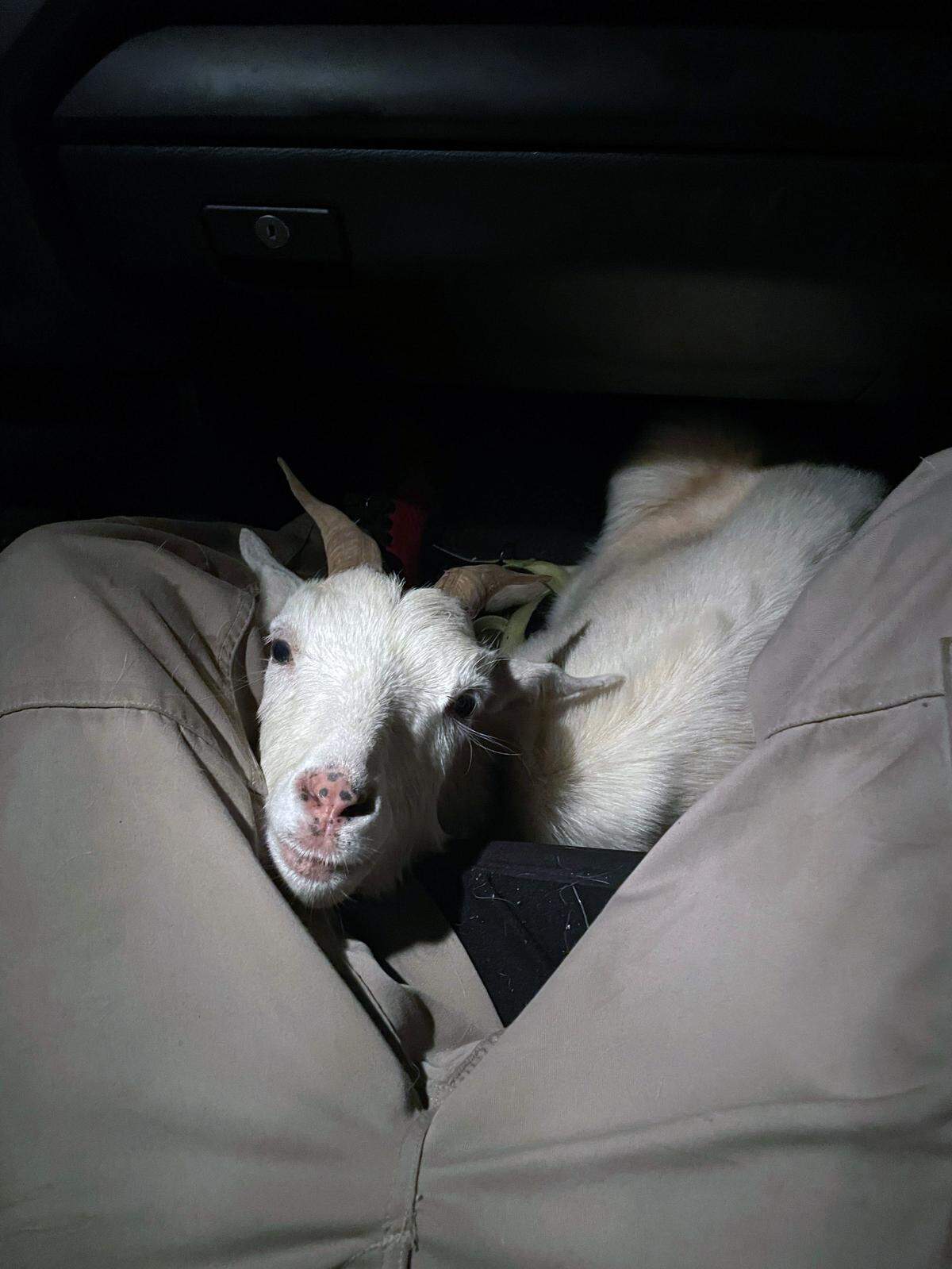
The goat was still skittish once it got off the boat and over the slope. As people began to leave, Hoochee calmed down. The goat sprawled out in the floorboard of the car, resting at the feet of Abram’s husband as they made the journey to Seale.
Hoochee’s current state
The next task for Abram and company was to get Hoochee looked at and find her owner.
Hoochee had a small hole on her head, an injury likely sustained while being on the rocks. The goat was “ridiculously underweight” to the point where Abram said she could put a fist underneath her rib cage.
“She was bleeding down her face and she was extremely scared and extremely skinny,” Abram said.
Finding Hoochee’s current owner has been difficult.
Based on social media tips, Abram thought this goat might be the same one that whitewater rafters have seen on the rocks for months. It was not. That goat is a male, and its owner said the creature did not leave the property that day, Abram said.
“(People on the river) were actually seeing two completely different goats,” she said. “She was out there for about a week (and) it wasn’t even the same rock.”
Hoochee’s tags provided some clues. Abram and her group were able to track down the goat’s original owner in Tennessee. The person had sold his goats long ago, but Abram was able to learn that Hoochee was a purebred Kiko goat born on Dec. 19, 2018. The breed originated in New Zealand and was introduced in the United States in the early 1990s.
The group was able to track Hoochee to Cullman County in Alabama, between Birmingham and Huntsville. That owner also sold her. After that, the trail runs cold, Abram said.
“How she ended up in the Chattahoochee River in Phenix City, Alabama, is beyond me,” she said. “We just can’t find anything. We’ve called all the farms who are in our local area who we know have goats, and none of them are missing any.”
Unless someone can prove Hoochee is their goat, she will remain on the farm in Seale. Her health is improving, and Hoochee is putting on weight. She’s developed a taste for sweet corn. A vet came to the property this week to draw blood and deworm the goat. Abram has a GoFundMe account dedicated to Hoochee’s vet bills.
The goat is building relationships with her caretakers and the other animals out on the farm. Her best friend is an older mixed breed dog named Indy.
“We’re not planning on getting rid of her at all,” Abram said. “We’re actually planning on expanding out our field and building more fences so she has more space to go. ...She’s happy here.”
This story was originally published March 18, 2022 at 5:00 AM.