How Thursday’s ‘Home Is Where The Art Is’ exhibition helps homeless in Columbus
Organizers of the annual art exhibition “Home Is Where the Art Is” hope the show raises awareness of the issues affecting a Columbus vulnerable population.
Presented by The Bo Bartlett Center and the Highland Galerie, the event showcases work by individuals experiencing homelessness in Columbus. The show is being held today, Thursday, April 27.
Organizers also say the exhibition will celebrate their creativity, as well. The opening reception will take place from 5:30 p.m. to 7:30 p.m. at the Food Mill on 2nd Avenue.
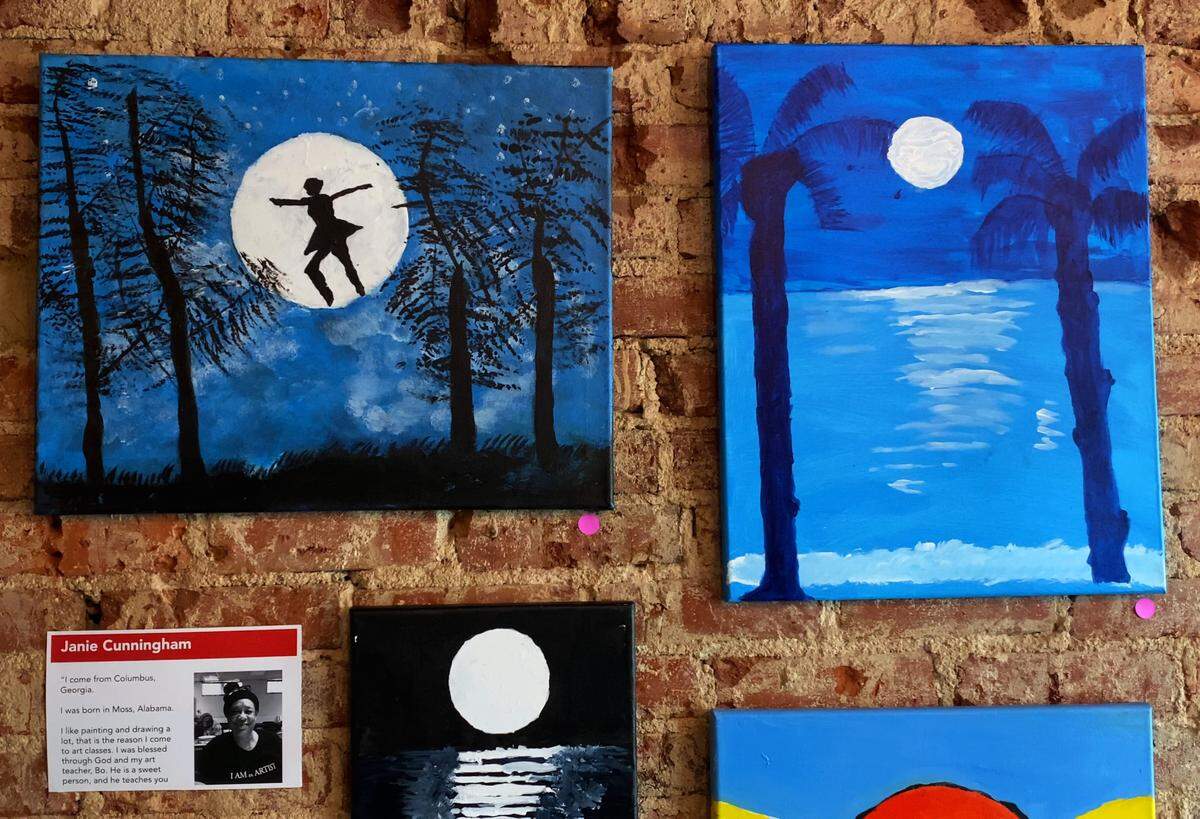
All proceeds from the event will support the participants and art supplies for the Home Is Where The Art Is program at Safehouse Ministries, an organization that works to meet the needs of vulnerable communities in Columbus. The group helps people experiencing homelessness, addiction or transitioning from incarceration.
“It’s been an incredible experience to watch people come to life,” painter Bo Bartlett told the Ledger-Enquirer. “And they have the freedom to put their feelings down.”
Participants have met every Thursday morning for the past nine years, he said. Their artwork will be available for purchase at the exhibition and money from the sale will go directly to the artists.
Along with the artwork on display, food will be provided by The Food Mill and there will be live music.
A silent auction on a selection of Bartlett’s paintings will be held to raise money for the program. The auction will close at 7 p.m., Thursday. Bidding on Bartlett’s portrait of Philadelphia Eagles quarterback Jalen Hurts is currently live on the painter’s Instagram account.
“Art is a universal language,” said Greysen Strumpler, the student outreach coordinator at the Bo Bartlett Center. “Someone can be from a different culture, speak a different language, and I can understand their language.”
Art transforms lives
In 2009, Stacy Underwood, Bartlett’s friend and fellow painter, founded an art program called HeARTworks for the homeless population in Jackson, Mississippi.
After Bartlett’s youngest son died in 2014, he was looking for something to ease his grief and took inspiration from Underwood’s program to begin Home Is Where the Art Is.
“It was something that grew out of my own grief and pain,” he said. “I channeled that into this program, and — right from the beginning — we had a lot of support locally.”
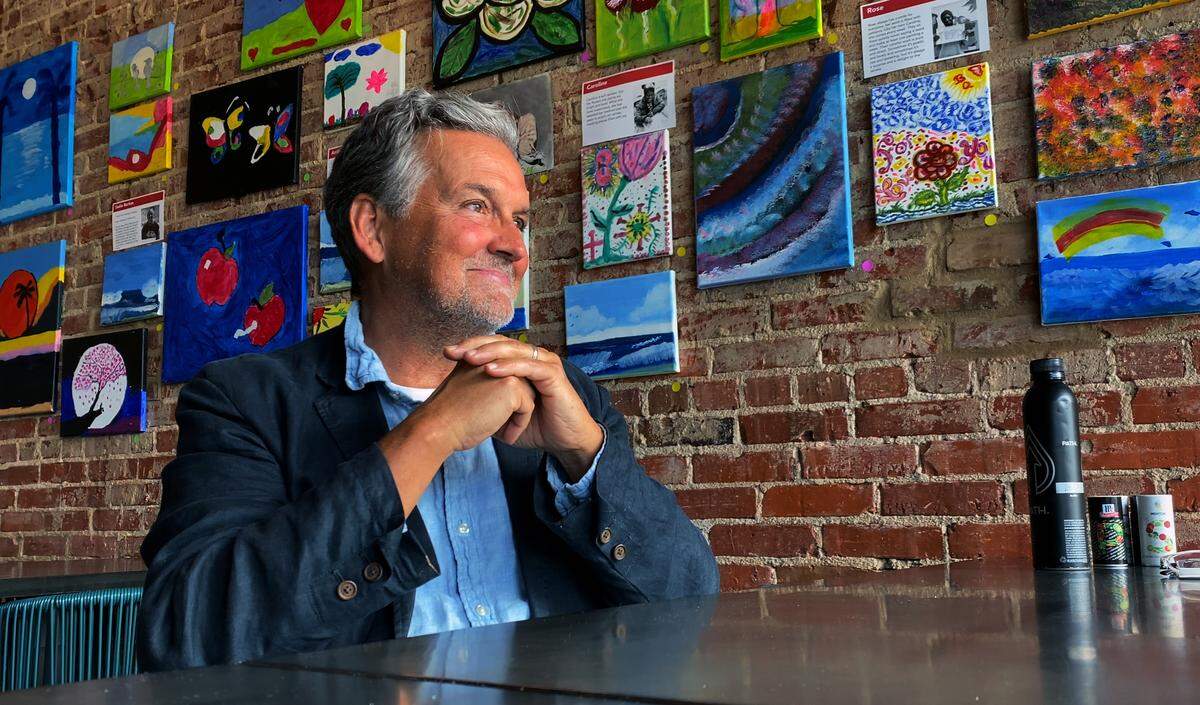
Bartlett and others helping to lead the program found early on that allowing participants to express whatever they want helped to liberate individuals who are usually focused on trying to get their daily needs met.
“Our motto is we believe in the power of art to transform lives,” Bartlett said. “And we’ve seen that so thoroughly in this program.”
One participant, Max, was very closed off when he first began going to the Thursday meetings, Bartlett said. He was quiet and tended to sit in a corner. Max tended to only paint religious iconography because he believed that was expected since the group meets in the basement of a church.
“I want you to paint something from your own experience,” Bartlett told the class one day. “It could be traumatic. It doesn’t matter.”
Max approached Bartlett and told him that the only experience he could think about painting was what he saw when his father died. Bartlett encouraged him to paint something based on that moment.
“And from that minute on, it was like he was telling a story,” Bartlett said. “He just flowered. His ability to transform and put his feelings down just freed and liberated him.”
Max continues to paint, he said, and is now living a fulfilling life in his own house.
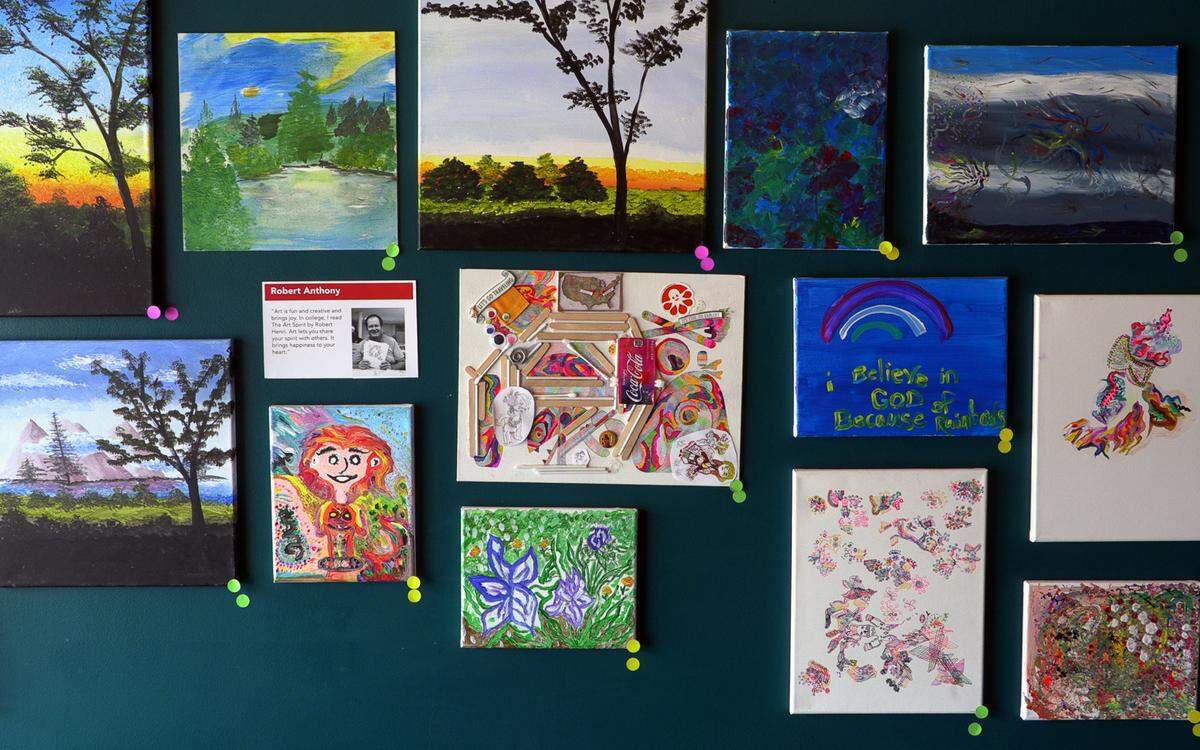
Bartlett hopes that people will come to the art exhibition and purchase participants’ work for more reasons than to support local artists because these individuals will continue doing what they love, he said. People who purchase the art should put it in their homes Bartlett said, and let their guests know about how the program helps.
By participating in Home Is Where the Art Is, individuals are able to grow their autonomy and get in touch with their true feelings, he said. It helps them recognize their short-term and long-term goals.
“(They realize) what they need to do next to move ahead in the world,” Barlett said. “And we’ve seen it multiple times. It’s such a rewarding thing to be able to experience that.”
This story was originally published April 27, 2023 at 10:29 AM.