
Sunday Interview with Jerome ‘Boom Boom’ Bechard: ‘I’m a ducker and a diver, and I cut my losses’
After 32 consecutive Sunday interviews with politicians, business leaders, warriors, doctors, educators and attorneys, it is time to drop the gloves.
And who better to scrap with than Jerome “Boom Boom” Bechard, the Columbus Cottonmouths hockey player turned coach.
Bechard, a Canadian farm boy who grew up on 2,500 acres in Saskatchewan, has been down South for a quarter of a century. After a successful minor league hockey career in Birmingham, Ala., he came to Columbus 19 seasons ago and became the face of the sport in the Chattahoochee Valley.
Nearly two decades later, hockey is still here and so is Bechard. He and his wife, Rhonda, are raising two daughters here. He survived open heart surgery and at 45 has a new lease on life grounded in the work ethic and values cultivated on the farm.
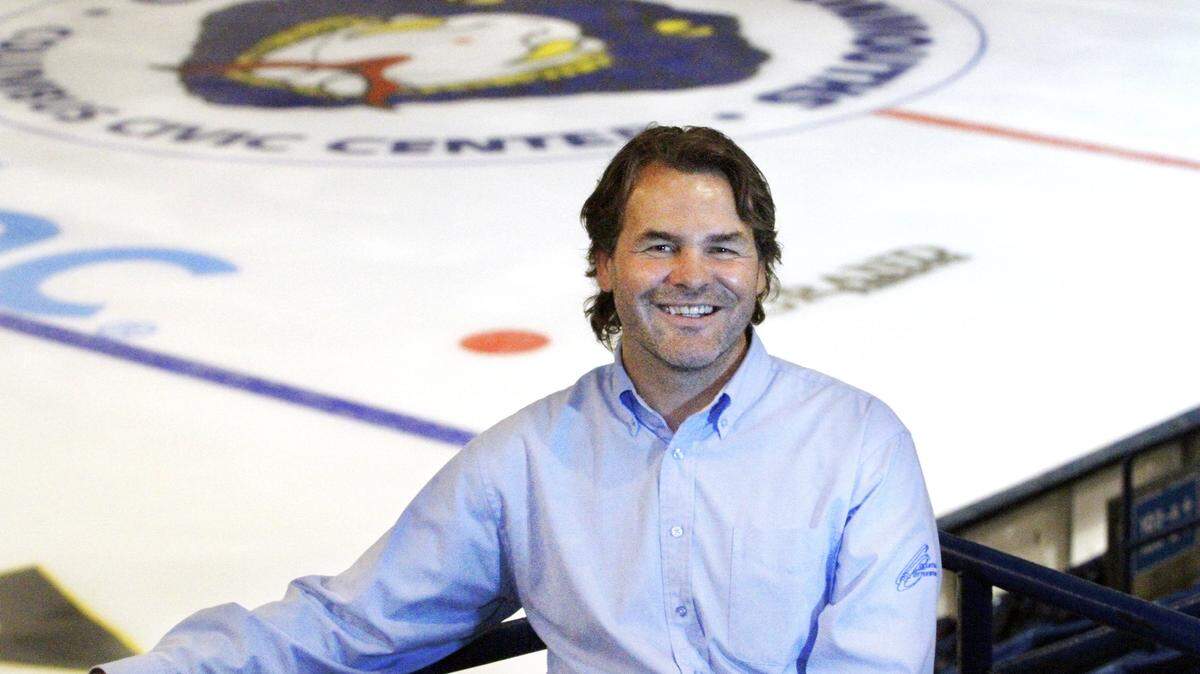
Recently, Ledger-Enquirer senior reporter Chuck Williams sat down with Bechard. The interview took place inside the Columbus Civic Center with the ice as a backdrop. Bechard had just finished a morning skate, his flowing hair still damp from the shower.
Here are excerpts of the interview, with some of the questions edited for length and clarity.
You got to Columbus what year?
1996-97 was my first year in Columbus.
Did you ever think you would be spending the next two decades of your life here?
No, I really didn’t. That very first year my wife was still in Birmingham, we were expecting our first child, Alex, and I was just coming here to see if this was a good option, to see if everything would work out. Obviously, it worked out pretty well.
In Birmingham you built a cult following. You were a player -- an enforcer -- you were Jerome “Stay Out of my Yard” of my Yard” Bechard. How did you become “Boom Boom?”
I don’t know. When I was in Birmingham, it’s kind of the same thing. You’re down South, a non-traditional market, people want to see you scrapping and fighting -- that rough-and-tumble hockey game.
The very first exhibition I was in Birmingham, I grabbed some university kid who had probably never fought in his life, and I one-punched him; knocked him out. “Stay out of my yard” was born right there.
And when we came to Columbus, Charlie (Morrow) was paying me and I said, “You can call me whatever you want as long as I get a paycheck.” “Boom Boom” kind of stuck. To this day, when I walk around town a lot of people don’t even know my first name is Jerome, and I respond to “Boom Boom” fine.
Which nickname do you like best?
“Boom Boom” is shorter to sign as an autograph.
When you say down South, you’re obviously not from around here. Where are you from?
Regina, Saskatchewan, Canada, about four hours from Minot, N.D. My first experience was coming down to Birmingham. I’d never been out of Saskatchewan. Well, I take that back -- I was in New Haven, Conn., for two years. But first time driving down anywhere big and I was driving through Chicago.
Boy, I was scared I was going to veer off into the wrong place and I was driving with my briefcase with about $5,000 cash because I was moving down South. I go through to Kentucky and I stopped for gas and couldn’t understand a word the attendant was saying.
Then I got to Birmingham and it was just a lot of change. Just beautiful country. Coming from Regina, where farm land is just as flat as this table, I never really got to see all the rolling hills and the forest and all that stuff, so it was pretty cool.
So, you’re a Canadian farm boy?
Yessir.
Do you have to play hockey as a kid? Is that like Little League baseball here?
It is. It relates to some of the sports here. We grew up on the farm, small town. When I say small town I’m talking less than 150 people. We were about eight miles out of town, so we got to a point where me and my twin brother played in the small town. There were only 12 players on our hockey team, and we were fairly good.
All of a sudden we outgrow that small town. We got to go some place where there is competition so we can get better. And we went to Rayburn, which is about a 10,000-person city, and we made the hockey team there and started travel hockey.
Similar to travel baseball?
Baseball, soccer. Parents will do anything for their kids to succeed at what they want to do. You put in all the time and effort, hopefully, so they can use that to make a better life for them, whether it’s going to school, or college, or making pro. My parents did that for us.
And you know what, a very small percentage actually make it. But I think being involved in sports teaches you life lessons. It teaches you to learn a work ethic, how to get along with people in different situations. I’m so thankful that my parents got us involved in something. It turned out great for me and it made me who I am and taught me a whole lot of things along the way.
Are you a hockey lifer?
You know what, if my brother called me tomorrow and said he needed help on the farm with Mom and Dad, or whatever, I would probably leave tomorrow. But, with that said, I have a lot of responsibility in Columbus. I don’t want to sound arrogant, but if I left I don’t know how that would affect the whole organization and the dynamics of the Columbus Cottonmouths.
You’ve become the face of this franchise, and you have been since the first puck dropped.
Charlie, Phil Roberto and Bruce Garber -- Charlie and Phil especially -- they marketed me fairly well. When you saw me, you thought Cottonmouths. When you saw Cottonmouths, you thought of me. It is still a little like that today. I want to be that, but I need someone on my hockey team to step up and be that guy. I need to be able to market that person and keep him here for a while.
Fortunately, we have had a little bit of success with that, but I’m still trying to find that replacement. With the level of hockey that we are playing, it makes it hard for me to retain that person because everybody has aspirations of moving up and going to the next level.
How did they retain you through the end of your playing career and then into coaching?
I was pretty realistic with my abilities and where I was in my life. I had already had the opportunity to be in the American League, three NHL camps. I knew I would never make the NHL. So, I kind of switched the focus to what do I need to do.
I’d much rather find a home and stay in that place, organization or city, and make a name for myself than be on 10 different teams in 10 different cities and just travel around and be a nomad in the minor hockey league kind of world.
Chasing small raises, right?
Yeah. You know what? At the end of the day, $300, $400, $500 a week, you’re not going to be able to invest a whole lot of money doing that. This is something I try to tell my guys coming in. You can be something really unique and big in this city and get to know people and make a name for yourself and it might be the most important part of your life because of the people you meet, and you are a Columbus Cottonmouth, and you are an athlete.
What is the toughest part in the life of the minor league hockey player?
I would say the travel.
You ride a bus wherever you go?
We ride a bus wherever we go for the most part. And you know, it’s not even the travel -- but it’s the travel and then play, and then travel and play, and travel and play. I watch the NHL and they gripe that they have to play back-to-back games on a Friday, Saturday. I’d like to see them play back-to-back, back-to-back, four games in four nights.
Give me a four-night schedule.
Let’s go with a three and three. We’re in Fayetteville, N.C., on Friday night. So, we’ll leave Friday morning at 8 a.m. We’ll travel four hours to Augusta and have a bite to eat. We’ll carry on for another three hours; we’ll get to Fayetteville at 5 p.m. We’ll stretch out and get ready for a 7:30 game. We’ll play and be finished at 10:30 p.m. We’ll grab a bite to eat, get on the road at 11 p.m.
We’ll get back to Columbus at 7 a.m. Saturday. We won’t have a morning skate. We’ll get back to the rink at 5 p.m. for a 7:30 p.m. game. And then we’ll jump on the bus at 11 p.m. in Columbus and travel to Fayetteville for a Sunday afternoon game at 4 p.m. We’ll play two games in less than 24 hours. And then come back, probably take two days off and be prepared for the following week. That’s probably the toughest part.
Most of the planet has never been in a hockey fight. Describe a hockey fight. It’s not fixed like wrestling, right?
No. If you were to talk to a true enforcer -- I don’t consider myself a true enforcer -- and I would protect my guys and I would draw attention toward me so the better players could go slower and all of that stuff. Believe me, I would come off the top rope.
Tom Wilson was an enforcer.
Tom Wilson was an enforcer. I would consider myself more as high energy. I did fight, and you know what, I just knew I had to do it and I would fight the biggest guy on the ice for no reason -- or if there was a good reason, it doesn’t matter.
If I survived, I did my job. If I got one punch in, hey, I beat you -- in my mind I beat you. I was a smart enough person to know that I was overmatched, so I wouldn’t go in there and try to throw toe-to-toe punches and stand in there.
I’m a ducker and a diver, and I cut my losses. If I was at a disadvantage, I have no problem covering up and “turtling it,” as people would say. I guess in that role, if I fought a big guy, 6-foot-4, 6-foot-5 guy and I did well, I’m a hero. If I fight a 6-foot-4 or 6-foot-5 guy and I lose and I’m suppose to lose, I’m in a win-win situation, in my opinion.
At the end of the day, just be pretty mentally focused -- and you know what? -- your adrenalin is pumping so much you don’t even feel anything. Plenty of times I would take a punch and get a cut, I have no idea I’m cut open. You don’t feel anything.
It’s part of the game, right?
It’s part of the game. And you know what, and I tell this to any of the kids I go talk to at school, fighting is in hockey for a couple of reasons. One, to change the momentum of the game. There shouldn’t be fights just to be fights. We’re losing a game 2-0, 3-0, nothing is going right. Something has to give, something has got to change whether it’s a hit, a fight, you’ve go to stop the momentum. So, change the momentum of the game.
Two, protecting your players, making them feel safe. As an enforcer, a guy who is supposed to intimidate my best players, my goal scorers, a lot of time the goal scorers are scared and they’ve got to feel safe to produce. That was my job to make those guys feel safe.
So, an opponent didn’t take a cheap shot on Marcel Richard without you coming back at him, right?
And sometimes when you’re being bullied if you push back, they’ll stop bullying you. So, if you are a goal scorer, stick up for yourself every now and then, they’ll probably leave you alone.
What is the message you tell kids about fighting?
You know what? God’s honest truth, I’ve never been in a fight off of the ice -- ever. There’s no reason for it. On the ice, that’s my job to protect my guys, to make us win, to entertain. We are in the entertainment business and that’s what people in the South want to see.
This is going on 19 years here and you’re starting to see and talk to people where “You know what? Fighting is not that important.” Everyone likes to see it here and there, but it’s the one-timers who like to see the scrapping and the physical play. Now after 20 years, we do have some hockey purists in Columbus that just enjoy a fast, up and down, hard hitting hockey game. They don’t need to see a fight.
In my 30-something years as a reporter, you’re probably the nicest guy I’ve ever met in sports. How do you reconcile this really good guy with a fighter?
When I put my skates on and flip a switch, something changes. I care about people in general, trying to help them out. Trying to get them focused on them to be better persons or people, and same thing on the ice.
And what I do on the ice, I do that so my team can win. I would run through that brick wall for a win and it doesn’t matter what happens to this old body. A win is a win, and there’s no other feeling like that.
So, I don’t know what happens, it just changes.
How does that mentality of “I would run through a brick wall for a win” change when you come off the ice and go into the front office? Would you still run through a brick wall to win?
Well, yes I would and I do. The win is different now. Obviously, we want on-the-ice success for the organization. Wins create more fans, create more people in the building, creates a better bottom line.
But at the end of the day, if we win a championship at the end of the year, that’s all bonus and gravy. To me, and I truly believe this, we’re here in Columbus to provide something for this community to come to as a nice family-friendly place to bring your kids, to enjoy yourself, watch a hockey game. There’s so much stuff going on here. ... To raise money for good charities, be good role models in the community. Show kids that you can do anything you want if you put your mind to it and you work hard. That’s why we’re here. If we can win hockey games on top of it, that’s great, but I really think my main purpose here is to help people.
The Jerome Bechard of 25 years ago would have never said that, right? You wanted to win hockey games.
No, I probably didn’t say it; I felt it. I really truly believe that athletes today aren’t as serious about who they are and what they portray to the community. We’re role models. I haven’t been on the ice in 11 years, but I’m a role model. The kids that watch me and see me, my kids, we’re all role models. Athletes even more so because we’re put up on a pedestal. You are who you are and you’ve got to send the right message because you can make a difference in someone’s life by how you hold yourself, what you put out there and how you act.
Has being a parent helped shape that for you?
I have two kids. Alex is a senior at Harris County, and Kylie is in eighth grade. Yes, it has affected me a little bit, but I’ve always believed that right from the get-go. Even from Birmingham knowing that I can influence people for the good, I think that’s the biggest part, to have that influence. You can influence somebody by just making them feel good. That’s all they want is to feel special. I hope I do that.
So, two girls.
I’m so happy, I’m so proud of them.
Are they athletes at all?
They are athletes. They both play soccer and volleyball. Alex is so much like me. Athletic, but not gifted, has to work really hard. She’s kind of the bruiser on the soccer team. She’s the defender and if something needs to be done out there, she’s the one taking someone out and sending a message.
Does that make you proud?
Oh, yeah. Everyone looks back and says, “That’s Boom Boom’s daughter right there; she gets so excited.” Of course, she didn’t hurt anyone; they were going for the ball. Then Kylie -- my little one -- she’s a gifted athlete. And they both are very, very tenacious and work hard and have a good work ethic. It makes me proud, yes.
Dealing with boyfriends yet?
Yeah. Alex’s boyfriend was very scared at first, but I think he’s come to know that my bark is probably a lot bigger than my bite.
Talk a little bit about the people who have helped shape you. You talked about your parents.
Obviously my Mom and Dad.
What are their names?
Clem and Dianne. I have two older sisters, a twin brother, a younger brother. Mom and Dad farmed and between crops and cattle at one point, always worked hard and instilled that kind of work ethic in us.
What do you grow in Saskatchewan?
A little bit of everything, but predominately we grow lentils, canary seed, canola and barley. Hopefully the barley goes malt so we can sell it to beer companies to make good quality beer. And canola is crushed for oil, and then lentils are actually high protein and the majority that are raised in Canada go to Turkey. And then canary seed is just bird seed.
How many acres do y’all have?
We have about 2,500 acres that we grow. Just going back farming-wise, and I could talk farming for a while, too. It’s changed so much that it’s crazy. I was named after my grandfather and if you Google “Jerome Bechard” you’ll pull up me, but maybe down the row you’ll see my grandfather.
It’s a good read. He invented the air seeder and he did not patent anything with the air seeder. If he would have it probably would have changed my life quite a bit. Again, I wouldn’t change anything for the world.
When you came here 19 years ago, Charlie Morrow was the owner and brought you into kind of the face of the franchise. You and Charlie got to be close, didn’t you?
I was in negotiation with Charlie here in Columbus and the New Mexico Scorpions. I had a contract sitting on my counter in Birmingham to go to New Mexico.
And they were putting pressure on me to sign. It was like “I need to call Charlie one more time” because I really don’t want to go to New Mexico. Rhonda is in Birmingham. She was staying in Birmingham. I don’t want to fly halfway across the country and be that far away.
Y’all were just married at the time, right?
Yeah, we had just got married. I made one last call to Charlie and Charlie is like, “Yes, let’s do this.” And knowing Charlie had the RexStixx at the time, we had to go to ballgames and sign autographs, sit in dunking booths, which all kind of lead to you know what, I’m going to do whatever it takes for this organization to be here.
That’s part of my job to promote our hockey team. So yeah, I got to be pretty close. Charlie was just a great cool guy that loved to promote. He did a lot for this community. Unfortunately everything was so short-lived. We came in 1996-97, and he passed away in 1997-98.
Did his illness impact you in any way?
I’m trying to remember what the date was, but I want to think it was mid-February or early March when he passed, and you know what? We all knew Charlie was still watching us and I think it really impacted our hockey team knowing that he had put this group together and I think he knew his time was going to be short-lived, and he wanted to see us win. He wanted a championship.
And y’all won a championship.
We won it that year -- a month and a half too late. Martha flew out to Wichita when we won it and she was on the ice with us holding the cup and we all knew he was there too; he was watching us.
Let’s flash forward 18 years, I guess. You dealt with your own illness, your own mortality last year, didn’t you?
I knew along the way that I had this aortic stenosis and we followed it from Birmingham, actually.
So you knew you had heart issues?
I didn’t know how serious the heart issues were. Backing up, I went for my second NHL camp in LA and did a physical. The doctors there said I had a heart murmur. Went and checked it out. “You’re fine,” that’s all I heard. Two or three years later, I go to Birmingham: “You’ve got a heart murmur. We need to check it out.” Well, they checked it out a little bit more and come to find out its aortic stenosis, or a bicuspid aortic valve is what I have.
They said, “No, you’re healthy, we just have to keep an eye on it, let’s watch it and this and that.” So, every year I went for my physical, heart checkup.
When I came to Columbus, Dr. Macheski with Columbus Cardiology said, “We’ll just keep up with it.” The year I retired Dr. Macheski said, “Thank God you retired. I’m glad you retired. I know you’re in great shape, I’m just glad you retired.”
Then he said, “You know, you’re going to have an operation on this at some point. It’s just a matter of when.” Then it started to change a little bit. The diameter of the valve was closing up and it was hardening. The story was I went to get my hernia fixed. My wife, who is a nurse, said, “You know you’re going to have to see Dr. Macheski and make sure you can get cleared so you can be put to sleep.”
Sure enough, gave him a call and he said, “No, you need to come in and have it checked.” I did a stress test, EKG, and he’s like, “No, we’re not going to let you do that surgery. We’re not going to put you asleep for a hernia. We need to concentrate on this.”
So, from that point, I knew it was getting close to having surgery. It was better to have while I was still healthy and still in good physical condition as opposed to waiting for it. The symptoms were all there. I couldn’t workout. I’d get dizzy.
When did you have the surgery?
It was June 6. A little over a year ago.
You skated this morning.
I feel 100 percent. I’m out-of-shape. I started working out fairly aggressively about a month and a half, two months ago.
Are you back doing full cardio work?
Back to full cardio. Back to 100 percent. It changed my perspective on life. I’m going into the hospital knowing I’m in good hands, but I was ready one way or the other. I was fortunate it wasn’t my time. God blessed me and the doctors to take good care of me, and it worked out great. At the same time, I was ready.
Recovery was a good six months, wasn’t it?
Yeah. A good six months. I was in the hospital for a week and read books and did as much reading and knowledge finding as I could. Everyone said in three or four days you could be out. I was in there for a week and it was tough.
The actual heart and surgery, didn’t feel anything. I was just being cracked open in the chest. It wasn’t fun. Hiccuping or sneezing, oh, my gosh, that hurt. Obviously, family was around and helped out. It’s kind of funny -- I talk to folks now after a year, so rewind last year at this time, people were coming into the office. At this time I was in the office full time: “Oh, you look so good, glad everything went well.” And now I talk to them this year and they say, “Oh man, you look like hell last year.” And I say, “Thanks for not being honest with me.” I knew I wasn’t a 100 percent last year. I had lost a lot of weight and looking at myself I could tell I didn’t have my color.
Are you at your playing weight right now?
Kind of at my playing weight, yeah.
What is it?
205. I probably should have been 185 when I was playing.
Talk a little bit about skating. That’s a cardio workout, right?
I think skating is one of the most dynamic exercises you can do. Your core and your bottom half of your body is engaged almost all the time. When I say engaged I mean you have to keep your thighs strong, engaged and poised. You’re always moving, so it’s one of the best workouts there is. A full body workout, opposed to running.
How old were you when you got your first skates?
Probably 5 or 6.
So, you’ve been skating for 40 years.
Forty years -- and still not very good at it. I’ve made a living at being a very bad skater. When I do go to school and talk to kids, it’s a very good message. I’m just average at everything I did. What made me better than everybody is what I put into it. That fearlessness, the intangibles that come with the game.
And whether you’re a football, baseball, hockey player, you can’t make up for the intangible. You can have all the talent in the world, but if you don’t put everything you have into it...
You were talking about Charlie Morrow. You are also very close to Wanda and Shelby Amos, the current owners of this franchise, right?
Yeah. Wanda and Shelby are gifts. They are really good stewards to the community. They are totally different from Charlie. Charlie was an extrovert, all over town, civic clubs, this and that. Wanda and Shelby are introverts.
Great folks. They do a lot for the community, but do it quietly. I feel fortunate to be involved with them and be a part of their family, because they treat us like family. They have helped us tremendously and they’ve done a lot to keep this hockey team here and going and involved. There’s not a whole lot of people in town that would keep a hockey team and probably not make a whole lot of money doing it.
Do you think sometimes this community takes the hockey team for granted?
I think a little bit, yes. And as the coach and general manager, I don’t think it’s good business to say the community takes us for granted, but I think they kind of do. It’s my job to do things to get you off your butt to come down to the hockey rink.
And what do I need to do that? I need to engage my hockey players with all facets of the community, get them engaged with the schools, get them engaged at the Boys and Girls clubs, get them engaged at different places.
Kids will bring their parents to a hockey game, right?
Kids will bring their parents. I go back to being good role models and sending the right message, and that’s all part of it. At the end of the day, we’ve been here for 19 years.
There’s no baseball across the street.
There’s no more baseball, which is unfortunate. Hockey, I think at the right time of the year, other than a month and a half too early because we have to deal with football, whether it’s high school or the SEC.
Do you have a favorite SEC team?
I don’t. I like watching the SEC in general. Obviously, I played in Birmingham so I like watching Alabama. With the proximity of Auburn being so close, and of course us being in Georgia, those are the three teams.
That’s the political answer.
That is the political answer.
What do you have to do to keep this franchise going here?
After 19 years there’s still people who haven’t been to a hockey game, and I’ve got to find out why. Why have you not come to a hockey game? “Financially, I can’t afford it.” OK, I have a cheap ticket for you somewhere along the line. I’ve got to find out how do I get to you. We have to do a good job to get out and get ourselves engaged in the community. We’ve been here for 19 years.
I’m pretty sure the first four years when Charlie and Martha had the hockey team, we didn’t make any money then. When we went to the East Coast League is when Wanda and Shelby first bought the team I think in 2001. When we went to the East Coast League, I know for sure they didn’t make any money. I’ve been the head coach and GM for the last 10 years, and in 10 years we’ve hit a good mark to break even one time.
I look back on how we met that mark. When I first took over all I thought about was kids, kids, kids. Go to the schools, get them engaged, do this, do that. It happened. Our attendance rose the first year from 2,500 to 2,800. Second year to 2,800 to 3,200.
And we broke even.
Are you doing that this year? Are you working the kids?
Yes.
So, you’re back to that philosophy.
And you know what? ‘07 and ‘08 hit. Stock market, the economy crashed, and I think right now the perception of the economy is a little bit better. And I think everybody is starting to feel that a little bit.
So, get back to the basics, we’re working closely with the school district and starting a reading program. We’ve always practiced from 10 a.m. to noon every day. About a month and a half ago I thought, “I run the team. We can practice whenever we want. We can practice at 3 in the afternoon if we need to.” Why are we doing that if I need to have my hockey team at a school from 8 a.m. to noon because that’s the only time that I can go and read to them and show them that reading is important? And the more you read, the better you’re going to get better at everything, and you’re going to be a better student in general.
“Oh, I can’t come to your school today. We have practice.” I can change that. We’re working on trying to get that going. If they need us at 10 a.m. on Tuesdays, our practice will be at 1 p.m., or if it’s on Wednesdays.
But we’re really trying to get out there and work that. And then there’s that personal connection with a child who will say, “You know what, you’ll never guess who read to me today?” whether it was Tommy Maldonado or Andrew Loewen or (Shannon) Szabados, which is pretty cool.
And you can get them in the seats?
We can get them in the seats.
How is a 45-year-old Jerome Bechard different from the 21-year-old Jerome Bechard that was trying to make the NHL roster?
I think I’m calmer. Again, the beard is a little grayer, which it’s not on here because it’s gray. I think that comes from learning and life experiences.
Going to NHL camps and realizing what it took to get there and then what it takes to stay there, and knowing I had the internal part, the desire and work ethic to stay there, but being smart enough and realistic enough in who I am and my abilities, and knowing that I didn’t have the God-given talents to stay there.
Knowing that, “OK, I’m not in the NHL. No big deal. I can still have an impact on other lives.” That’s what it’s all about for me. I have my office stuff, I have my 18 guys in the locker room, and everyone around us, and it’s my job to make those guys better people.
Did you ever think growing up in Saskatchewan you would be a Southern boy?
I don’t have an accent.
Oh, you’ve got an accent, brother!
Not a Southern accent. No, I never would have thought I would call this home. But this is home.
This story was originally published October 11, 2014 at 9:53 PM.