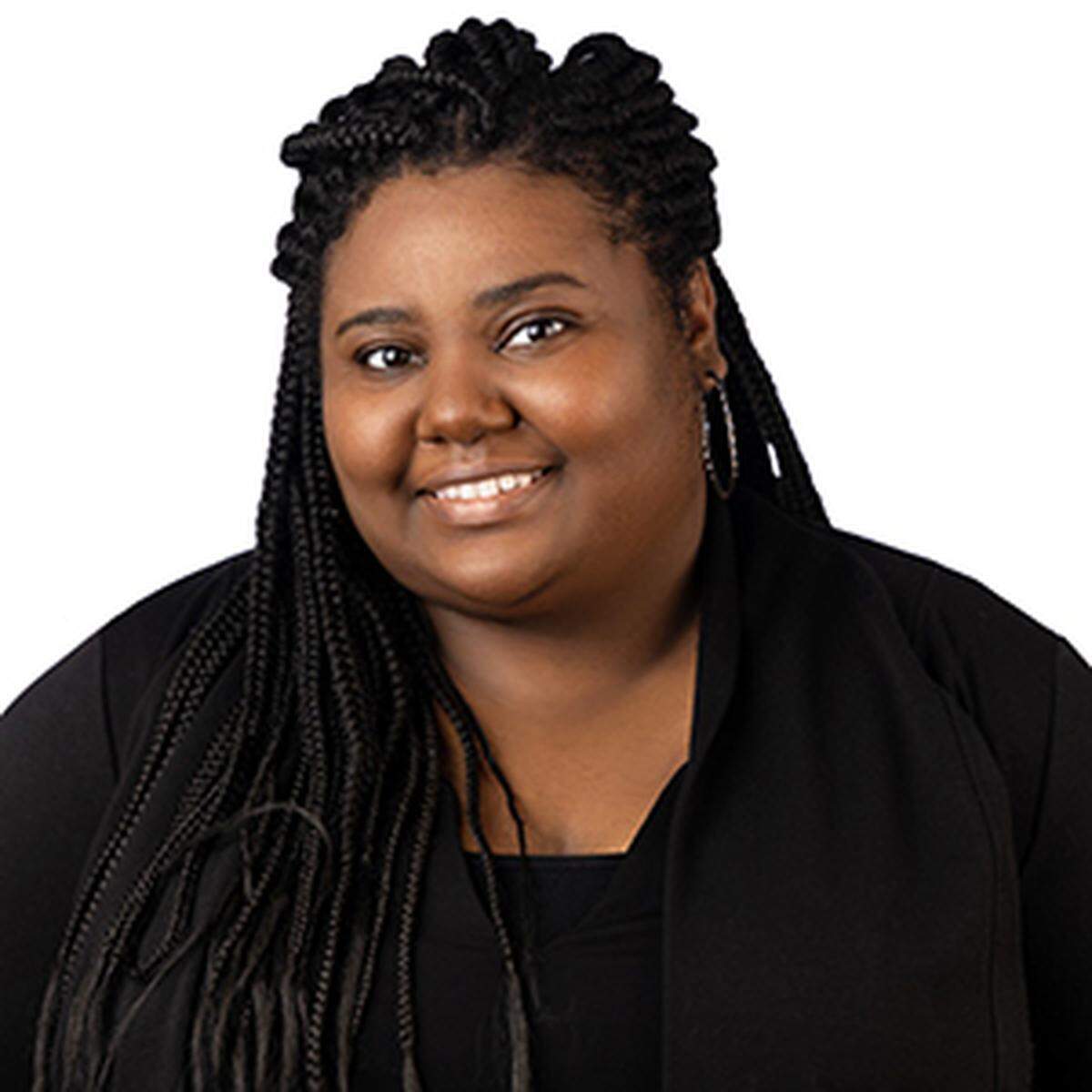
Discover how these Columbus residents connect their personal stories to Black history
While there is an effort to focus more on Black history and culture year-round, Black History Month still offers a moment for people in Columbus and around the country to learn more about this part of American history and culture.
Each year, the stories of famous Black community leaders, Black inventors and tragedies or achievements are highlighted. But Black history is woven throughout the personal history of everyday people.
The Ledger-Enquirer spoke with Columbus residents to learn more about how their personal histories connect with the larger story of Black history in America.
Here are their stories:
From laborer to business owner
Taniesa Taylor’s mom moved from New York to Columbus in 2008, but Taylor, who also is from New York, swore to herself that she’d never move to Columbus.
“God had other plans,” she said.
Taylor was a loan officer. The mortgage bank she worked for was looking to expand in Arizona. So, Taylor expected to move to Arizona — until her mom became disabled.
Three months after her mom moved to Columbus, Taylor followed.
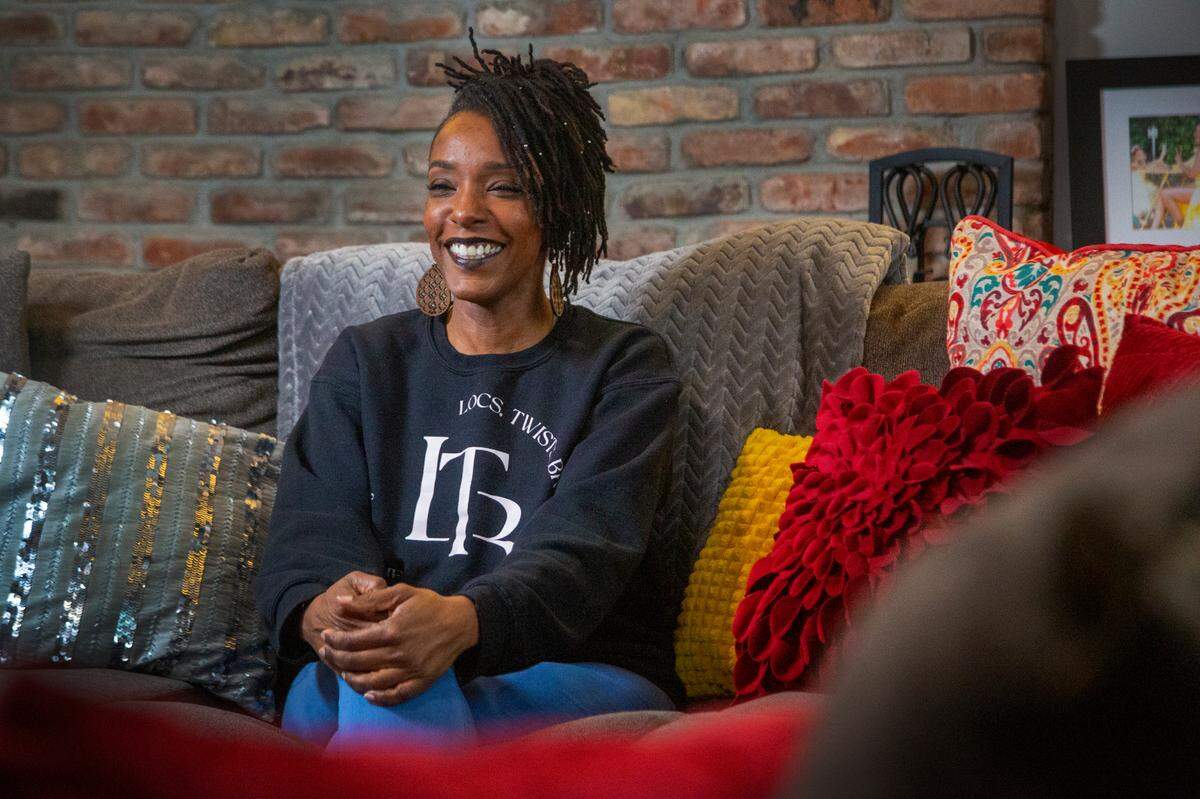
It was hard for Taylor to find a job in Columbus, and she worried how she’d support her family while working in a restaurant and earning about $9 an hour. This was similar to what Taylor, who was in her mid-30s, earned when she was 19 years old.
One day, she was introduced to a man named Jimmy Watts, an insurance agent with State Farm. In the neighborhood where she grew up, Taylor hadn’t known any Black people who were business owners or homeowners.
“I didn’t know it was possible,” Taylor said.
Watts gave Taylor the opportunity to get her insurance license and introduced her to other successful Black business owners. Taylor was inspired and encouraged.
“I didn’t come from a family of college graduates,” she said. “So, I was the first person in my family to graduate college, own a home and start a business.”
Eventually, Taylor, who is now 45 years old, felt empowered to start her business as a hair stylist, specializing in braids, locs and twists.
Nationwide, Black business owners own about 3.5 million businesses and employ over 1.2 million people, according to the U.S. Small Business Administration.
The more people grow financially, Taylor said, the more they’re able to impact others.
“You’re able to afford to give opportunities to other people, to mentor other people, to be an example of leadership and growth,” she said. “If we all impact each other that way, and we grow forward, there’s nothing we can’t do.”
Reflecting on sacrifices
Demetris Knighton, 40, is a firefighter and paramedic, working for the Maxwell Air Force Base and Harris County EMS.
He grew up in Harris County and attended paramedic school in Columbus.
Knighton saw how hard his parents worked throughout his childhood. Both came from large families, and both served in the U.S. Army. Knighton also had other family members who served in the Army.
His father was in the infantry and was stationed at Fort Moore (formerly Fort Benning) as a drill sergeant. Knighton doesn’t remember what his mom did in the army. She left the military when he was young.
“She held the fort down,” he said.
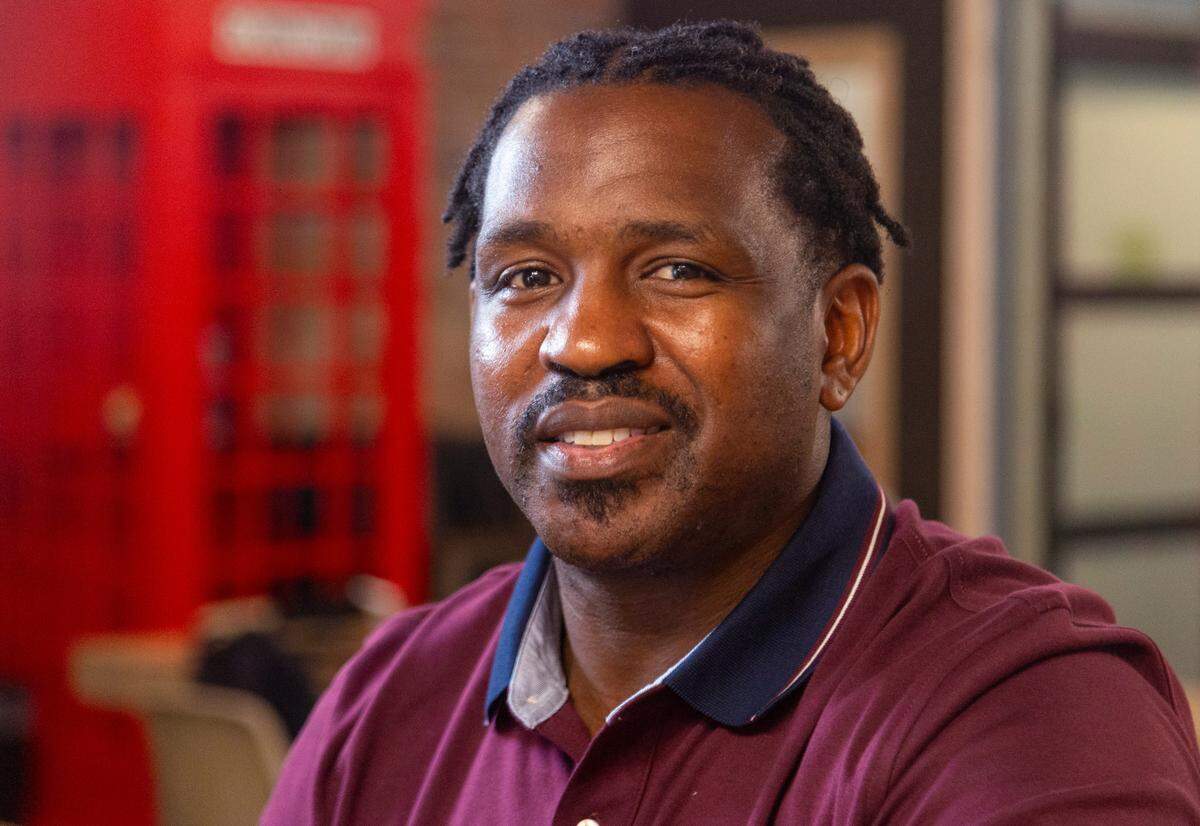
Following in the footsteps of his family, Knighton joined the Marines.
“That turned into eight years of adventures,” he said.
During his time in the military, Knighton worked in information technology and intelligence. Knighton understood how far the military had come in race relations by the time he served.
In communications, there were two sides of work to be done.
“Historically, Black people were more in the radio and wire,” Knighton said. “And the smart people were on the computer side.”
But during the time Knighton served, everything was more diverse. People from all backgrounds were placed in any role, he said. The Marines would break down people, so everyone was on equal footing.
Because of this equal footing, Knighton said, he and his peers understood the importance of working together.
Knighton credits his good experience in the military to the sacrifices made by Black service members in the past.
“If those guys didn’t fight and prove that they were just as capable for those other jobs, then I wouldn’t even have had the option to be in one of those jobs,” Knighton said.
He is optimistic that race relations will continue to get better.
“I like a lot of things about the new generation because they don’t care like we did,” he said. “They’re friends with who they want to be friends with. They love who they want to love.”
Support in education
Randalette Williams, 55, initially majored in sports medicine.
She and a classmate, Elizabeth, were the only two Black American women in the program. There was only one Black man in the program.
“We watched him and how they stayed on him,” Williams said. “You’ve got to prove yourself. You’ve got to prove yourself 10 times more than the next person.”
Williams was told that she would never be able to complete the program. She was just shy of meeting the requirements. Williams tried to stick it out because she’d always wanted to go into sports medicine, but the pressure and lack of support became too much.
“I’m like, ‘It’s not worth the stress,’” Williams said. “If you don’t have any faith in me — if you’re not willing to help me — and you (say) more jabs and discouraging words then that’s fine.”
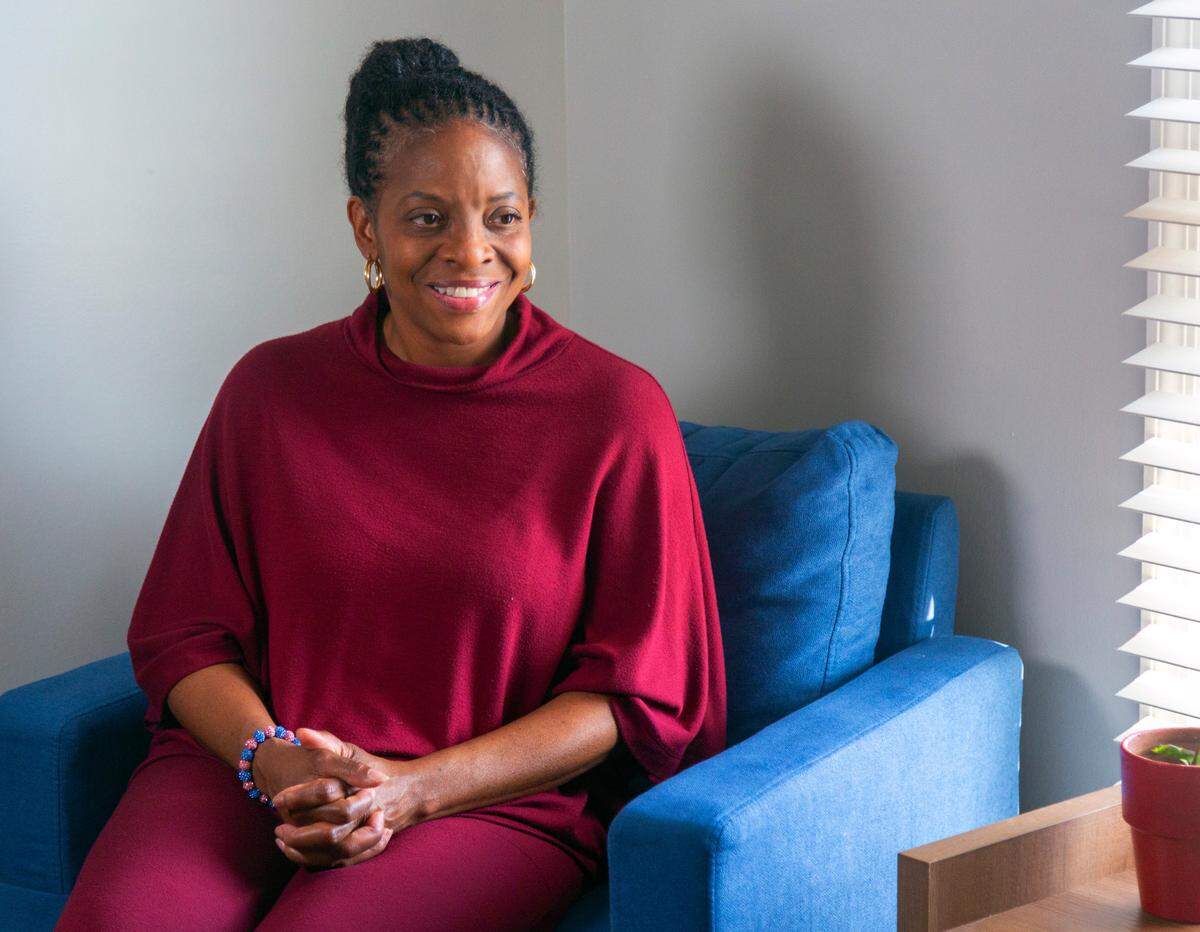
Williams pivoted into a 23-year career as an educator in the Muscogee County School District. She taught physical education for three years before becoming a guidance counselor.
After her time with the MCSD, Williams was a GEAR UP Georgia program coordinator at Columbus State University. The program helps students in grades 7-12 prepare for college and careers.
Guiding students through their education and introducing them to different career paths became a passion for Williams, who was the first African American treasurer of the Georgia School Counselors Association.
Williams enjoyed helping students find what they are skilled at and showing them how to turn it into a career. There already was an African American men’s initiative on campus, she said, and Williams wanted to integrate these students into the GEAR UP Georgia program.
“I thought it was very important for them to see what the next level of Black male experience would be, specifically in a college setting,” Williams said.
During her time in education, Williams discovered how important it was for young Black students to see representation in teachers and mentors.
“Any opportunity for a Black male educator to come in, they always made an impact,” Williams said. “They liked seeing themselves in an adult male, an adult role model.”
Only about 1.3% of the nation’s public school teachers are Black men, according to the National Center for Education Statistics National Teacher and Principal Survey.
Encouraging people to become teachers and retaining teachers has become difficult in recent years, she said. But now that she’s retired and has seen some of her successful students as adults, Williams believes the career is worth it.
“Anytime one of them can come back around and thank me for something or remember when I said or did something, that’s very rewarding,” she said.
Her biggest supporter
Tikiera Ford, 22, graduated from CSU with a bachelor’s degree in sociology in December.
Ford is from Eufaula, Alabama. Her family moved to Columbus about eight years ago. Eufaula is a small town, she said, and there wasn’t much opportunity there.
After moving to Columbus, Ford’s mom, Felicia Daniel, built her business named Georgia Peach Notary. Her aunt also was a business owner. Seeing these successful women in her family motivated Ford, she said.
“Seeing them make something out of nothing and push the boundaries of stereotypes that are placed on Black women was very inspiring for me,” Ford said. “That is what led me to keep pushing myself.”
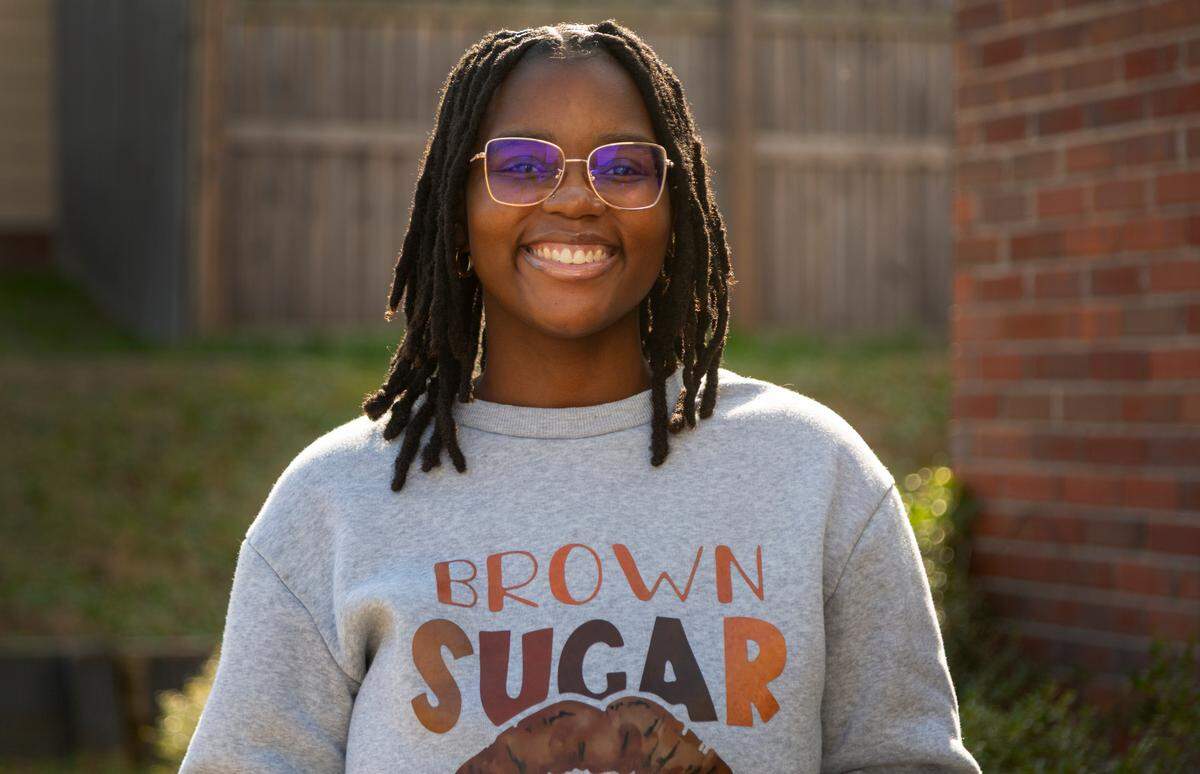
Very few people in Ford’s family have earned bachelor’s degrees, she said. Much of her family grew up in deeply rural communities and didn’t have the resources or opportunities to pursue college, Ford said.
“They grew up in a time where a lot of people weren’t really interested in Black Americans getting an education,” she said.
However, Ford found the opportunity to start taking Columbus Technical College classes through dual enrollment while attending Northside High School. Her mom, who has an associate’s degree, was Ford’s biggest supporter as she did dual enrollment in high school and went on to graduate from CSU.
Her mom listened to Ford’s complaints, helped when she couldn’t settle on a major and was supportive when Ford began to lose motivation. It was worth it when they celebrated Ford’s graduation.
“I know that she definitely was super, super proud of me because I am one of the very few people in my family to have a bachelor’s degree,” she said.
A 2024 study by the Pew Research Center found that 38% of U.S. Black women have earned college degrees compared to 26% of Black men.
Preserving family history
Kristi Pitts, 42, owner of the Crowned Beauty Co. in Columbus, grew up in the South Side of Chicago.
While her father always had lived up North, her mother and her family moved to Chicago from Jackson, Mississippi. Their move was part of the Great Migration, during which millions of Black Americans moved out of the South into other parts of the country.
Her mother’s family were sharecroppers in Mississippi, Pitts said, and life was hard for her mom in Jackson.
She hadn’t known as much about her dad’s family history but has tried to research it more since he died a few years ago.
“It really hit me that whatever history I had kind of went with him,” Pitts said.
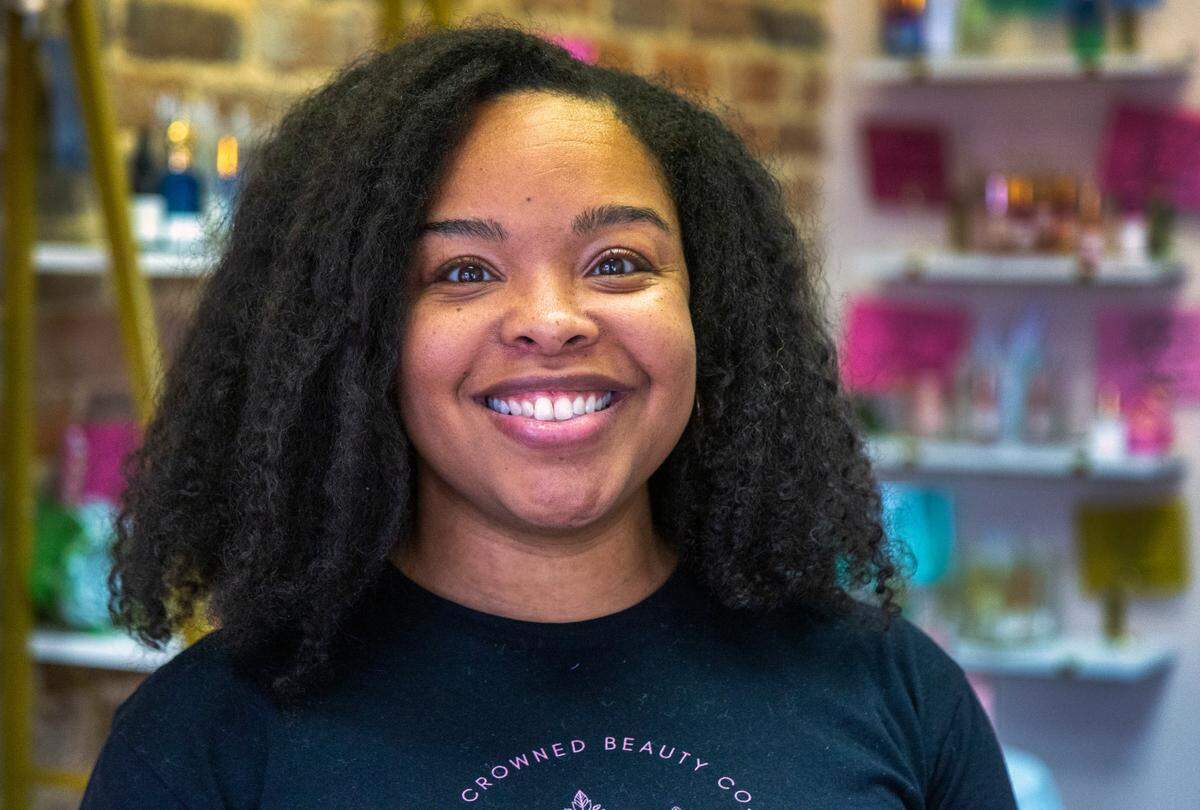
She found that she was related to civil rights activist Archibald Carey Jr., who worked closely with Martin Luther King, Jr.
“I feel like that greatness has inspired me to be great, even though I’m doing something different,” Pitts said.
Pitts has continued to try to find more of her family history, tracing her father’s line to a freed slave in Athens, Georgia. She and her sister also found more family history on her mom’s side of the family they traced to the Ivory Coast.
It’s been harder to put the pieces together on her father’s side of the family, she said, but Pitts still is digging. Tracing family roots before the 1870 census is difficult for African Americans because of lost or poorly maintained records.
But this fact shouldn’t discourage people from trying to learn more about their ancestors, Pitts said.
“There’s something about knowing that you came from something great and a great people that really spurs you on,” she said. “It makes you feel very blessed and unique.”
This story was originally published February 24, 2025 at 10:46 AM.
CORRECTION: The names of Kristi Pitts and Demetris Knighton were incorrect in a previous version of this story.