
‘People are just in awe.’ Columbus glass beehive shows secret life of honeybees
The inner workings of most beehives are a private matter — a complex operation that exists entirely out of human sight. But a new glass beehive at the Columbus State University Oxbow Meadows Environmental Learning Center offers visitors the rare opportunity to get up close and personal with a honeybee colony, allowing them to witness every stage of life in the hive.
Built and cared for by former Chattahoochee Valley Beekeepers Association president Jim Ellis, the hive was unveiled May 12 at the learning center. Ellis said it took 11 months to construct the hive and more than two years to engineer it to work with the building’s air conditioning.
Now, it’s like a normal outdoor hive; the bees have complete control over the moisture, temperature and air flow, which is essential to the health of the colony, Ellis said.
“People are just in awe. They’ve never seen anything like this,” he told the Ledger-Enquirer. “You can actually see how the bees live, and you can see it live under glass. In a sealed beehive, you can’t see this.”
Inside the hive
Ellis stumbled into beekeeping 38 years ago while photographing a wedding. He spent nine years studying beekeeping at the Young Harris Beekeeping Institute at the University of Georgia. Now, he has a master beekeeping certification. He works in structural pest control — the management of pests that infest buildings and structures.
The colony residing in the glass beehive came from a structural pest control project in Lumpkin, Georgia, Ellis said. He moved the queen to the glass beehive, and the colony has been flourishing ever since.
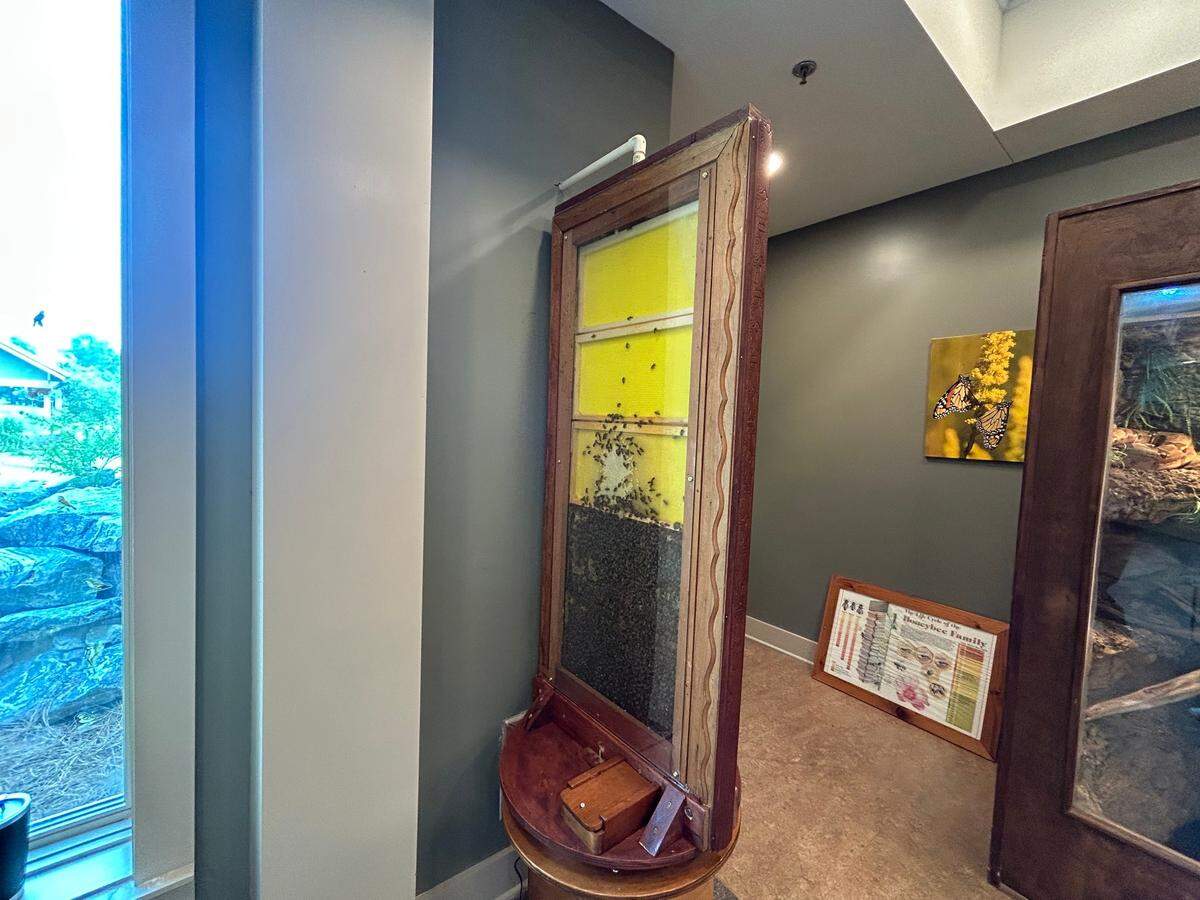
The hive consists of five frames filled with plasticell wax foundation, which the bees use to make honeycomb, Ellis said. A door at the bottom allows bees to enter and exit the hive, and a ventilation tube at the top allows for air flow.
The hive is about half the size of typical beehives, which have 10 frames. A few thousand honeybees live in the glass hive, Ellis said, but colonies can have upward of 130,000 bees.
Besides watching the bees come and go, visitors also can get a glimpse of bee behavior in the glass hive.
“You can actually see bees coming in doing their little dance,” he said. “There’s two dances. There’s a wagtail, and there’s a round tail, which tells the distance and the direction of where the nectar source was found. … It’s fascinating.”
It takes worker bees 21 days to fully develop, Ellis said. After hatching, bees clean their cells and coat them in fresh wax. The queen inspects each cell and lays an egg in it if it’s clean.
Nurse bees feed the larvae for nine days, then they become house bees that process nectar from field bees by adding enzymes, Ellis said. House bees turn the nectar into honey by using their wings to remove moisture. After 18 days, they become guards, protecting the hive and spreading the queen’s scent to identify intruders.
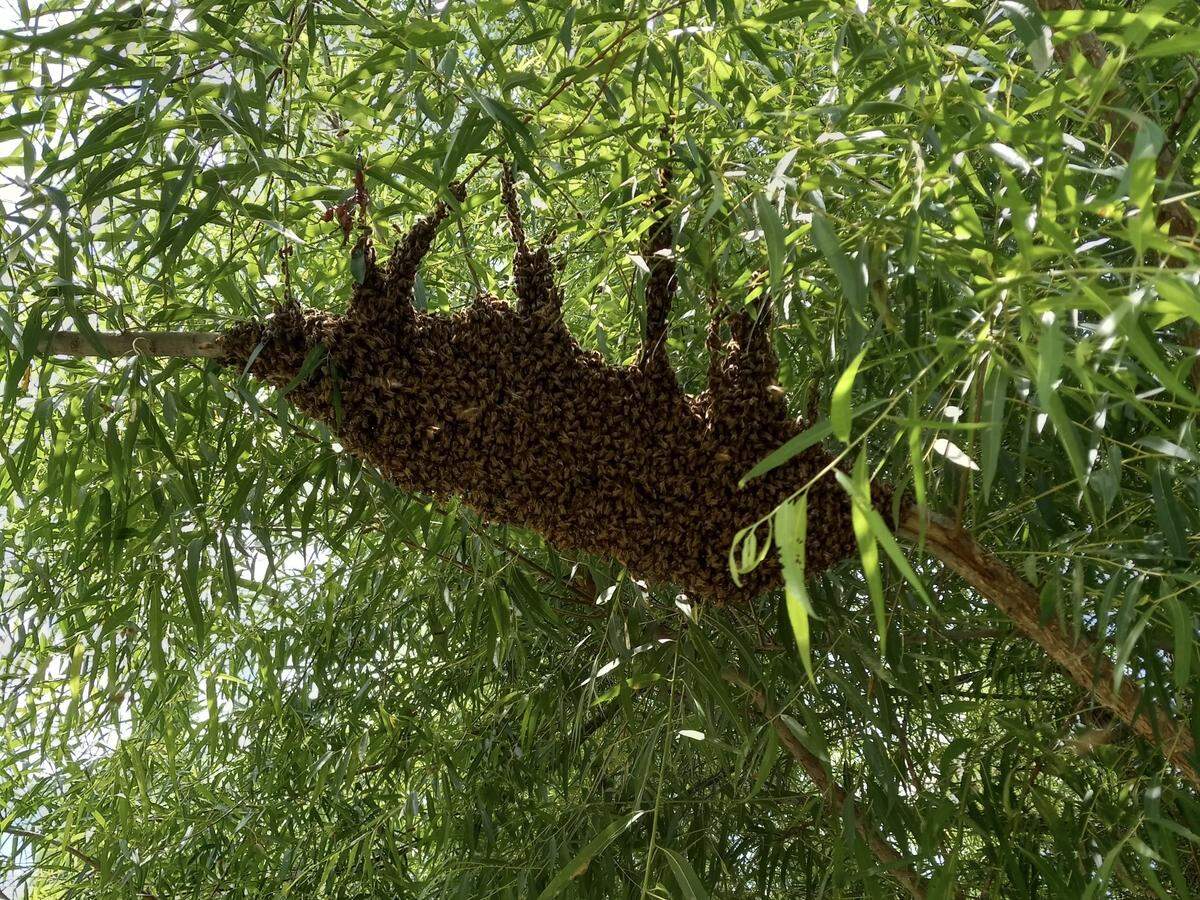
When the hive is full of honey, half the bees leave to start a new colony, bringing the queen with them, Ellis said. The other half stays in the old hive and waits for the new queen to hatch and mate before beginning the process again. It’s a complicated ritual that yields the sweet liquid folks know and love.
“It’s a true science,” Ellis said. “I’ve had so many people come down here and see it and [hear] me explain this and say, ‘How could there not be a God?’”
Learning from the hive
Not only do Oxbow Meadows visitors enjoy the wildflower honey that the glass hive produces, but they also leave with a valuable lesson: Honeybees pollinate 80 percent of all flowering plants, including 130 types of fruits and vegetables, according to the United States Department of Agriculture.
Ellis said even the most fervid carnivores rely on honeybee pollination; for example, cows, pigs and chickens eat corn.
“That’s where it all starts,” Ellis said. “We would not starve to death if we lost our bees, but there’s a limit to what we could do. There’s what’s called self-pollinators, like bell peppers. But wouldn’t it be boring if all we had to eat were bell peppers?”
Education is key to preserving bee populations because, Ellis said. A “lack of knowledge is our worst enemy,” he said.
Kevin Weis, president of the Chattahoochee Valley Beekeepers Association, echoed that sentiment. He told the Ledger-Enquirer the glass beehive informs people and inspires them to give back to these pivotal pollinators.
“I think people will see [the glass beehive] and go out and buy the bee license plate, which supports the bee community,” he said. “Sometimes it inspires people to get a hive of their own. Education is an important part of that. The observation really allows people an inside view of what’s going on in the community.”
The Chattahoochee Valley Beekeepers Association holds monthly meetings at Oxbow Meadows, and they welcome new members.
While the glass beehive will remain on display at the learning center, a good time to see it will be during the Honey Harvest event July 12, from 10 a.m. to 1 p.m. Activities will include honey extraction demonstrations, honey sales, crafts, story time and animal interactions.
Tickets can be purchased at oxbow.columbusstate.edu/insectival/