
I took a ride with an elite Columbus stunt pilot. Here’s what I learned
If you told me at the beginning of this summer that my internship at the Ledger-Enquirer would involve doing nosedives and loop-the-loops in a 55-year-old airplane, I would have laughed.
But that’s exactly what I found myself doing July 30 at the Columbus Airport — and that’s where I met renowned aerobatic pilot Marty Flournoy.
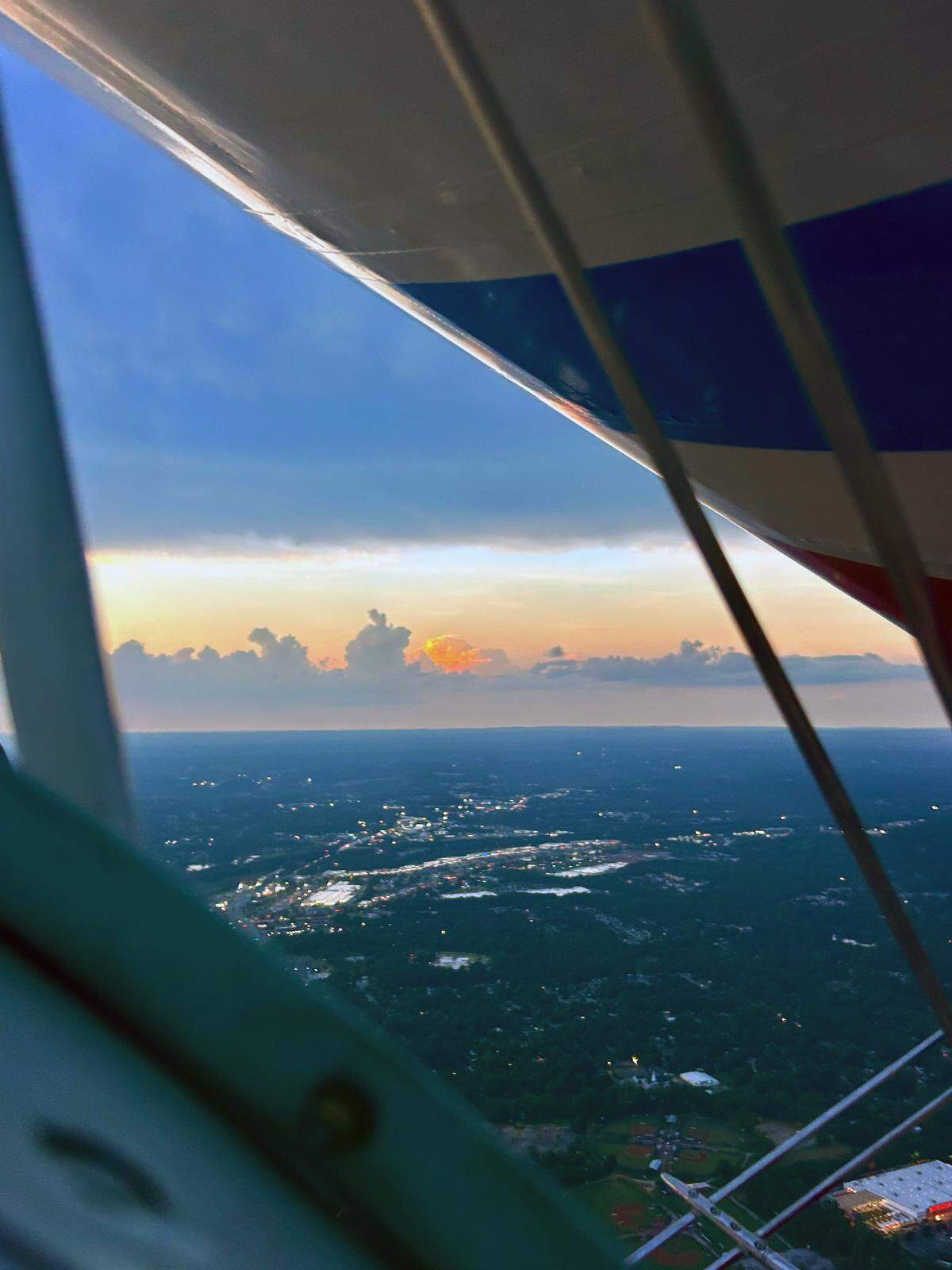
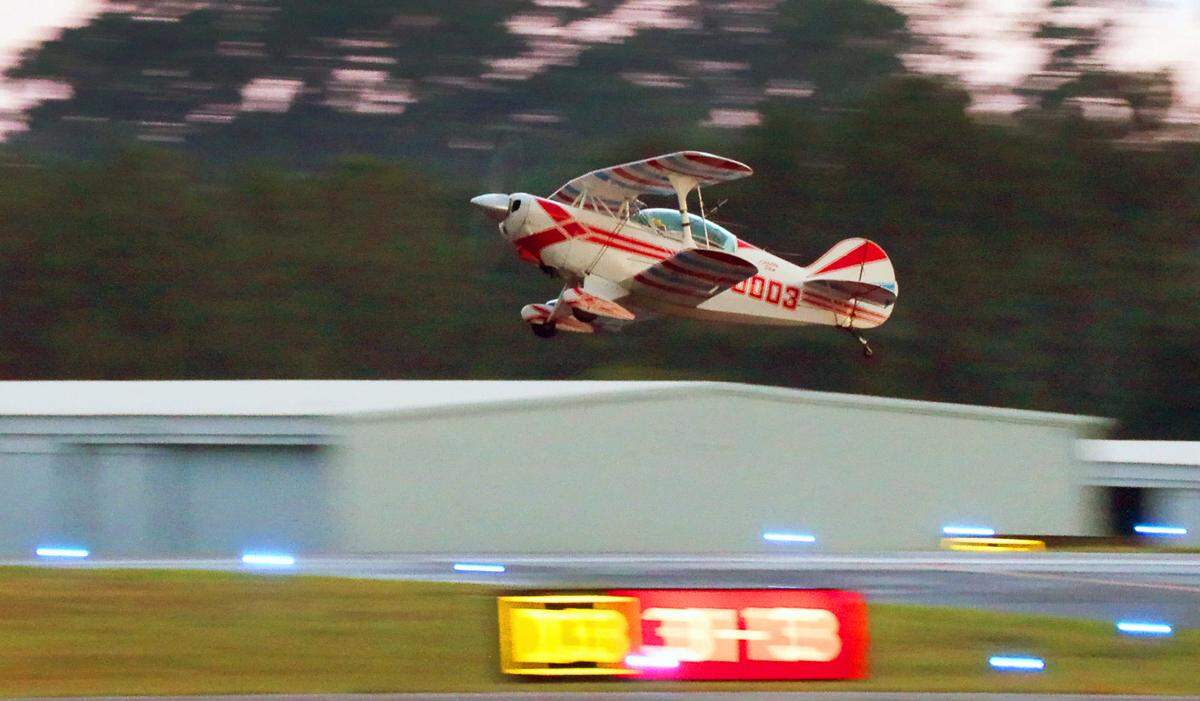
As the sun set and veins of lightning streaked across the sky, I sat in one of the original Pitts Specials, a light biplane designed during World War II.
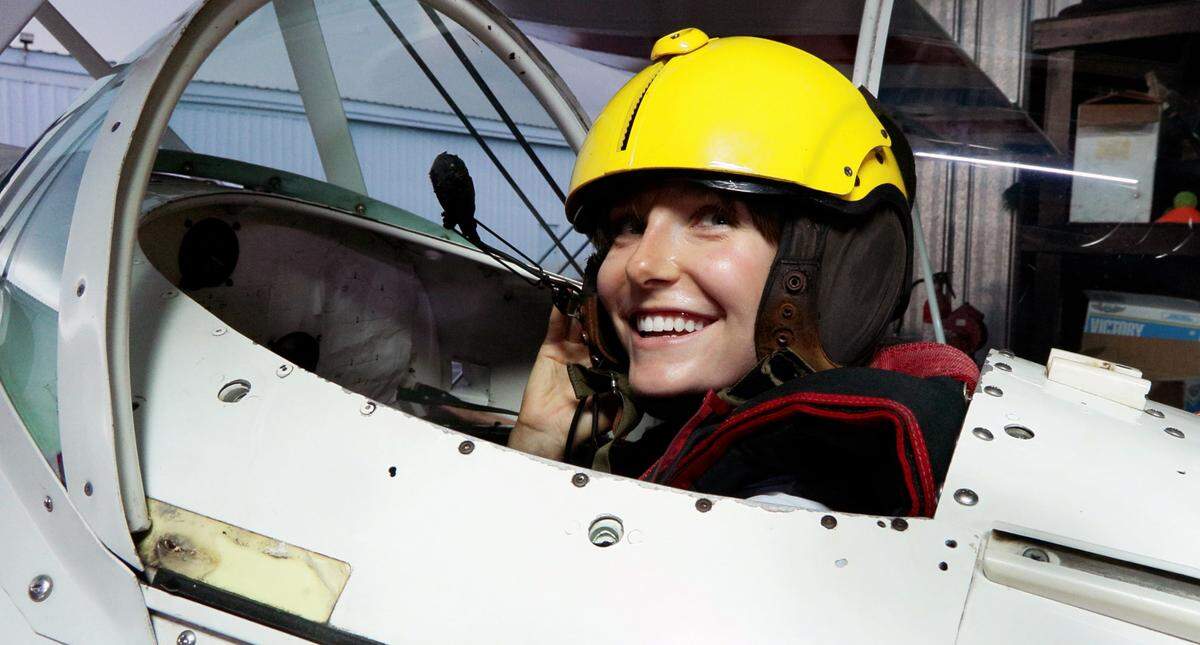
The evening storm left us a small opening in the sky above the airport, so I quickly strapped on a parachute pack and a too-big helmet, and prepared for the ultimate roller coaster.
And what a ride it was.
Not an adrenaline junkie
I don’t necessarily consider myself an adrenaline junkie. You never could convince me to go bungee-jumping, whitewater rafting terrifies me, and I’ve blacked out on amusement park rides at least twice.
But I was awestruck as Flournoy demonstrated hammerheads, barrel rolls and other aerobatic maneuvers. I was stunned by the twisting horizon, the pink-tinged clouds and the feeling of being completely unmoored to anything. Mostly, I was surprised by how thrilling I found it — and how disappointed I was when a bolt of lightning flashed, signaling it was time to return to Earth.
Flournoy often has such an experience, one that he shares with the pilots he trains. The Ledger-Enquirer last caught up with Flournoy in 2018, when residents near the airport asked who was buzzing their sky in a plane.
Since then, the real estate developer has been busy training pilots, judging competitions and winning a few of his own.
“It’s nice to have a hometown that will embrace something like this,” Flournoy told the Ledger-Enquirer. “It’s very rewarding, as you can imagine.”
Flournoy’s flight history
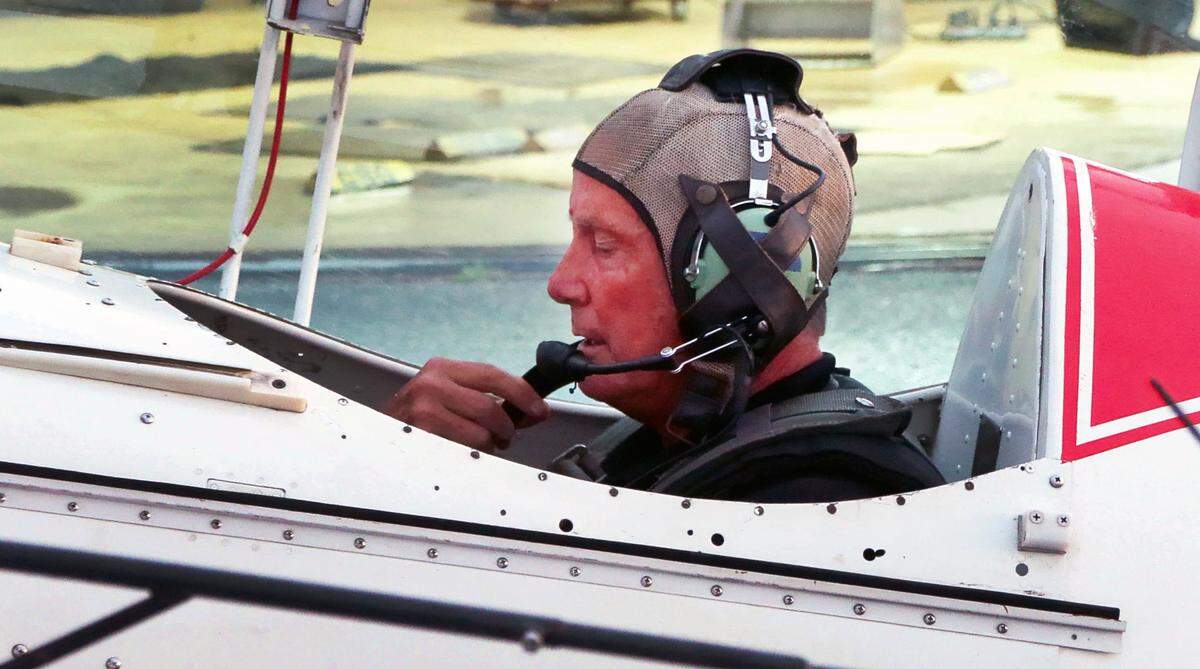
Flournoy, a Columbus-native, has been licensed to fly since 1979 and an aerobatic pilot for 30 years.
Beginning in 2003, he helped judge the World Advanced Aerobatic Championships in Lakeland, Florida. After extensive training and practice, he secured a spot on the USA Advanced Aerobatic Team and went on to earn four team podium finishes at the WAAC between 2012 and 2023.
After serving as an accredited national judge for several years, he was selected as a USA international judge for the WAAC and judged five competitions in a variety of countries from 2015 to 2024.
Flournoy also was the 2021 U.S. National Aerobatic Championship winner and the 2022 runner-up.
So I was in good hands in the plane.
Flournoy said he is grateful for the Columbus flight community. Despite his worldly experience, he wants to stay local.
“It’s a great community,” he said. “We’ve got a great airport out here, good management … and we don’t have a real high concentration of incoming traffic like you do in Atlanta or some of the larger cities. Now, I’m trying to keep all my business right here in my hometown.”
Aerobatic competitions
Flournoy flies at an altitude of 800 to 4,000 feet. During competitions, this window can be even smaller. Like any sport, he said, the joy and challenge of aerobatics is in the quest for improvement.
“You fly to work on getting better, not just circling around on a joyride,” he said. “You really have to have the discipline to have prescribed figures. You’ve got to do them in a very tight area, a 1,000-meter box.”
Aerobatics, he said, is like figure skating. Pilots follow a set routine for competitions and are judged on each figure. Mastering maneuvers requires extreme skill and attention to detail.
“All of those elements are like an ice skater,” he said. “If you have to do a triple axel, you’ve got to do that and land it exactly in the correct direction. And it has to be done in front of the judges. (For aerobatics), your line links and the aerobatics have to all be symmetrical. The rolls have to be centered.”
Before I got my turn in the cockpit, Stan Moye showed us just how difficult competition training can be. Flournoy gave him pointers from the ground as he tried to perfect an eight-point roll, a maneuver that will be part of his routine for the World Advanced Aerobatics Championships in Hungary next month.
Aerobatics involves the constant pursuit of improvement.
“It’s always a challenge,” Moye said. “You can master one skill, and then there’s always another one to challenge it. In that one competition flight, you’re guaranteed something’s not going to come out like you expected, and that is what you really have to be prepared for.”
One of the hardest parts about aerobatics, Moye said, is controlling the nerves. Staying relaxed is key to ensuring the flight goes as smoothly and mistake-free as possible, he said.
“I had a saying on the side of my plane at one time: ‘Watch it happen,’” he said. “If you can get into that flow where you’re doing the skills and sitting back and your brain is just watching it all happen, and you’re relaxed and everything’s coming through on cue like it should, then you know you’re going to do your best flight.”
Training others
A large part of Flournoy’s work has included training other pilots since 2004. He trains people interested in becoming pilots for airline charters and commercial flights as well as students who are enrolled in the School of Aviation at Middle Georgia State University. He also teaches a course on judging once a year.
“It’s been a very rewarding part of aviation to go and pass the skills that I’ve been able to get,” he said.
Flournoy often does spin and upset training to teach pilots how to recover from spins, a type of aerodynamic stall that causes planes to follow a steep, downward spiral. According to SKYbrary, spins can be entered either intentionally or unintentionally, and they can happen at any flight altitude at virtually any airspeed.
“Spins are feared by most pilots,” Flournoy said. “If you’re properly trained, it’s not something you should avoid. It’s something that we can practice. … It would be akin to drifting in a car on a dirt road. You learn to do that in an airplane, so that if it happens to you inadvertently, you don’t panic. You know how to recover.”
To start a spin on purpose, a pilot reduces the engine power to an idle, pulls the nose up until the plane stalls, and then pulls back on the controls while pushing the rudder in the direction they want to spin.
From the passenger seat, it looks and feels like the plane is headed for a crash landing.
While flying, Flournoy communicates with the flight tower at the Columbus Airport. He flies only when there is no incoming traffic, often later in the evening or on weekends, which are reserved for student training.
Flournoy said he finds working with students especially fulfilling.
“You’ve got to let the student control the airplane without you being on it,” he said. “So you’ve got to let them get as far into a mistake as you can recover. If they’re doing well, I try to say, ‘You got it’ [and] be encouraging. When they stand up on the podium and get a trophy after practicing for weeks and weeks, that makes you feel great.”
Allowing students to train in his plane makes the expensive endeavor much more accessible, Flournoy said.
“By not having to buy an airplane, being able to fly and keeping the cost of running an airplane at a fair amount, it makes it fun to spread the love and let them have a bite out of the cake,” he said. “It’s fun to see the expression when they get on the ground. They’re all stoked. They can’t wait to do it again.”
Neither can I.