
Life & Health: Ending unwanted pain at the dentist
Dr. Terry Wilkey says he is for anything that helps take the fear out of going to the dentist.
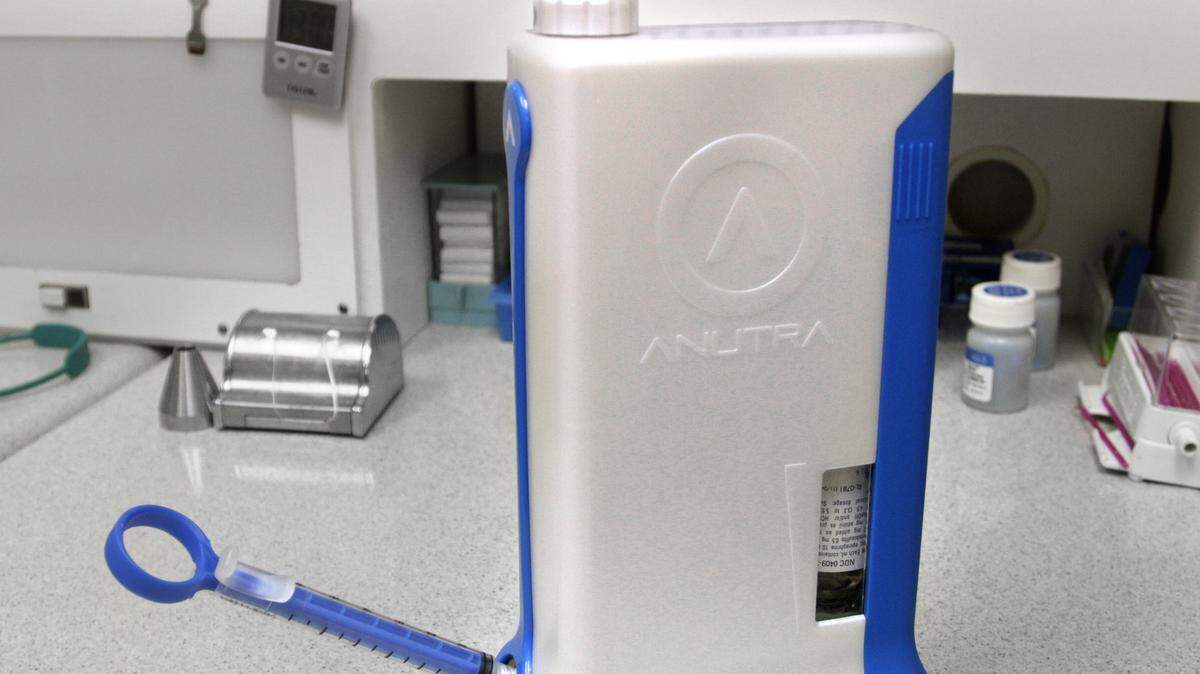
He believes he has added such an item to his practice with the Anutra Local Anesthetic Delivery System that removes some of the pain from the dental experience.
"It makes a huge difference. We have been using it for about three months and the response has been wonderful," said the cosmetic dentist who has been in practice here since 1993.
The system was approved this year for dentistry in this country by the Food and Drug Administration.
Wilkey said the system was developed by 10 North Carolina dentists, and as soon as he saw one at a professional conference, he knew he needed to get one.
"One of the primary complaints patients express about going to the dentist is the pain of an injection. What most people do not understand is the root cause of that burning and stinging sensation is from the anesthetic being used and not the needle," Wilkey said.
A pH is the measure of acidity of a solution, with the value of 7 representing neutrality. Lower numbers indicating increased acidity, and higher numbers represent increased alkalinity.
Wilkey said local anesthetics are traditionally very acidic. Lidocaine with epinephrine is a very popular anesthetic and with a pH around 3.5 has the same level found in citric acid that is found in fruits, like lemons.
That high level of acidity contributes to the majority of pain felt by patients after injection.
"It is the acidity that causes the burn after the shot has been given. It can burn like crazy," Wilkey explained.
With the system, the local anesthetic is buffered to levels which mirror the body's pH level, which is a little more than 7. The amount of acidity is reduced dramatically.
"The burn is gone," Wilkey said.
In addition to reducing pain, the buffering allows patients to become numb more quickly and increases the likelihood patients will need just one injection to become anesthetized.
Wilkey said it all makes for a calmer patient.
He explained the buffering is accomplished by precisely mixing the anesthetic with sodium bicarbonate.
The device, which accomplishes this, is lightweight, no more than a couple of pounds, and comes with special throw-away syringes.
"It costs me a little more, but it is something I really wanted for my patients," Wilkey said.
This story was originally published September 7, 2015 at 8:27 PM with the headline "Life & Health: Ending unwanted pain at the dentist ."