
The changing face of heroin: Users now mostly young white adults, many of them women
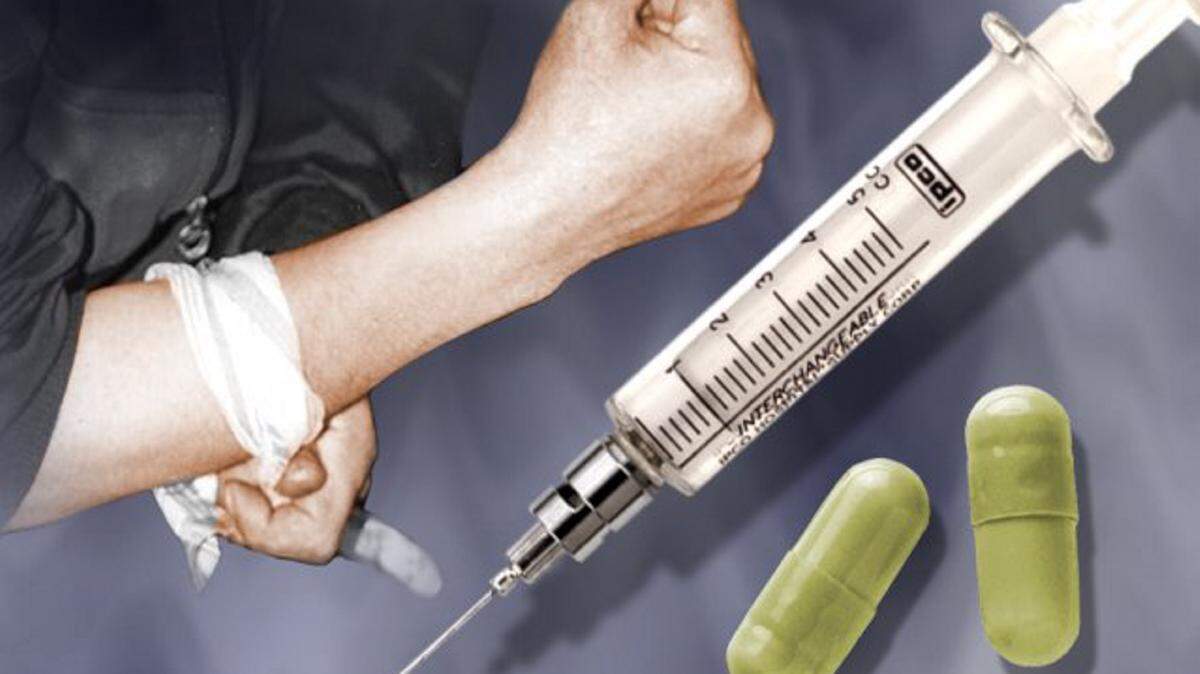
The word "heroin" usually evokes the image of a back-alley junkie desperate for the next fix.
But these days a heroin addict in Columbus is more likely to be a college student, a suburban young mother or a professional who has been hooked on prescription medications.
In 2014, researchers at Washington University in St. Louis conducted a national survey and found that the profile of the typical heroin user had changed over the past few decades.
"Our data show that the demographic composition of heroin users entering treatment has shifted over the last 50 years such that heroin use has changed from an inner-city, minority-centered problem to one that has a more widespread geographical distribution, involving primarily white men and women in their late 20s living outside of large urban areas," the report said. "Part of this increase in heroin use and apparent migration to a new class of users appears to be due to the coincidental increase in the abuse of prescription opioids over the last 20 years. ..."
Muscogee County Coroner Buddy Bryan said this shift already is occurring locally.
"We're seeing more Caucasian females in their 20s and 30s than what you would consider to be a street-junkie heroin addict," he said. "Normally it's at a home and we'll find the addict with the needle still stuck in their arms on the toilet, or on their bed, or on the floor of their bedroom in seclusion.
"The door will be closed and most of the time locked. So they seclude themselves from the parents or whomever, and then the parents realize that, 'Well, you know, Amanda hasn't come back in the room for the past 20 minutes,' then they go to check and find her dead on the floor."
Bryan said he also finds dead heroin addicts in drug houses, roach-infested apartments or in emergency rooms, dumped off by people who don't want to get involved.
Last week, a 29-year-old man sat at the Muscogee County Jail awaiting a bond hearing for two heroin sale charges.
In an interview with the Ledger-Enquirer, he said he had been selling heroin to people of all socioeconomic backgrounds before going to jail.
"I think it was my capability to intermingle with different people of different levels," said the man, who didn't want to be identified.
"I have a college degree, and I have friends from college all the way to political levels."
The man said he earned a drafting degree from Columbus Technical College and comes from a middle class background with professional parents.
At first he got involved with drugs to make money, he said.
By age 21, he had suffered a few minor accidents, he said, and got hooked on opiates while recovering.
He started with Lorcet, Percocet 10s and then graduated to Oxycontin 80s.
"From then on, it pretty much just escalated," he said.
"I had an addiction and some of the worst withdrawals from those 80 milligram Oxycontins, and I had sources a lot of people didn't have as far as doctors and pharmacists and stuff like that."
He said he always considered addiction a matter of mind control until he started selling heroin and saw what it does to people.
"I see people go like cold in and out, the beginning of an overdose," he said. "But then here, recently, a couple of my close friends have passed. And I told myself there's really no amount of money that will be worth that."
The man said he began selling heroin after the FDA started cracking down on prescription pills.
He's been selling heroin for the past two years, he said, and he considers himself a user but not an addict.
Most of the heroin sold in Columbus comes from Atlanta, he said, and he expects to see sales double within the next year.
"It's definitely increasing because more and more people want to make that money," he said.
He said he could easily make $10,000 a month dealing heroin, but that he's no longer interested in selling.
"I'm really not worried about money right now as much as I am about separating myself from certain places, people and things," he said, "taking it one step at a time,"
(Hover over or tap the graphics to learn more)
In the Washington University study, researchers analyzed surveys of nearly 2,800 men and women across the nation who sought treatment for heroin addiction.
They found that respondents who began using heroin in the 1960s were predominantly teenage males whose first opioid of abuse was heroin.
But more recent users were men and women in their 20s.
About 75 percent lived in less urban areas.
"Whites and nonwhites were equally represented in those initiating use prior to the 1980s, but nearly 90 percent of respondents who began use in the last decade were white," the report said.
"Although the 'high' produced by heroin was described as a significant factor in its selection, it was often used because it was more readily accessible and much less expensive than prescription opioids."
Alva James-Johnson, 706-571-8521. Reach her on Facebook at AlvaJamesJohnsonLedger.
This year, during Red Ribbon Week, the Ledger-Enquirer focuses on heroin and its grip on addicts in Columbus and across the nation. Here’s a look at what’s planned for the week:
SUNDAY: Heroin makes a comeback on the drug scene
TODAY: Who is using heroin and why
TUESDAY: The impact heroin has on the body
WEDNESDAY: An addict struggling to kick the habit tells his story
THURSDAY: What officials and agencies in the Chattahoochee Valley are doing to address the problem
FRIDAY: Local reaction to the growing heroin crisis
This story was originally published October 25, 2015 at 11:07 PM with the headline "The changing face of heroin: Users now mostly young white adults, many of them women ."