
Natalia Naman Temesgen: The source of our Christmas traditions
Santa's coming this week! And so we'll do the Christmas things.
We'll hang the stockings. We'll drink eggnog. Even the kids know to leave Santa a cookie and Rudolph a carrot.
We do the things that feel like Christmas, even if we aren't sure why they feel like Christmas.
The past two years, we sent Christmas cards featuring a family photo. It seems like the custom these days, especially for families with children or beloved pets. But this year I waited too long to get them made, so I used an old box of cards from a few years back. They're not personalized, so I ended up printing tiny family photo stickers to seal the envelopes.
Why did I feel such a need to include a picture of us? And why have Christmas cards become such a family photo kind of thing? When did that start?
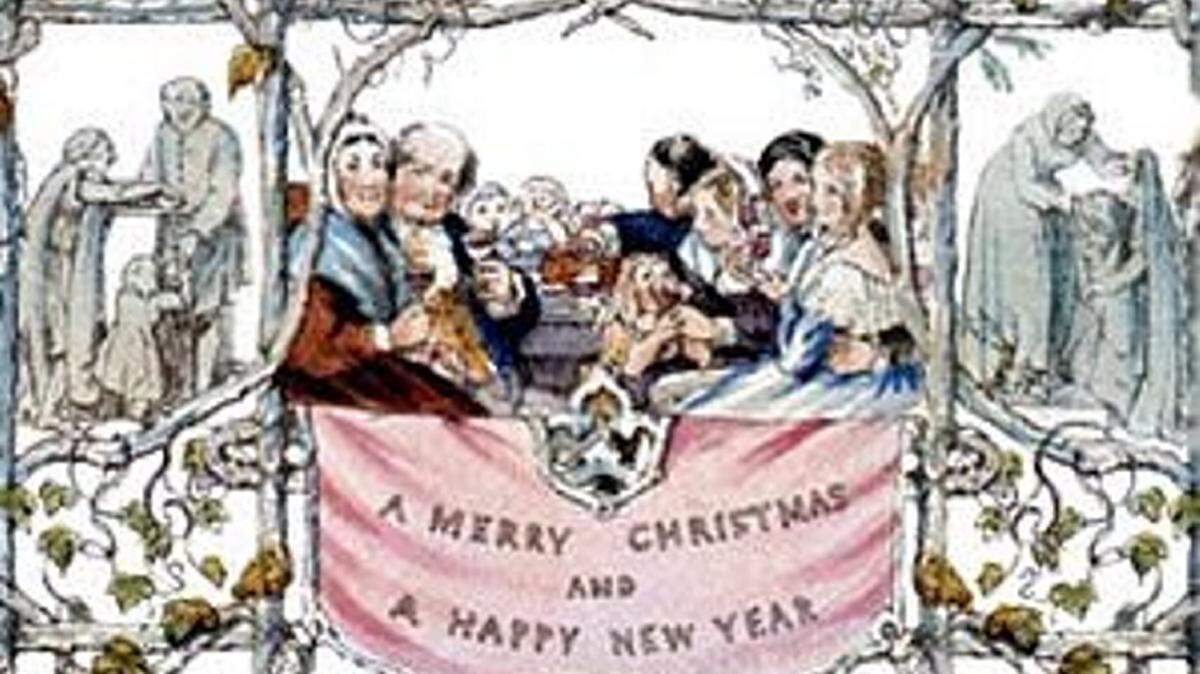
The first year on record that a Christmas card existed is 1843, when Sir Henry Cole, a British civil servant, commissioned an illustrator to create a Christmas card for him.
The central image of this card is, to a degree, what you might see today. It features the merriment of a family around a table of food, raising their glasses for a toast. "A Merry Christmas and a Happy New Year" is written below. Much like the cards featuring family photos I see so often today, this original card seemed to say to its recipient "We're doing great and enjoying the season. See? Hope you are, too."
And on the card's two side panels, due to the fact that the Puritans of the time felt such a happy and self-indulgent image was anti-Christmas, images of people clothing the poor and feeding the hungry were also featured. This reminds me of the more religious, photo-free cards I've seen. Ones that ask us to remember the reason of the season, for example.
As sending Christmas cards became widespread in America, all types of images and designs were created. American lithographer Louis Prang made a killing on a card with a flower and the simple message, "Merry Christmas." (Five million were printed in 1881.) And even in the 1910s and '20s, there was a surge of homemade cards being created from paper, foil, silk and ribbon.
They were so precious, they were rarely put in the mail for fear of being destroyed, and were instead given by hand.
All this makes me curious about the history behind every Christmas tradition. Some of these histories may be much more commercially driven than we'd like to think. But what makes them stick with us is the way in which they become personal.
The cards we send are moreso an extension of our family identity than anything else. The ornaments we use may be older than some of those who decorate the tree. The food we make might come from a recipe from generations past. Our traditions, though widespread, become unique when adopted by each new family. That's one of my favorite parts of Christmas.
Natalia Naman Temesgen is an independent contractor. Contact her at nntemesgen@gmail.com.
This story was originally published December 19, 2015 at 7:52 PM with the headline "Natalia Naman Temesgen: The source of our Christmas traditions ."