
Christmas story: Physical therapy executive becomes a patient, suffers organ failure, receives greatest gift after countless prayers
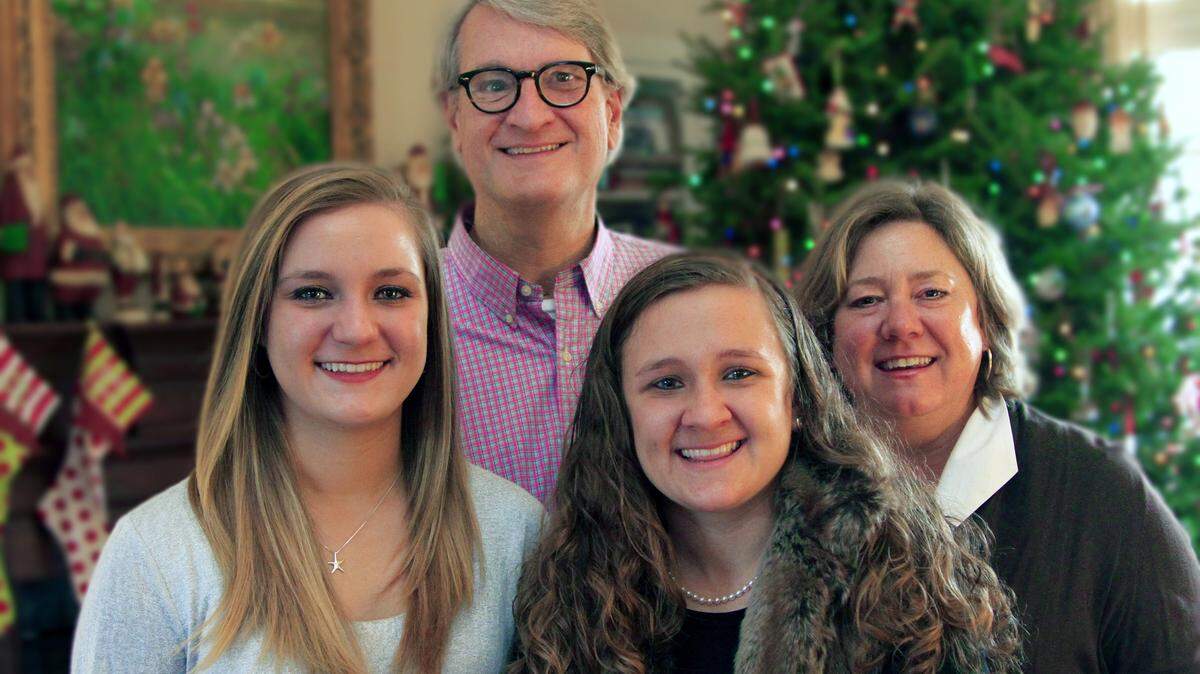
He was too sick to decorate the tree. He was too sick to drive his family around town and enjoy the lights. He was too sick to videotape them opening presents.
Christmas 2014 was more about hoping Patrick Graham would see the new year than anything Santa would bring to their Columbus home.
So as Susan prayed for her husband, and as Mary Frances and Katie Claire prayed for their father, they added this strange yet loving request: They asked God for Patrick to be sick enough to qualify for a liver transplant.
Years of battling two diseases had put Patrick, now 50, in a wheelchair and withered his 6-foot-3 frame from 215 pounds to eventually 135. His health hung in the exasperating purgatory between too sick to survive without a new liver and not sick enough to receive one.
So after Patrick overcame overwhelming odds, after countless prayers from countless folks, after what some have called a miracle, his family jokes they might have prayed a bit too hard for Patrick to be sicker.
Now, the physical therapy executive with a reputation for providing excellent care is grateful for receiving it. He has emerged from his medical maelstrom -- 71 straight days in a hospital, including resuscitation -- with a renewed appreciation for family, friends and faith, plus a passion to spread the gospel of organ donation.
'Hard to see'
Wegener's granulomatosis and Alpha-1 antitrypsin deficiency conspired against Patrick's health and decimated his body. Wegener's is a chronic inflammation that restricts blood flow to organs. Alpha-1 is a genetic disorder preventing the body from making enough of a protein that protects the lungs and liver.
"I think we've been on somebody's prayer list for 18 or 19 years," Susan said.
Despite his health issues, Patrick still became a successful physical therapist. He is president and chief operating officer of Human Performance and Rehabilitation Centers. But year after year, Mary Frances, 22, and Katie Claire, 19, watched their strong hero become too weak to play with them or grill for them.
"Whenever he was sick before, he would never show it; he'd always suck it up," said Katie Claire, a freshman early childhood education major at Mercer University. "But seeing him so sick, where sometimes he couldn't even get out of bed, was just really hard to see."
All of which prompted Mary Frances, a senior exercise science major at the University of Mississippi, to ask, "How could you not believe in God after that? You don't watch somebody go from that low of a point to how he is now without believing there is a greater being to control that."
Patrick's health continued to decline during summer 2014. Sleep wouldn't solve his fatigue. Nausea wrecked his appetite. Sometimes he blacked out from intense coughing fits, so he couldn't drive.
Beyond the lung infections, Patrick's liver was being destroyed. He received oral chemotherapy to combat the Wegener's and blood infusions to fight the Alpha-1, but he developed hepatic encephalopathy, a loss of brain function, because his liver increasingly failed to remove toxins from his blood.
"That was part of God's grace," he said. "I knew I was sick, I knew I felt bad, but because of all that toxin in my brain, I couldn't really process how critical it was."
Patrick also couldn't maintain reality.
"He thought I was the president of the United States," Susan said. "There were days he didn't know who he was."
That's when Susan was most thankful to also be a physical therapist.
"God knew when I went to PT school that a lot of the things I learned I was going to be able to apply to help Patrick," she said. "I had a lot of common sense about what to really freak out over and what to not freak out over, but it is different when it's your husband."
The Grahams traveled that October to an Ole Miss football game. At the Grove, it was the first time many of their friends had seen Patrick in a wheelchair.
"Some people cried in front of him," Susan said.
'Very frustrating'
A MELD (Model for End-Stage Liver Disease) score measures the mortality risk for liver patients. Patrick needed at least a 15 to be listed for a transplant. His score had been 13 when it skyrocketed to 28 in October. But he was tested again in November for confirmation, and the MELD score had dropped back to 13.
"It was very frustrating," Susan said. "We kind of felt stupid or something. We thought he would be listed by the time we left. But they just blew it off. It could have been the lab made a mistake or because he was in the hospital for a week and the liver took a beating."
Patrick said of his body, "Everything started shutting down."
While he physically was falling apart, he emotionally was uplifted that month. He won the American Physical Therapy Association Private Practice Section's most prestigious annual award. Drew Bossen, an executive with a competing company in Iowa, allowed the Graham family to use its jet to fly to Colorado and accept the honor.
"There was no way I could have tolerated a commercial flight," Patrick said. " I am that blessed to have such genuine people in my life."
During his speech, Patrick told the audience, "Health issues have written a lot of my story, but, because of them, I am a better caregiver to my patients and I can better understand what it means to be scared as a patient. I can more easily share the message of hope, because that is what drives me every day."
Breathing treatments kept Patrick somewhat functioning, but he was too weak to continue his tradition of frying the family's Thanksgiving turkey. By the first weekend of the new year, Patrick couldn't get out of bed by himself.
During one of his more lucid moments, he told Susan if he were blessed to be on the transplant list, everyone who wanted to pray for him should first pray for the donor's family.
"God bless him for being that way, but he was very adamant," Susan said. "He felt a lot of burden for a family that was going to go through loss and suffering to save him."
Patrick had an evaluation appointment scheduled for Jan. 12 at the Emory Transplant Center in Atlanta. But by Jan. 8, Susan couldn't wait any longer. She called the center and told a nurse, "I don't think he's going to be alive by then. We've got to do something."
The nurse advised her to take him to an emergency room in Columbus and keep the Monday appointment in Atlanta.
'This is crazy'
Susan and Mary Frances, still on break from college, took Patrick to his appointment at Emory while Katie Claire returned to her senior year at Brookstone School. They prayed that Patrick's MELD score would agree he needed a new liver.
"I was like living for that appointment," Susan said. "I almost took bags with me because I thought surely they were going to keep us. But I didn't. We just went."
During the drive, Patrick continued his breathing treatments through a nebulizer plugged into the car's cigarette lighter. After they arrived at Emory University Hospital, which houses the transplant center, an equipment problem in the lab delayed the results of Patrick's blood work. He was so uncomfortable in the waiting area, he begged someone on the cleaning crew to find him a place to lie down, but all the rooms were occupied. Another coughing fit meant he needed another breathing treatment. The nurse suggested they return home because Patrick couldn't be treated until the lab reported his blood test results.
On the way home, they stopped in Newnan for Patrick to use the restroom. Susan had to help him, so she wheeled him into the women's room.
Patrick was too exhausted to immediately get back in the car. As he sat on the curb in the parking lot, Susan wondered, "What are we doing? This is crazy." But she promised herself, "I'm not breaking down. I'm in survival mode."
While they got Patrick situated back home, Susan heard a succession of phones ring: First his, then hers, then the home phone.
The nurse practitioner at the Emory Transplant Center was on the line. She had the results of Patrick's blood work. His MELD score was 24, and other indicators warned of more organs failing. They must immediately bring him back to Atlanta.
Dreading the return trip, Susan asked whether she instead could take Patrick to a Columbus hospital. No, the nurse said, he wouldn't survive without the specialized care at the center.
Susan asked whether she instead could call an ambulance.
No, the nurse said, they didn't have time to wait.
"I could barely get him home," Susan replied, "and we're going to hit 5 o'clock traffic."
The nurse told Susan someone else should drive so she could attend to Patrick if he had a seizure en route.
Susan hung up and told the girls, "Daddy's really sick. We've got to get him back to Atlanta."
Patrick overheard and protested, "I can't do it. I'm not going."
Susan countered, "Yes you are. We don't have a choice. Girls, you help him get in that wheelchair. I'll start packing."
Family friend Lee Lee James and Susan's sister-in-law Suzanne McCluskey drove. By the time they left Columbus, it was past 4 p.m. -- and they were headed right into Atlanta's rush hour. But they didn't turn on the flashers; they figured they had a more powerful force.
"God just opened up the lanes," Susan said.
But they had to stop for Susan to throw up. As she got back in the car, she noticed Patrick's nose was bleeding. She didn't want anyone else to be alarmed, so she casually wiped it while Patrick moaned and rocked in the back seat.
They reached the Emory emergency room around 6:45 p.m. While they waited two hours to get a room, Patrick looked at Susan with the most alert expression he had in days. He told her, "I can't do this much longer."
"I know now," Susan recalled, "he meant living."
"I didn't have anything left in the tank," Patrick said.
Susan told Patrick, "Baby, we have come way too far. We are getting help now. We are here. You can hang on as long as you've got to because you have fought through the hard part."
'No pulse'
Two nights later, Jan. 14, Susan tried to sleep in a hotel room, but she couldn't rest.
"All of a sudden," she said, "I had such a burden to get back to the hospital."
When she returned to ICU, she heard a nurse's voice: "Mr. Graham, are you having trouble breathing?"
Susan welcomed the decision to intubate Patrick because he was using so much energy to breathe. But a blood clot closed off this trachea, and he coughed out the tube. Outside the room, as Susan spoke on the phone with her brother, Lee, in Columbus around 11:30 p.m., she heard another voice declare, "No pulse!"
And the loudspeaker blared, "Code blue, Room 535!"
A woman waiting for another patient knelt and prayed for Patrick outside his door. When he stabilized, a nurse invited Susan into the room, but he needed resuscitation again.
"Patrick looked dead," Susan said. "Chaos in the room. Blood shooting up."
The door opened, and a hand slipped into Susan's.
"That is the sweatiest hand," she thought. "Who is that?'"
It was the hospital's new chaplain -- working his first emergency.
"He was about to faint," Susan recalled with a laugh. "So I'm consoling the chaplain while my husband is coding."
She added, "I really feel like God brought him in there to distract me from what was going on."
By 2 a.m., Patrick was stable again, but his kidneys failed later that day, and he was put on continuous dialysis. A ventilator kept his lungs breathing. Six drugs called vasopressors boosted his blood pressure.
To qualify for a liver transplant, in addition to the minimum MELD score of 15, the maximum number of vasopressors usually is two. Patrick's condition was so dire, however, his team's lead doctor was willing to gamble if he could be weaned down to three of those drugs.
'He can't die'
Friday, Jan. 16, Patrick's MELD score soared to 33, more than double the threshold for a transplant, but he went into septic shock, a lethal drop in blood pressure from a severe infection. The mortality rate for septic shock, according to the Mayo Clinic, is nearly 50 percent. So after months of not being sick enough to receive a new liver, Patrick was too sick for the surgery.
"I was like a hot air balloon that totally lost all of its air," Susan said.
The doctor advised Susan to gather the family. "Patrick has one foot on the earth and one foot in the air," he told her, "and it's totally up to God where the other foot lands."
Holding hands, Susan and Mary Frances walked together to tell Katie Claire.
"I knew it didn't look too good," Katie Claire said, "because they were both crying."
Susan told her, "Daddy might not make it."
Katie Claire started screaming. She shouted, "He can't die! He can't die!"
"To watch her facial expression go from normal to ," Mary Frances shook her head as her voice trailed off, then added, "She'll never make that face again."
"It was terrible," Susan said. "My heart hurt so bad."
Susan sought balance between being optimistic and realistic as she talked to Katie Claire.
"I don't think I did it very well," she said. "I didn't want to crush her spirit of staying positive. There's something to that, but I had to make sure she was hearing me."
Mary Frances felt the hope for her father fade.
"I didn't think he was going to come home," she said.
In fact, Mary Frances said, a disturbing vision came to her mind: Her uncles could escort her down the aisle at her wedding. Then she prayed for strength.
"To have that many negative thoughts is not a good thing," she said, "but I was preparing myself for the worst."
Susan understood Patrick's sepsis meant, "I could have to go home without him," she said. "But I think God just really protected me from having those feelings. I knew the girls were watching me really close."
Sometimes, however, she wavered, especially at night, when she had more time alone in the hospital.
"The Devil would use those opportunities to seep in any doubt," she said.
To repel those thoughts, Susan entered Patrick's room and prayed over her husband.
"I was pleading with God to save him," she said. "I knew we had a lot of good stuff down the road to do. But I was praying more for Patrick to be comfortable and to be at a place where he wasn't hurting and where he knew that people were really covering him with prayer and fighting for him to live."
Patrick couldn't talk while he was intubated, but his sedation was lowered so Susan could have what might have been the final conversation with her husband.
Susan asked Patrick whether he wanted to tell her that he loves her.
He nodded yes.
Susan asked Patrick whether he was in pain.
He nodded yes.
Susan asked Patrick whether he was scared.
He shook his head no.
Here's why: "We both always believed what was God's will was going to happen," Patrick explained. "I think, at that point, she felt comfortable that, if I wasn't scared, it was going to be OK. No matter what happened, it was still going to be OK."
"That was all I needed to hear," Susan said. "That was such a gift that God gave me."
She also told Patrick, "You have to get better so you can see how our girls handled all of this. It's what we prayed for since the day they were born, that they would turn to God and they would learn to trust Him."
The daughters delivered their own messages while they visited their father.
Katie Claire repeatedly told him, "I love you, and the Lord is in control."
Mary Frances told him, "We got this. No matter what happens, I'll make sure Katie Claire and Mom are taken care of. We're going to be OK. I love you, and I'm so thankful for everything you taught me."
'A miracle'
Throughout the MLK holiday weekend, family and friends prayed in the waiting area. Among their pleas: Cover Patrick. Heal Patrick. Touch Patrick. Have favor on him. Save him.
Doctors finally found the right antibiotic to treat the infection, and Patrick's body rallied. He got off of all the vasopressors and was listed for a transplant. His medical team members were amazed.
"I have no idea about their religious background," Patrick said, "but they just said this is a miracle."
On Monday, Jan. 19, with his MELD score at 34, Patrick was rated No. 1 for a liver in the Southeast -- out of more than 16,000 on the U.S. waiting list.
Susan burst into tears of relief.
"It was just like everything became colorful and sunshine," she said. "I mean, I knew he still had a long way to go, but I knew we had a shot at it."
When she told Patrick the news, Susan said, "his eyes just about popped out of his head and he started crying."
Palmer McCluskey announced that his only birthday wish was a new liver for his Uncle Patrick. Around 11:20 p.m. Tuesday, Jan. 20, a nurse told Susan the Emory transplant team indeed accepted a liver, but it was too early to share the news because tests had to ensure it was the type Patrick needed.
Donor information is kept confidential, but Susan overheard a nurse mention the liver came from Grady Hospital. So after he was listed as the top priority as far north as the Carolinas, as far south as Puerto Rico and as far west as Texas, Patrick's possible savior was found only 6 miles away.
Wednesday morning, Jan. 21, the transplant team confirmed the liver matched.
"This was the greatest gift we could have gotten," Mary Frances said.
As nurses prepped her husband for surgery around 3 p.m., Susan leaned over and whispered in his ear, "Baby, now you do everything in your power. God's got you, but you fight like hell to come back."
Six hours later, the lead doctor informed Patrick's 40-50 relatives and friends in the waiting area that the surgery was successful -- and that he never saw so many supporters for one patient.
Others back in Columbus that day formed a prayer circle on the front lawn of the Grahams' house in the Brookstone subdivision.
"It just really blew me away," Susan said. "I was dumbfounded through this whole thing by people's outpouring of love and generosity and prayer and concern. It was just so sincere."
Patrick called the Emory transplant team "an amazing group of physicians and caregivers. I think the fact that I wasn't an alcoholic that had abused my liver, they were really rallying for me."
It took Patrick's new liver only one day to wash away his jaundice and revive his skin color. He still had setbacks, but six weeks later, he was healthy enough to transfer to Emory Rehabilitation Hospital, where he received three hours of physical therapy each day.
'So blessed'
A normal hospital stay for a liver transplant is no more than two weeks. Patrick was hospitalized for more than two months.
"I had so much medicine going through me," he said. "I was nauseous all the time. I wasn't eating. I had a feeding tube. I had a lot of pain. It was just a vicious cycle."
He was so weak, he couldn't sit up in bed or even push the call button to summon a nurse. Susan wasn't allowed to sleep in the rehab unit, so she stayed with friends 10 minutes away.
"I was very, very scared when we went to rehab to not have her around at night," Patrick said.
But that first night, Susan instead slept in her car in the hospital's parking deck to be and feel closer to her husband. And when she was allowed in his room, she stood by his bed for hours and exercised his atrophied body.
"She's the most amazing woman I've ever met," Patrick said.
Going from a giver to a receiver of physical therapy initially was a tough transition for Patrick.
"I knew when they knew their stuff and when they didn't," he said with a smile.
No wonder he insisted on one therapist at the hospital never treating him again.
"She just didn't act like she knew what she was doing," he said. "I almost fell twice."
Overall, however, he gives the therapists high marks.
"They were really good at pushing me," he said. "I needed to be pushed. I just wanted to lay in the bed because I was so tired and weak. Physically, that's the hardest thing I've ever had to do."
After 24 days in the Emory rehab unit, Patrick still couldn't walk without assistance, but insurance limits meant he had to continue his therapy at home. That's where he gained a new appreciation for the HPRC staff members who were among his caregivers.
"I'm just so blessed, so blessed, with the people I work with," he said.
As his throat healed from the intubation, the only nourishment he could have was in gel form. A thickener had to be added to his liquids to prevent the fluid from entering his lungs because he still couldn't properly swallow.
It took three more weeks to be cleared to eat and drink normally. For his first regular meal during recovery, Susan wheeled Patrick out to their back porch so he could grill steaks.
"That and regular water was fantastic," he said, "fantastic."
Patrick's rehab goal was to be strong enough to stand up when it was Katie Claire's turn to walk across the stage at Brookstone's graduation.
He did.
"That was like the first time I really knew that my dad was back," Katie Claire said. "Everything is really going to be OK."
'God carried us'
Mary Frances produced a prayer blog about Patrick's journey, and strangers around the world were compelled to click.
"I can pull up a map, and every country in the entire world is lit up with at least one hit," she said. " There were people all over the world praying for him. Watching that happen was crazy. This really was bigger than just our little family."
Friends texted prayers to Susan in the wee hours of the morning, showing she wasn't the only one losing sleep over Patrick's health. Combined with the visitors and other gestures of support, Susan said, "I don't think I could ever begin to describe my appreciation. It's one of the purest loves I've ever experienced."
Patrick fought back tears as he said, "It's, for me, one of the biggest joys to be a living example of the power of prayer. To this day, I still get cards and notes from total strangers that have been praying for me. The Lord saved me for a reason. It's still unfolding what that's to be."
July 24, the day Patrick returned to work -- following more than a year away from the office and six months after his liver transplant -- HPRC chairman and CEO Brian McCluskey, Patrick's brother-in-law, wrote in his blog, "Patrick's story is the story of a miracle. My theology is far too amateurish to explain his healing. I just know that legions of faithful people were prayerfully thinking of Patrick every day. His work is not complete.
"Welcome back, Patrick Graham. Even in your absence, you taught us all."
Patrick emphasized this lesson about faith and prayer: "All throughout this, we knew what we wanted to happen, but in God's timing we could see stuff that didn't happen, but when it happened down the road how much better it was because it happened that way. You realize that His timing is just perfect."
It's perfect, the Grahams profess, not because Patrick survived but because faithful believers chose to cherish the blessings along the healing path.
"There are so many people that are suffering and so many people that don't have a great outcome like we did," Susan said. "So we're very sensitive to that. But that's not the whole message of this story; the message is that God carried us through the whole thing."
Epilogue
Patrick takes one anti-rejection drug twice a day so his body will continue to accept his new liver. And that liver doesn't have the Alpha-1 deficiency. He also is free from symptoms of Wegener's, the other disease that destroyed his first liver. The only remnant from the Wegener's is the special pair of glasses he wears to correct his double vision.
He isn't back at HPRC full time yet. Patrick works 20 hours per week while he regains endurance, but he weighs 220 pounds and he has no pain or medical complications. His blood is tested every month in Columbus, and he will go back to Atlanta for a checkup in six months.
As this Thanksgiving approached, Patrick wrote in a letter, which the organ bank sent to the anonymous donor's family, "I treasure every single day and will treasure my gift from you by being the best husband, daddy and friend I can be."
Back home from college for Christmas, the Graham girls continued to savor the simple yet meaningful benefits of their father's restored health.
"The other night, he was on the floor fixing a fire," Katie Claire said. "To see him actually well enough to get on the floor and get up from that is just something so great to see."
Mary Frances put it this way: "He's still our daddy, but he's the new and improved daddy, because he doesn't feel like crap anymore. It's awesome."
Patrick had their home designed with a ceiling high enough to fit a super-sized Christmas tree. The Saturday after Thanksgiving, he climbed a ladder and placed atop their 11½-foot fir the angel he and Susan received as a wedding present.
When she saw him on the ladder, Susan thought, "What am I going to tell his doctors when he falls off and I let him do that?" But she instead soaked in the scene. "I was thrilled."
"It was emotional," Patrick said. "I had to pause for a little bit."
He added with a laugh, "Susan thought there was a squirrel or something in the tree, but it was me crying."
The Graham family's 2014 Christmas card cited Romans 15:13: "May the God of hope fill you with all joy and peace as you trust in Him, so that you may overflow with hope by the power of the Holy Spirit."
Their 2015 Christmas card cited Psalm 126:3: "The Lord has done great things for us and we are filled with joy."
The card asks the recipient to join the Grahams in praying for the donor's family. The card also shows each of the Grahams holding a sign promoting organ donation.
Katie Claire: "Be an organ donor. It saved my dad."
Mary Frances: "An organ donor gave my daddy the gift of life."
Susan: "An organ donor saved my husband. Recycle yourself."
Patrick: "An organ donor can save 8 lives. I am one of them."
Mark Rice, 706-576-6272. Follow him on Twitter @MarkRiceLE
HOW TO BECOME AN ORGAN DONOR
According to the U.S. Department of Health & Human Services, 122,126 Americans are on an organ transplant list and 22 of them die each day while waiting. One donor can save as many as eight lives with their organs. To become an organ donor, visit www.organdonor.gov.
The department also advises donors to designate their decision on their driver's license, tell their family and friends about their decision, tell their doctor about their decision and include their decision in legal documents, such as advance directives, wills and living wills.
This story was originally published December 24, 2015 at 5:57 PM with the headline "Christmas story: Physical therapy executive becomes a patient, suffers organ failure, receives greatest gift after countless prayers ."