
Judge Clay Land unseals letters written by four elected officials, 20 others on behalf of business owner 'Sunny' Shah
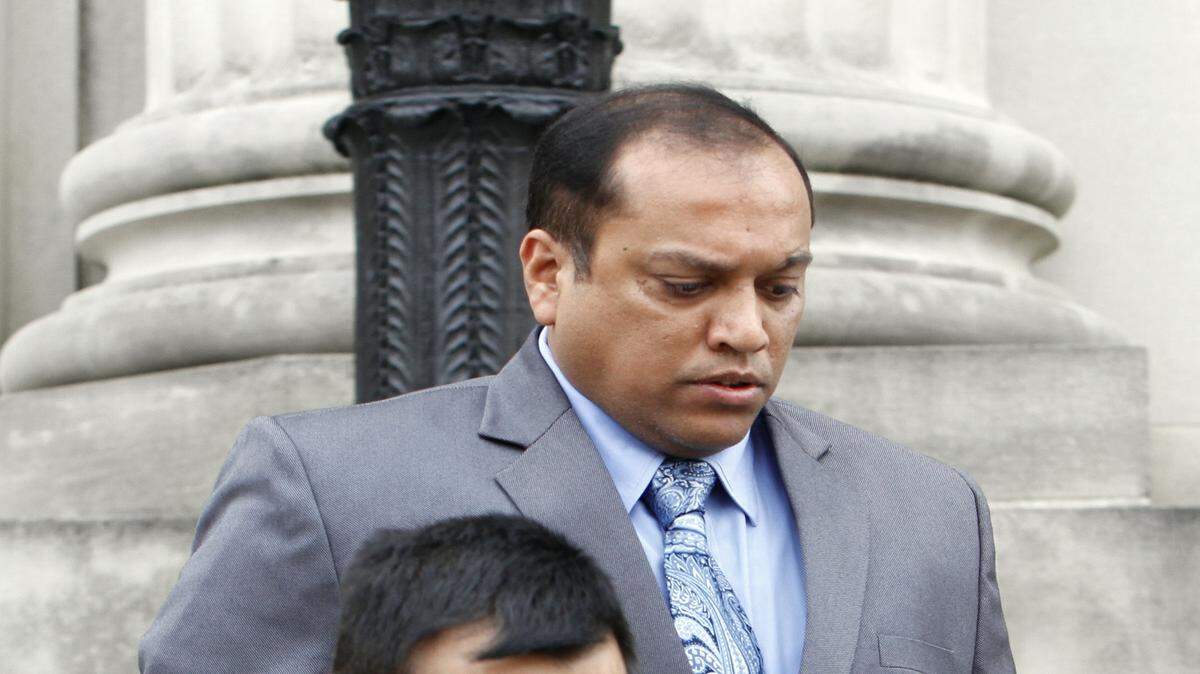
As convenience store owner Sawan "Sunny" Shah stood before a federal judge last month facing up to three years in prison for his part in defrauding the IRS of more than $1.3 million, the naturalized United States citizen from Mumbai, India, had four elected leaders vouching for his good name and good deeds in the community.
Congressman Sanford Bishop, Muscogee County Sheriff John Darr, Marshal Greg Countryman and Bishop's wife, Municipal Court Clerk Vivian Creighton Bishop, submitted character letters to U.S. District Court Judge Clay Land asking for consideration before he sentenced Shah. They were among 24 people who stood up for Shah in the wake of his guilty plea.
The letters Land referenced in the Jan. 26 sentencing were unsealed earlier this month after a request from the Ledger-Enquirer, which the judge turned into a motion in front of the court. Shah's attorney objected to the public release of the letters, while the federal prosecutors took no issue.
Letters from elected officials for Sunny Shah
The veteran congressman's letter, submitted on his official letterhead, summed up the tone of the elected officials' requests. All of them told the judge they knew Shah and his family well. Another common thread was that each of the politicians had benefitted from Shah's generous political campaign contributions.
"Judge Land, Sonny (sic) has made tremendous deposits into the Columbus 'community bank of character' and it is my hope consistent with the applicable law, sentencing guidelines, etc., he would be allowed now to make withdrawals from that bank of goodwill," Bishop wrote. "I believe that Sonny has learned a valuable lesson from his brush with the law and he will not be a recidivist."
Shah pleaded guilty last October in the Middle District of Georgia to operating an unlicensed money transmitting business. He was later sentenced to 21 months in prison and ordered to pay more than $1.3 million in fines and restitution, a punishment that Land lessened because of Shah's cooperation with federal authorities.
The full extent of the crime was revealed during January's sentencing hearing.
Shah admitted in court to cashing 567 fake tax refund checks created from stolen identities.
The crimes netted $1.357 million, of which Shah got between 10 and 30 percent of each check he cashed, according to facts presented in court.
It was a slice of a deeper criminal conspiracy that involved identity theft from private and federal employees, the filing of more than 4,000 false federal income tax returns and the draining of more than $24 million from the U.S. Treasury over the last five years.
The investigation has resulted in more than a dozen federal convictions, most of them people who live in the Chattahoochee Valley.
Darr, Creighton Bishop and Countryman were among nearly 50 people in the Columbus courtroom as Land sentenced Shah.
All three said in recent interviews that they heard the facts of Shah's crimes, which were committed over a 13-month period in 2013 and 2014, for the first time in Land's court.
"I did not know the number of the checks and there were some other things I was not aware of," said Creighton Bishop, who sat on the front row with Shah's wife during the sentencing.
"I based the letter I wrote on the Sunny Shah that I knew."
She had been friends with Shah for about 11 years, according to the letter to Land.
Creighton Bishop never asked the judge to consider probation instead of prison time, but she did request "leniency" in the sentence.
Asked if she would have still written her letter in support of Shah had she known the complete story of the financial crimes, Creighton Bishop said, "probably not."
In 2012 while she was facing re-election, Creighton Bishop took $2,200 in contributions from Shah between March and July, according to state campaign contribution records.
The sheriff was one of two people, and the only elected official, who spoke as a character witness, asking the judge to consider probation rather than prison time. Prior to addressing the court, the sheriff had expressed similar thoughts in his Jan. 20 letter to Land.
"I understand the court must take into consideration all aspects of this case and those involved, but any consideration that can be given to placing Sunny on probation is appreciated," Darr wrote.
In his letter, Darr outlined an eight-year "personal and professional" relationship with Shah.
He called Shah a "caring individual."
"Mr. Shah has been very supportive of the Muscogee County Sheriff's Office by being financially accommodating to a number of charities and organizations that were affiliated with me," Darr said.
Citing his duty as sheriff to uphold the law, Darr outlined in the letter a conversation he had with Shah.
"After speaking with Sunny, I believe he understands the seriousness of the situation and I believe that this will never happen again," Darr wrote. " I believe that placing Sunny on probation will have the desired effect of determent."
In a recent interview, Darr said this was the only such character letter he has written in his seven years in office.
When Darr won a tightly contested re-election in 2012, Shah was one of his financial contributors and held a fundraiser for the sheriff at a local Indian restaurant.
In October 2012, Shah gave the maximum individual contribution of $2,400 to Darr's campaign, according to Georgia campaign disclosure records.
"His gift and fundraiser did not play a factor" in the character letter, Darr said.
In a one-page letter Thursday to his staff and supporters that was posted on the sheriff's Facebook page, Darr, who faces re-election later this year, explained his actions and acknowledged he'd pay a price for writing it.
"I acted in accordance with my conscience," Darr wrote, "though it was not easy to do so and may subject me to continued criticism and judgement."
Rep. Bishop has also taken contributions from Shah, according to Federal Election Commission filings. Shah made at least three contributions to the congressman's campaign between Aug. 7, 2013, and July 15, 2015.
Those contributions totaled $4,750. In October 2012, a "Savon Shah" of Columbus made a $500 contribution to Bishop.
"Sunny asked me to write a letter," Bishop said in a recent interview. The congressman, who has been in office since 1993, said he has written "20 to 40" such character letters over his career.
"A saint is just a sinner who fell down and got up," Bishop said. "I don't condone any wrongdoing. But I do respect that we all fall short in the work of God. Sunny has done a lot of good in this community; he has done a lot of good with his family and his extended family."
In his letter to Land, Countryman drew a Biblical comparison in describing Shah, a man he has known for the last decade.
"Sawan (sic) character reminds me of the 'Good Samaritan,' in the chapter of Luke," Countryman wrote to the judge.
"When he sees someone in need, he tries his best not to walk by on the other side as the priest and Levite did when they saw someone in need of help. Sawan is one of the good neighbors of our community. I consider him and his family to be an extension of my own family."
Shah's charitable deeds include giving bicycles to children, Gatorade and money to a youth football team and lunches for the Junior Marshal Program, a mentoring organization for at-risk middle school students, according to Countryman's letter.
Countryman took campaign contributions from Shah-controlled entities in 2012 but did not appear to take direct contributions from Shah. Shah's contributions played no role in his decision to write the letter, Countryman said in an email.
"Not in any measure or degree!" the email stated.
Countryman also stated in his response to Ledger-Enquirer questions that he was not aware Shah had been convicted when he wrote the letter.
Court records show Shah entered a guilty plea on Oct. 13, 2015, and Countryman's letter was dated Jan. 19. The criminal case was opened in federal court on July 21, according to court records.
The businessman has been on the local political radar since 2008 as he and his entities have made contributions to candidates, including Mayor Teresa Tomlinson in 2010 when she first won office. That year she received $600 in contributions from a Shah-controlled entity, the mayor said.
In 2014 before she won re-election, Shah sent the mayor a $500 contribution, which she returned without cashing the check. By that time at least one of Shah's businesses had been raided as part of a Columbus Police Department commercial gambling investigation. Shah was never arrested or charged with a crime in that probe.
"I returned the check to Mr. Shah in 2014 because at that time I knew him to be the subject of a criminal investigation and I did not believe it appropriate to accept any such contribution, particularly given my role as Public Safety Director," Tomlinson said.
She was not asked to provide a character letter for Shah prior to his federal sentencing, the mayor said.
The elected officials were not the only ones who wrote letters in support of Shah. They also came from his parents and many business associates.
Though Land released the identities of the elected officials, citing they should have little expectation of privacy in such situations, he ordered on Feb. 4 that all of the other names be redacted, but the letters be unsealed.
"The Court has re-read all of the character letters in this case and finds that they do not include information that would be unduly embarrassing or personally intrusive to the authors of the letters or third parties," Land wrote.
"The absence of such information diminishes the privacy interest that the authors may have in the letters. The Court further finds that the four public officials who wrote letters in support of (the) Defendant have an even lesser expectation of privacy."
The manager of the accounting office Shah used outlined a 15-year professional relationship that dated back to just after Shah entered the country.
"I have observed that he is well respected within the business community," according to the letter. " I can not understand how Mr. Shah being incarcerated will serve the public."
Shah's parents -- his father is a doctor and his mother is a homemaker who raised three children -- both praised him as a son.
His father acknowledged the crime in his letter and said his son should have been more careful in his business practices.
"I have spoken to him at length on his involvement in the illegal activity and I would like to inform the honour judge that Sawan is a conscious individual who is repentant for his actions, and has indeed learned from his mistake and mended his ways," the father wrote.
U.S. District Court Judge Clay Land's response to the Ledger's request for the letters
This story was originally published February 20, 2016 at 8:29 PM with the headline "Judge Clay Land unseals letters written by four elected officials, 20 others on behalf of business owner 'Sunny' Shah ."