
Local lawyers celebrate Primus King
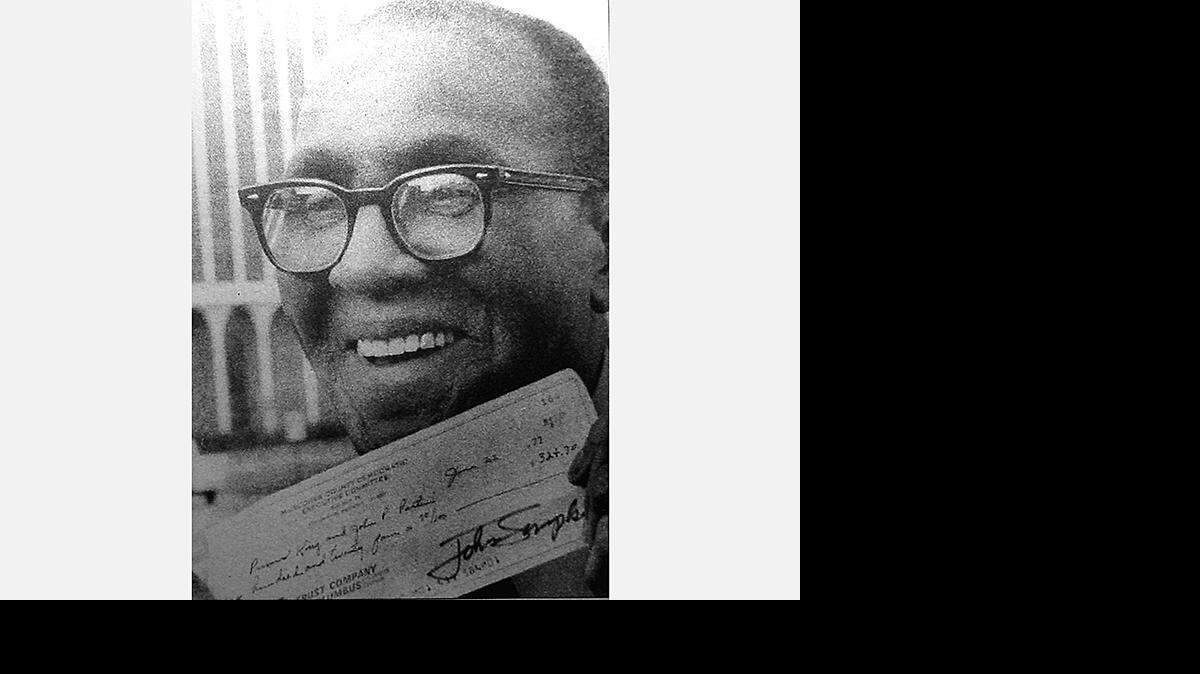
On the night before today's presidential primaries, about 75 people gathered at the Columbus Public Library on Macon Road to reflect on the life of Primus King, a local barber who opened the doors for black people to vote in the Democratic primary across the state of Georgia.
The black history event was organized by the Columbus Bar Association, in partnership with the Fountain City Bar Association, a group comprised of black attorneys. The attendees consisted of local attorneys, civic leaders and other professionals.
The two panelists were U.S. District Court Judge Clay Land and Chief Deputy Assistant District Attorney Al Whitaker. Pete Temesgen, a local assistant district attorney, served as moderator.
Before the panel discussion, the group watched a short video featuring Gary S. Sprayberry, chair and associate professor of history at Columbus State University. He described how King, at the urging of Dr. Thomas Brewer, a local physician who was later assassinated, decided to challenge the "white only" Democratic primaries that existed in the early 20th century.
On July 4, 1944, King went to the Muscogee County Courthouse and attempted to vote in the primary election.
When he entered the courthouse, a white detective grabbed him and asked him where he was going, Sprayberry said. King said he was going in to vote and he was roughly put out in the street. But he was determined and walked three blocks to the office of a white attorney, Oscar Smith, and told him he wanted to sue the Democratic Party in Muscogee County. King sued for $5,000 in damages, and federal judge T. Hoyt Davis ruled in his favor, awarding him $100 with interest. The decision was upheld by the U.S. Circuit Court of Appeals in New Or
leans. The defendants appealed to the Supreme Court, which declined to hear the case.
King, who died in 1986, didn't receive the money until 1977, Whitaker said the final amount was $324.70.
Whitaker talked about the human side of King, telling the group that he was born in 1900 in Russell County. He was the last of five children, and his father was a sharecropper.
"One of the things Primus decided was that he was not going to allow himself to stay in such a situation," he said. "Without a formal education, he worked as a yardman, chauffeur, butler for some of the prominent white families in Columbus."
Whitaker said King experienced discrimination and saved money so he could start his own business. He purchased a barbershop for $8, and within the first couple of weeks, the business had paid for itself. He attended a revival a few years later and was converted to Christianity. Whitaker said King became pastor of Mount Pleasant Baptist Church and later also preached regularly at another baptist church in Columbus.
Land told the group about other personalities in the case, such as King's lawyer, Oscar Smith Sr.
"I have researched the history of our court and have found some fascinating stories in that history and this is one of those," he said of the King case.
He said Smith's son, Oscar Smith Jr., later became a superior court judge in the Chattahoochee Judicial Circuit and one of the first things he did on his first day on the job was integrate the courtroom.
He said the judge who originally was supposed to hear the King case died unexpectedly, and Judge Davis was nominated to the position in 1945 by President Franklin D. Roosevelt.
Dr. Brewer and others in the community helped King raise $10,000 for the lawsuit, according to Land and others at the forum. King received phone calls from people threatening to throw him in the Chattahoochee River.
Arguments in the case, King vs. Chapman, began in the federal district court in September 1945. King's attorneys argued that his right to vote under the 14th, 15th and 17th amendments had been violated, Land said. One civil rights lawyer who participated in the case was Thurgood Marshall, who later became a Supreme Court justice.
Land said the Democratic Party was the only party with serious representation in the South during that time. All white primaries were a way to disenfranchise black voters, along with poll taxes and literacy tests.
Katonga Wright, of the Fountain City Bar Association, said the forum provided an opportunity for the community to explore a significant part of history.
"The purpose of the event was to enlighten the community about a civil rights precedence that happened right here in Columbus," she said. "A lot of times we take for granted that cases go before the Supreme Court, and we aren't familiar with them. But this is one that started here and had national implications."
Donna Hix, president of the Columbus Bar Association, said the two groups have been working together on several projects to benefit the entire community.
"I think it's part of trying to bring lawyers together and the community together for different events," she said. "And this just happened to be perfect timing for Super Tuesday."
Alva James-Johnson, 706-571-8521. Reach her on Facebook at AlvaJamesJohnsonLedger.
This story was originally published February 29, 2016 at 9:38 PM with the headline "Local lawyers celebrate Primus King ."