
‘I could not protect Deonn this one time,’ Carter’s mother says at killer’s sentencing
At 20 years old, Tyquez Darnell Davis is about to be shipped off to prison for the rest of his life.
He was sentenced to life without parole Thursday in the fatal 2016 shooting of Deonn Rashad Carter, 31, an autistic man popular with Columbus public safety workers he befriended through his job at a Piggly Wiggly grocery store on River Road.
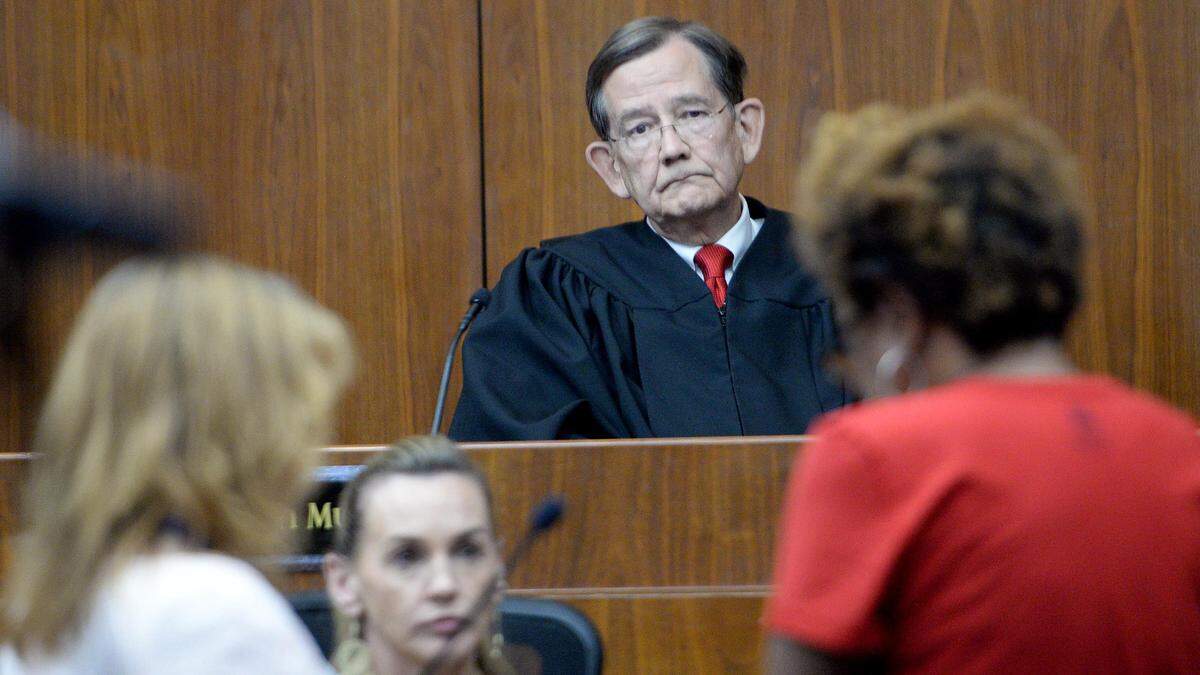
“It is apparent to the court that there are no winners here,” Judge Ron Mullins said while announcing the sentence. Carter’s family lost a loving son, and Davis now has ruined his life by killing Carter, Mullins said.
“And for what?” the judge asked. “A cell phone.”
Carter’s cell phone was the only thing taken from him during a robbery around 9:30 p.m. Aug. 9, 2016, when Davis and four other men riding in a stolen pickup truck accosted Carter at the Parkside at Britt David apartments on Armour Road, where Carter lived with his mother.
Two of the men who were with Davis said Davis got out of the truck, stuck a pistol in Carter’s face, and then shot Carter as Carter tried to run away.
As a result of being shot through the back of the left knee, Carter died from pulmonary thrombosis 11 days later in the hospital. His death came two days after police arrested Davis, catching him with Carter’s cell phone.
A jury last week convicted Davis of felony murder for killing Carter while committing the felony of aggravated assault, two counts of auto theft and one count of being a minor with a handgun, as he was 17 and had a pistol when police arrested him.
Davis also was convicted of aggravated assault, but for sentencing that count was combined with the felony murder charge.
Besides life without parole for felony murder, Mullins gave Davis an extra 15 years for one of the auto thefts. Any prison time on the other charges is to be served concurrently.
The testimony
Among those testifying during Davis’ sentencing hearing was Carter’s mother, Suzette Carter Ragland, who told the court she always felt it was her job to protect her two children, Carter and a younger daughter.
“I could not protect Deonn this one time,” she said through tears, later adding, “Losing my son is something I have to deal with for the rest of my life.”
She and Deonn had a “special bond” that carried them through the obstacles they faced, she said: “Deonn had autism, and because of this, he had to fight for his place in the world…. He did not have an enemy until that night he was shot.”
Whenever they faced some misfortune, Deonn’s love and optimism helped them overcome it, she said. He helped others in the same way: “He wanted everybody to know that they were loved and they were special,” she said.
A victim’s advocate read two letters from friends, one of whom worked with Carter’s mother: “Every time I saw him, he had a smile on his face which showed the love in his heart,” she wrote.
Another said she would always remember Carter’s laughter and singing, and his calling her to ask about her children, her grandchildren, and her dogs. He never forgot the dogs, she wrote.
“Deonn would never have known what it was like to hurt someone,” she added. She visited him in the hospital, before his death, and found him bewildered by the assault, she said: “He couldn’t understand why someone would do this to him.”
Davis’ grandmother also spoke, telling Mullins that Davis is “not an animal.”
She feels for Deonn’s mother, she said: “I cry every day. I cry every night…. I ask the court to have mercy on my grandson, my only grandson.”
Davis lived with his grandmother, police said.
Davis also spoke, telling the judge, “I’m sorry to Deonn Carter’s family that her oldest son has been taken from her.”
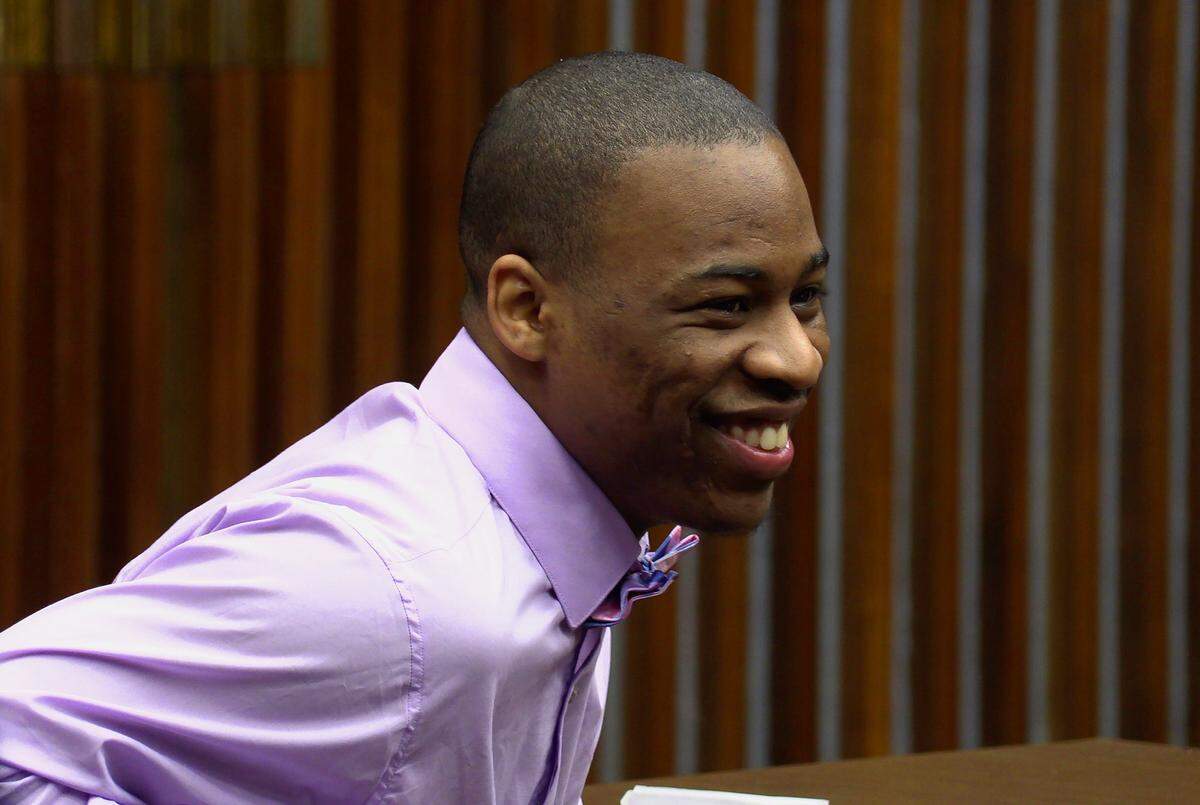
Prosecutor George Lipscomb reminded Mullins of Davis’ odd demeanor during the trial, when Davis frequently laughed and cut up in court: “He’s been very lighthearted, and has expressed no remorse,” Lipscomb said.
Defense attorney Jennifer Curry countered that Davis lacks the experience and maturity to deal with what he’s facing. “Everyone reacts differently under different circumstances,” she said. “When he gets nervous, he laughs…. I ask this court not to hold that against him.”
She argued Davis should be sentenced to life with possible parole, as life without parole should be reserved for a deliberate murder, and Carter’s dying days later from a blood clot loosed by a leg wound did not reflect Davis’ intent to kill.
Though it convicted him on felony murder, the jury found Carter not guilty of malice or deliberate murder, she noted.
Sentencing him to life with parole would give him a chance at rehabilitation, possibly allowing his release around the time he turns 47, she said.
Mullins cited Davis’ other crimes as evidence he was preying on the public in an increasingly violent manner. Besides Carter’s shooting and two auto thefts, he was charged in a series of burglaries reported around Columbus in the same time frame, and the court heard evidence that Davis shot a Phenix City man who came home to find Davis and his buddies burglarizing the man’s home. That was on Aug. 15, 2016.
Davis afterward posted a Facebook video bragging about the shooting.
He is not the last to be tried in Carter’s death. Though three of his codefendants pleaded guilty, a fourth, Dequoyae Devon Waldon, 25, still faces murder and assault charges. Waldon’s case was severed from Davis’, so he will be tried later.
The three who pleaded guilty to assaulting Carter were Travarus Daiquan Thomas, 22; Quamaine Quinzell Thomas, 21; and Tauron Mykevious Stephney, 21. The two Thomases, who are not related, testified during Davis’ trial, identifying him as the one who shot Carter.
This story was originally published July 25, 2019 at 4:29 PM.