‘A long journey’: Columbus man to be freed after 2007 murder conviction overturned
Applause erupted in a Columbus courtroom Friday as 10 family members and friends heard Derrick Cartwright soon would go free after serving 13 years in prison on a murder conviction that since has been overturned.
That joy soon was tempered by news that Cartwright would not be freed immediately, because the court and the Georgia Department of Corrections had yet to finish the paperwork required to secure his release.
Still, his mother Cheryl Cartwright was looking forward to her son’s coming home for the first time in over a decade.
“I’m just really praising God and the judicial system for letting him come on home,” she said as she and others waited outside the Muscogee County Jail on 10th Street. “He’s done served 13-and-a-half years, so we just want him home. It’s a blessing.”
Now 31, Cartwright was 18 years old when he was jailed in the April 3, 2006, death of Kevin Stafford, who was shot in the neck around 4 a.m. at Sixth Avenue and 35th Street before crashing his car into a house as he tried to flee. Stafford died later at the hospital.
Police got a warrant for Cartwright’s arrest after a witness told them she saw him shoot Stafford after asking Stafford, “Where’s my $40, mother f----r?” Stafford had driven to the area and parked to buy cocaine, authorities said.
Cartwright surrendered to police the following April 26. When he went to trial from April 30 to May 3, 2007, prosecutors had four witnesses say they saw him shoot Stafford, though their accounts were inconsistent. The defense questioned their credibility because two had felony convictions and a third was facing felony charges when he testified.
The defense alleged one of those witnesses was the actual gunman who wanted to pin the shooting on Cartwright.
The alibi
But the crucial issue turned out to be Cartwright’s alibi: He told police he spent that night with his family, and he had witnesses to corroborate that, but prosecutors maintained he made that alibi up after the shooting, and persuaded relatives to play along.
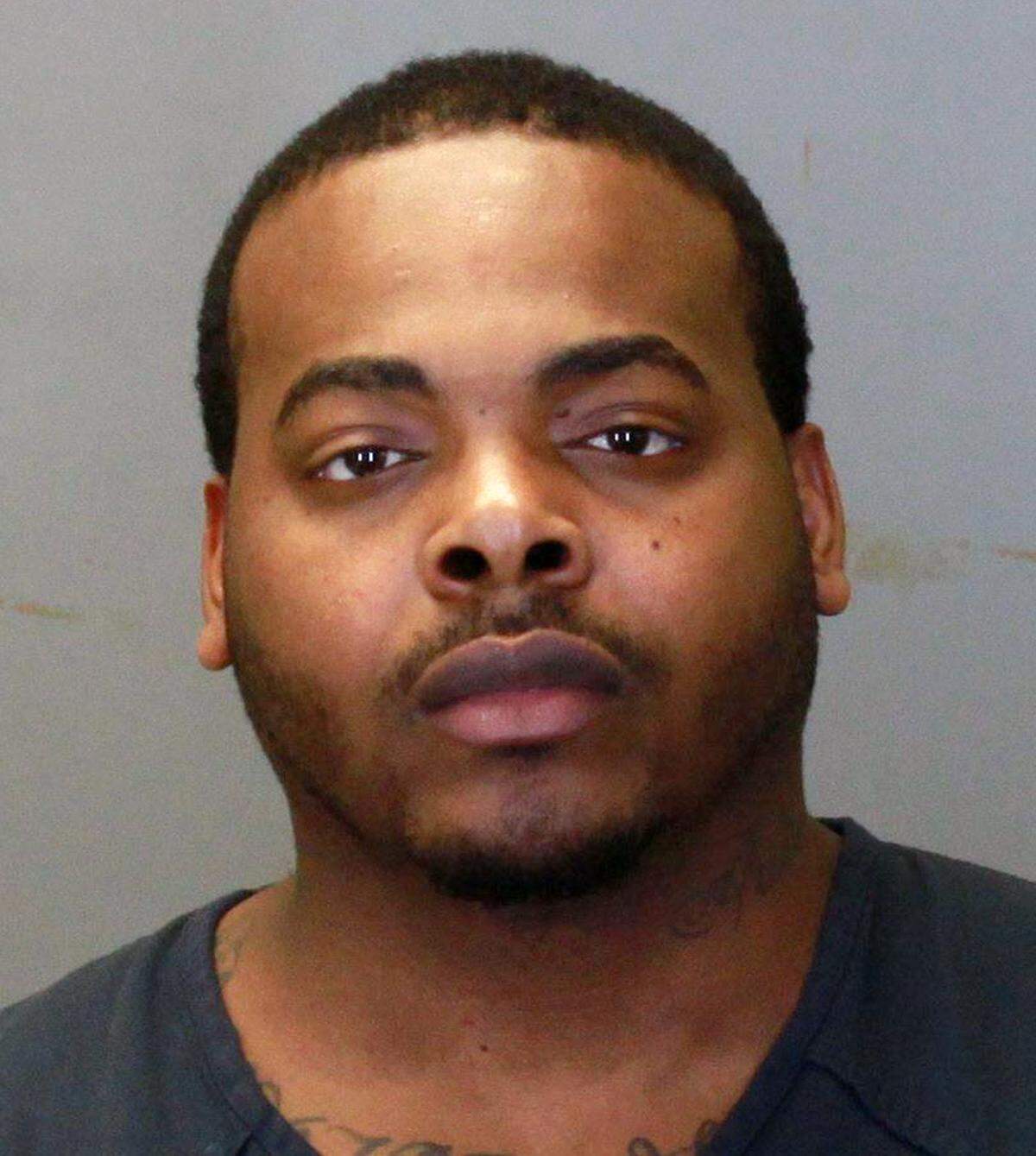
A detective, Andrew Tyner, told jurors in 2007 that Cartwright never claimed to have an alibi when police first questioned him. But earlier, during Cartwright’s May 2006 preliminary hearing in Columbus Recorder’s Court, Detective Bernard Spicer testified Cartwright did bring up an alibi.
The defense attorney at Cartwright’s murder trial never called Spicer to contradict Tyner, and the jury convicted Cartwright of murder, aggravated assault and using a gun to commit a crime. He was sentenced to life in prison.
The Georgia Supreme Court upheld his conviction in 2012, when Cartwright’s appeals attorney failed to file a transcript of Spicer’s testimony from Recorder’s Court to document the discrepancy in the two detectives’ accounts.
It was one of many setbacks that dogged the case as the years passed, but Cartwright and his family never gave up hope.
“I always just prayed and kept going to see him, and kept his spirits up, kept my spirits up,” his mother said Friday. “We had a lot of tough times over the years, you know, so we just kept our faith, and I’m just glad I’m still living to see this day, because I could have been gone.”
In 2016, Columbus attorney J. Mark Shelnutt took on Cartwright’s defense and filed a habeas corpus appeal.
Habeas corpus is a civil action the inmate files against his prison warden. It has been a principle of law since the nation’s founding, when the Constitution’s framers feared the government’s holding people prisoner without cause. It requires the authority holding the inmate to justify the imprisonment.
That also hit a setback, at first, when a Superior Court judge in Georgia’s Cordele Judicial Circuit denied Cartwright’s writ of habeas corpus.
Overturned
But Shelnutt appealed that to the Georgia Supreme Court, and this time the defense filed an affidavit from Spicer stating Cartwright had mentioned an alibi early in the investigation.
Because the prosecution at Cartwright’s trial had relied so heavily on Tyner’s testimony to argue Cartwright invented his alibi later, Spicer’s testimony to the contrary might have led to a different verdict, the state Supreme Court ruled unanimously March 4, granting Cartwright a new trial because his previous attorneys were ineffective.
Rather than wait months for another trial, Cartwright opted to take a plea deal Shelnutt worked out with Assistant District Attorney William Hocutt IV: He pleaded guilty Friday to voluntary manslaughter, before Judge Ron Mullins sentenced him to 20 years in prison with 12 to serve and the rest on probation.
With credit for the time he’s already been in prison, Cartwright became eligible for release — once the Department of Corrections and Muscogee Superior Court filed all the necessary documents.
During the sentencing, Hocutt told Mullins the plea deal was a “reasonable outcome” in light of the difficulties involved in finding witnesses from a trial held 12 years ago.
“It’s been a long journey,” Shelnutt said afterward. “I’m glad for him that he’s gotten time served, and I hope he’s going to be able to get out and go on with his life. He’s got a lot of family and a lot of friends who have stood by him all this time.”
They still were standing by Friday, waiting outside the entrance to the county jail, just yards from where Shelnutt spoke to reporters.
Asked what they’d do first, when Derrick Cartwright walked out, his mother said they’d go to dinner.
“We’re probably just going to go somewhere and eat good, and just rejoice — and hug him,” she said. “He’s got to get us all off him, because we’re going to hug him real tight…. I’m just glad he’s coming home.”