
Muscogee County courts prepare to move over 540 cases through grand jury. How will it work?
After a seven-month coronavirus lockdown left a backlog of pending cases, Columbus trial courts will take the first step toward resuming in-person proceedings Oct. 26 when the county impanels a grand jury with COVID-19 safety measures.
Muscogee County has had no grand juries or jury trials since the state declared a judicial emergency March 14. The chief justice of the Georgia Supreme Court’s orders prohibiting the assembly of jurors during the pandemic repeatedly have been extended since.
Those restrictions are easing now that the epidemic incrementally is subsiding here: Grand juries are allowed to resume, and jury trials soon will follow, though Chattahoochee Judicial Circuit Chief Judge Gil McBride said no trials in the six-county circuit are expected until January.
Grand juries are a crucial step in criminal prosecutions, as they review evidence in the most serious and complicated cases, to determine whether they’re worthy of further prosecution, which typically means taking them to trial. When grand juries don’t meet, it chokes the court system so all those involved are left waiting for justice.
“It leaves the cases, the victims and the defendants in limbo,” said Steve Craft, chief assistant public defender for the Chattahoochee Circuit. His staff attorneys represent defendants who can’t afford private lawyers.
How many cases are waiting?
In murder cases, defendants can spend months in jail, without indictment.
Resuming grand juries signals the courts finally are moving toward clearing the backlog, though Craft said it still could take a year and a half to catch up to where the system stood before the COVID-19 crisis.
Judge McBride said it’s a significant step in getting felony cases moving again: “I think the net effect will be to pick up the pace.”
But this grand jury will have a lot of work to do. District Attorney Julia Slater said more than 540 cases will be presented. However, thata’s just a portion of all the felonies in Columbus, Craft said.
“There are roughly 4,500 cases pending in Superior Court right now, of varying degrees, and a significant number of those are on bond,” he said, “on bond” meaning most of those defendants are not in jail awaiting trial. “The cases could range anywhere from simple theft to murder.”
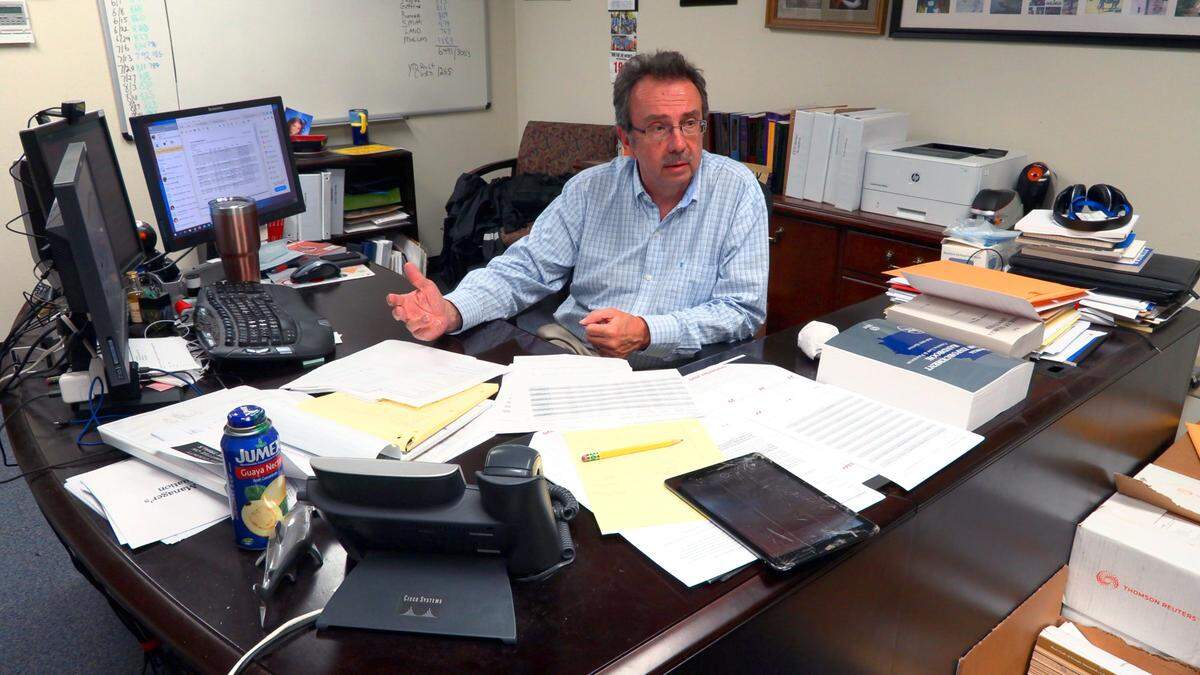
Last week, 87 of the Muscogee County Jail’s 919 inmates faced murder charges, said Sheriff Donna Tompkins, whose staff runs the facility.
“Some of those have been in jail two or more years,” Craft said of the murder suspects. “But in the big picture, that’s less than 10% of your jail population…. As a percentage of all the felony cases pending in Superior Court, that’s probably not even 1% of your cases.”
Among those who’ve been awaiting trial the longest is Brandon Conner, charged in Columbus’ only pending death-penalty case. He has been indicted for murder and arson.
Conner has been jailed since Aug. 21, 2014, the night the charred bodies of his girlfriend Rosella “Mandy” Mitchell, 32, and their 6-month-old son Dylan Ethan Conner were found in their burned Winifred Lane home. Conner is accused of killing both before setting the house afire.
Attorneys still are working through pretrial issues in the capital case.
Court and COVID
A “grand” jury is so named because it needs 23 jurors, as compared to a “petit” or trial jury that takes 12. Still at least 12 of the 23 grand jurors must consent to indict a criminal case for prosecution, just as 12 trial jurors must agree to reach a verdict.
To get 23 grand jurors, Muscogee County Jury Manager Sonya Kibble has summoned 175, expecting many will have legitimate reasons not to serve, in the midst of a pandemic. A few already have told her they can’t participate, Kibble said.
Among those exempt from jury service by law are:
- Anyone 70 or older, who may file an affidavit to have their name be removed from the jury list.
- Full time students at a college, university, vocational or other post-secondary school who document their school registration.
- Primary caregivers for children under 4, having no alternative childcare available.
Because of COVID-19, other factors likely will affect the public’s willingness to serve, said Craft, the public defender:
“We have virtual school. We have home school. How many parents are at home with their kids, and have nobody to look after their kids if they get subpoenaed for jury duty? We have people taking care of elderly family members. We have citizens who would normally be in that jury pool who themselves are at risk or may be sick.”
Slater, McBride and Kibble each said safeguards should alleviate such worries.
“We understand that, when you are called to jury duty, you are told that ‘laying all other business aside,’ you will attend, so we take their safety and their health very seriously,” Slater said.
Those summoned are to gather in what’s commonly called “the jury room” on the ground floor of the Government Center tower downtown. The room usually seats about 200, but with most of the chairs now stacked against a wall and the rest spaced out for six-foot social distancing, it now holds 72, Kibble said.
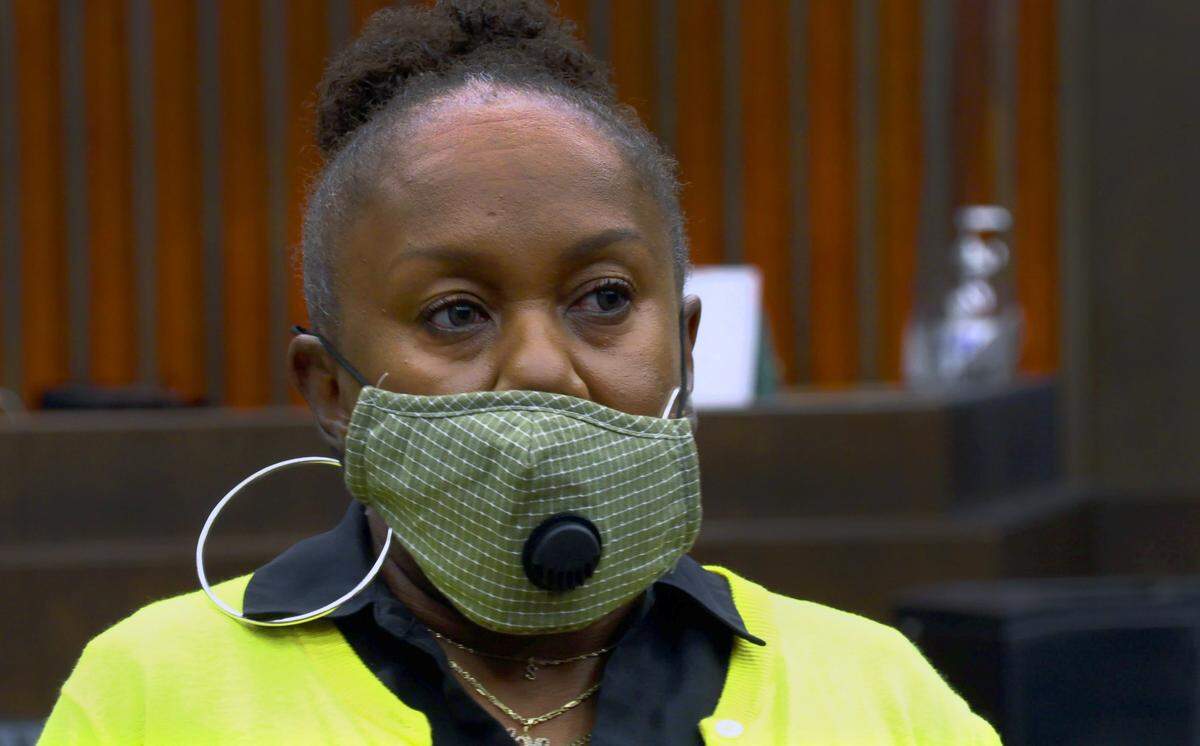
With that capacity, all of those summoned can’t be there at the same time, so they’ve been divided into groups to arrive on a staggered schedule, she said: “Some people are coming in at 8:30; we have another group that’s coming in at 9; and our final group will come in at 9:30.”
Once 23 have been selected, they will continue to use the jury room to review the evidence prosecutors present. The witnesses expected to testify will wait in a separate conference room on the same floor.
Normally a Muscogee grand jury meets only on Tuesdays for several weeks. This time they will meet more often to finish quickly and reduce the risk of a juror’s catching the virus elsewhere and bringing it back to the jury room, Slater said.
The grand jury will meet three days a week over three weeks, with morning and afternoon sessions divided by a lunch break, she said. The exception will be Nov. 11, Veterans Day, when government buildings will be closed for the holiday.
Health survey
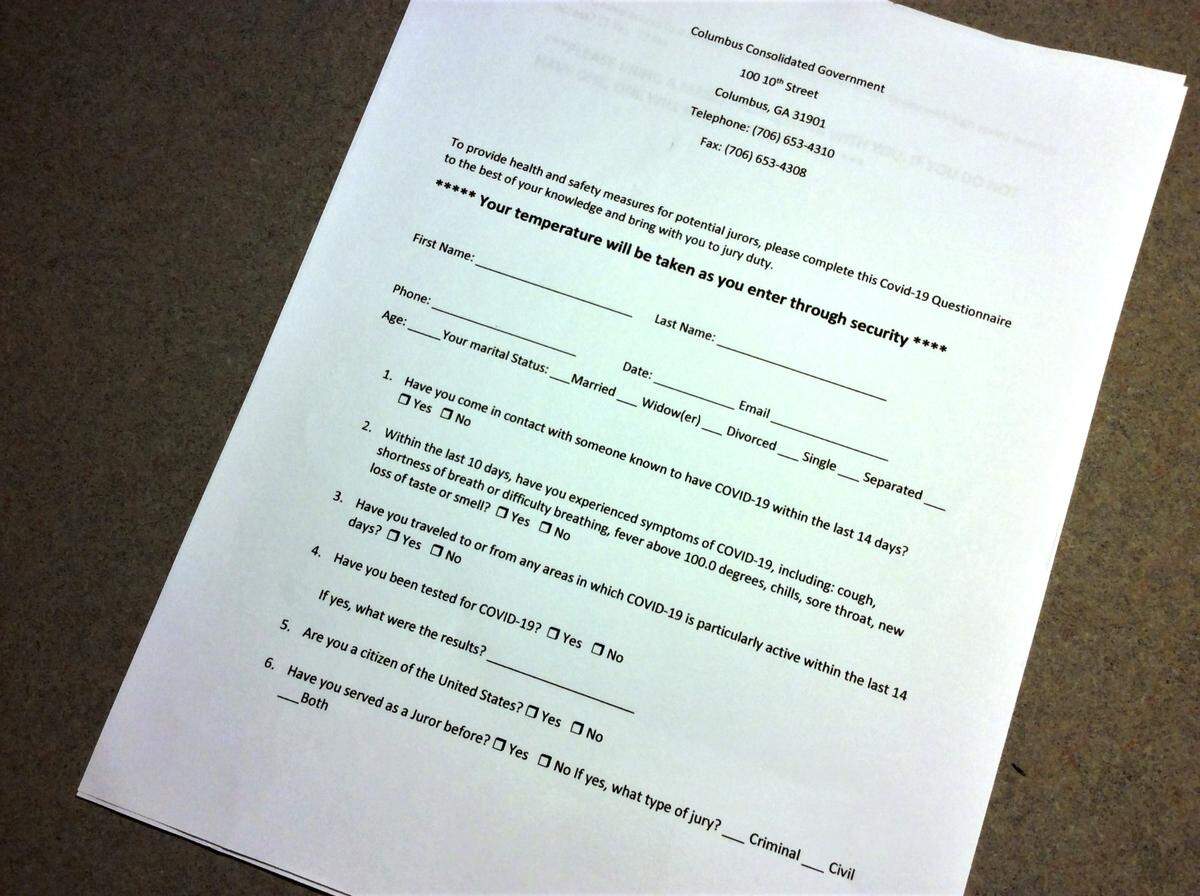
Along with a court summons, the prospective jurors were sent a survey asking health questions such as:
- Have they been in contact with anyone testing positive for COVID-19 in the past 14 days?
- Have they in the past 14 days traveled to any COVID-19 hot spots?
- Have they experienced symptoms in the past 10 days?
- Have they tested positive or negative for the virus?
Those with health reasons to be excused will be considered individually, McBride said: “When and if we get any positive replies, we’ll deal with it.... It’s still going to have to be handled case by case.”
Everyone entering the Government Center, including prospective jurors, is required to wear a mask and submit to a temperature check. Masks are provided to those who don’t have one.
Muscogee will not be the circuit’s first county to reconvene a grand jury: Harris County has issued summons for Oct. 20, when prospective jurors are to gather in what’s called “the old courtroom” in the courthouse in Hamilton. The room can accommodate around 55 people, with social distancing, Slater said.
Harris County’s grand jury is to meet for three straight days to review 75 cases, a rate of 25 a day, McBride said. “I think that’s probably a good indicator for what Muscogee County’s expected to do as well,” he said.
The circuit’s other four counties are Chattahoochee, Marion, Taylor and Talbot. Those less populated areas have not amassed as large a backlog of cases as Muscogee and Harris, so they’ll resume grand juries later, Slater said.
After indictment, the final step in the judicial process is a plea or a trial, but how to safely hold a jury trial is yet to be determined.
Each county in the circuit has formed a committee to establish COVID-safe procedures, with the aim of being ready for trials by next year — though trial jury summons will be sent six weeks in advance.
McBride believes the circuit will have its plans in place, come January.
“The idea is that we will restart jury trials on Jan. 4 in the Chattahoochee Circuit,” he said, noting judges already have adopted a 2021 schedule. “It would take something fairly extraordinary to make us back away from that at this point.”