
‘In a good place’: How a restaurateur went from smoking crack to helping addicts recover
Little things can mean a lot, to someone who once hit rock bottom.
It meant a lot to Ernie Perritt when he didn’t have to smoke a cigarette the last time Columbus police pulled him over for a traffic stop.
He used to smoke while the officer checked his background, because he knew he would not get a cigarette again for 30 to 60 days. “I knew I was going to jail. Most guys know it,” said Perritt, 62, a recovered cocaine addict. “So when I gave him my license, if I had one, he would go back to his car, and I’d be smoking cigarettes until he came back to put the cuffs on me.”
That was back when Perritt was hooked on crack, and kept violating his probation. It was also back when he still had a car, before he lost everything to his addiction, and wound up homeless.
He lived that way for years, until the day he walked from the Muscogee County Jail to Columbus’ Valley Rescue Mission, where the once successful restaurant and bar owner joined the mission’s recovery program, and put his old life behind him.
Today he’s still there, not as a client but an administrator. He joined the staff, rose through the ranks, and now coordinates food services and runs the men’s addiction program.
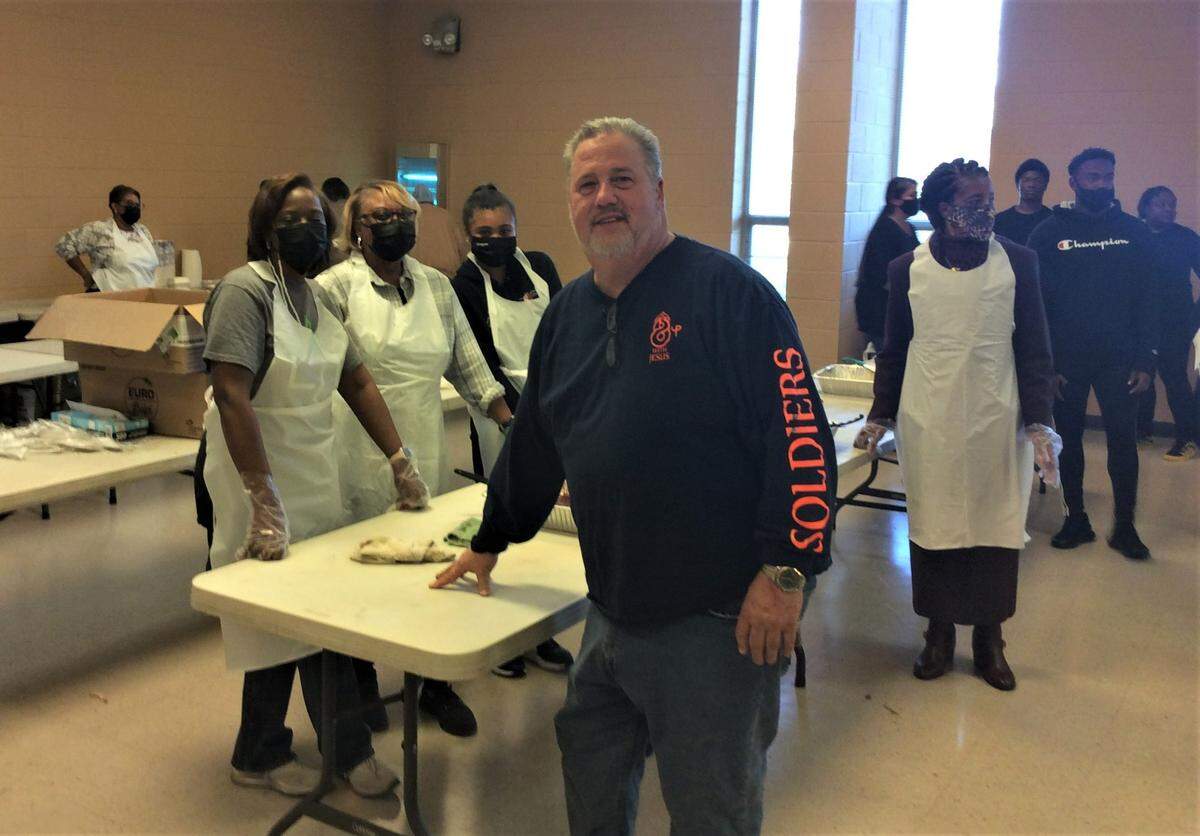
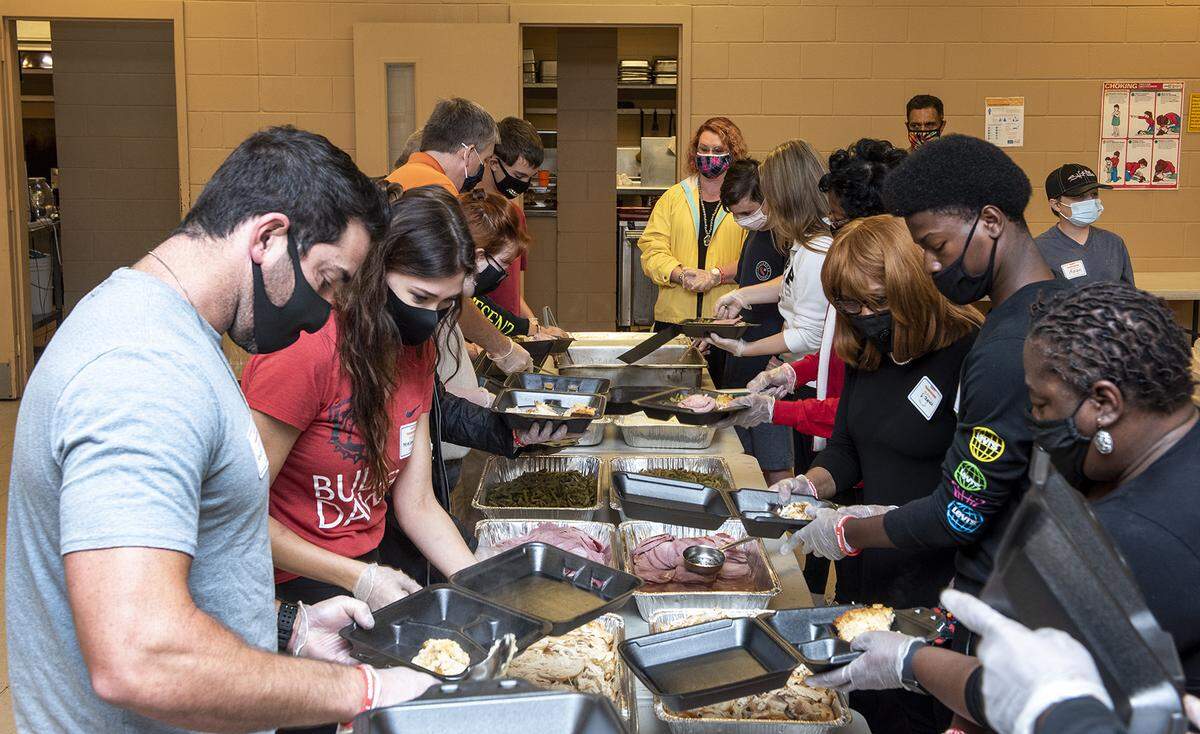
As he prepared Wednesday to feed the mission’s residents and guests for Thanksgiving, the former chef talked about the long, strange trip that put him there, a precipitous descent that followed repeated success in the restaurant industry.
He once ran his own place, Ernesto’s Harbor House in Columbus’ Gentian Corners shopping plaza, and later worked in management for Applebee’s and Marriott. Then he joined with a partner in buying a north Columbus bar, called Muldoon’s, that gave him a six-figure income.
That was enough money to buy a lot of coke, but he could never get enough, Perritt said as he sat for an interview in his office at the Second Avenue mission, where he usually arrives around 6 a.m. each day to coordinate meal preparations.
Thanksgiving is different only in the supply, he said: Donations pour in around the holidays. Shelves in the mission’s pantry were overflowing from food drives. The rest of the year can be a struggle, he said.
The mission abides by the Bible’s command to care for the least of these, he said, and it takes that seriously. It gets no government subsidy.
“If we start taking state and federal money, we’ve got to take Jesus out of the picture.... We’re a faith-based mission, and we’re going to stay that way,” he said.
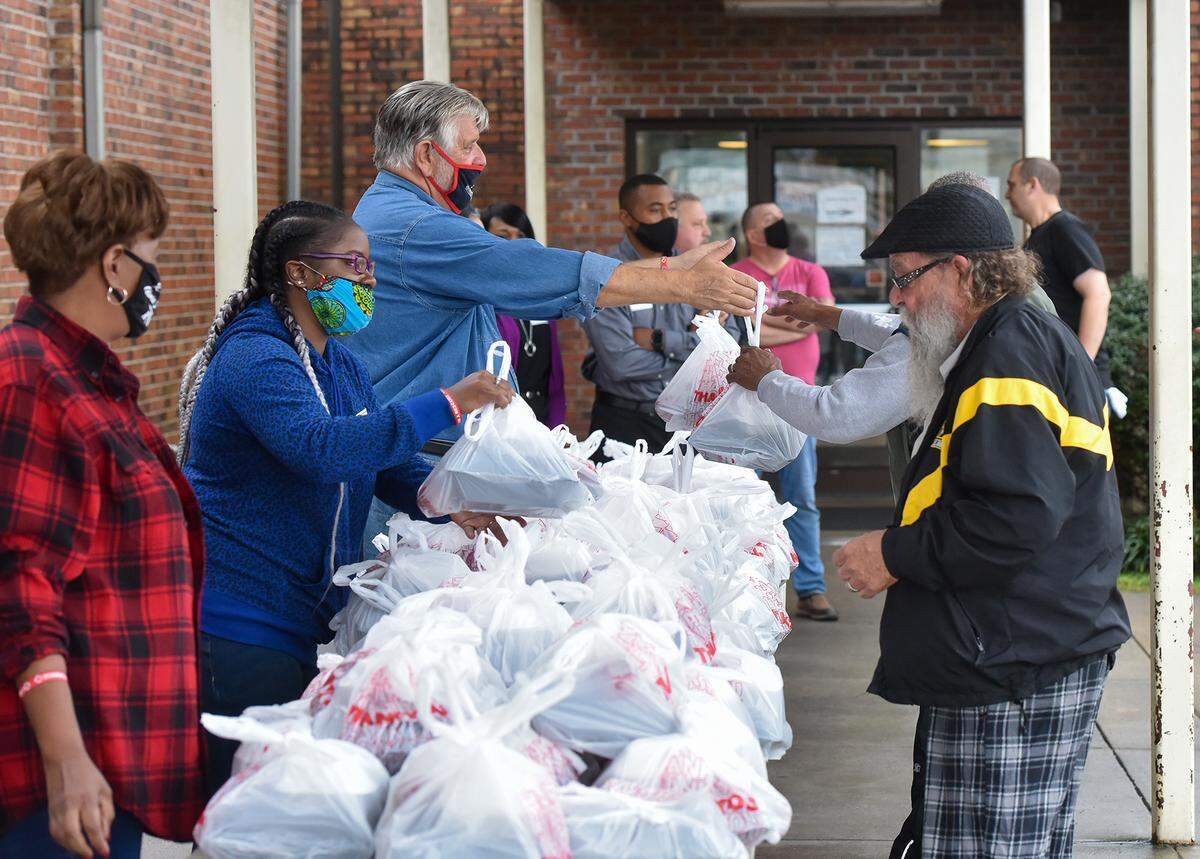
Though he once was among the homeless men staying overnight, many of those fed there are neither homeless nor unemployed. They are working families who aren’t making enough to be secure in their food supply, he said.
“We get whole families. We’ve got couples who bring their children every day. It’s not just the one homeless guy walking down the street. It’s food-insecure families.”
Rise and fall
Though Perritt knows what it’s like to lose everything, his life was not so challenging, in the beginning. A native New Yorker, he started out in the restaurant business, and was doing well as a manager when he came here at age 28.
He started Ernesto’s Harbor House in 1986, right after he moved here. Two or three years later, he closed it down and went to work for corporations. Along the way, he had four marriages. And he had two sons, who today are 33 and 36.
When he invested in Muldoon’s, in 2001, his career hit a peak: He had a profitable bar and restaurant where his friends came to drink.
“I went my whole career doing well, and Muldoon’s was definitely the capper,” he recalled. “I was making good money.... So at that point in my life, yeah, I thought I had it made. Then of course the drugs took over.”
He started using powdered cocaine, casually at first, and then not so casually: He could not get enough, and he could not quit. The business he so enjoyed became too much for him to handle.
“It wasn’t work. It was fun,” he said. “But it got to a point where I was doing so much coke I couldn’t even operate the restaurant.... I had to leave.”
That was around 2004. After that, he started smoking crack, to get a hard, quick rush. But he couldn’t keep a job, so he needed money. He borrowed and stole and did whatever he had to, to maintain his habit.
He lost friends, and his own family had to shun him, tiring of his constant need for cash.
“Once the family said enough’s enough, then I was doing whatever dirt I could, stealing, just whatever it took. It didn’t matter,” he said. “My two sons, they supported me. I couldn’t go to their house anymore, but they were behind me regardless. My family loved me still, but they kept their distance. When you’re addicted and they can’t help you, you don’t talk to them.”
His repeated run-ins with the law eventually got him sent to prison, for cocaine possession. From 2005 to 2009, he was in Georgia’s Dodge State Prison, near Hawkinsville, swearing he would clean up. “I’m thinking, ‘Man, this ain’t me. I didn’t grow up like this.... I’m never going to touch it again.’”
He used it again as soon as he got out. “I reported to the parole officer, the day I got released, with a fifty-dollar rock in my mouth,” he said. “And I took my first hit when I left her office, in the parking lot.”
Because he couldn’t pass a drug test, he repeatedly violated his parole. He went to jail so often that he took to huffing a cigarette every time the cops stopped him, until he no longer had a car to drive or a home to live in.
He started staying in crack houses, hanging out with other addicts. Occasionally he ran across someone he used to know, back when he was living the high life, and he always ducked away. “If I seen ‘em, I avoided them,” he said. “I would isolate myself. If I see somebody I know, I was ashamed. I still had the shame part, the guilt part, but you don’t care.”
He started every day with an oath that he would quit the crack. “I woke up saying I don’t want to do this anymore, every day, for five years, and never did nothing about it,” he said.
While he was homeless, from 2009 to late 2013, his parents died, never knowing their wayward son one day would return to the family fold.
Redemption
The mugshot from Perritt’s last arrest remains in a Muscogee County Jail database, dated Nov. 18, 2013. He did his time, then took that lonely walk to the rescue mission.
“As I walked here, I was 55 years old, and I knew I was tired of being tired, and I knew I just had to do something ... because I can tell you this, if I had stayed out there, I’d be dead,” he said.
He stayed overnight at the mission for three weeks before he entered the months-long recovery program, and took a mission job preparing food when he was done. He kept getting promoted until he reached a new peak in life, working with addicts who are much like he was.
Around 2016, his two sisters started talking to him again. One, a law enforcement officer 10 years younger, didn’t speak to him for five years. “The Lord restored all of that,” he said. “It took a while. I couldn’t rush her, because you know, she wasn’t going to put me back in her life if I wasn’t ready.”
His faith in Jesus gave him the strength to recover and turn to serving others, he said.
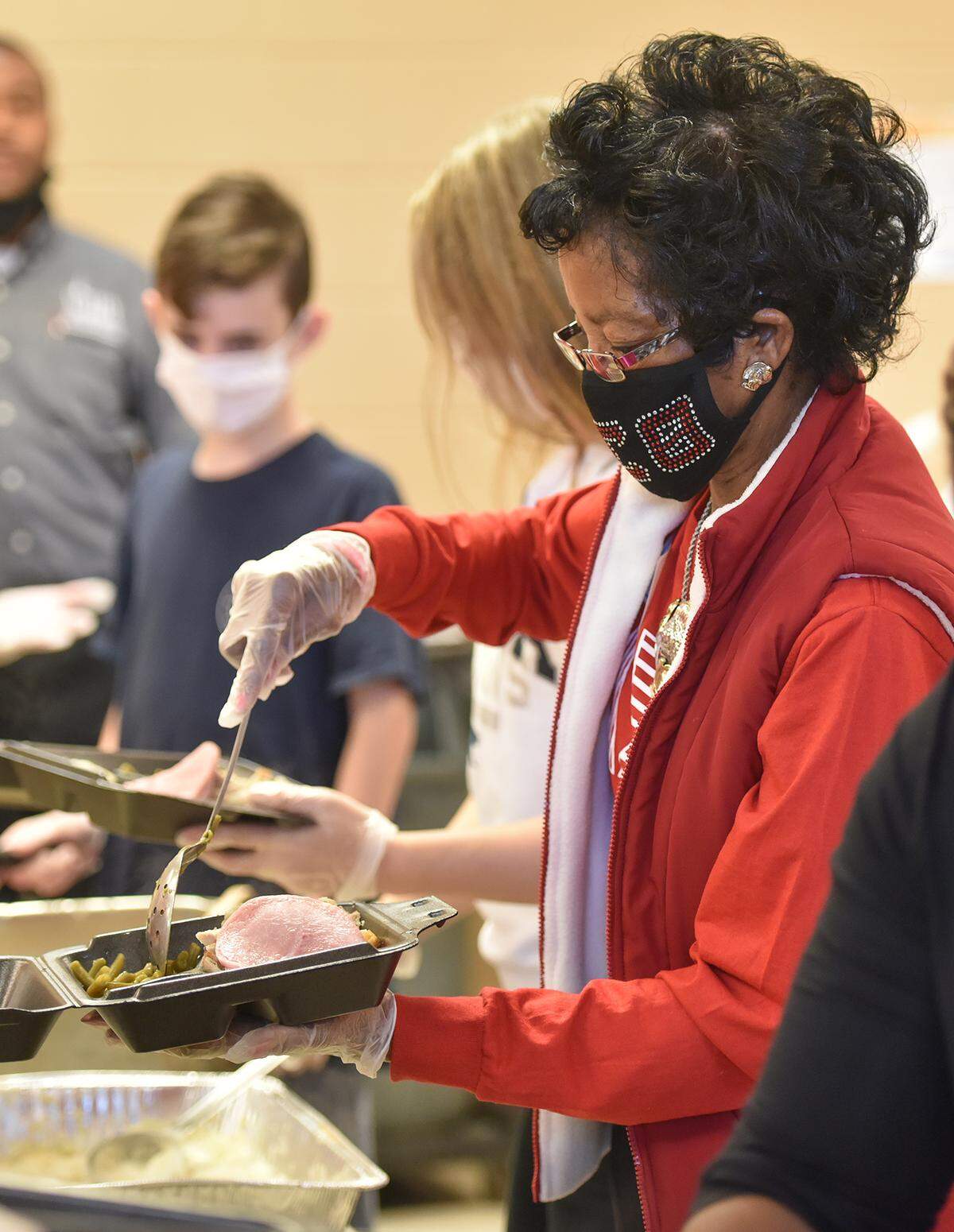
On Thursday, as he rushed around the mission kitchen directing 50 volunteers assembling hundreds of Thanksgiving meals, he felt as if the dark and desperate life he once led had vanished, like chapters ripped from his biography.
“Now it feels like it never happened,” he said, watching the frantic food preparations as a steady stream of people stopped by to pick up meals.
“I’m in a good place,” he said, a place where helping others recover, and not finding a fresh cocaine fix, is his daily challenge: ”That’s why the Lord put me here.”
This story was originally published November 25, 2021 at 2:31 PM.