
Judge in Columbus murder trial decides whether to acquit four defendants
A judge has decided to acquit two of the four suspects accused of killing a Columbus rapper over 16 pounds of marijuana in 2018.
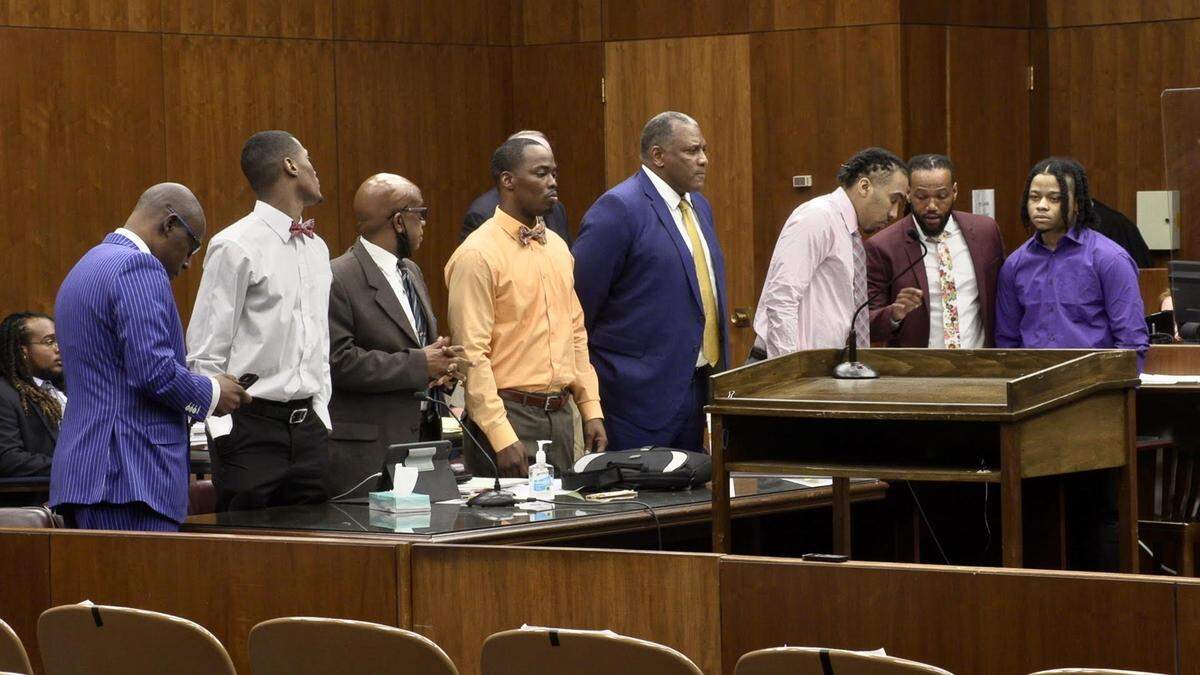
Senior Judge David Emerson dismissed the case against defendants Tyree Jaquan Smith and Johnathon Lemorris Swift. The judge said he found no evidence to sustain the charges against them.
The murder trial of Dover Bartlett Coppins and Tommie Jamal Mullins Jr. will proceed, he said.
Defense attorneys were set to make closing arguments in the trial Friday morning when they first asked Judge Emerson to acquit their clients, basing their arguments on the conflicting testimony of Eric Spencer Jr., the prosecution’s star witness.
After Emerson freed two of the four suspects, he postponed the closing arguments until 9 a.m. Monday, sending home jurors who had waited hours outside the courtroom as attorneys debated the acquittal motions.
Spencer testified last week against his former codefendants before the defense called him back to the stand Wednesday to recant his testimony.
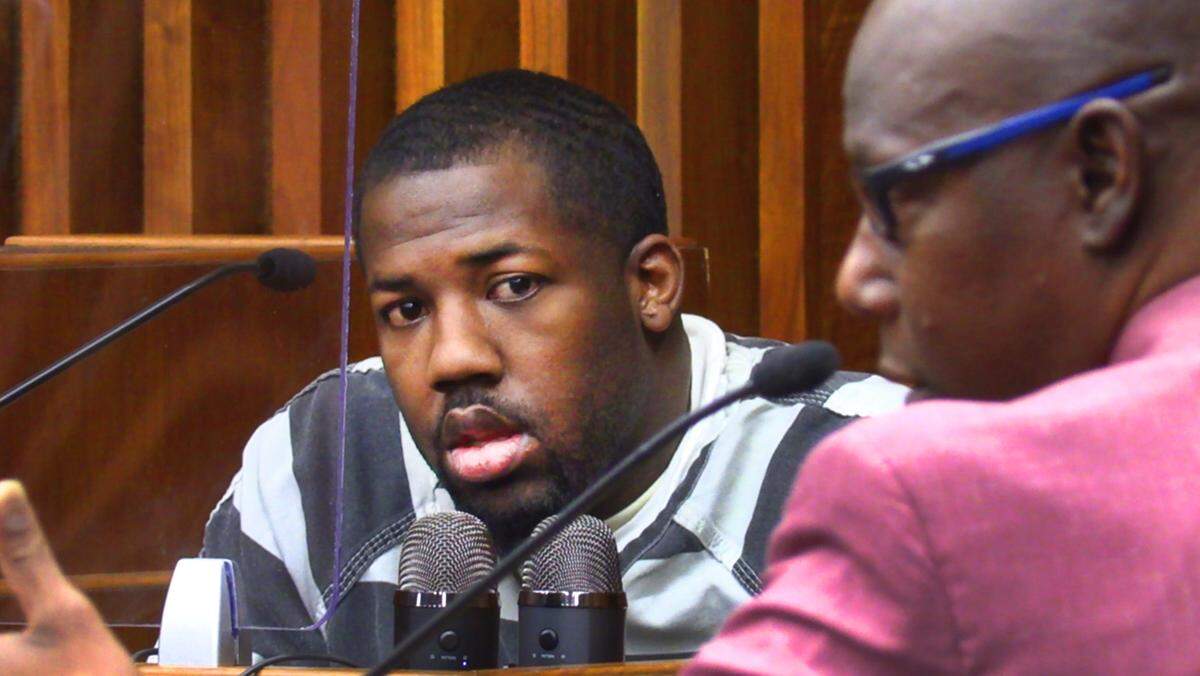
That’s when Spencer told the court he lied about “everything” he had said earlier about the men on trial for murder in the April 6, 2018 robbery and fatal shooting of Branden Denson, found dead outside a Buena Vista Road Pizza Hut.
Police believe Denson was robbed of a suitcase of marijuana before he was shot three times in the back and left dead in the driver’s seat of his Jeep Wrangler, where Pizza Hut workers found his body about 10:30 p.m.
Once charged with murder like his cohorts, Spencer pleaded guilty to lesser charges and agreed to testify “truthfully” against the other suspects. He testified March 24 and 25, giving a detailed account of each suspect’s role in the heist.
His testimony was crucial partly because police never recovered the marijuana or the .40-caliber Glock pistol used to shoot Denson. The only suspect’s fingerprint found on Denson’s Jeep was Spencer’s, near a door handle on the rear driver’s side, investigators said.
Denson was shot through that open door, leaving bullet holes in the back seat, but none penetrating the exterior of the car, police said. Detectives initially believed Spencer was the shooter, because the evidence put him in the position to shoot Denson.
The robbery and shooting were recorded by a security camera on a nearby grocery store, but it was too far away to show the robbers’ faces. Police said it still corroborated what Spencer told them had happened.
The defense attorneys argued Friday that once Spencer recanted his earlier testimony, prosecutors were left with no evidence to prove their clients’ guilt.
Cell phone records showed some of the suspects had been in contact with each other, and that the alleged ringleader had texted Denson, right before the shooting. But those records could not pinpoint the suspects’ locations, placing them only in a broad area served by certain cell towers.
Judge Emerson questioned prosecutors on that point, asking, “What is the independent evidence that corroborates Spencer?”
To rely solely on the cell phone records struck him as a “leap of faith,” he said.
Spencer in his earlier testimony said Mullins arranged the rendezvous with Denson; Swift drove the rented Elantra they used; Smith took the marijuana from Denson’s Jeep; and Coppins fired the fatal shots as they drove away.
Spencer said his role was checking Denson for weapons as Coppins held Denson at gunpoint.
After the robbery, the suspects again met with Mullins, who divided the marijuana among them, keep 10 to 12 pounds for himself, Spencer said in his testimony last week.
While recanting that testimony Wednesday, Spencer said he lied about “everything that I said that they did.”
Smith, 24, and Swift, 30, each had been charged with murder and armed robbery. Smith was represented by attorney William Kendrick, and Swift was represented by Michael Eddings.
This story was originally published April 1, 2022 at 2:38 PM.