
Jury reaches verdict in fatal 2016 marijuana robbery near Columbus Manchester Expressway
Valintino Tucker did not react Thursday when a judge told him he would not spend the rest of his life in prison for murder.
Acquitted of all charges in the 2016 fatal shooting of Ronald Davis in what police called a marijuana robbery, the 28-year-old sat stone-faced as Judge Maureen Gottfried announced the verdict jurors reached in an hour’s deliberation.
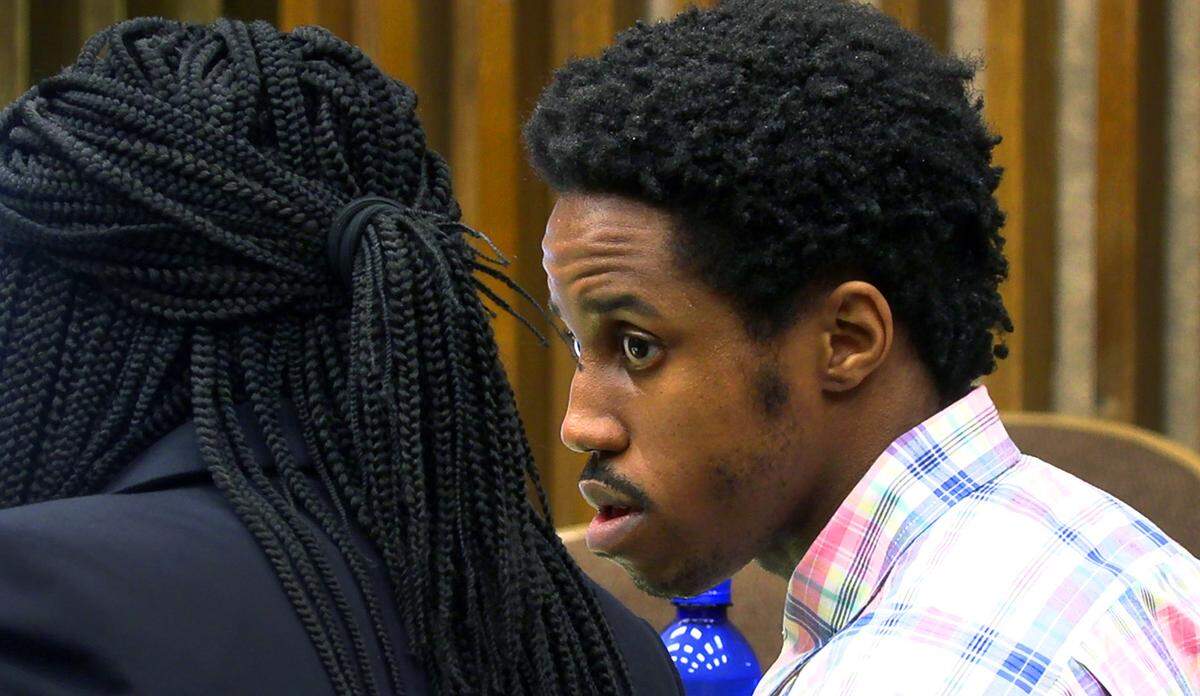
Tucker didn’t hear what the judge said, defense attorney Angela Dillon explained later. She had to lean over and tell him, she said:
“I looked at him to see why he didn’t react, and I said, ‘Mr. Tucker, did you hear them?’ And he’s like, ‘No, what happened?’ And I said, ‘They said not guilty,’ and then he reacted, obviously with relief.”
Had he been convicted, he would have been sentenced to life without parole, she said. Besides murder, Tucker was tried on charges of armed robbery and using a gun to commit a crime.
The witnesses against him included his brother, Saleem Jackson, who testified he first tried to shoot Davis to rob him of four ounces of marijuana, but his pistol didn’t fire.
Jackson said Davis began to beat him, slamming him against a table and throwing him against a door before his brother intervened, shooting Davis in the head. Davis died in the hospital the next day.
Another witness against Tucker was Dylan Haskell, whom Jackson had befriended in jail in 2015. Haskell testified that he set up the meeting between Jackson and Davis, expecting a marijuana deal, not a robbery.
The testimony
Jackson testified that he never intended to pay for the marijuana, and brought no money with him when he met Haskell at a Pizza Hut on the Manchester Expressway, near Davis’ 17th Avenue home.
He met Haskell there because he and his brother were from LaGrange, and unfamiliar with Columbus, so they arranged a rendezvous off Interstate 185, Jackson said.
Jackson brought a 9-millimeter Kel Tec pistol, and his brother also was armed, he said. He had told Tucker he planned a robbery, and Tucker had agreed, he said.
After meeting Haskell at the Pizza Hut, on Nov. 15, 2016, they all got into Jackson’s blue Dodge Caravan to go a few doors down 17th Avenue to Davis’ home, where Haskell and Jackson went inside, and Tucker waited in the van, the witnesses said.
Davis showed Jackson the marijuana, and Jackson demanded he weigh it to prove the amounts were accurate, Jackson and Haskell said. Then Jackson reached into his jacket as if to get cash, and instead drew the pistol, pointed it at Davis, and pulled the trigger, they said.
The gun only clicked, they said.
Then Davis grabbed Jackson and began to beat him, Jackson said, adding Davis had him pinned to the floor when Tucker came in, pointing his pistol and telling Davis to back off.
He said Davis let him go, but then grabbed him again, and that’s when Tucker shot Davis.
Haskell said he did not see the shooting, because he had run to another room where he froze in panic, fearing he would be shot next.
He stayed there until he heard tires squealing and saw the van speeding away, he said. Then he walked back to the Pizza Hut to get a pickup truck he left there, and went home, he said.

Acting on tips from Davis’ friends, and on surveillance video that recorded Haskell and his truck, police tracked Haskell down, and the information he provided led to the arrests of Jackson and Tucker, a detective testified.
Police located Jackson’s van and found his Kel Tec pistol under the front passenger’s seat.
A firearms expert testified the gun’s firing pin was broken. Police never recovered the gun used to kill Davis.
Haskell and Jackson did not go to trial because they pleaded guilty in January, agreeing to testify for the prosecution.
Here are their pleas and sentences:
- Jackson, 25, pleaded guilty to criminal attempt to commit a felony and in January was sentenced to 25 years with 12 to serve and the rest on probation.
- Haskell, 24, also pleaded to attempting to commit a felony in January and was sentenced to 10 years with four to serve and the rest on probation.
After the jury acquitted him Thursday, Tucker was expected to be released. His attorney said he had been held in jail for six years awaiting trial, knowing he could go to prison for life.
“He’s managed. He’s made it through,” Dillon said. “But of course he’s got to come out and get reoriented. He was saying, ‘I’ve got to get out. I don’t have a job.’ He can go home to his family, but it’s pretty trying, to have that hanging over your head: It’s not just the fact that you’re serving time, but you’ve got life without parole hanging over your head.”
This story was originally published May 6, 2022 at 9:06 AM.