
‘Please send somebody!’ Widow recalls finding body as Columbus man goes to trial for murder
Tomeka Pugh instantly sensed something was wrong as she arrived at her Hunter Ridge Circle home, and she was right.
“My door was standing wide open,” she recalled, and all the lights at the house looked like they were on. She told her two sons, then ages 17 and 10, to wait in the car while she went in, calling for her husband James Richardson Jr.
She did not hear any answer, nor any other sound: “It was just weird,” she remembered Tuesday, testifying in Muscogee Superior Court. “It was eerily quiet.”
That quiet soon was shattered by her screams, as she found her spouse dead in the dining room, face-down, with blood on his face and on the floor beneath him.
Her screams drew her sons’ attention, and she had to rush to close the door so they wouldn’t see their stepfather’s body. Because her cell phone was dead, she called 911 on a landline.
“Please send somebody!” she pleaded on the 911 recording. “He’s bleeding everywhere!”
As prosecutors played that recording in court, Pugh began to sob on the witness stand. In the courtroom audience, other family members also began to cry, some leaving the room.
Pugh was the first witness in the murder trial of Cyrus Howard Sr., whose mother lived in the same neighborhood, though Pugh did not know him. She could testify only to what she recalled from the day her husband died, on July 30, 2018, when she came home to find his body at 9:19 p.m.
She could not say why Howard an hour earlier had walked from his mother’s home a few doors down, called her husband to the front door, and gunned him down, continuing to shoot as Richardson tried to get away, hitting him five times.
Pugh was not alone in seeing no motive for the homicide: Columbus police, prosecutor Veronica Hansis and defense attorney William Kendrick all acknowledged that no reason Howard has given for killing Richardson makes any sense.
And no one, including Howard and his lawyer, has denied that he did it.
Howard, 52, is on trial for murder, aggravated assault and using a gun to commit a crime, and he faces life in prison if convicted.
The aftermath
After shooting Richardson, who was 36, Howard walked back to his mother’s home, put his shoes and other clothing in a bathroom tub, and poured bleach over them. He later gave the gun to a neighbor living near an apartment Howard rented on Lee Street, and the neighbor turned it over to police.
In the days following the homicide, the police were baffled.
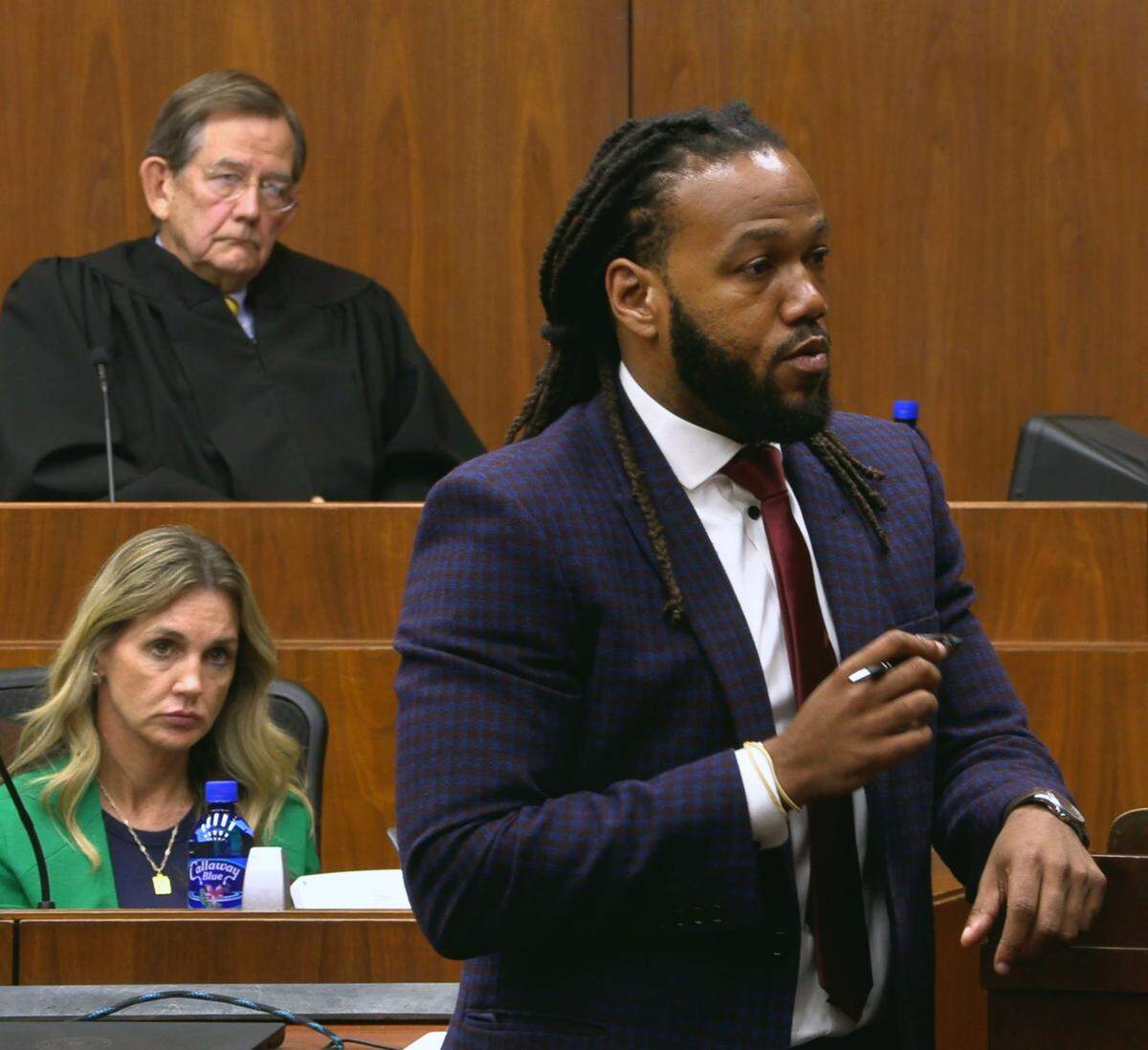
“Actually, they can’t figure it out,” Kendrick told jurors in his opening statement.
They suspected Howard, because neighbors saw Howard going to and from Richardson’s home, but they had no motive.
Even when Howard admitted shooting Richardson, in interviews with police Detective Stuart Carter on Aug. 2 and Aug. 8, 2018, his explanations made no sense.
Howard said he feared Richardson threatened his mother, though Richardson had made no threats. He mentioned feeling menaced by the Gangster Disciples street gang and by a group he called the “Black Disciples.” When asked what they wanted from him, Howard told Carter, “To make a certain decision I can’t speak of, sir.”
He could not connect Richardson to either of the groups mentioned, yet said he feared they were going to break into his mother’s house and hurt her. When Carter asked why someone would hurt his mother, he said, “Sir, I have no idea.”
No evidence corroborates anything Howard said about Richardson threatening his mother, Hansis told the jury Tuesday. Jurors would not hear that Richardson was “a violent gang member,” she said.
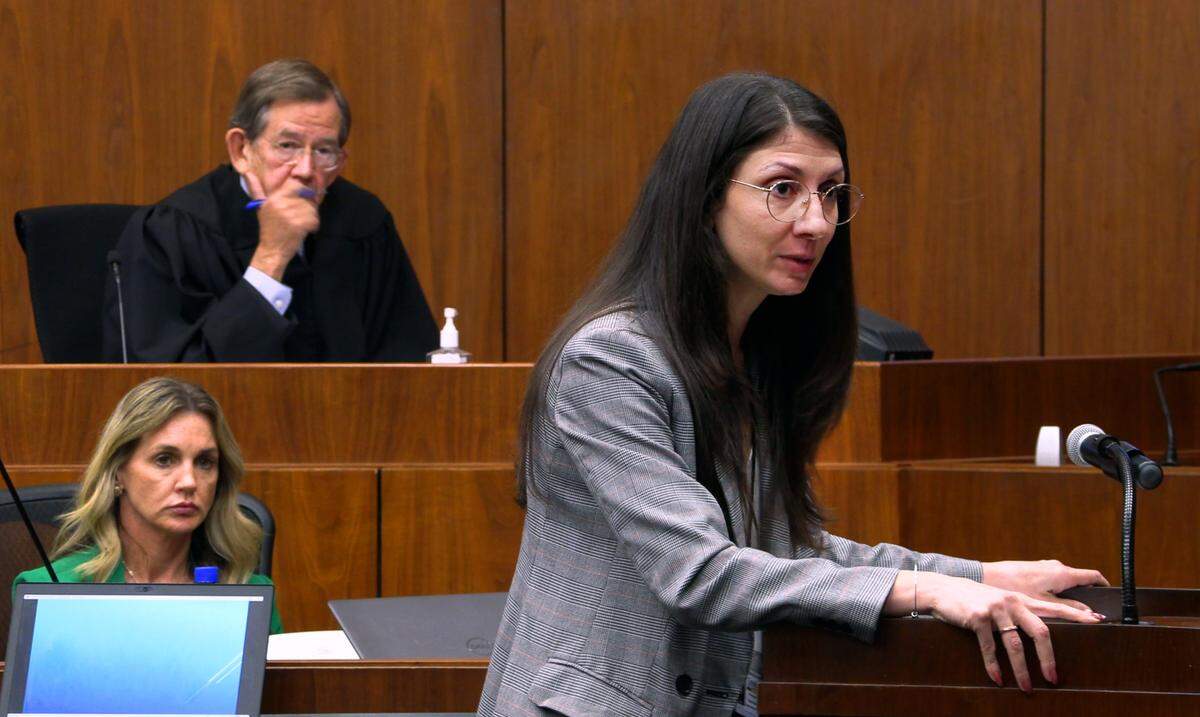
Still Howard believed that, Kendrick countered, and that made the threat real to him: “If things don’t make sense, there’s a reason they don’t make sense,” he said. Howard still had a “reasonable belief” he was protecting his mother, the attorney said. “He’s just as truthful in his mind about why he did what he did.”
Kendrick in pretrial hearings has said he believes Howard was delusional. But he is not defending Howard on the claim Howard was insane at the time of the slaying, so Judge Ron Mullins has restricted what he can tell jurors about that: He can’t use terms such as “delusion” or “delusional,” for example.
Richardson’s widow was asked about the threats Howard alleged, as she testified Tuesday, and she also was bewildered.
“It doesn’t make sense at all,” she said, later adding, “My husband would never threaten an elderly person.... That was not my husband’s thought process.”
Other witnesses testifying Tuesday included neighbors who saw Howard walking to and from Richardson’s home, and noted he was behaving oddly, not stopping to talk, seeming focused on a particular errand. “We usually speak,” one said, but Howard only said “Hey” as he walked passed her. Another witness said Howard didn’t seem to notice him at all.
The jury spent Tuesday afternoon reviewing videos of Howard’s interviews with Carter, recordings that police and prosecutors say show no evidence of a mental health issue, as Howard is coherent and appears to understand what’s happening.
This story was originally published November 1, 2022 at 3:23 PM.