
Russell County judge rejects taking 5-year-old’s alleged killer off jail suicide watch
Editor’s note: This story includes reporting on a graphic, violent crime.
The man accused of buying a 5-year-old girl’s sexual favors from her mother before cell-phone recording himself raping and strangling the child again faced a Russell County judge Wednesday.
Almost exactly a year after he was arrested and charged in the death of Kamarie Holland, Jeremy Tremaine Williams came to court to ask Circuit Judge David Johnson to have him removed from suicide watch at the Russell County jail.
Johnson heard about 30 minutes of testimony from the county detention director and county sheriff before denying Williams’ request.
Also Wednesday, Williams was arraigned on new charges involving another child victim, following a grand jury’s indicting him Oct. 26 for first-degree sodomy, first-degree rape, and sexual abuse of a child younger than 6.
District Attorney Ken Davis could not recall when that offense is alleged to have occurred, but said it preceded Holland’s homicide on Dec. 13, 2021.
Johnson consolidated that case with Holland’s, during Wednesday’s hearing, so Williams will be tried on all the charges at the same time.
Davis, who’s to retire at year’s end, concluded the hearing by announcing he was ready for trial, prompting defense attorney Charles Floyd III to object that Williams, who has pleaded both not guilty and not guilty by reason of insanity or mental defect, had not yet had a court-ordered psychological evaluation.
Johnson ordered that evaluation when Williams last was arraigned on April 5, on charges stemming from Holland’s slaying.
The judge told Davis that setting a trial date was not a matter to be weighed during Wednesday’s proceedings.
Williams’ plea based on his mental state means he claims that at the time of the crime, he was “unable to appreciate the nature and quality or wrongfulness of his acts.” Russell County District Attorney-elect Rick Chancey has said that were a jury to accept that defense, Williams would be sent to an institution for the criminally insane.
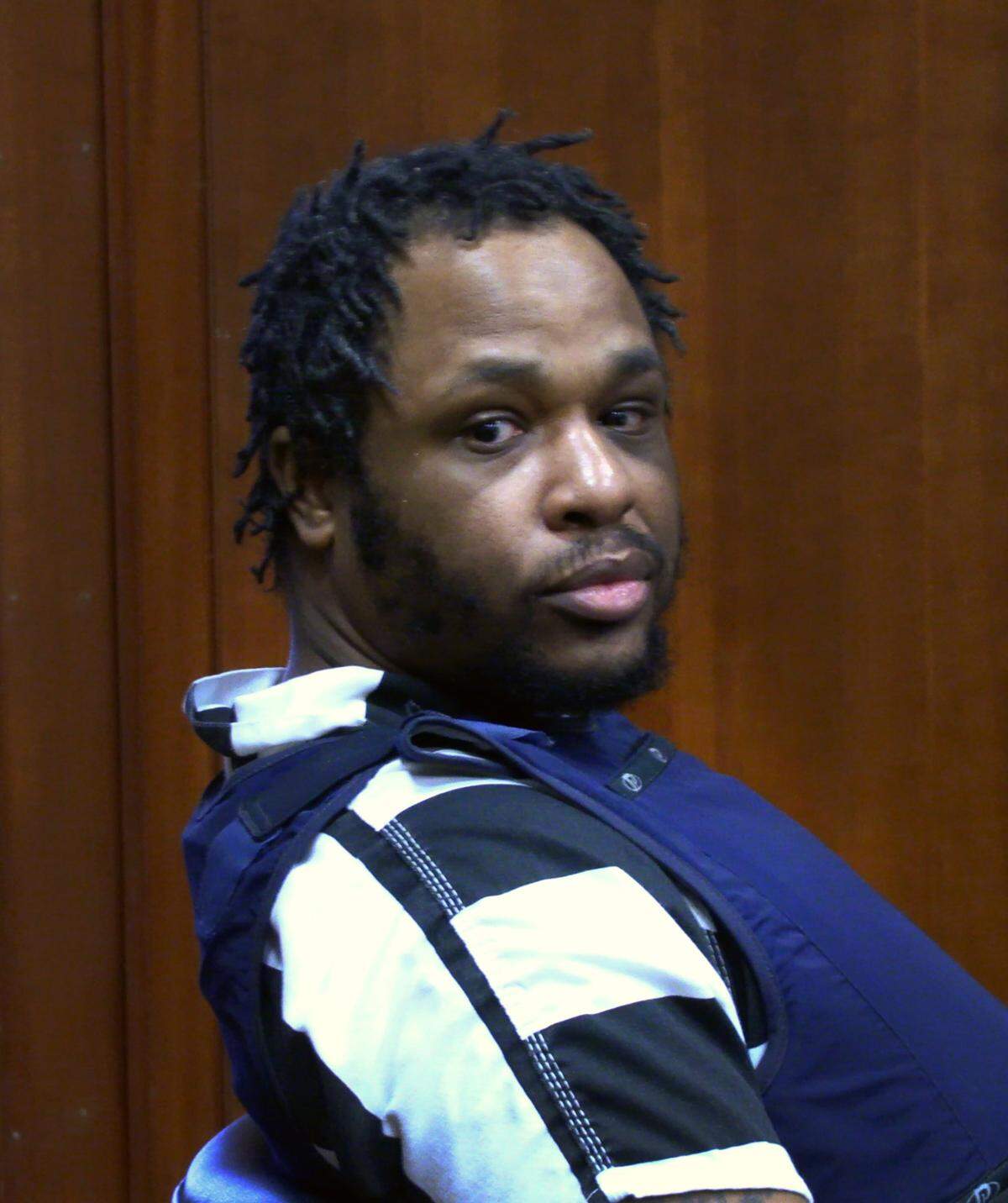
Suicide watch
Floyd told Johnson that to protest being kept on suicide watch, Williams was refusing to cooperate with his defense attorneys and with jail staff.
The attorney cited a series of reports from psychologist Dr. Donna Fleitas, noting Williams was not aggressive and did not appear to be at risk of harming himself.
The restrictions left Williams in isolation, “basically sitting in a cell with a piece of tissue paper,” to ensure he had no means to kill himself, Floyd said.
In the year he has been jailed, Williams was released from suicide watch only for two months, and then isolated again, the attorney said.
Steve Johnson, the jail detention director, testified that Williams remained on suicide watch because he made “numerous statements” that either he wanted to kill himself or wanted deputies to kill him.
Johnson cited an April 8 report that Williams was in a jail shower when the suspect said that “reality has hit him that he actually killed that little girl, and he didn’t want to live anymore.”
.jpeg "K Holland_fitted (1).jpeg")
Williams admitted then that he had attempted suicide by hanging himself with the elastic band from an old jail uniform, and officers afterward found the band hidden in his cell, Johnson said.
He said Williams is not subject to all the typical suicide-watch restrictions: He’s allowed to have a toothbrush when he showers, and toothpaste, a comb and toilet paper.
He was given a mattress with an attached pillow, and allowed to have visitors via video, Johnson added. He said Williams could have a Bible and meet with a minister, if he requested that.
Testifying after Johnson, Sheriff Heath Taylor called Williams’ restrictions a “modified suicide watch” because of the extras he’s allowed.
“The reason he went back on suicide watch is he attempted suicide,” said Taylor, of Williams adding that he “never had anybody say he wanted to kill himself as much as he has.”
Johnson filed a written order denying the defense motion:
“There was no evidence or testimony that the defendant has been denied any constitutional protections or rights,” the judge wrote. “He has been given medical treatments and right to counsel. Absent some showing of a violation of the defendant’s constitutional rights or protections, the court sees no grounds to intervene in this matter.”
In court the judge said that if Williams still refuses to cooperate with his defense team, “that’s a decision that he’s making.”
After the hearing, Davis said the next step in Williams’ case is his psychological evaluation, which is to be conducted at the Taylor Hardin Secure Medical Facility in Tuscaloosa.
Mother charged
Besides Williams, Kamarie Holland’s mother Kristy Siple also is charged in the homicide, accused of trafficking her daughter to Williams for a so-far undisclosed amount of cash.
Siple, also known as Kristy Hoskins, faces three counts of felony murder based on rape, sodomy and first-degree kidnapping.
Both she and Williams were indicted for conspiracy to commit sex trafficking, the charge accusing Williams of agreeing to pay Siple “for the use of her daughter.”
Williams was indicted also for human trafficking, abusing a corpse and producing child pornography, plus capital murder for killing someone younger than 14, and three more counts of capital murder for causing a death in the course of kidnapping, rape and sodomy.
He allegedly recorded himself committing the crimes, authorities said.
Williams faces execution, if convicted, but prosecutors are not seeking the death penalty in Siple’s case. If convicted, she faces life in prison.

The evidence
Siple reported her daughter missing from her Bowman Street home in Columbus on Dec. 13, 2021, the same day authorities searching for the missing girl found her slain in a vacant house Williams once occupied on 15th Avenue in Phenix City. Investigators captured Williams later that night.

They arrested Siple on Dec. 28, after further investigation revealed she had trafficked her daughter to Williams, said Sheriff Taylor
Johnson has issued a gag order that prohibits authorities from disclosing details of the ongoing investigation, though attorneys are free to comment on court procedure and the status of the case.
This story was originally published December 14, 2022 at 1:47 PM.