
‘I didn’t kill Mr. Miley’: Suspect testifies in Columbus murder trial over drug deal
The man accused of killing an alleged drug dealer during a midtown marijuana buy repeatedly proclaimed his innocence on the stand Thursday in his murder trial.
“I didn’t have anything to do with the shooting or killing of Devion Miley,” Zajaliq Riley said of the 20-year-old who died from a shot to the back after selling two ounces of marijuana to Riley and Detric Bush.
Riley had to refute earlier testimony from Bush, who pleaded to lesser charges in July and agreed to testify.
Bush said the three men were in Riley’s Honda Civic on Boxwood Boulevard, with Riley driving, when Riley ordered Miley to get out of the back seat, and shot Miley as he exited.
Miley walked across the parking lot of the Midtown Shopping Center at 3200 Macon Road and collapsed, bleeding to death on the way to the hospital.
In his testimony, Riley said Miley got out of the car unharmed after Bush paid him $500 cash for the marijuana.
Miley told Bush and Riley he was going to walk the few blocks back to the Efficiency Lodge at 1776 Boxwood Place, where he had been living, Riley said, and declined a ride there.
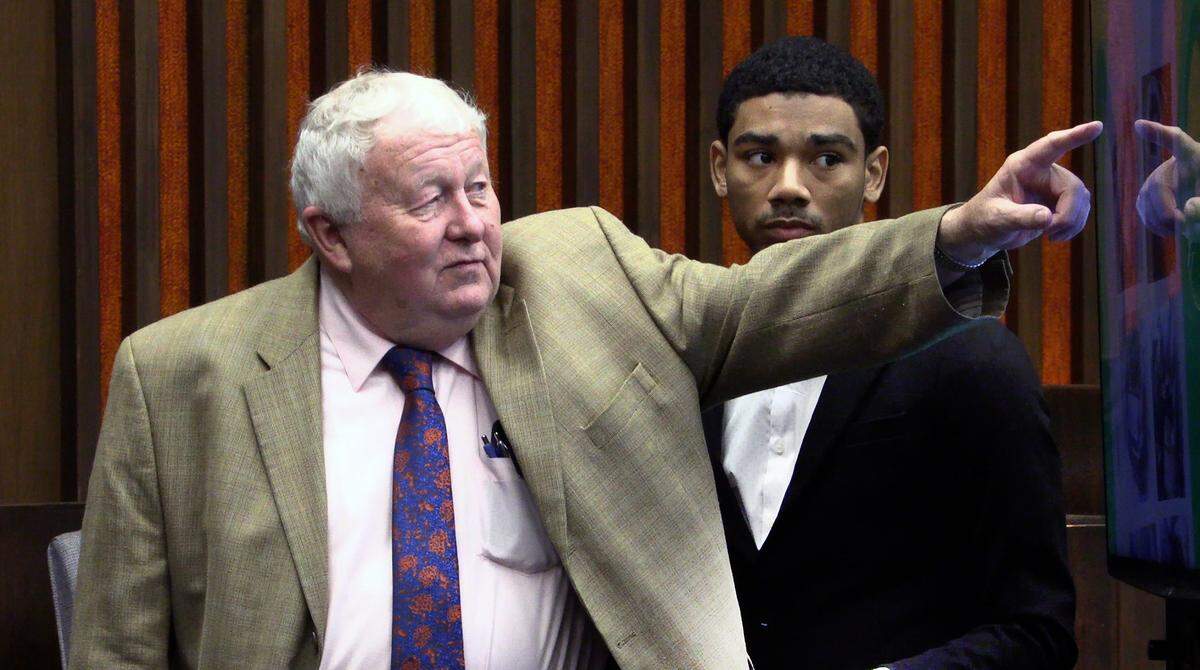
“I didn’t shoot Mr. Miley,” Riley told defense attorney Mike Garner.
The drug deal
Otherwise Riley’s testimony matched much of what Bush told jurors happened the night of May 8, 2021.
He said he and Bush went to the Efficiency Lodge to buy marijuana after contacting Darius Requenna, who had advertised the drug on Facebook and Instagram. Requenna put them in touch with Miley, who was with four or five other men when they met outside the extended-stay motel.
That’s where Bush bought two ounces of marijuana by paying Miley electronically on his phone, using the Cash App to transfer funds, Riley said. They left before Bush’s girlfriend called to say he had taken money from her account.
“I was barely up the street before he received that call,” Riley said. They turned around and went back, so Bush could tell Miley had to return his girlfriend’s money.
Police Sgt. Thomas Hill testified Wednesday that investigators tracked those online transactions, finding $480 went from Bush to Miley at 10:03 p.m., and Miley sent the money back at 10:13 p.m.
Then Riley tried to pay Miley using the Cash App, and repeatedly was rejected “for security reasons,” Riley testified.
Hill said police tracked those attempts as well, including:
- $430 rejected at 10:18 p.m.
- $220 declined at 10:25 p.m.
- $430 rejected at 10:41 p.m.
- $430 declined again at 10:45 p.m.
- $220 rejected at 10:46 p.m.
Finally, one of Miley’s older associates suggested Miley, Riley and Bush drive to the McDonald’s on Macon Road to use the Wi-Fi system there, and they left.
Though Bush said he paid Miley in cash before they left the Efficiency Lodge, Riley said that didn’t happen until they were on the way to McDonald’s. That’s when Miley gave Bush the marijuana, and got out to walk back, he said.
Another discrepancy in the defendants’ accounts was Bush testifying that he was the only one who bought marijuana, and Riley did not because he couldn’t pay.
Riley said they split the marijuana after they drove back to where Bush was living in the Oakland Park neighborhood off South Lumpkin Road.
The first he heard of Miley’s shooting was a phone call around 11:30 p.m., just 30 minutes after passersby found Miley bleeding outside the shopping center, Riley said: “You just killed my nephew,” the caller said. “Why did you kill Mr. Miley?”
Prosecutor Robin King challenged that, noting one of Miley’s aunts said the family didn’t know Miley was dead until 3 or 4 a.m.
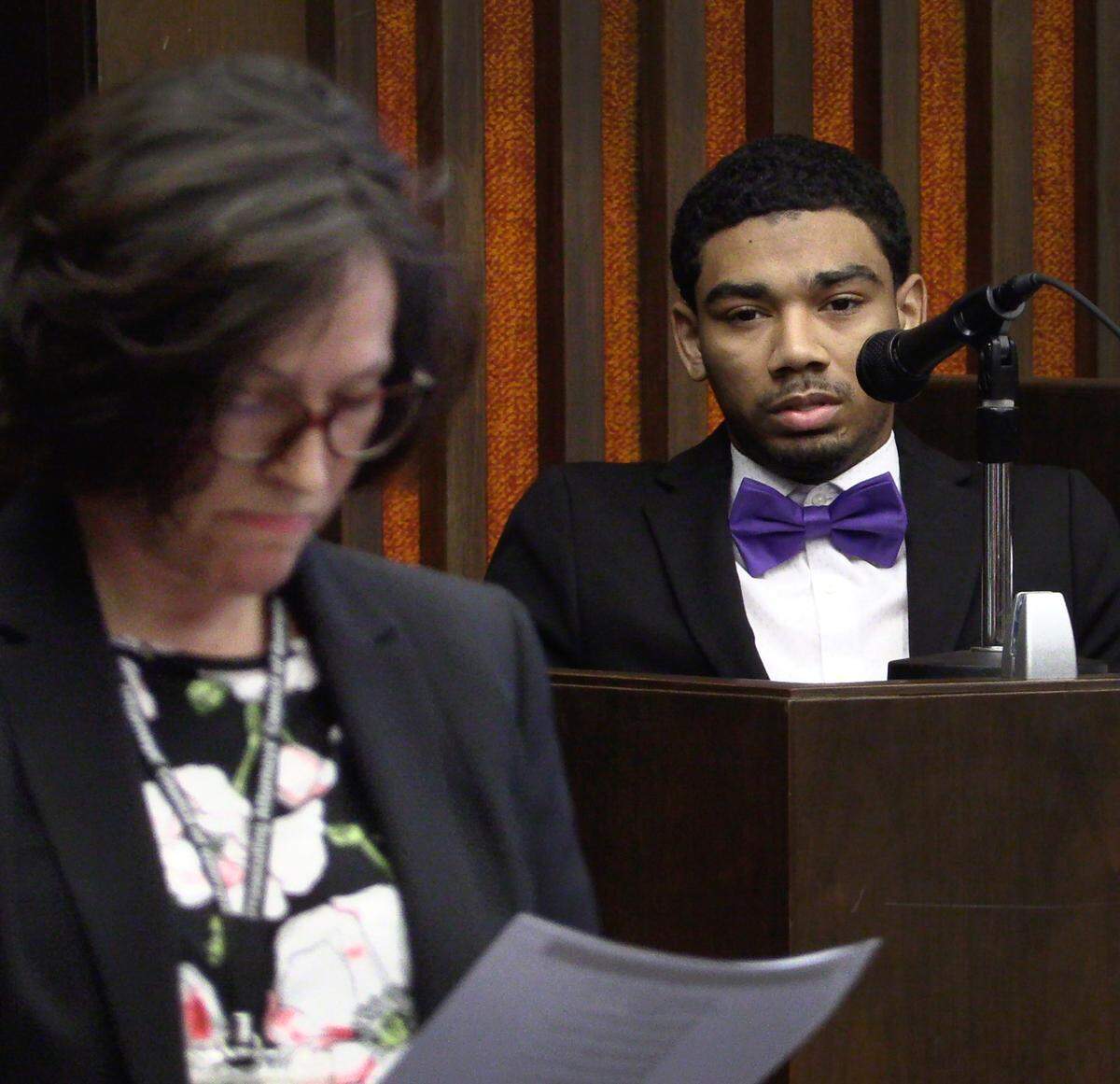
“I have no knowledge of when they knew,” Riley responded. “That doesn’t have anything to do with them assuming I was the killer.”
Miley’s associates at the motel said they became worried when he didn’t return, and went looking for him, seeing the crime scene tape at the shopping center. Motel residents called police to report him missing, and detectives questioned them that night.
The responding officers said they found Miley with $557 in his pocket, but no identification, and initially they did not know who he was.
Changing stories
Trial testimony showed some witnesses misled police at first, not wanting officers to know about the marijuana deal.
Riley acknowledged that he lied in his first police interviews, telling Hill he’d never been to the Efficiency Lodge or to Boxwood Boulevard.
“I did not want to put myself on the scene with Devion Miley,” he testified. He was afraid he’d be considered a suspect partly because of his race, he said: “I’m a young Black male.”
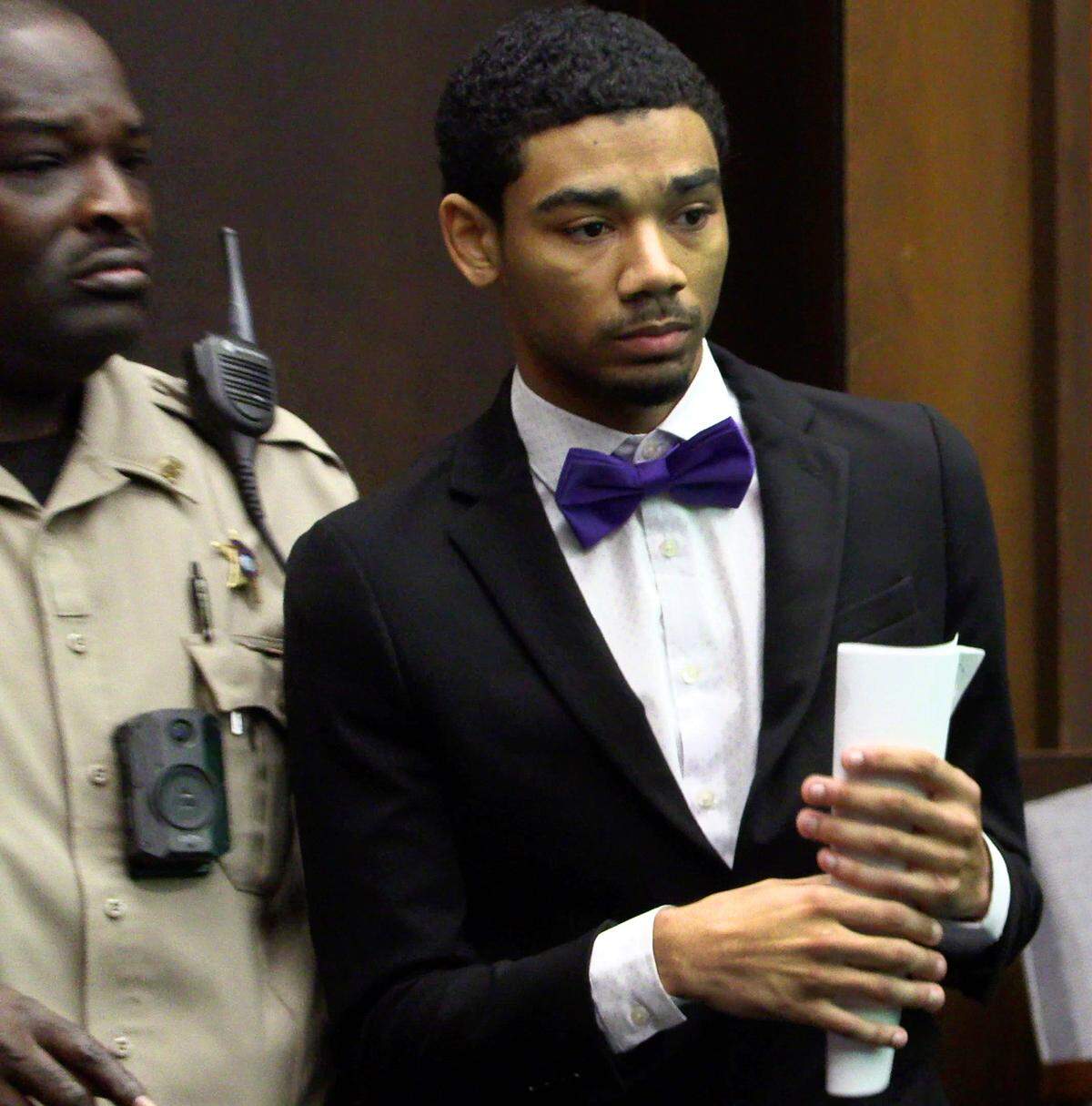
First arrested in October 2021, he was jailed eight months before being released on bond, he said. Later he was arrested again, and spent the past two months in the county jail, he said.
Riley was the trial’s last witness. After closing arguments Thursday afternoon, Judge Gil McBride told jurors to return Friday morning for deliberations.
Now 22, Riley faces life in prison if convicted on these charges:
- Felony murder, allegedly for causing Miley’s death while committing the felony of trying to buy marijuana.
- Criminal attempt to commit a felony, for trying to buy marijuana.
- Possession of a firearm in the attempted commission of a felony.
Bush, also 22, pleaded guilty July 25 to trying to commit a felony, to using a gun to commit a crime, and to having a firearm while on probation.
His recommended sentence is 15 years with five to serve in prison and the rest on probation.
This story was originally published August 10, 2023 at 1:32 PM.