
Jury reaches verdict in fatal Columbus shootout trial over pregnant woman
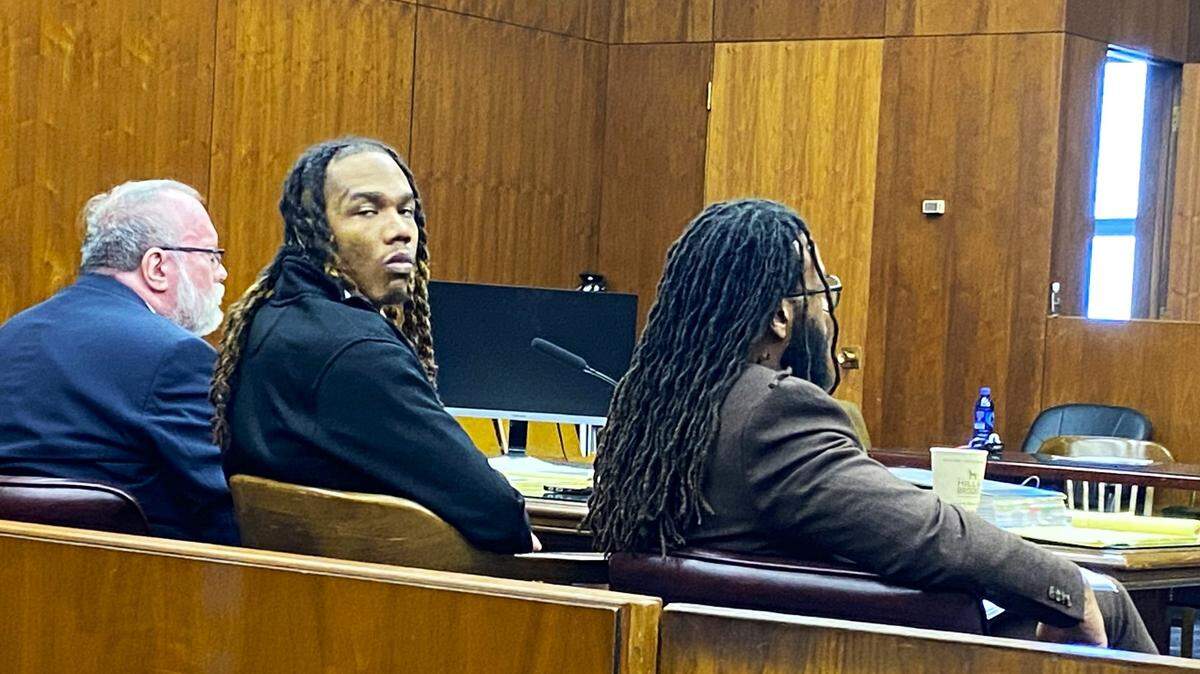
After deliberating into the night Friday, jurors finally reached a verdict in the murder trial of a Columbus man who traded 16 shots in a tiny apartment bathroom with his estranged and pregnant girlfriend’s new beau.
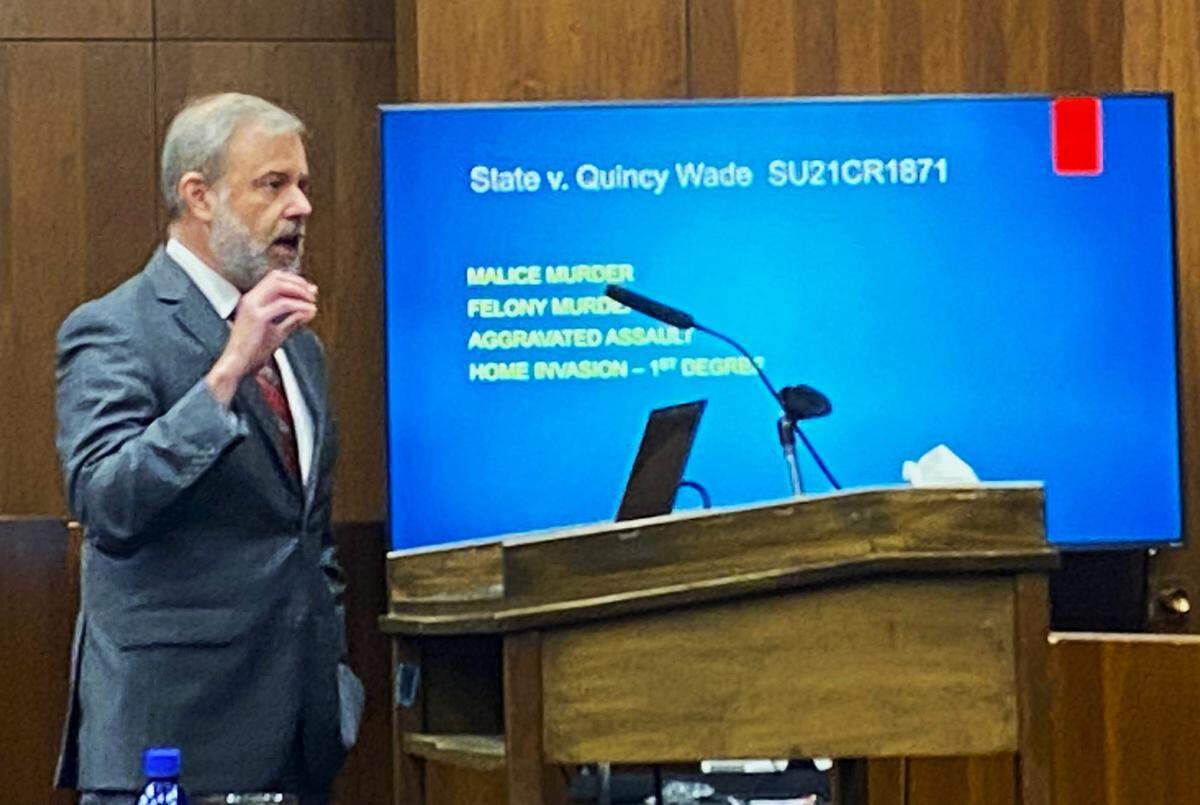
The jury found Quincy Tyrek Wade not guilty of all felony charges in the Sept. 7, 2021 death of 26-year-old Maurice Vaughn Jackson, including:
- Malice or intentional murder.
- Felony murder for killing Jackson while committing aggravated assault.
- Aggravated assault for threatening the estranged girlfriend with a gun.
- Home invasion for entering the apartment without authority.
The jury found him guilty only of criminal trespass, a misdemeanor and lesser offense to home invasion. The maximum penalty for that is a year in jail, which Wade already has served awaiting trial.
Though the 27-year-old has other pending charges, he has paid bonds to be released on those counts, and may soon be freed from jail, his attorneys said.
The jury of eight women and four men began weighing the evidence at 1:15 p.m., and later spent about an hour reviewing some of the video evidence in court, before resuming their deliberations. They asked several questions about legal definitions as the hours wore on, and finally reached a decision around 7 p.m.
The evidence
Three days of trial testimony showed Wade had a tumultuous relationship with Channa Powell, who was 11 weeks pregnant with their child the night he came looking for her at the Patriot Place apartment of her friend, Rickell Paulk.
Powell had just broken up with Wade two days earlier when he questioned whether the child was his, and she had been spending time with Jackson, with whom she worked at a solar farm.
The day before the shooting was Labor Day, and Powell had spent the afternoon with Jackson at a family cookout before returning to Paulk’s home on Buena Vista Road around 12:30 a.m. Wade began texting and calling her around 2:20 a.m., then came to the apartment and banged on the door around 2:30.
Jackson retreated to the bathroom, where Paulk was, and hid in the tub behind a shower curtain. When no one answered the door, Wade came in through an unlocked, sliding glass door off the patio, carrying a 9-millimeter pistol.
Powell ran into the bathroom with Paulk and Jackson, and locked the door. Wade kicked the door in, so frightening Paulk that she ran out of the apartment and hid outside.
Powell said Wade put his gun to her head and then her abdomen, threatening to kill her and her unborn child.
That’s when Jackson snatched the shower curtain aside, and the two men opened fire as Powell cowered in a corner. Wade was shot through the legs, and Jackson was hit four times, with a fatal shot through the center of his chest.
Both guns jammed as empty bullet casings lodged in the firing chambers.
Wade fled through the patio door as Powell snatched his Smith & Wesson pistol and threw it on a couch. She ran back to Jackson, cradling him in her arms as he died.
Wade drove back to his apartment on Ruben Street, and had his roommate take him to a hospital in LaGrange, where police tracked him down.
What’s self-defense?
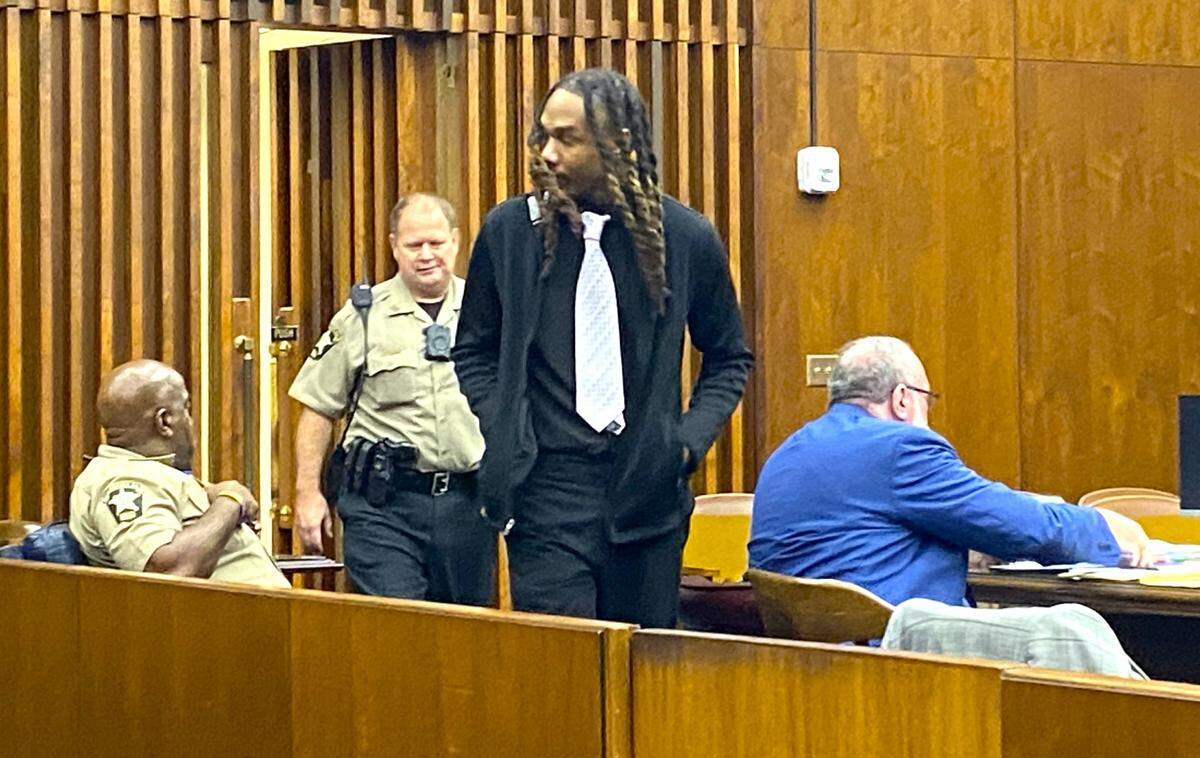
With these circumstances in evidence, the defense and prosecution focused their closing arguments Friday on whether Wade or Jackson acted in self-defense, under a Georgia statute sometimes called the “stand your ground” law.
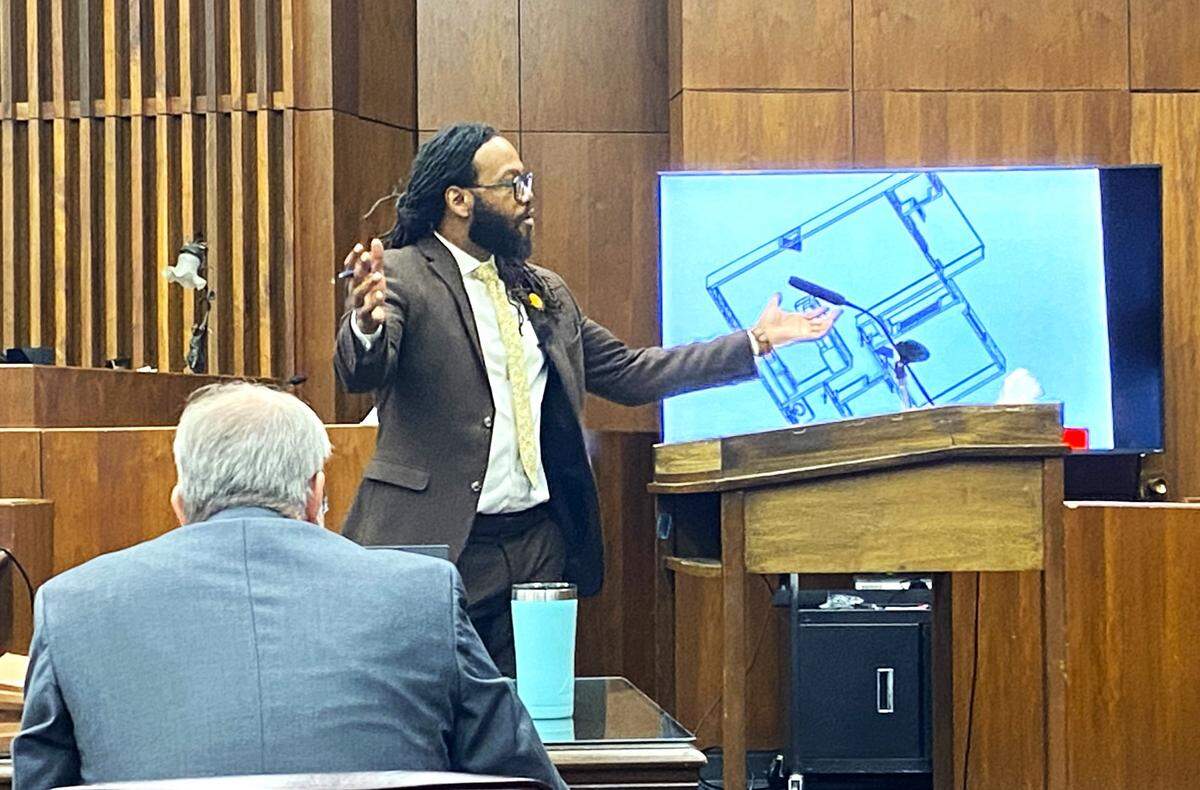
Representing Wade, law partners William Kendrick and Mark Shelnutt claimed Jackson ambushed Wade, shooting him first, so Wade had to shoot back.
“When you’re shot, what choice do you have but to defend yourself?” Kendrick asked jurors, later adding, “When you’re shot, it’s necessary to stop getting shot.”
He claimed Wade and Powell were having only an argument when Jackson intervened, and that’s what triggered the ensuing violence.
“There’s no evidence that Mr. Wade even knew Mr. Jackson was in the apartment.... Whoever interjects violence into the situation is responsible for what happens,” he said.
After Friday’s verdict, Kendrick said he thought that perspective resonated with the jury.
“They probably tuned in on the injection of violence,” he told reporters. “There’s no way to dial it back once the shots are fired.”
Wade has been jailed for two years, he said. He was unsure when his client might be released.
Kendrick also argued in his closing that Wade’s charges of home invasion and aggravated assault were manufactured to justify Jackson’s shooting first. He called adding those counts “fixing it up” to make the case more palatable to jurors.
He noted Powell did not report Wade’s alleged threat the day of the shooting, but in an interview on Sept. 16, 2021. He said that detail was added to justify Jackson’s shooting first.
What the prosecution said
Chief Assistant District Attorney Don Kelly then outlined each element of the self-defense law, arguing it was not in Wade’s favor at any point.
The law allows Georgians to use deadly force in defense of themselves or others, to defend someone’s home, and to prevent the commission of a forcible felony.
It does not allow them to claim self-defense if they provoke the violence themselves or act as the initial aggressor; if they are committing a felony; or if they are seeking revenge for a prior wrong.
Under the law, Jackson would have been justified in shooting Wade dead when Wade came through the patio door with a gun, Kelly said. Instead Jackson retreated to the bathroom, though the law says residents have no duty to retreat when threatened.
Jackson was a welcome guest in Paulk’s apartment, and Wade was not, Kelly said. Carrying a gun, he entered the home “without authority” when no one answered the door, committing the felony of home invasion.
Then he kicked in the bathroom door, causing Paulk to flee out of fear. Because Jackson heard Wade threaten Powell with the gun, Jackson by law was justified in shooting Wade to stop the commission of another felony, aggravated assault, Kelly argued.
The offense of aggravated assault does not require that victims be injured, he explained, only that they be placed in immediate fear of a violent injury.
So, Jackson was justified in shooting Wade to prevent the felony of aggravated assault, to defend Paulk’s home, to defend Powell, and to defend himself, the prosecutor said.
Wade, by comparison, had no right to self-defense, Kelly said.
“He’s the aggressor to start with,” he said, later adding, “He forfeited the right to self-defense the moment he walked into that apartment with a gun.”
This story was originally published September 29, 2023 at 7:18 PM.