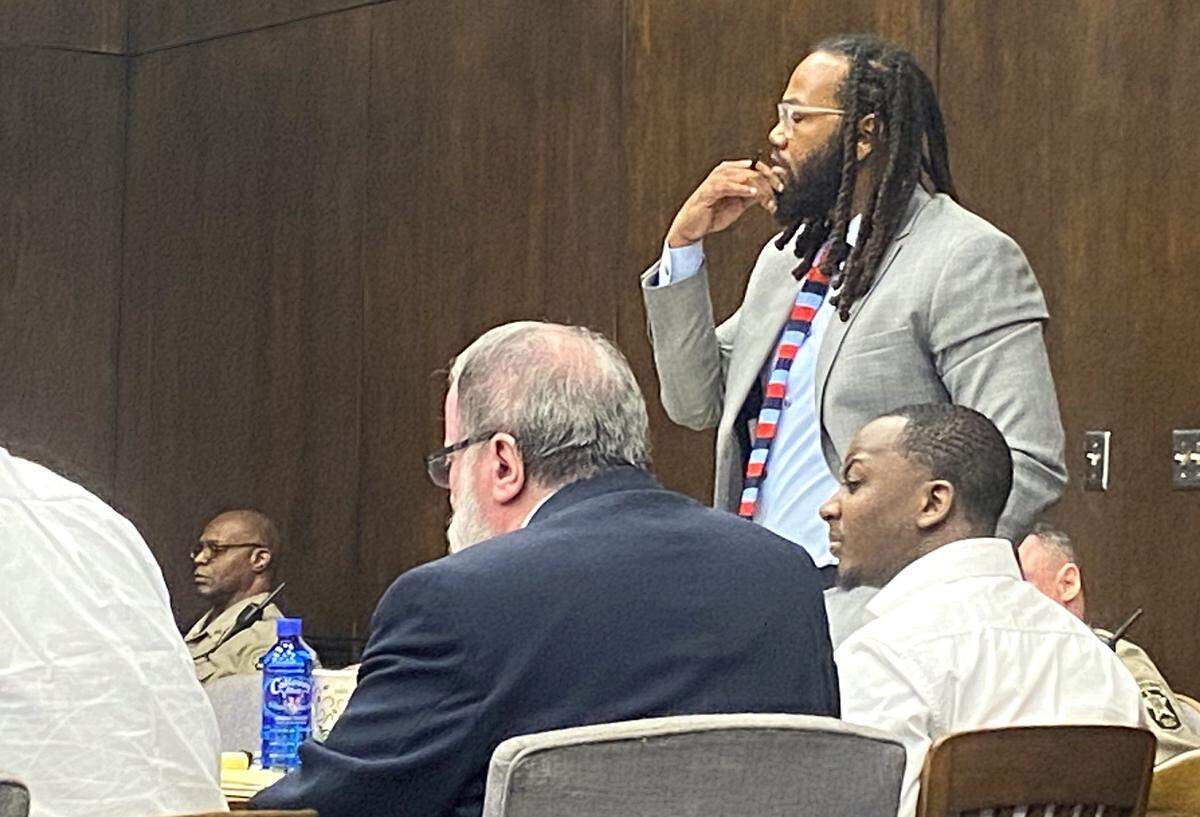
Columbus jurors get crash course on gang rivalry and organizations during murder trial
Columbus jurors got an afternoon’s crash course in gang culture Tuesday as experts testified in the trial of three men accused of gunning down two teenagers in 2021.
Authorities say the dead teens and two survivors with them were in the Zohannon street gang, which in 2021 was at war with rival gang US World. Prosecutors allege the men on trial were in the Marlow gang, a local “hybrid” gang affiliated with US World.
Muscogee Sheriff’s Lt. Jeremy Hattaway, who advises both the sheriff and Columbus police on gangs, said “Marlow” comes from the TV crime drama “The Wire.” The character Marlo Stanfield is an ex-drug kingpin and killer.
Hattaway said the Marlows had a stronghold in Columbus’ Wilson Homes apartments, where the gang evolved from a predecessor known as the Lime Green Money Gang, which used lime green as its signature color.
That gang, the LGMGs, was preceded by a Wilson-based gang called the 5150 Taliban, known for wearing camouflage, Hattaway said. He said gangsters use the term “Wilside” for the Wilson area.
Wilson Homes, a housing complex with the address 3400 Eighth Avenue, also has had Insane Crips, Gangster Disciples and Bloods, he said.
He said the Marlows had no gang colors, but they used hand signals, such as two middle fingers pressed to the palm with the thumb and other fingers extended, forming both a “U” and a “W” to show they back US World.
When asked about the Zohannon gang the four teens shot were in, Hattaway said they use the colors pink and blue, and tend to be younger, from their early teens to mid-20s.
Prosecutors have said the Zohannons are a subset of the national Gangster Disciples.
But such gang associations and alliances can be only temporary, Hattaway noted, and hybrid gangs may have varied connections.
Sixty gunshots
The June 14, 2021 shooting was at Seventh Avenue and 32nd Street, outside a “trap house” where the three suspects sold drugs, prosecutors said.
Police collected 60 shell casings at the scene, evidence of the barrage of shots that peppered the passing Dodge Dart the four teens were in, before it crashed into a parked car.
Jesse Ransom, 17, and Saiveon Pugh, 18, died there. Wandray Harris, 19, and Ta’Journey Lee. 16, were wounded.
Pugh and Lee both had guns, and Harris and Ransom were wearing masks. Defense attorneys claim they were targeting the three suspects for a drive-by shooting.
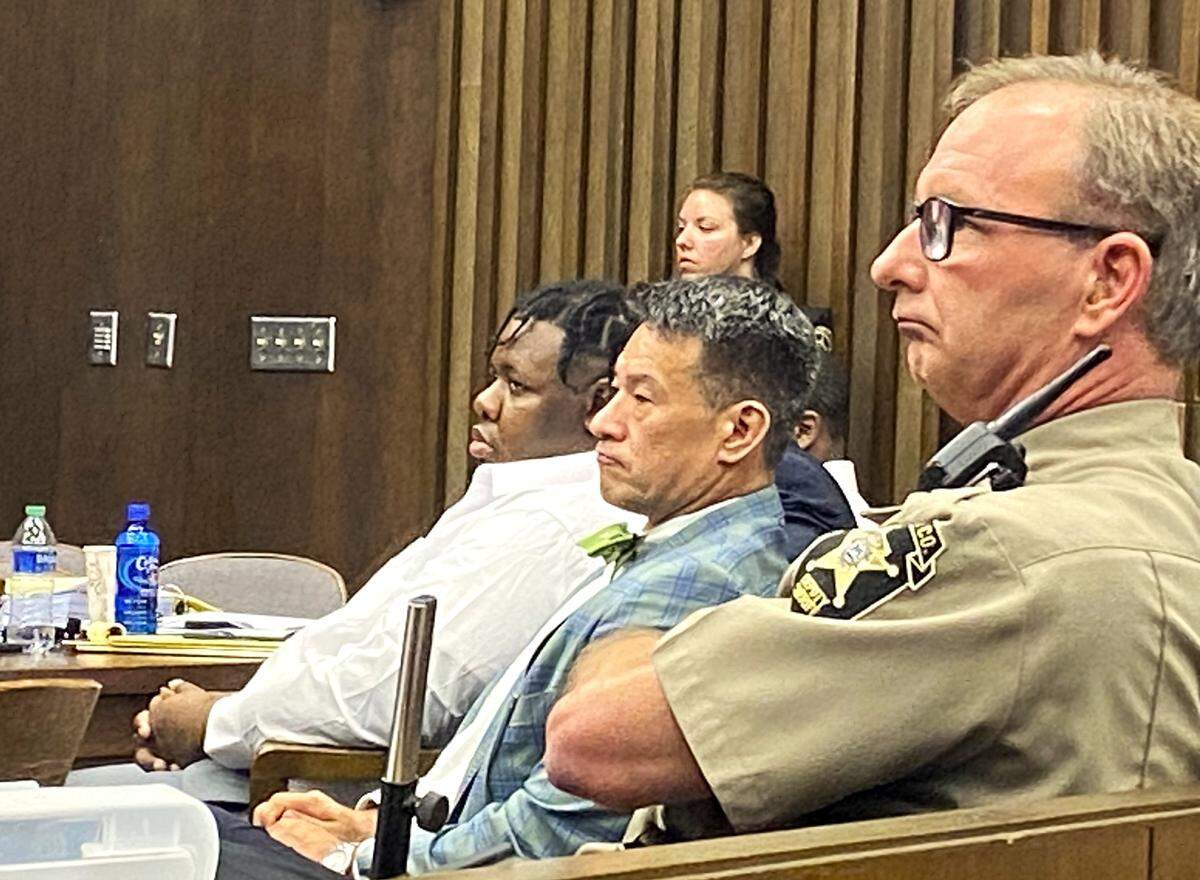
The suspects are brothers Terrance Upshaw, 31, and Homer Upshaw, 28; and Rodderick Quaterrius Glanton, 28.
A 21-count indictment charges them with murder, aggravated assault, criminal damage to property, possessing guns while committing felonies, and violating Georgia’s Street Gang Terrorism and Prevention Act.
State gang prosecutor Cara Convery had Hattaway show jurors social media posts and photos in which the trio were shown flashing hand signs or using other allegedly gang-related symbols or terms.
What is a ‘gang’?
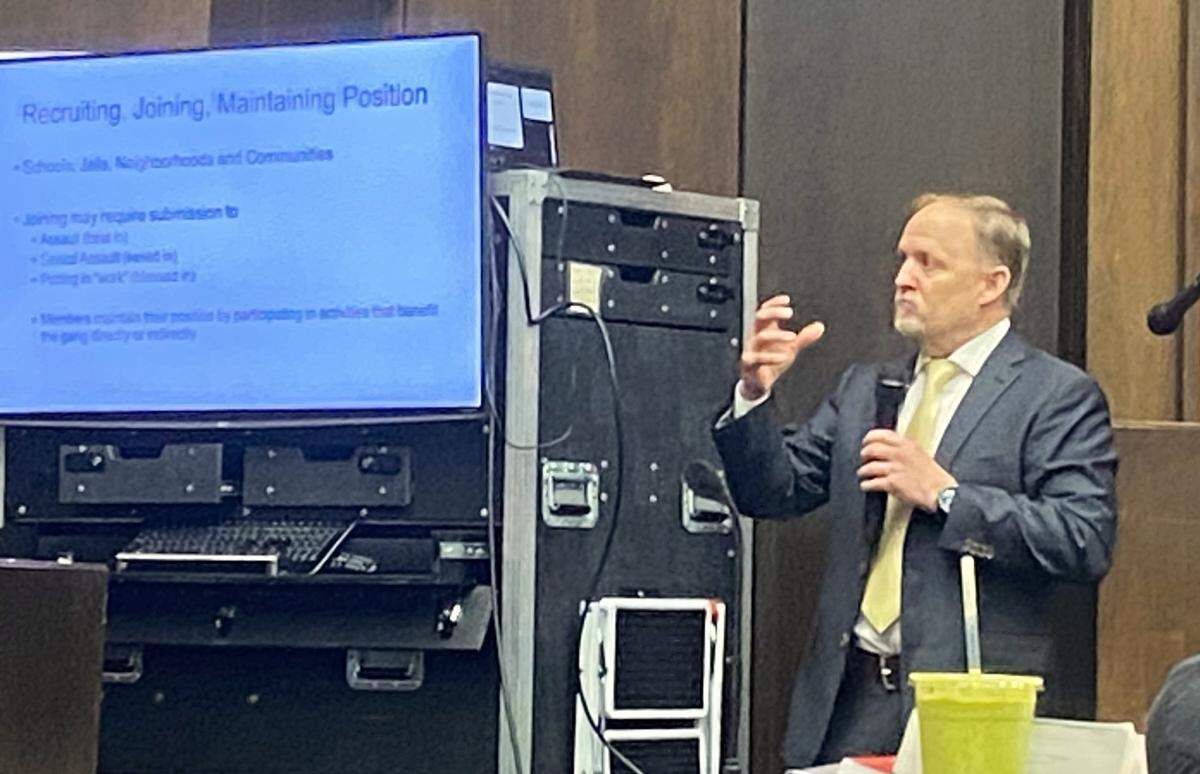
Also testifying Tuesday was a state gang expert, William Murdock, who spoke more generally about gangs in Georgia and nationwide.
He said a gang is defined as three or more people sharing signature colors, signs, graffiti, tattoos or social media symbols while perpetrating crimes to further the interests of their group.
The country in 2021 had about 35,000 gangs with 1.5 million members, and Georgia alone had 71,000 people associated with gangs, he said. “There’s a lot of fluctuation in that,” he added.
Some, like the Gangster Disciples, date back to the 1950s, but others last only three to four years, he said.
They include transnational gangs like those that expand into the United States from Mexico, motorcycle gangs, prison gangs formed by convicts serving life, and hybrid gangs that typically pop up in local neighborhoods, Murdock said.
Hybrids often have loose or no leadership or established rules, and may change their colors or other identifiers as they adapt to law enforcement pressure, he said.
They flourish in low-income areas where residents are unlikely to challenge them or risk retaliation by complaining to the police, he said.
“Gangs don’t set up strongholds near multi-million-dollar homes,” he said.
When defense attorneys asked him about the case on trial, Murdock said he was there only to give “an overview of gangs in general” and could not testify to other details.