
Alleged gang member cries on witness stand about fatal shooting at Columbus’ Wilson Homes
The Columbus woman accused of killing a South Carolina man at an alleged gang party wept on the witness stand as she recalled his shooting.
Elysia Cooley was 16 when Marcel Samedi died from a gunshot wound to the head at Wilson Homes apartments on June 5, 2021. She is among four people charged with his murder, and she testified Thursday and Friday against three alleged Insane Crips now on trial.
Gang prosecutors with the state attorney general’s office said she risked her life taking the witness stand, as she has been threatened while jailed.
When lead prosecutor Thomas Kegley asked her why she took that risk, she shed tears in reply.
“My brother is Marcel’s age right now,” she said. “And if the roles were reversed, I would want someone to tell my mom and my brother the truth.”
Kegley asked how long she’d known Samedi.
“About a year, before he passed,” she said.
In the courtroom audience, Samedi’s mother Martine Azor began to cry, as did others, and Judge Richard Winegarden excused the jury to tell Kegley the emotion was distracting jurors.
Kegley said he could tell the victim’s family not to cause a commotion, but he could not tell them not to cry. “I cannot ask them not to be emotional,” he said.
Cooley’s testimony resumed when the jury returned.
Cooley, who’s 19 now, said she grew up on the east side of town where at age 15 she joined the Forrest Park 6-0 Neighborhood Crips, before “personal issues” with that subset made her move to the Insane Crips.
The Insane Crips are affiliated with the national Crips gang based in California.
Here in Columbus, the gang has three territories, Cooley said: Dimonwood, East Wynnton and Wilson.
Each area has an OG or “Original Gangster,” who acts as a leader, she said. Her OG was Michael Douglas Brown, she said.
Brown, 48, also known as “Pop” or “Mr. Dimonwood,” was charged with gang offenses in Samedi’s death, but he has not been captured.
Cooley said Brown had a dispute with Makenzie “Mac 10” Pearce, the OG at Wilson, who had been taunting Brown’s Dimonwood gang. The gathering at Wilson in June 2021 was a “C-call” or “Crips call” for gang members to congregate there, she said.
The expectation was that Brown and Pearce would settle their differences, but Pearce didn’t show, she said.
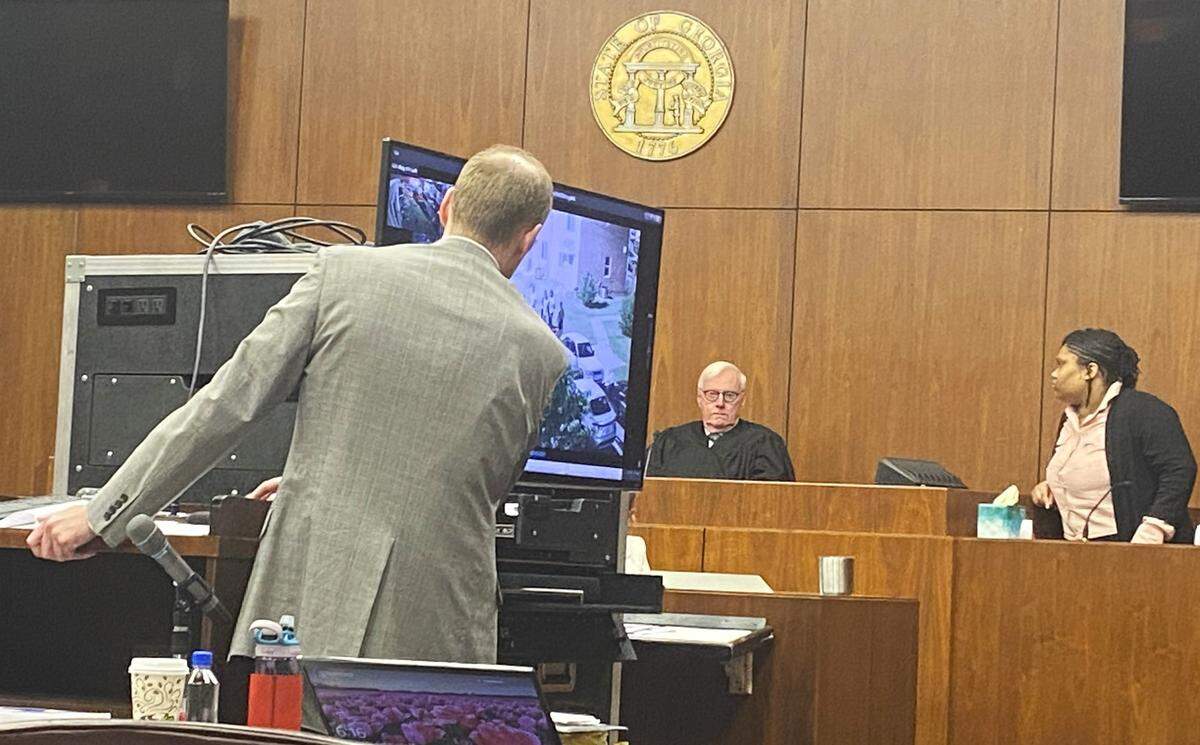
As Kegley showed her surveillance video from Wilson, Cooley identified some of the people recorded there, including the three suspects on trial: Corey Troupe Jr., 26; Davion C. Dupas, 22; and Jahiem Rashard Davis, 21.
The footage showed them don masks and drive away in two cars. Cooley said they went to a gated neighborhood where two Crips got out to scout around an apartment, then came back to the cars to return to Wilson.
Around 9:45 p.m., she and other gang members drove to the area of Wilson’s 108 Building, where Samedi, Troupe and Dupas got out, while she remained in the car, she said. “I saw them run to a building, and a couple of seconds later, I heard gunshots.”
Dupas and Troupe returned, carrying guns, but Samedi did not, she said. Troupe was distraught and crying, she said, quoting him as saying, “They made me leave my brother.”
They drove to Curry Street, which she called “a meet-up spot for D-wood,” the Dimonwood gang.
“They realized that Marcel was missing,” she said. “Everybody just seemed distraught.”
But no one told her what happened, she said. She went home, got a bag she had packed, and left with Troupe to travel to Brown’s home in Atlanta. After two days there, she and Troupe went to Rock Hill, S.C., where Troupe had shared an apartment with Samedi.
No one reported the shooting, or told Samedi’s mother he was dead. Instead Troupe and Brown concocted a story that Samedi had met a woman in Columbus and never returned to South Carolina with them, Cooley said.
Police said Samedi’s body, left in the rain outside Building 108, was not identified for six days.
Who shot Samedi?
Cross-examining Cooley, Troupe’s attorney William Kendrick asked whether Samedi’s death left Troupe distressed.
“He was upset, yes sir,” Cooley said.
Did Troupe intend to hurt Samedi?
“No, he didn’t,” she replied.
She said Troupe later organized a balloon release in Samedi’s memory, and both she and Troupe got tattoos in tribute to him.
She acknowledged that she never saw Troupe shoot the gun he had. But she knew that another gang member who’s not on trial did fire a gun at the time, and she said he could have been the one who shot Samedi.
Kendrick asked her whether that man should be on trial.
“If it was up to me, he would be charged, sir,” she said.
She later acknowledged, under Kegley’s questioning, that she was not privy to the prosecution’s trial strategy, or to other evidence in the case, so she did not have the expertise to judge those decisions.
Here are the suspects’ charges:
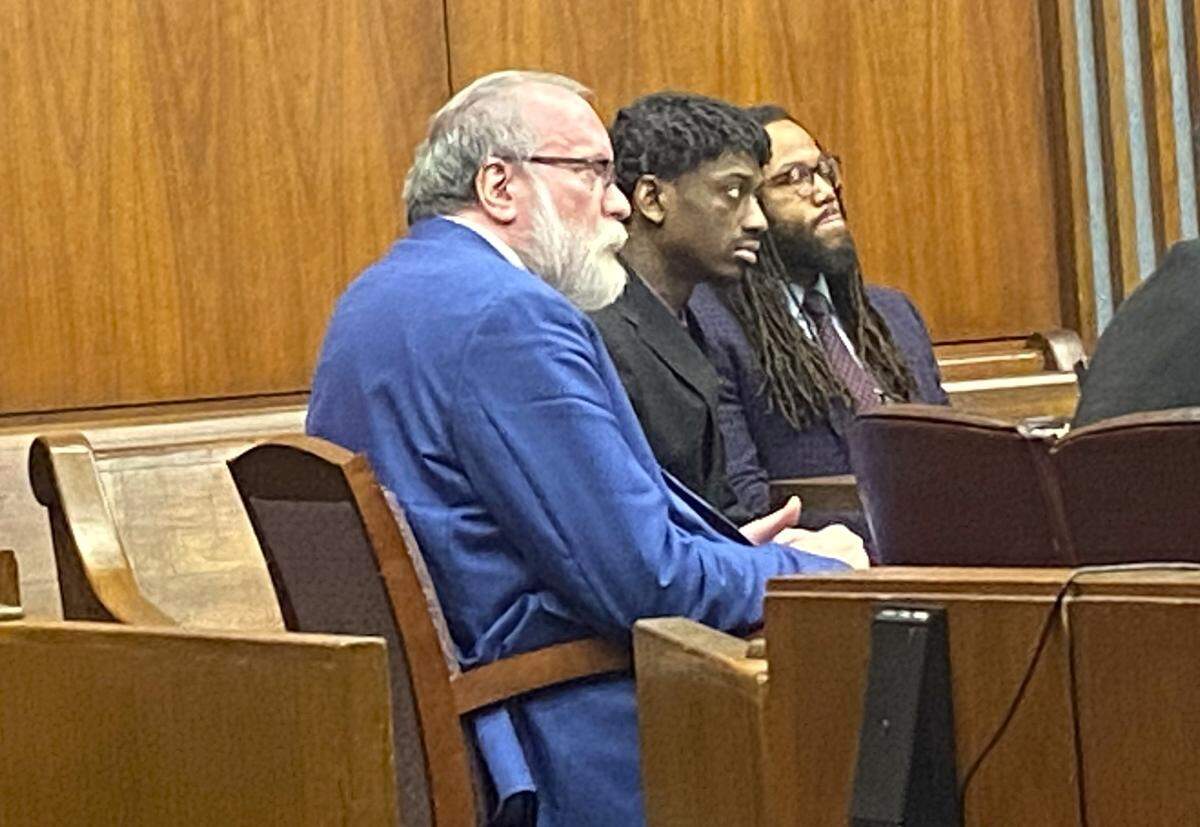
Troupe, also known as “Lil Pop,” and Dupas, known as “Yungdemon Dee,” both face six counts of violating the Street Gang Terrorism and Prevention Act, two counts of felony murder and one count each of aggravated assault, using a firearm to commit a felony, and first-degree criminal damage to property.
Jahiem Davis, also known as “Zhg Jah,” faces eight counts of violating the Street Gang Terrorism and Prevention Act, three counts of felony murder and one count each of aggravated assault, using a firearm to commit a felony, first-degree criminal damage to property, and being a convicted felon with a firearm.
Each defendant on trial could be sentenced to life in prison if convicted.
This story was originally published February 16, 2024 at 9:34 AM.