CSU cutting budget, enacting ‘hiring chill’ after enrollment decline. What happens next?
Editor’s note: Subscribers enjoy early access to this story. Thank you for supporting local journalism.
It’s a basic math problem for colleges: Having fewer students enrolled equals having less money to educate them — and Columbus State University is among those dealing with the more complicated results.
CSU leaders are seeking “creative” ways to cut a combined $3 million from this year’s and next year’s budget while also trying to reverse two straight years of enrollment declines.
A “hiring chill” is one cost-saving measure that already has been to put in place, CSU president Chris Markwood told the Ledger-Enquirer.
The fall 2019 semester enrollment of 7,877 students is a 2.5% decrease from last year at CSU, according to the University System of Georgia’s report released this week. That follows CSU’s 4.5% drop from 2017 to 2018.
All of which has erased the university’s decade of growth. CSU had increased enrollment from 7,951 in 2008 to its record high of 8,452 in 2017.
Now, CSU faces a $1.6 million shortfall in its fiscal year 2019-20 budget of $118,469,572. And it must propose a budget for fiscal year 2020-21, which begins July 1, with an additional reduction of $1.4 million, Markwood said.
CSU isn’t in this predicament alone. Although USG’s overall enrollment of 333,507 is a 1.5% increase over last year and marks another record high after a fifth straight year of growth, enrollment declined from 2018 to 2019 at half of USG’s 26 institutions.
What’s being cut
No programs or services for students will be cut at CSU, Markwood said.
“But we are looking at more creative ways to deliver services,” he said.
For example, the three employees in CSU’s career services department left this year. Two resigned, and the third took another job on campus, Markwood said.
As a result, career services are being embedded in other departments, filled in with part-time staff and relying on the colleges instead of only a centralized location, Markwood said.
“We’ll probably eliminate one or two of those full-time positions in career services but be bolstering the staffing and delivery of those services through other parts of the campus,” he said.
None of the 2,063 CSU employees (859 full-time) has lost a job because of the cuts, Markwood said, but it’s too early to know whether anyone will by the end of the fiscal year.
A “hiring chill” is the main way CSU is cutting costs, Markwood said.
“It’s not a freeze,” he said. “We’re still carrying on hiring essential faculty positions and essential staff positions, but we’ve chilled hiring, which means people are having to take a little extra time to justify a position.”
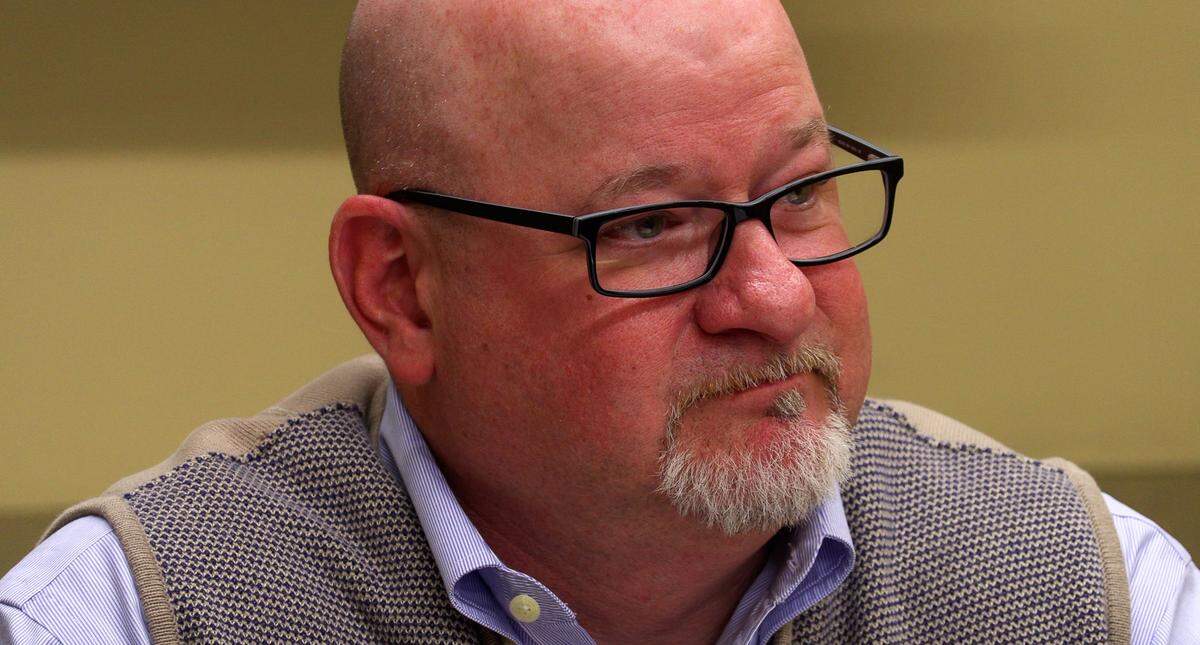
Markwood said the president’s office staff of two full-time employees was cut to one. The person in that eliminated position moved to a vacancy elsewhere at CSU, he said.
“I thought it’s important that if we’re going to make staff cuts, the president’s office be up front and participating in those reductions,” he said.
Asked how many positions CSU will eliminate, Markwood said, “We don’t have that number yet.”
That will be determined after the spring and summer enrollments, he said. By then, the outlook could be brighter.
“Last year, we saw a resurgence in spring and summer enrollment, in part because of this new January term we started,” he said. “So although we had a 4.5% reduction in enrollment in the fall of last year, in the end our credit-hour production was only 1.7% off.”
The “main focus” on eliminating positions is targeting support staff, not faculty, Markwood said.
“Faculty generate revenue by teaching classes,” he said. “Those students are paying tuition, generating credit-hour production, which feeds into our funding formula allocation. So we want and need our full-time faculty to continue doing that in a very effective and a very efficient way.”
‘Extremely concerned’ about budget cuts
CSU Faculty Senate executive officer Clint Barineau told the L-E Friday that he and his colleagues are “extremely concerned about the budget cuts. We’re concerned about, first of all, the impacts they will have on our students and our ability to offer classes, especially to make sure we’re offering the curriculum that our students need to complete their degrees.”
The most alarming situation Barineau said he is aware of is in CSU’s Department of Earth & Space Sciences, where he is a geology professor. One of the three geology instructors left for another job during the summer, and CSU’s hiring chill has prevented the department from filling the vacancy.
That has left CSU without anyone qualified to teach the sedimentary geology course required to graduate with a geology degree. CSU has 25 geology majors now, Barineau said. He is filling in as the sedimentary geology instructor, teaching only two students in the course this semester, but 6-8 could need to take the course next year, he said.
“We already had our fall schedule out, and we had students enrolled in that class,” he said. “So in order to make sure we didn’t negatively impact students, I taught it as an overload in addition to my regular courses, but I cannot deliver that curriculum like a sedimentary geologist can. … We really can’t offer it again until we get (that faculty position) back.”
Barineau said he is trying to make that case to the dean and provost, but he acknowledges the difficult circumstances.
“I understand in tough economic times you have to deal with budget cuts,” he said. “Since a lot of our spending is on salaries, there’s no doubt some positions are going to be lost. I try very much in my role as executive officer to think about the university as a whole and not just my own unique department.”
To that end, Barineau said he hopes CSU’s leaders will communicate clearly to the university community about the decisions they make and the rationale for them.
“That’s the conversation that we’re trying to have with the president and the provost, to make sure the process is really transparent so we understand,” said Barineau, who meets with them at least monthly.
Asked how much confidence he and the faculty have in Markwood and his administration to make the right decisions, Barineau said, “We know the administration has to make some difficult decisions regarding the budget, and we are hopeful that those decisions will not negatively impact our students and the degree programs we as faculty have spent decades building. We are hopeful, but concerned about how decisions are being made, not necessarily whether or not the administration can make the right decision.”
Samantha Miller Gurski, assistant director of CSU Continuing & Professional Education, represents the non-faculty employees as the CSU Staff Council chairwoman. In an email Friday to the L-E, she praised the university’s leadership for being “very transparent, offering opportunities for us to provide feedback, taking the time to openly discuss the numbers, etc. Their openness has been very refreshing and reassuring.”
The budget for part-time instructors also is being reduced, Markwood said, although he didn’t have such numbers available.
Phasing out desktop printers is another cost-cutting move.
“The estimates are we could save $200,000 a year in not replacing printer cartridges,” Markwood said.
Paige Giddens, president of the CSU Student Government Association, declined to comment for this story. Students interviewed on campus Thursday said they have not noticed any changes as a result of the enrollment decline or budget issues.
“They’re not affecting me,” said Hanna Ivey, a senior vocal performance major from Sumner, Ga. “. . . The music program is still thriving, and I’m still getting the same quality of education,”
Marquell Baker, a junior graphic design major, from Carver High School in Columbus, said, “It hasn’t really affected me at all. I’m still learning the best that I can. I’m getting my work done. The teachers are great. . . . The classes seem as full as they’ve been in the past two years I’ve been here.”
Meanwhile, the university continues looking for ways to increase enrollment.
How to increase enrollment
Among the ways Markwood said CSU has been trying to increase enrollment:
- Hired two new recruiters and expanded efforts in the Atlanta market.
- Contracted with a consulting company to improve outreach to prospective students on their smartphones through automated messaging instead of staffing phone banks.
- Starting in the spring 2020 semester, will offer a couple of “nexus degrees,” which are 60-hour programs that can be completed in two years. They provide real-world experiences taught by experts working in the career field.
- Lowered barriers to entry. Instead of requiring applicants to have all the requirements fulfilled before being accepted, such as immunizations, the deadline now is before enrollment.
Next steps include strengthening CSU’s connection to Fort Benning and offering more degree programs completely online, Markwood said.
Then he mentioned a way any CSU supporter can help increase enrollment is by increasing donations to the college.
“We dropped 200 students because they didn’t have the funds to pay the bill,” he said. “Within the state of Georgia, there’s a deadline we have to meet in order to stay compliant with policy. If we had more scholarships available, if we had more time to work with those students, we could have saved those 200 students, which would have eliminated our enrollment decline. It really puts the focus on affordability for us.”
Markwood added, “It’s 200 people who leave defeated, who leave frustrated with CSU, with higher education in general, and who may have given up. … So, to me, that’s the devastating piece of it. We want them back. They need to be back for themselves and for their families and for this community.”
CSU’s undergraduate in-state tuition and fees total $3,667 for a full load of 15 credit hours per semester this fiscal year.
The USG Board of Regents hired Markwood four years ago from Texas A&M University-Corpus Christi, where he was the provost and vice president for academic affairs.
This story was originally published November 15, 2019 at 2:24 PM.