This giant reptile was so big, it ate dinosaurs. Now it’s named after CSU professor.
A prehistoric species has been named after a Columbus State University professor.
CSU geology professor David Schwimmer is the namesake for Deinosuchus schwimmeri. That’s the scientific identity of the giant reptiles that were so big — estimated as long as 35 feet, equivalent to a 72-passenger school bus — they feasted on dinosaurs and were considered the largest predators in the coastal wetlands of what is now the southeastern United States 75-82 million years ago.
The news was announced in a Journal of Vertebrate Paleontology article by Adam Cossette and Christopher Brochu of the University of Iowa. They credited Schwimmer “for his tireless work on the Late Cretaceous paleontology of the Southeast and Eastern Seaboard, U.S.A.”
According to the CSU Earth and Space Sciences Department post congratulating Schwimmer on its Facebook page, he is “one of the world’s foremost experts on the giant North American Cretaceous crocodilian genus, Deinosuchus.”
The department added, “This is an incredible honor for Dr. Schwimmer and a testament to the impact of his research in the field of paleontology.”
During an interview with the Ledger-Enquirer in his lab Friday, Schwimmer chuckled and said, “I guess if you have to have something named after you, you want a big-bad predator. … What’s always fun with these things, after the professionals get the paper, it spreads to the websites and the amateurs, and you start getting thousands of questions, which is, you know, it can be fun.”
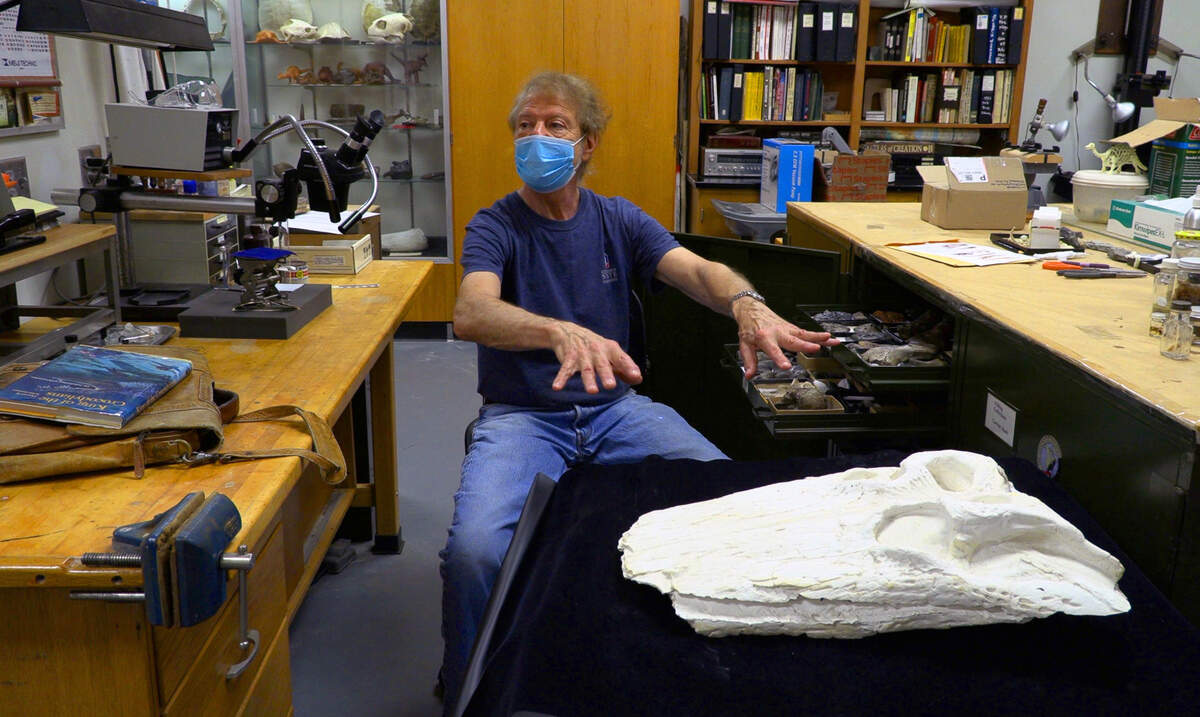
Schwimmer’s research includes a 2002 book titled “King of the Crocodylians: The Paleobiology of Deinosuchus.”
Although this species’ order, Crocodylia, sounds like crocodile — and the species’ genus, Deinosuchus, translates to “terrible crocodile” — they are more closely related to alligators, Schwimmer said.
“At the time it was living here in the eastern U.S.,” he said, “there was nothing bigger. . . . We actually have bite marks from these guys on dinosaur bones. Now, the only question you can ask: Were they scavenging or predatory? … My guess is predatory. I always go with the argument, if you’ve got a big shotgun, it’s probably for killing, not for wounding. This creature was big enough to take down most dinosaurs. Also, interestingly enough, most of the bites we see are in leg bones and tailbones. If you’re going to grab a dinosaur, that’s the place you’re going to grab them.”
At 35 feet, it could have weighed as much as 5-6 tons, Schwimmer said.
“The junior cousin of T-Rex was living at the time, and we definitely know it could have taken that down,” he said. “T-Rex, for the record, appears about 5 million years after these guys.”
The first specimens of the species were described in the 19th Century. Schwimmer’s major work was first finding them in Georgia and east Alabama. The southeastern coast of North America was around Stewart County, Georgia, at the time, he said.
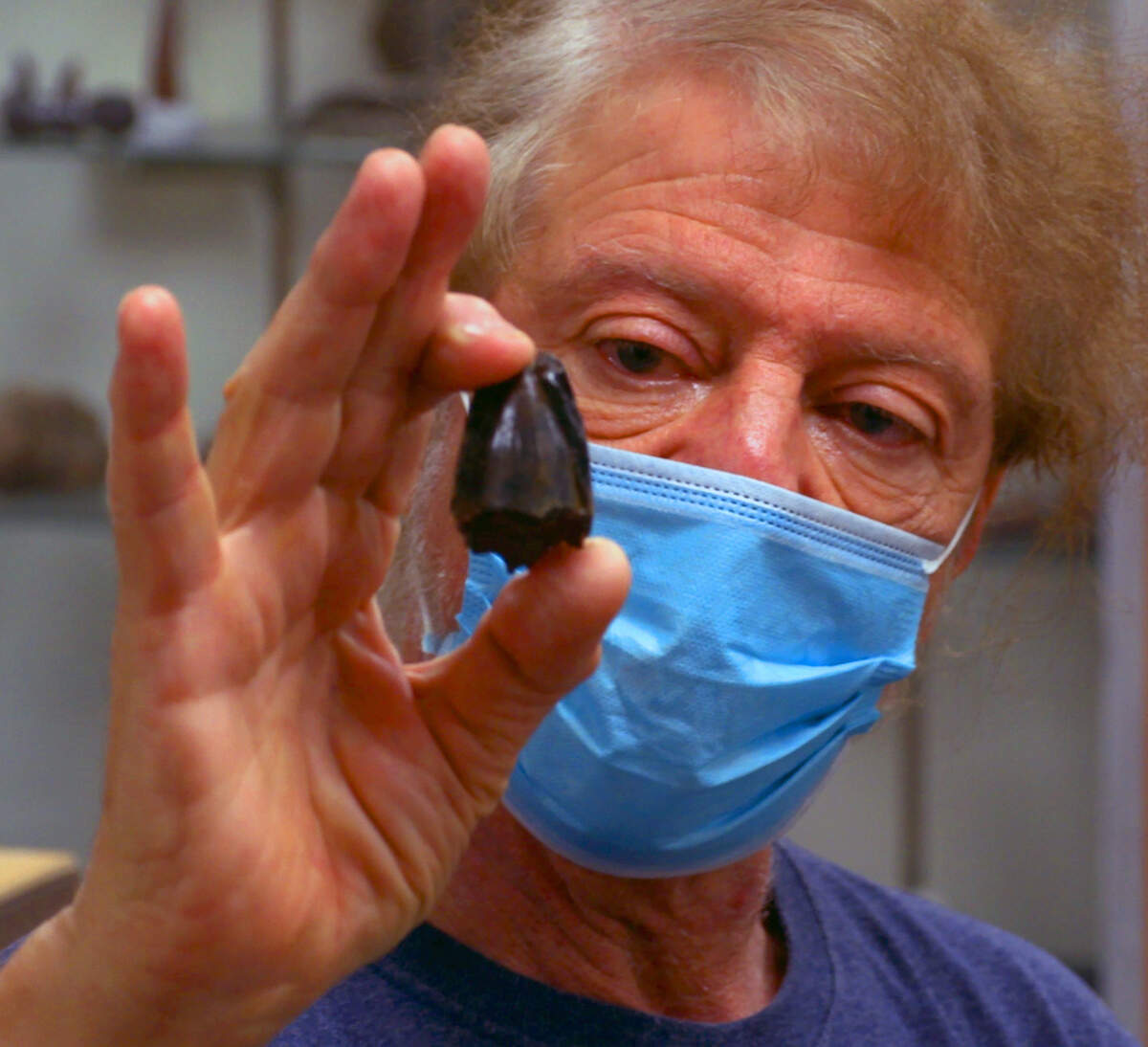
In a box ready to be shipped to the Smithsonian, Schwimmer has a jaw fossil that’s estimated at nearly 82 million years old — the oldest specimen of this genus found anywhere. He discovered it in a creek bank along the Chattahoochee in the late 1980s about 10 miles south of Fort Benning.
“It’s the satisfaction of finding something new,” he said. “How many people get to do something new for the first time in history, especially in science?”
Schwimmer, 73, has been teaching at CSU and researching this species for 42 years. He said he’s found hundreds of fossils since 1979, including the rear of a skull in Russell County that’s already in the Smithsonian.
He grew up 10 blocks from the American Museum of Natural History in New York City.
“I knew all the dinosaurs when I was 5,” he said. “What more could you want for a kid, to actually get to work on things like dinosaurs and giant animals and fossils?”
And, no: He isn’t related to the actor David Schwimmer, who played Ross on the hit NBC sitcom “Friends” (1994-2004) — and that character’s job was working as a paleontologist in New York City.
This story was originally published August 4, 2020 at 5:45 AM.