What’s new for MCSD students compared to spring? Your guide for online-only classes.
As the Muscogee County School District prepares to open the fall 2020 semester Monday with online-only classes due to the surge of coronavirus in Columbus, administrators and teachers say they now have the training and the plan to deliver better remote instruction than they did during the spring.
“I am so appreciative of the entire team for putting in extensive work over the summer and preparing for the virtual instruction,” MCSD superintendent David Lewis told the school board during its Aug. 10 work session. “There will be bumps and bruises along the way, but it won’t be for a lack of effort and a lack of planning that’s gone into this. Clearly, nothing is going to look anything like it did back from March to May. Everything will be much more structured, much more planned and organized.”
Here’s a summary of what promises to be different compared to the spring as MCSD’s more than 30,000 students return to online-only classes Aug. 17 through Sept. 9 — and possibly longer if Lewis decides COVID-19 hasn’t subsided enough in the area:
Attendance
The Georgia Department of Education is requiring districts to monitor attendance during virtual instruction as if students were in the schools.
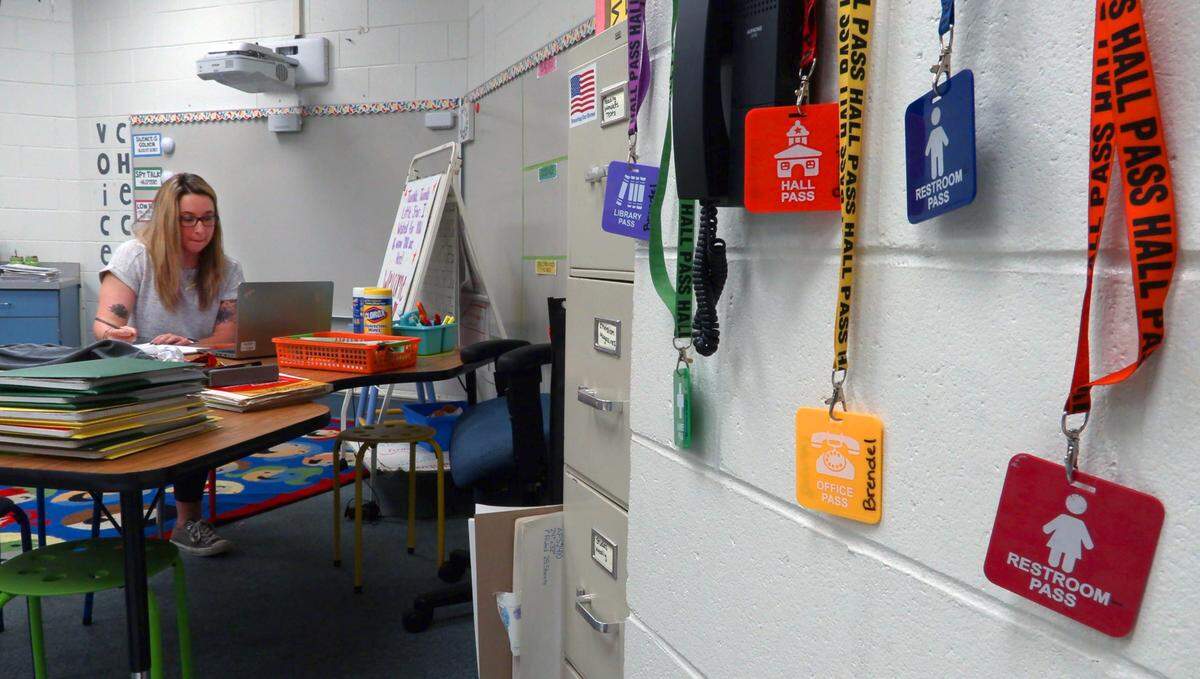
Unlike the spring, when teachers couldn’t conduct classes in the school buildings, they must teach their online sessions while in their classroom, unless they receive permission to work from home.
Also unlike the spring, when teachers often didn’t require students to be on their screen at the same time as long as they completed their assignments, students must attend the virtual classes.
Attendance will be taken daily. Students fulfill the attendance requirement when they log in to the live instruction via the Zoom videoconferencing platform at the designated times.
MCSD social workers, academic deans and counselors will work with families to address barriers.
For help with technology, call the support line at 706-748-2271 from 7:30 a.m. to 7 p.m. Mondays-Thursdays and from 7:30 a.m. to 4:30 p.m. Fridays.
Additional help is available at mcsd.instructure.com/courses/112074.
Computers
Last month, board members asked Lewis about whether the district would provide a computer device to every student. Lewis said he could guarantee that service for students in grade 3-12, but he wasn’t sure about the availability for prekindergarten through second grade.
Monday, however, MCSD chief information officer Ron Pleasant told the board that every student will be provided a device: Chromebooks for grades 3-12, iPads or Chromebooks for grades K-2 and iPads for any prekindergarten assignments.
Mobile Wi-Fi units could be available for students in households without internet or a reliable connection. Requests should be directed to the student’s school.
Meals
During the spring, meals were available at only certain schools and public housing complexes. Now, meals will be available at all 52 MCSD schools.
The prepackaged meals will be distributed Mondays, Wednesdays and Fridays, 11 a.m. to 1 p.m., in a grab-and-go format to comply with coronavirus precautions. Students will receive two breakfasts and two lunches on Mondays and Wednesdays.
Meal prices are the same as last year. Applications for free and reduced-price meals will be accepted as usual if the school doesn’t already have that status for all students. Parents or guardians may pick up meals for their children. Their children don’t need to accompany them.
Schedules
Students must follow their daily class schedules to participate in virtual sessions through Zoom and the Canvas online course management system. They will be given multiple breaks during the day.
For example, depending on the grade level and the student’s learning needs, the teacher will conduct:
- Direct instruction for 15-30 minutes, teaching and demonstrating skills.
- Guided instruction for 15-20 minutes, allowing students to practice the skills and checking for understanding.
- Collaborative or independent practice for 20-30 minutes, allowing further practice as individuals or in small groups, through projects and other assignments.
Teachers may record sessions for students and parents to view later.
Training
Over four days last week, MCSD offered teachers 75 virtual learning sessions developed and conducted by 19 district specialists. Approximately 3,150 teachers took three of those courses, and 270 teachers attended additional expert classes, Lorrie Watt, the district’s executive director of curriculum and instruction, told the board.
And in an anonymous exit survey, Watt said, 97% of the teachers indicated they feel prepared to instruct their students online.
“These cross-functional teams worked so well and were so committed to this,” Lewis said. “When you get a percentage of 97% saying they feel prepared on something in the short time they had to work on this, that is yeoman’s work. I just want to say kudos and thank you to all the people who led the effort but also for the tremendous work getting prepared.”
The training for virtual instruction included how to:
- Use the Canvas digital platform to communicate with students and parents, check for understanding, develop differentiated lessons to individualize learning based on test scores, create engaging home pages and form assessments that go beyond multiple choice quizzes.
- Use Zoom and its interactive tools.
- Adapt classroom management strategies to the online environment.
- Build relationships with students.
- Assess participation.
- Use videos from YouTube in lessons.
- Determine when to use the flipped classroom model, which assigns students to learn the new content on their own, then discuss and implement that content when they gather as a class.
- Record lessons so parents can help their children anytime.
- Plan and collaborate.
Keith Seifert, the district’s chief academic officer, emphasized the importance of teachers not letting the remote instruction prevent positive relationships with their students, keeping the humanity in mind as well as the technology.
“There’s time at the beginning of the day that social-emotional piece will be key to checking in with students and seeing how they’re doing so teachers can adjust their instruction accordingly,” he told the board. “… Learning will not take place without that trust, so we’re going to be working real hard on that.”
Impact on a school
The Ledger-Enquirer saw the impact of this training at Downtown Elementary Magnet Academy.
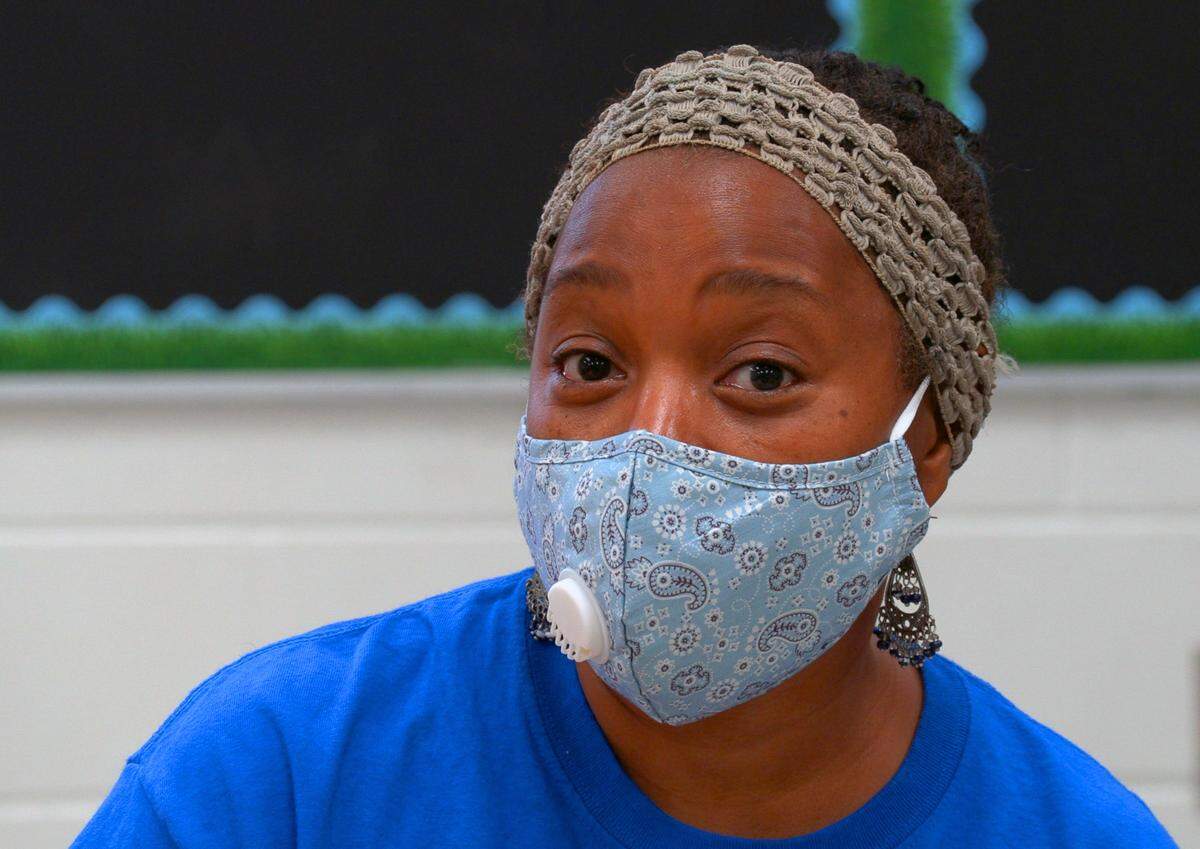
For fifth-grade teacher Inez Parker, her biggest problem in the spring was student attendance. Out of her 27 students, the most she saw on her screen any day was around 15. As a result, she said, their academic performance suffered.
“I called the parents multiple times,” she said.
Other parents called her as late as 9 p.m., asking if their child’s assignments were submitted or if she could clarify some information.
The common reason for the absences, Parker said, was that those students had parents who couldn’t work from home and couldn’t find an adult to supervise their children. Several youth organizations now are offering a solution, providing supervision at their facilities for as long as MCSD conducts online-only classes.
That’s a huge part of the education equation, said academic coach Jill Steinhauser, who helps train teachers.
“We have to make sure our parents are supported,” she said. “… We’re trying our best right now to get a hold of parents so they understand the expectations.”
More than 90% of the school’s approximately 300 students are eligible for free or reduced-price meals because they come from low-income families, and 75% are considered economically disadvantaged, according to the Governor’s Office of Student Achievement.
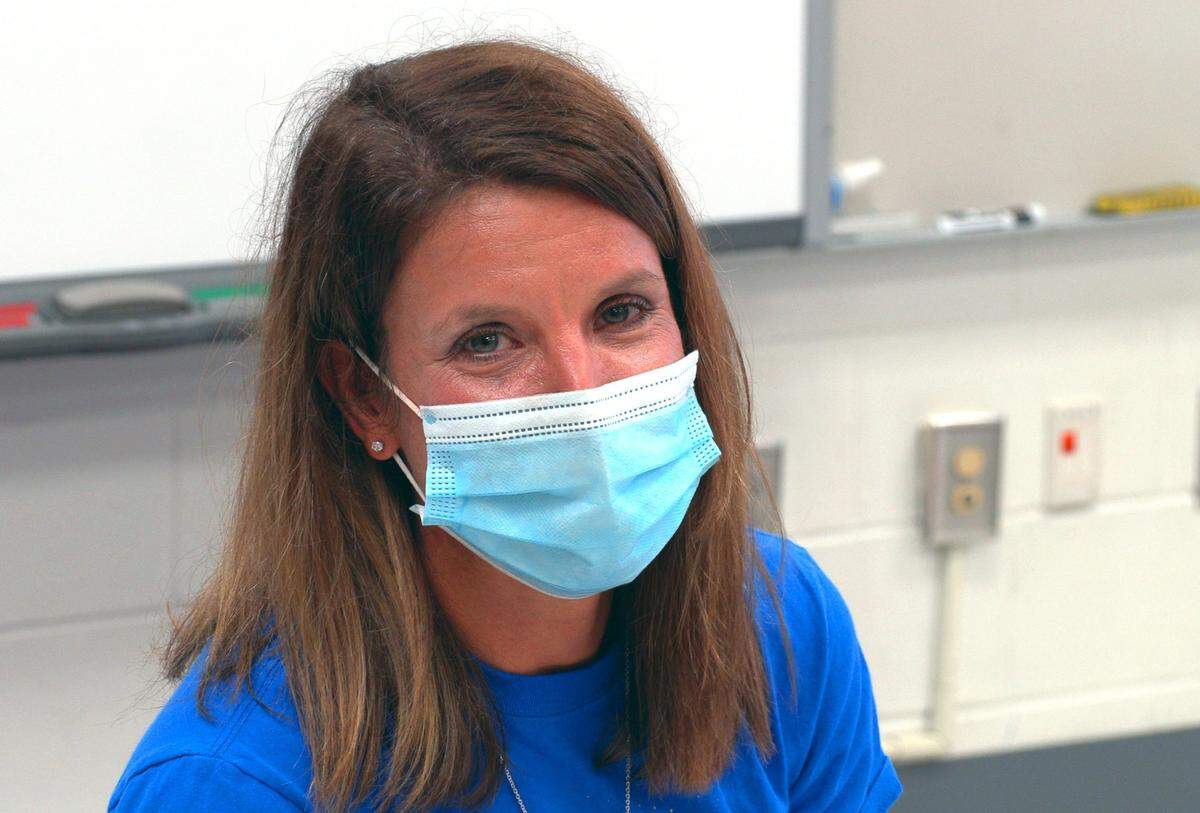
Meanwhile, the training has lifted Parker’s outlook about the online-only classes.
“This training has given you a place to start and kind of given you an idea of how to take everything that you’ve been using throughout all these years and put it in such a way that you can still give it to these kids to make sure that they’re successful,” she said.
For example, first-grade teacher Danielle Brendel sat alone in her classroom while MCSD content special Ben Travers conducted a videconference about how to use Canvas for social studies and science lessons.
Travers told the teachers they should be familiar with the state’s standards in the previous grade level because their students might be deficient in some areas that were supposed to be learned during the spring.
“Going back and remediating students is a must,” he said.
Travers suggested teachers help their students find equipment at home they can use in their lessons, such as paper or plastic cups for measuring during an experiment.
“It’s going to be tough,” he said, “but we’ll get through this.”
Brendel praised the training.
“It’s really cool to be able to have this opportunity because it’s not only showing me more of what I can do,” she said, “but it’s helping me see how I can reach kids in different ways, especially with the technology generation.”
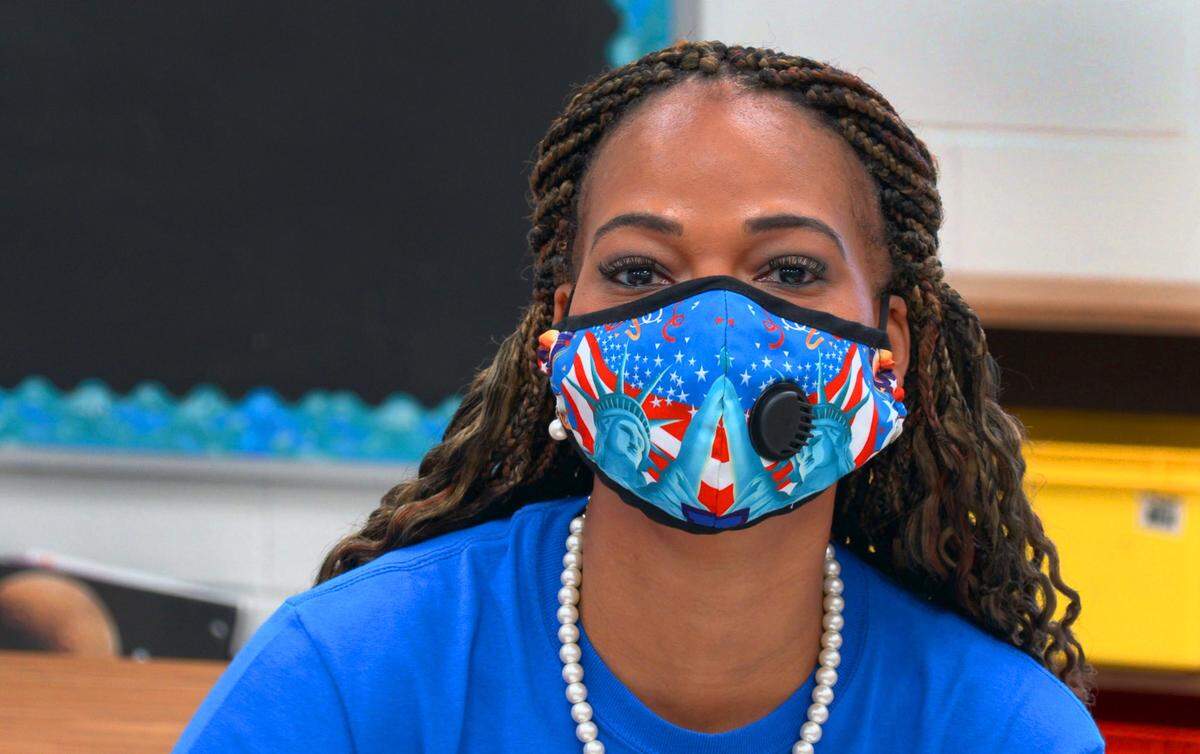
During the spring, special-education teacher Robyn Robinson saw some of her students struggle to sit still and pay attention long enough for a class via Zoom to be effective. So she contacted their parents and set up personal sessions with those students on the platform that best suits them.
Now, as the school’s lead special-education teacher, she encourages her colleagues to do the same.
“We don’t want any excuses as to why we cannot meet the needs of our students,” she said.
Robinson advises parents to have their children get ready for online-only learning as if they were going to the school building.
“If you come in PJs, your mind is still in the sleeping mode,” she said. “But if you get dressed, shower, brush your teeth and actually put on clothes as if you were leaving the house, now your mind is ready for school. So let them go buy the brand-new outfit for the first day. That’s important.”
Despite the uncertainty, Steinhauser said, the circumstances present an opportunity.
“I’m excited to see what this is going to bring to education,” she said. “… We’ve needed this for a while, just kind of a little something to be like, ‘OK, let’s take us into the 21st Century.’ That’s what we’re trying to get, to personalize learning, and this really forces the hand.
“I know it’s going to be a challenge. I know it’s going to be difficult. But I also know that, through all that, learning is going to take place. … When we get through this, everybody’s going to have this wonderful sense of accomplishment: ‘Wow look at what we did.’”
Steinhauser sees the long hours and focused effort her colleagues have put into this training and is confident it will benefit their students.
“Nobody knows what to expect to come on Monday,” she said, “but I have no doubt in my mind that these women are going to absolutely knock it out of the park.”
That kind of belief from her coach prompted Robinson to declare, “We’re all in this together. So if she tells me I’m going to knock it out of the park, I’m going to stand at the plate and hit a home run.”