Columbus teen creates podcast encouraging girls to succeed in male-dominated STEM fields
A brain researcher in Maryland. A marine biologist in Mississippi. A cancer immunologist in California. A forest fire scientist in Colorado.
Columbus High School senior Laura Kate Holden, 18, has interviewed them all — in the past five months, more than a dozen women across the country succeeding in the STEM careers of science, technology, engineering or math. Laura Kate uses her phone and laptop to record the podcasts produced by GEMS, the club called Girls in Engineering, Math and Science.
Melissa Niemi, a science content specialist in the Muscogee County School District, established the club four years ago as a science teacher at Richards Middle School. She sought a new way of motivating girls who excelled in other academic areas but lacked the confidence to persevere in the STEM subjects because they traditionally have been male-dominated fields.
Laura Kate was among the 13 members of that first GEMS club in 2017. When she started attending Columbus High, she wanted the inspiration to continue, so she led the effort to begin a GEMS club there.
GEMS has grown to more than 60 members in high school and 20 in middle school. Their activities have included:
- Developing a website and social media platforms that feature weekly blog entries from members who write about STEM news.
- Posting videos on their YouTube channel about STEM-related topics, such as coronavirus and coding.
- Taking in-person and virtual field trips.
- Designing and implementing a promotional campaign that increased by 60% the number of girls taking Advanced Placement STEM courses at Columbus High.
- Participating in STEM competitions.
- Conducting videoconferences with Junior GEMS at Richards and Blackmon Road middle schools to encourage more girls to become involved in STEM.
- Creating an online “took kit” that outlines how any school can create a GEMS club.
And they produce those podcasts.
The opportunity
Last spring, GEMS was scheduled to host a “Dinner with Diamonds,” where members would have sat at tables with female STEM professionals in the career field that most interests them. But the event was canceled due to the COVID-19 pandemic.
“Once that happened, I was trying to scramble to find ways how we can still hear the stories of these incredible women,” Laura Kate told the Ledger-Enquirer, “and so I started a podcast, and I had a lot more free time, and so I decided to learn what RSS feeds meant and how to link my Spotify and my Google Podcast together.”
Laura Kate laughed as she disclosed that she reads scientific research papers “for fun,” but that’s how she finds women to interview.
“I’ll see at the top who it was written by, and I’ll email them,” she said. “I kind of explain what I’m doing, and the overwhelming willingness to sit down and have an hour of your day to just talk to me, a high school senior, it’s a nice feeling to know that there are women out there that really want to encourage this.”
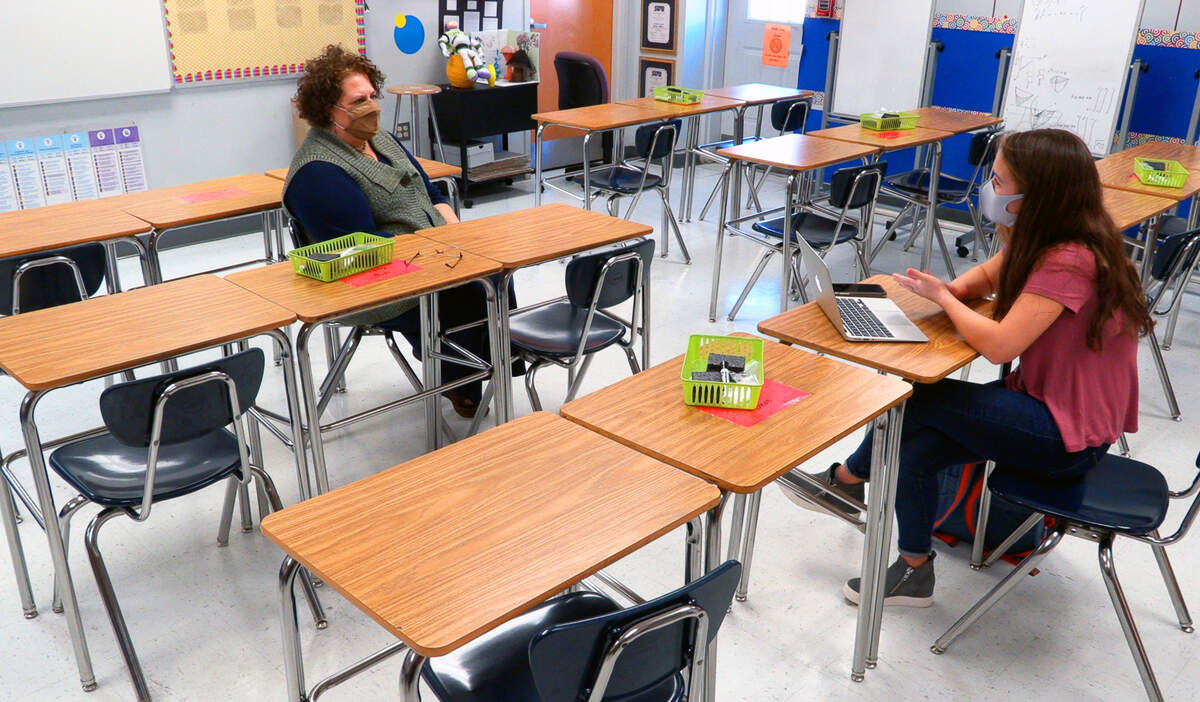
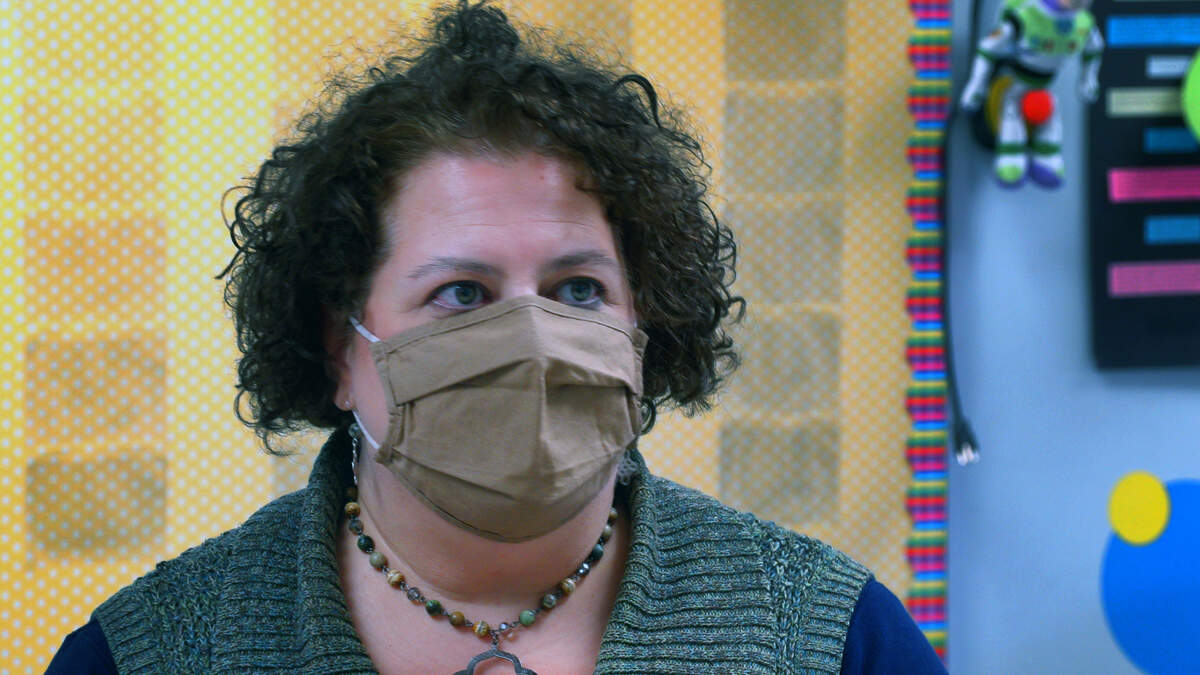
One of the podcast guests was Columbus High math teacher and department chairwoman Storie Atkins, who taught Laura Kate last year.
“It was great,” Atkins told the L-E. “… She’s a planner, and she checks all the boxes, comes prepared.”
The need
The National Girls Collaborative Project cites statistics from a 2018 National Science Foundation study to describe the STEM gender gap: Although approximately half of the college-educated workforce in the United States are women, they are only 28% of the scientists and engineers.
The American Association of University Women lists these key factors perpetuating the STEM gender gap:
- Gender stereotypes
- Male-dominated cultures
- Few role models
- Math anxiety.
“You had to, in the past, I think, be in a world by yourself,” Atkins said, “forging your own, pioneering your own little path in that arena, because it wasn’t popular to be good at math, on math teams, as a girl.”
The gap is greater at the higher levels of STEM training. Out of all science and engineering degrees awarded in the United States in 2016, women earned approximately half of the bachelor’s degrees, 44% of the master’s degrees and 41% of the doctoral degrees – about the same proportions as in 2006 – according to the National Center for Science and Engineering Statistics.
“Women, we can tinker and think mechanically and design and do all the things,” Atkins said. “... So I’m glad that we’re moving to a place where it doesn’t matter who it is, what gender, because I think it’s wonderful, and I do feel that girls are empowered now to be in those majors in college and in those occupations in the professional world.”
Columbus High chemistry teacher Brendle Moyer, the GEMS club’s faculty sponsor, emphasized the importance of girls connecting with successful female STEM professionals.
“I never really liked science until I got to high school and had two really wonderful science teachers, and they helped bridge that gap,” she said. “Because I had them as my influence, I saw that they could do it, so I felt like I can as well because I had that positive role model.”
The impact
Laura Kate gave an example of the podcast’s impact as she recalled what CHS senior Sonali Patel told her after listening to the interview with biomedical engineer Ritu Raman, a postdoctoral fellow at the Massachusetts Institute of Technology: It helped her decide to major in biomedical engineering at Georgia Tech.
“I think that just one episode, 45 minutes of listening to this woman talk about her passion kind of translated to Sonali,” Laura Kate said. “… There might be other girls impacted the same way, and I think that’s an incredible thing to see and be a part of.”
Although she isn’t certain about what her major will be at the University of Georgia, Laura Kate figures it indeed will be in a STEM field. Regardless, she intends to follow this advice she heard during that interview with her former teacher:
“I think Ms. Atkins kind of put it simply, and it’s to follow your passion,” she said. “If you find something that you’re good at or something that you love, it doesn’t feel like work, it doesn’t feel like a job, it’s something you want to do.
“And I think every single woman I talk to, although all the things they do are really different, it’s something that they feel called to do, it’s something that they love to do, and it’s especially something that they love to share. So I think if you love it and you’re passionate about it, then you’ll be successful.”
All of which is why Laura Kate wants to ensure the GEMS podcast continues after she graduates from CHS.
“There is a group of girls eyeing that spot, so there will definitely be one if not more of them doing the interviews,” she said. “. . . Their excitement and eagerness and tenacity for learning, I think, make it evident that it will continue for a long time.”
WHERE TO FIND THE PODCAST
The podcast, called GEMS, is available on Spotify, Google Podcast, YouTube and other platforms.
This story was originally published April 5, 2021 at 6:00 AM.