‘We need young people.’ How Harris County teacher rebuilt construction program in 2 years
Jim Steel, a Harris County High School teacher with a fitting last name, has rebuilt the school’s construction program after an instructor’s departure led to shutting down the curriculum.
When Steel arrived in 2018 from Crisp County High School, he was met with only remnants of the program that had closed five years prior.
“This room was a junk room,” he said. “We had two hammers, a circular saw, a couple of hand tools, basically no power tools.”
The school system invested $8,000-$10,000, Steel said, and he applied for grants that generated $73,000 to equip the program, which also received donated equipment and material from local construction businesses.
Now, the program totals 75 students per semester in three skill levels. Even if they don’t end up working in construction, Steel said, they can use those skills to maintain and improve their home instead of paying somebody to do it.
Houses are being built in Harris County “like crazy,” Steel said, “and they’re behind because they don’t have the people. … My students can leave here and go out and get a high-paying job — a lot more than I’m making as a teacher.”
Construction workers earn an average of $20.67 per hour and $43,000 per year, according to the U.S. Department of Labor. Those figures range from $19.17 per hour and $39,860 per year in residential construction to $28.84 per hour and $59,980 per year in electric power generation, transmission and distribution.
Employment of construction workers is expected to grow by 5% from 2019-29, faster than the average of all occupations, says the department’s job outlook.
Rebuilding
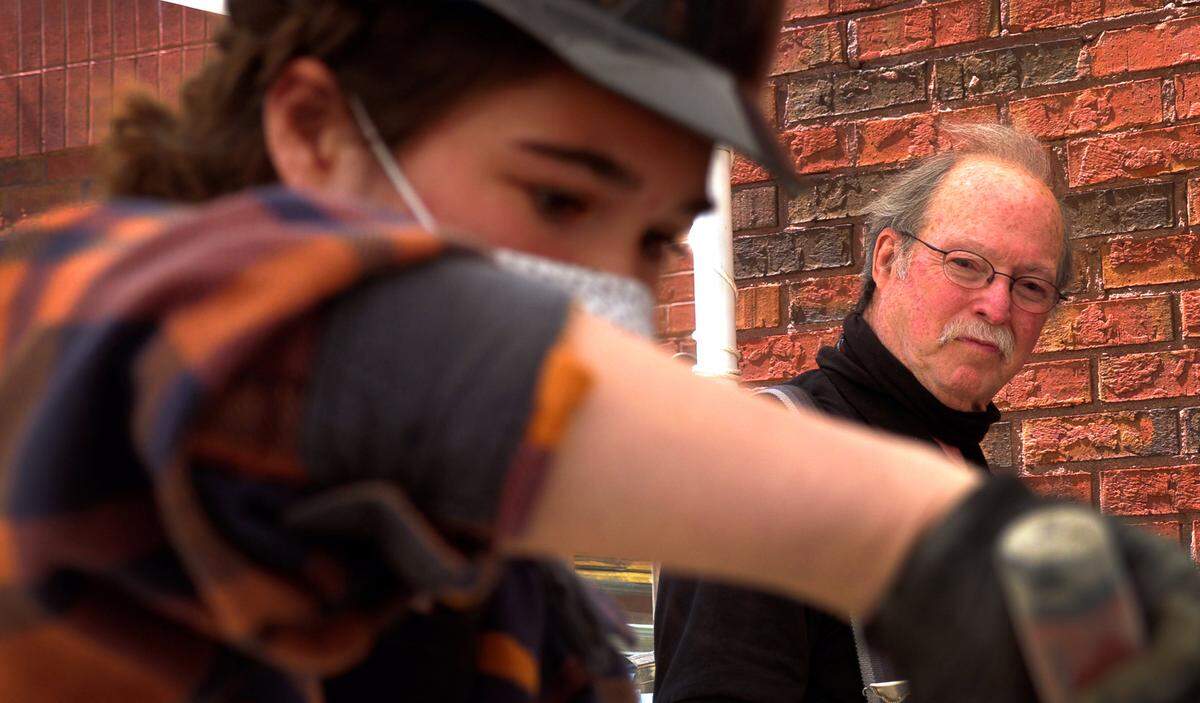
Rising senior Michael Watley, 17, joined the program as a freshman in 2018. Back then, he couldn’t hammer a nail straight. Now, he finished fourth in this year’s state high school carpentry competition.
Michael credits Steel for motivating him and his fellow students to improve.
“It shows how much love he has for the students and the trades,” Michael told the L-E. “He wants us to succeed in life.”
Michael is among the 10 HCHS students who qualified for the Georgia SkillsUSA state competition in March. And they all finished in the top 10 of their category: carpentry, electrical, masonry or plumbing.
“I’m proud of these kids,” Steel said. “It helps to have good kids that want to actually learn.”
Michael said Steel “wants us to be able to take what we learn in his classroom and to apply it to our life, and he gives good life lessons.”
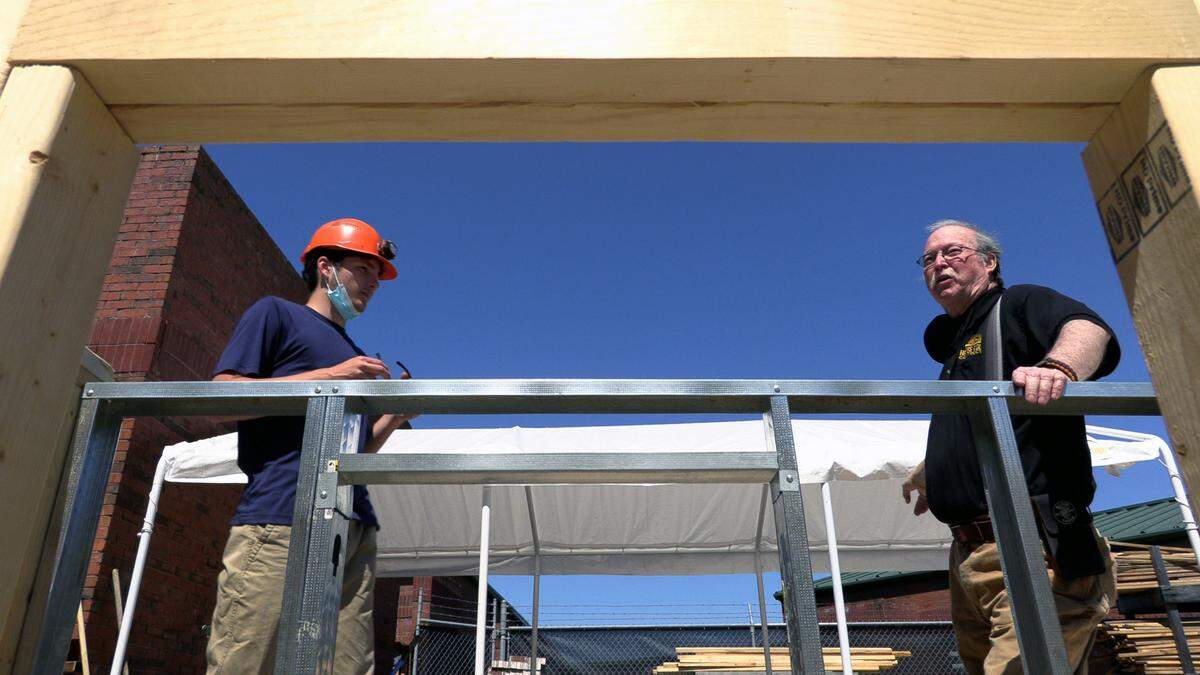
Steel explained why he emphasizes teaching the so-called soft skills before his students try to impress employers.
“They can’t train you to come to work on time; they can’t train you to be respectful; they can’t train you to cooperate,” he said. “… We teach that in our program.”
Perseverance as well.
When he feels like giving up, Michael said, Steel tells him, “You’re going to get through this. You got this. If you need help, I’m right here next to you.”
Recruiting
This was the first year in the program for HCHS rising senior Grace Senette, 17, who finished sixth in the state for masonry.
She didn’t seek the position. She just happened to be in the art room when Steel visited to recruit students.
Grace was intrigued. Then she was hooked.
“It really does incorporate a lot of art, when you think about it,” she told the L-E. “It’s an outlet … to incorporate something you would do in the real world.”
In fact, Grace is considering masonry as a career — or cosmetology, another kind of craftsmanship.
“It’s way different,” she said with a laugh. “But if (cosmetology) doesn’t work out, I’ll definitely do this.”
Grace appreciates Steel’s teaching style.
“He’s very encouraging and entertaining,” she said. “He draws you in. … He always lifts you up. He will never let you get down on yourself. If you can’t figure something out, he’ll help you figure it out or get the tools to figure it out.”
‘We need young people to do it’
Steel estimated he has worked in the construction industry for 25-30 years. This was his third school year at HCHS and 15th year in teaching. He also taught in Crisp County and Lee County, Georgia.
Before he became an educator, Steel worked various construction jobs and helped build churches for the Jehovah’s Witnesses. He learned about the chance to pursue a different sort of mission in 2005.
His wife, who was running the career center at Lee County High School, told him the construction teacher was leaving. Steel laughed as he recalled his reply: “Teach? I didn’t want to go to school anymore when I got out of school.”
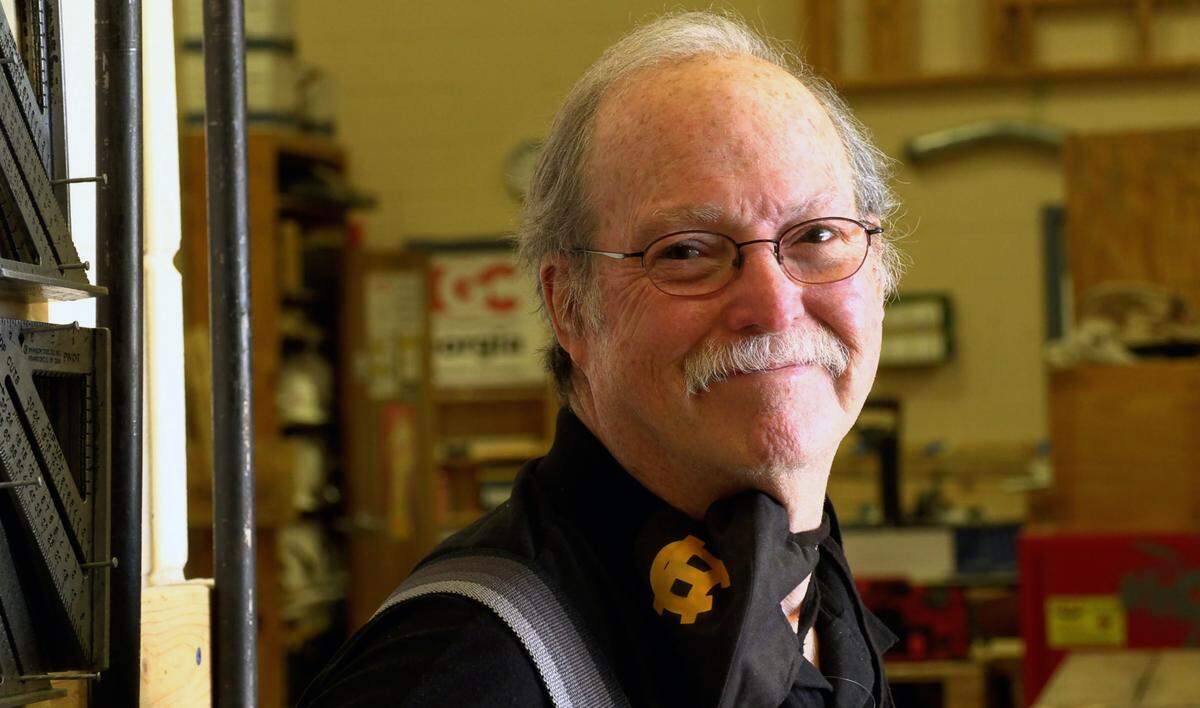
Then he thought, “In the construction industry, we’re graying out, so we need young people to do it.”
Steel put in stark contrast the options for his graduates.
“In four years, they will have earned $100,000,” he told the Ledger-Enquirer, “or they could go to the university system and have a bill — ‘Here’s your diploma, and there’s your bill’ — for $100,000.”
The program has earned certification from the National Center for Construction Education and Research. That means students who complete the program and pass the test are certified to land better jobs and higher wages in the industry ahead of applicants without such credentials.
When he hears students say they have more confidence because of the program, Steel wells up inside.
“I get really excited about these kids,” he said. “I could go out and do something different, make a lot more money, drive a nicer car and things like that, but I do it for the kids. They’re the reason I get up to come to school. They’re the reason I stay late.”
This story was originally published June 4, 2021 at 6:00 AM.