How this Harris County teen turned life around to be family’s first high school graduate
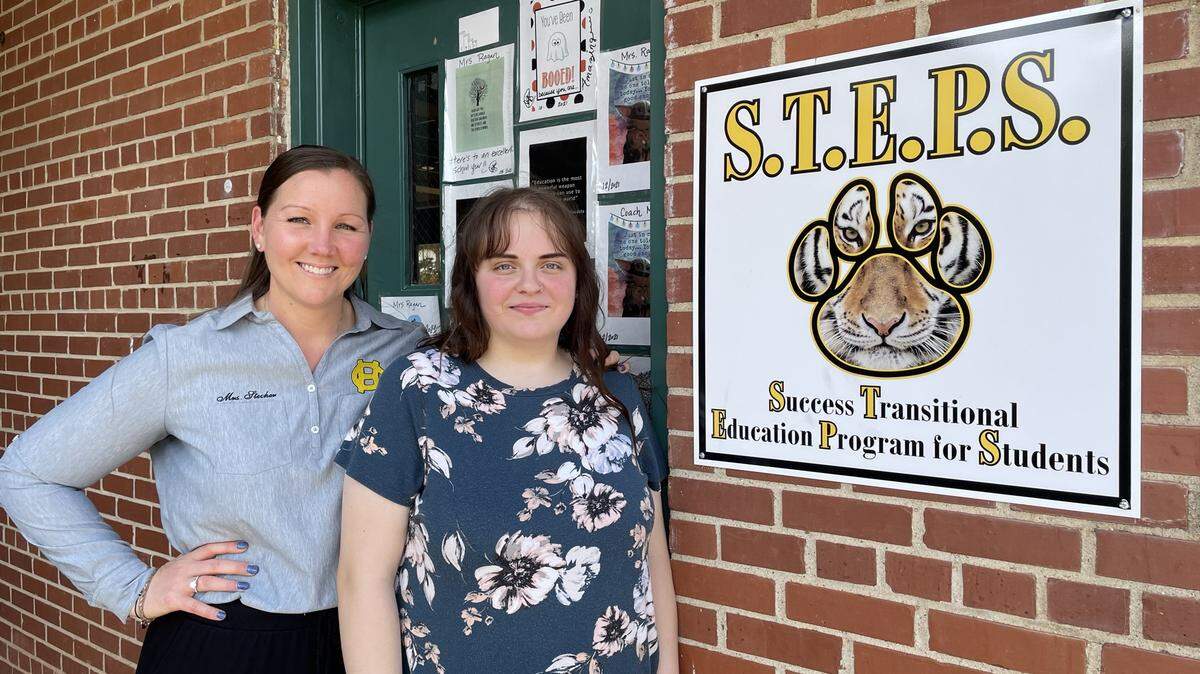
Her mother is estranged, and her father is incarcerated, so 18-year-old Kellie Finnegan lives with a friend’s family in Ellerslie as she finishes 12th grade — and becomes the first person in her immediate family to graduate from high school.
The momentous moment will culminate a circuitous journey for this previously wayward youth, who now has a clear direction and the skills to stay on a successful and joyful path.
As she looked forward to being part of the Harris County High School Class of 2022 at Saturday’s ceremony, Kellie told the Ledger-Enquirer, “I know I’m going to cry. It means a lot to me. Even though I don’t talk to my mom, I hope that it makes her proud.”
And because she did the hard work to turn around her life, Kellie can be proud of herself.
“I definitely am,” she said.
Kellie credits Ariane Stecher for being the most constructive influence she needed to break away from the destructive forces. Stecher is administrator of the Harris County School District’s alternative school, called the Educational Opportunity Center, which contains the Successful Transitional Program for Students.
“I could cry talking about that woman,” Kellie said. “She has helped me through more things than I don’t know what. She’s helped me choose the friends I should be around, choose the people I need to have in my life.”
“From there, it just went downhill”
Kellie and her brother were living in Harris County with their grandparents when their grandfather died in 2019.
“From there,” she said, “it just went downhill.”
Later that year, Kellie’s misbehavior at school ran out of reprieves as she was caught with an illegal vape. She was sent to the EOC in October.
The EOC is for students whose violations of the school district’s disciplinary code require them to attend an alternative school. STEPS is the program that allows EOC students to return to their regular school. STEPS also helps students who transfer from other districts without proper transcripts acclimate into HCSD.
Stecher recalled her first impression of Kellie.
“She was bubbly, but you could also tell there was a lot of hurt and anger underneath the surface,” Stecher told the L-E. “She was resistant to help at first. She didn’t really think what she was doing was wrong.”
That winter, Kellie’s misbehavior continued at home. Her grandmother decided the family needed a change of scenery, so they moved to Alabama. Stecher thought Kellie would continue along a troubled path and make unhealthy choices.
Kellie didn’t attend school in Alabama. That summer, an argument with her grandmother prompted Kellie to try to repair her relationship with her mother in Chicago.
It didn’t work out. Kellie instead moved in with her aunt in Chicago. She struggled to learn online during the COVID-19 shutdown of in-person classes.
In December 2020, Kellie returned to Harris County to live with a friend’s family. And she called Stecher for a second chance at getting an education.
“I don’t want to be a nobody”
Stecher said she was “shocked” to get that call from Kellie. Then she was pleasantly surprised when they met in her office, sensing she was talking to a changed teen as Kellie cried.
“You could tell there was an understanding in her about her actions and the way she was conducting herself,” Stecher said. “… She was lost. She was confused. She was hurt. She was trying to rekindle this relationship with her mother that she so desperately wanted, and she was met with the same stuff as before and probably magnified times 10. That’s just terrible. Her self-worth was low. Her self-confidence was low.”
Stecher recalled Kellie saying, “I don’t want to be a nobody. I want an education.”
In her 16 years as an educator, Stecher said, she never has seen a student make such a mature and brave turnaround without parent involvement.
“That was a first — of her own will,” Stecher said. “… She had to be open and vulnerable and raw, not knowing what my answers were going to be.”
Stecher told Kellie she must re-enroll back in the EOC because she hadn’t finished her assignments there and didn’t have documentation that she accomplished them elsewhere.
“I didn’t want to disappoint them”
Kellie struggled to consistently attend school, especially Fridays. Stecher figured Kellie was sabotaging herself so she didn’t have to return to regular classes and lose the attention she was receiving in the EOC and STEPS, where classes have a maximum of 15 students who stay with the same teacher. The average class at HCHS has about 30 students who change teachers throughout the day, Stecher said.
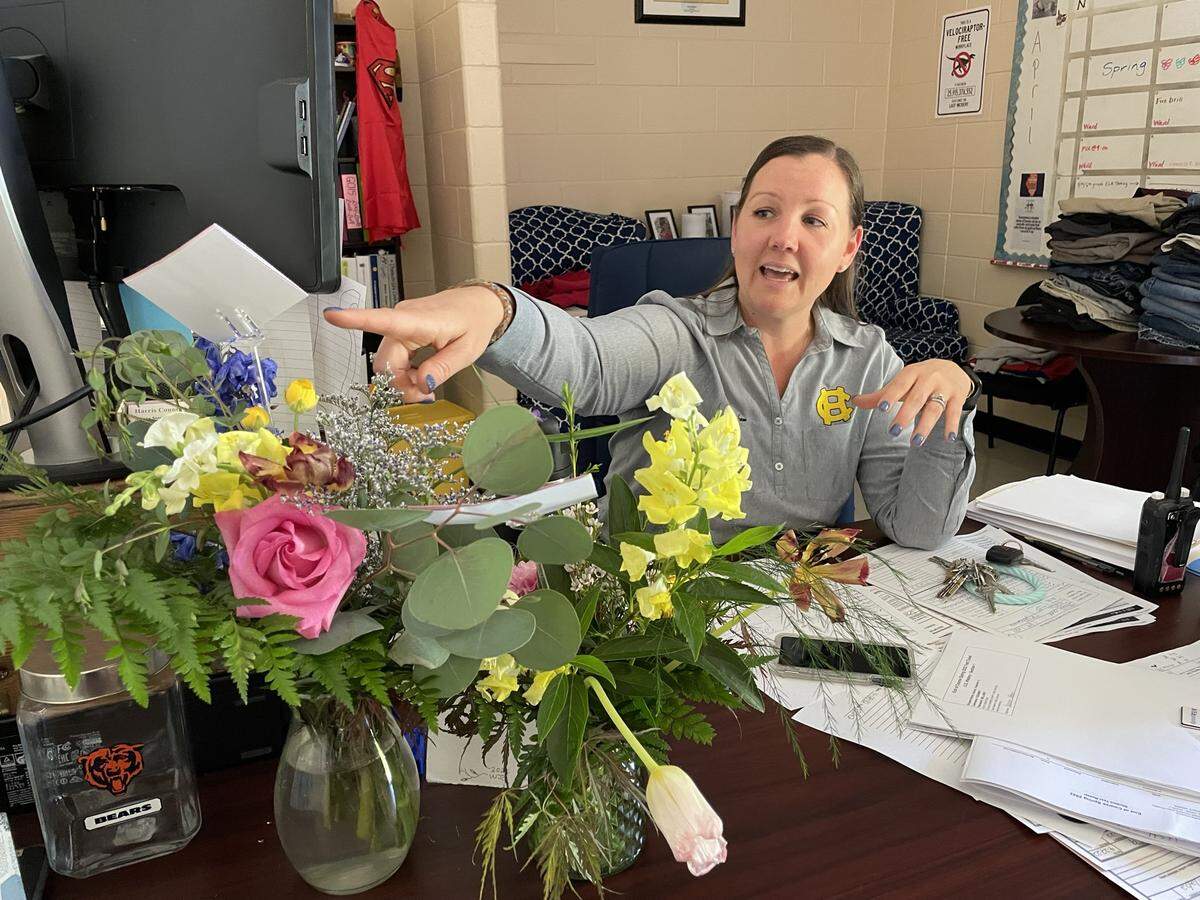
“We have kids who do that all the time,” Stecher said of the suspected self-sabotage. “… We provide them with such consistency and love and boundaries and expectations. Even though their days might be hard sometimes, they know we’re going to show up for them and support them whether or not they’re making good decisions.”
After a while, Kellie brought a positive attitude to the EOC.
“I started to see how much everyone here cared about me,” she said, “and I didn’t want to disappoint them.”
Stecher noticed.
“She didn’t mess around,” Stecher said. “She had a couple little hiccups because, when you’re around kids that have conduct issues, everybody pushes each other’s buttons. But she came in and buckled down.”
That motivation comes from unconditional love mixed with clear and consistently enforced rules.
“I don’t think I’ve ever had anyone in my life care about me as much as Ms. Stecher has,” Kellie said.
And it comes from Kellie having a vested interest in the EOC. She works for the janitorial services contractor ABM as the center’s custodian 6 hours per day after school.
Cleaning the facility helped Kellie clean up her life. It gave her more responsibility and more opportunity to achieve and show Stecher her gratitude.
“I really would not keep this job if I didn’t do it for her,” Kellie said.
Stecher rated Kellie’s custodial performance as “10 out of 10.”
The worst part?
“I don’t like cleaning the bathrooms,” Kellie said with a smile.
The best part? Taking pride in a job well done and earning income without having to commute.
“That feels great,” she said.
“I’m afraid if she wasn’t there, it would have gone sideways”
Kellie’s encouraging trajectory was threatened by a letter from her incarcerated father. What she thought was a hopeful message prompted Stecher to warn her about its potential harm.
As they talked in Stecher’s office, Kellie asked her to read the letter. Stecher was concerned the father’s sweet words weren’t sincere. Then she was even more suspicious when she read the request he made for Kellie to send him money.
Referring to the flowers Kellie sent her May 1, on Principals Day, to thank her for all she helped her overcome, Stecher said, “She’s so giving. … She’s always thinking about other people.”
Stecher mulled the pros and cons of what to tell Kellie about the letter. She didn’t want to crush her spirit, but she also didn’t want the father to take advantage of Kellie.
Forgiveness is allowed, Stecher told Kellie, but “you don’t owe that man anything.”
Stecher reminded Kellie that she was saving money for a car and college.
“It’s only $20,” Kellie replied.
“That is $20 of your money,” Stecher countered. Plus, if Kellie set this precedent, Stecher figured, more requests for money probably would follow.
Kellie left Stecher’s office and sat on the church pew in the hallway, where students can have some alone time or a private conversation with an adult.
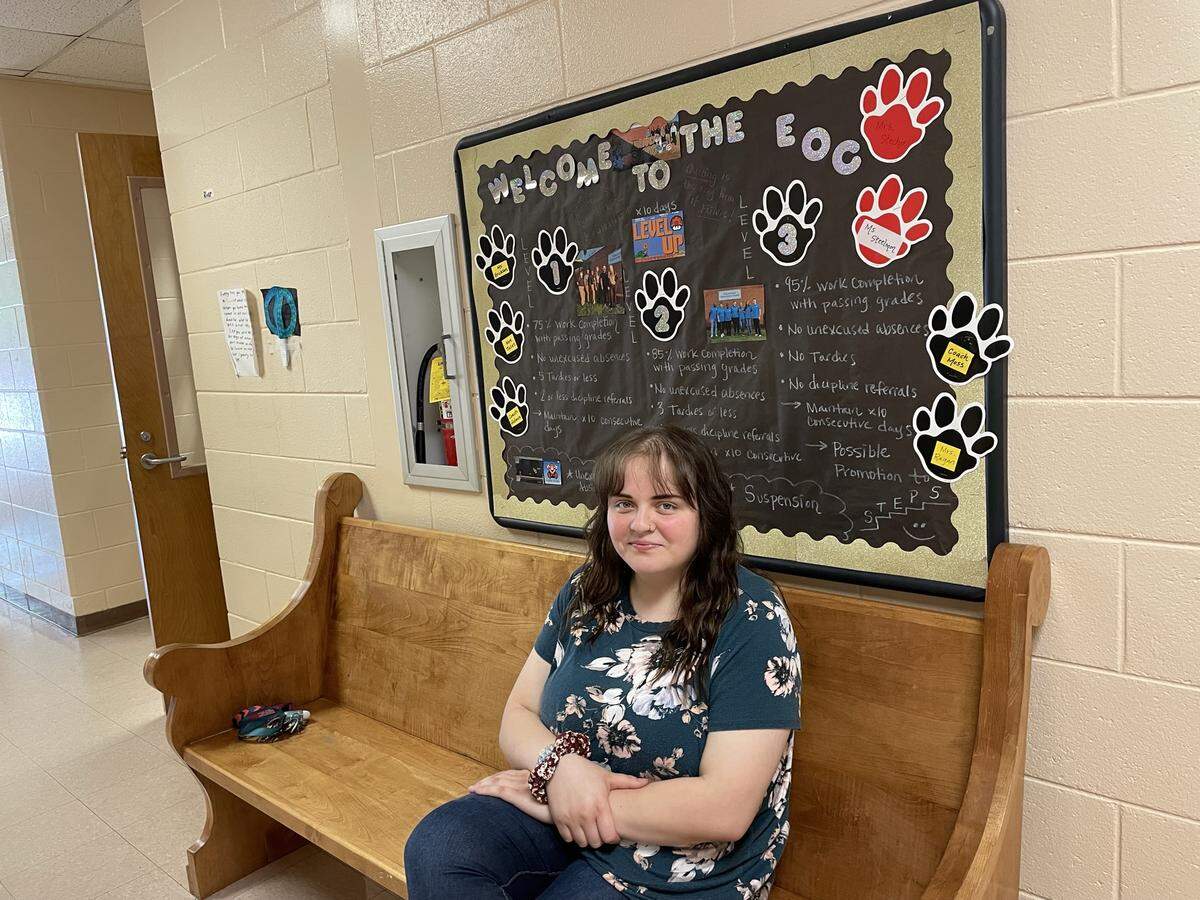
On the monitor from the school’s security camera, Stecher saw Kellie rip the letter into tiny pieces.
“Atta girl,” Stecher thought to herself. “I also knew how much that had to hurt — the excitement of when she entered (the office) and when she left in sadness.”
Stecher texted Kellie later that night to check on her.
“Are you OK?”
“I’ll be fine.”
Reflecting on the impact of her father’s letter, Kellie initially was mad Stecher had intervened, then she was glad.
“I’m afraid if she wasn’t there,” Kellie said, “it would have gone sideways.”
“A new outlook on life”
Stecher sees Kellie oozing confidence about her capabilities now.
“She understands she can do things on her own, and she’s smarter than she was before,” Stecher said. “She knows how to advocate for what she needs now. She’s not afraid to ask for those types of things.”
Kellie also understands personal growth is a constant pursuit.
“She’s learned a lot from her pain and her disappointment,” Stecher said.
Kellie plans to attend Columbus Technical College for an associate’s degree then transfer to Columbus State University for a bachelor’s degree in psychology — and possibly help wayward youth find a path to success and joy.
“I think she has a new outlook on life,” Stecher said. “… We really discussed family doesn’t necessarily have to be blood. You can have people in your life that support you and lift you up and help you in ways that sometimes your blood can’t.”

This story was originally published May 12, 2022 at 10:06 AM.