
This family has deep roots in Fort Benning. Could their parents be the new namesake?
The Auburn home is still in the family. It’s a place Dave Moore comes to work on occasion, and nearly every time, he finds himself lost in the history books from his late father’s library.
Walls filled with decades of military awards, movie posters and memorabilia surround Dave as he sits at the same desk where his father, Lt. Gen. Hal Moore, researched and co-authored his 1992 bestseller “We Were Soldiers Once… and Young” with late war correspondent and journalist Joe Galloway.
Hal Moore, who died in 2017 just shy of his 95th birthday, had a military career that spanned more than three decades, highlighted by his heroism as commander at the Battle of Ia Drang during the Vietnam War. Outnumbered and surrounded, Hal Moore and his men were able to drive back North Vietnamese forces in what came to be known as the first major battle of the war.
Yet, it’s Julie — Hal’s wife and the Moore family matriarch who died in 2004 — who Dave says held the family together and brought the decorated lieutenant general to the point of greatness.
It’s that teamwork the family hopes to honor as they petition the federal government to select Fort Moore as the replacement name for Fort Benning. Benning’s name change is not optional. Congress says it must happen. Titles associated with the Confederacy must be scrubbed from Department of Defense-owned property and assets as mandated in the 2021 National Defense Authorization Act.
While other proposals for the post’s new name seek to honor the accomplishments of individual military personnel, Dave told the Ledger-Enquirer that Fort Moore would honor both his father’s achievements and the importance of the military family.
“If this proposal were Dad alone, it’d be a worthy proposal,” Dave said. “But there’ll be many other worthy proposals of a similar nature.
“(Mom and Dad) represent what was best of the Army family (and) the Army spouse,” he added. “Let’s take this opportunity and make this something bigger than just naming it after an individual, but rallying around a cause that can be bigger than Fort Benning and that’s essential to the Army’s mission success.”
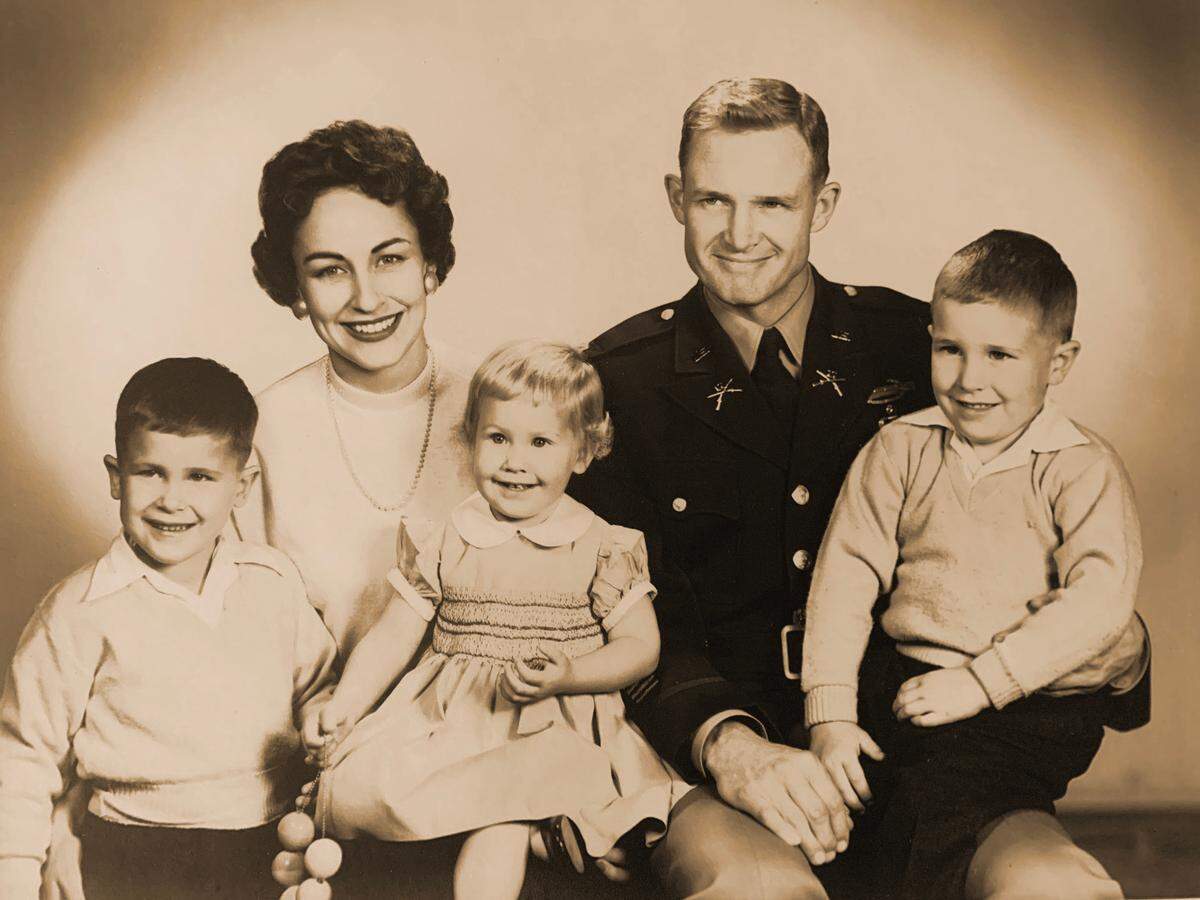
Early lives of Hal and Julie Moore
Hal and Julie Moore first met at Fort Bragg, North Carolina. She was an Army brat, born at Fort Sill, Oklahoma in 1929 to Colonel Louis J. Compton and Elizabeth Compton. After several assignments, the family arrived at Bragg, and Col. Compton commanded Army Field Forces Board #1 on the post.
A young soldier who graduated from West Point, Hal was sent to Bragg in 1948 after being stationed in Japan. Hal ended up a parachute tester under Compton.
Moore chose the Army at a young age, leaving his hometown of Bardstown, Kentucky, before he graduated high school. He moved to Washington D.C. to find a job, took night classes to finish high school and then attended George Washington University in the evenings. Two years later, he went to West Point and was assigned to the Infantry Officer Basic Course at Fort Benning after graduating in 1945, a few months before the end of World War II.
Julie was a student at the University of North Carolina at Chapel Hill, and was visiting her parents when she met Hal at the post pool. She walked up to the young soldier to introduce herself, and although Hal seemed to brush her off, love eventually blossomed. Julie decided Hal was the man for her in the summer of 1949. She chased him until he caught her, Dave said.
The couple married in November 1949, and their first child was born 18 months later at the installation.
By the time Moore was commanding men in Vietnam nearly a decade and a half later, he’d been around the world. He was awarded three Bronze Star Medals (two of those for valor) for his service in Korea. He taught at West Point, worked at the Pentagon and served a three-year tour with NATO forces in Norway.
In 1964, Moore completed studies at the Naval War College and earned a master’s degree in international relations from George Washington University before the Army transferred him to Fort Benning.
Moore left the installation in August 1965 at the head of the 1st battalion, 7th U.S. Cavalry bound for Vietnam. In three months, he and his men would be surrounded by the enemy in the Ia Drang Valley.
Hal Moore, Ia Drag and Vietnam
Dave Moore was only four years old when his father left for Vietnam, too young to be aware of the situation. He only knew the families of deployed soldiers had been kicked off Fort Benning. His dad wasn’t there, and life went on.
Across the world, his father had been ordered to conduct a helicopter assault into the Ia Drang Valley early on Nov. 14, 1965, for search and destroy operations.
Dave Moore and Ramon A. “Tony” Nadal, who served as a captain under Lt. Gen. Moore during the fighting at the landing zone, described what took place over the next few days.
When the commander touched down at Landing Zone X-Ray among the first waves of men near the base of the Chu Pong Massif, they were alone. But Moore and his men would soon capture an enemy soldier who told the Americans that the mountains near the landing zone were home to multiple regiments of North Vietnamese forces.
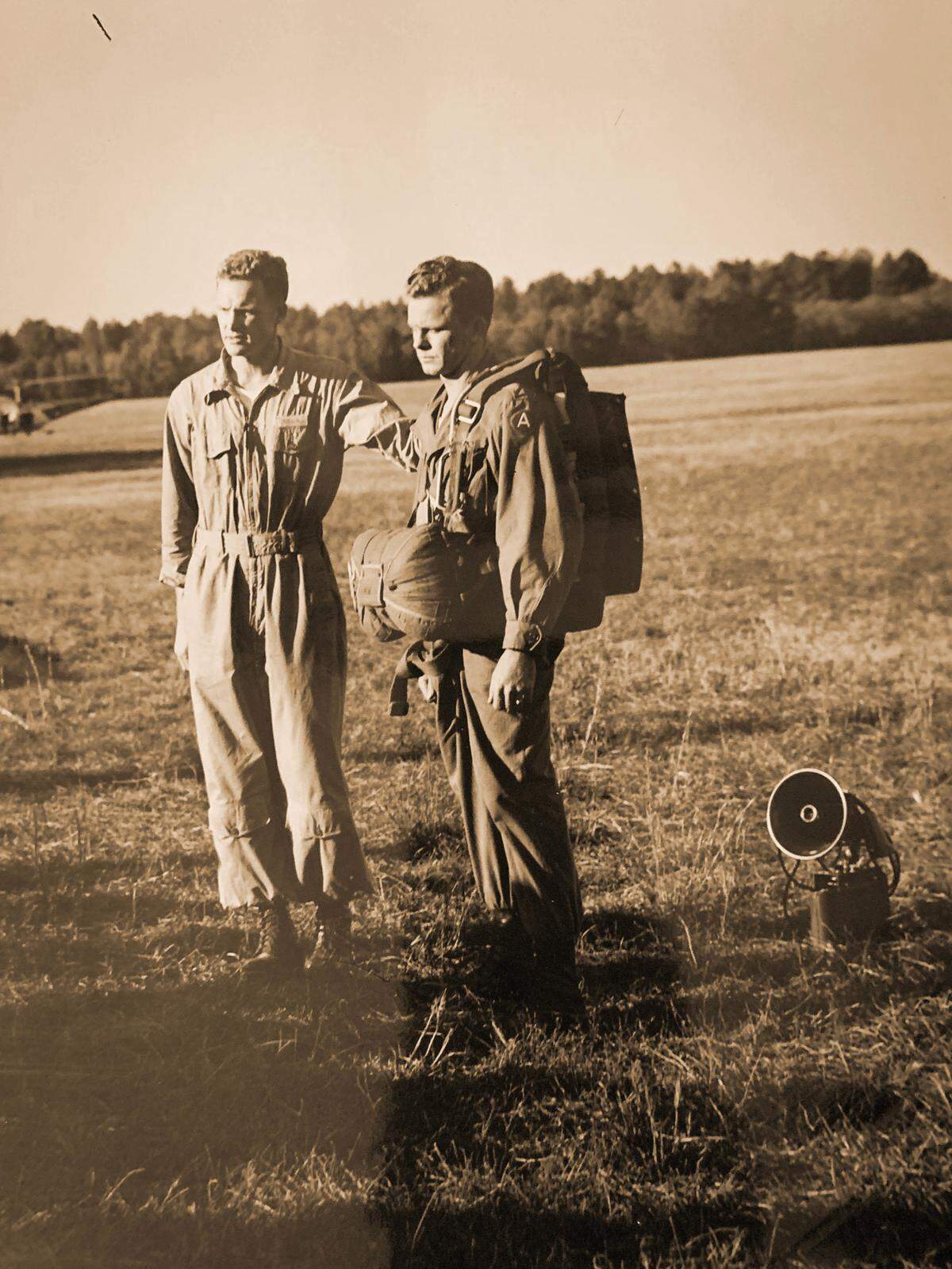
The original plan was to split the American soldiers, sending them out into the woods to look for the enemy. But Moore realized survival depended on holding the landing zone, Nadal said.
Moore and his roughly 400 men were outnumbered and started taking enemy fire 90 minutes after landing. The situation was dire. Over the next three days, the Americans engaged the much larger North Vietnamese forces. Moore took an active role in the fighting, joining a company in an infantry assault on the second morning.
Reporters and military historians later compared Moore’s position to that of another 7th Cavalry commander, George Custer — his troops were surprised and slaughtered at the Battle of the Little Bighorn in 1876. Troops in the valley even called the blonde-headed Moore “Yellow Hair,” a tongue-in-cheek nod to Custer.
Yet, Moore and his men did not meet Custer’s fate. The North Vietnamese nearly overran the Americans’ position, but well-placed, timely artillery and air support kept Moore and his men on the field.
Casualties were high on both sides, especially for the North Vietnamese who withdrew on Nov. 16. The Americans claimed tactical victory in the first main engagement of the Battle of Ia Drang. The North Vietnamese had more success at the second engagement with different American soldiers. at Landing Zone Albany.
It was Moore’s decision-making during the battle that kept his men from being overrun, Nadal said. Nadal kept in contact with Moore throughout the rest of military career and life. He compared Moore to Sir Galahad, a knight of King Arthur’s Round Table renowned for his gallantry and purity.
“He was the finest soldier I ever met in my military career,” Nadal told the Ledger-Enquirer. “He led by example, everywhere. ...He epitomized the motto of West Point — ‘Duty, Honor, Country.’
“He just had lots of virtues, both as a commander in battle and as a family man,” he added. “I’m not the only guy who feels this way. The loyalty and good feelings he left behind are pretty unique.”
For his heroism and leadership at LZ X-Ray, Hal Moore was awarded the Distinguished Service Cross, the second-highest military decoration that can be awarded to a member of the United States Army. For Dave, the importance of his father’s actions started to sink in during a first-year military history class at West Point when he opened up a textbook’s section on Vietnam.
“I said ‘Hey, that’s Dad,” Dave recalled. “So to understand that West Point valued this fight and his leadership to bring that into their formal military history instruction — that’s when it really dawned on me. It really sunk in.
“I didn’t see all of that (growing up.) I saw Dad, and that’s all I saw.”
Julie Moore and her sacrifices
Hal Moore wasn’t the only one making a mark on the U.S. Army.
Julie spent her entire life in the military — as a daughter, a wife and later, a mother, when two of her sons joined up. Dave entered the Army in 1979, graduated from West Point in 1984 and retired in 2011. Steve Moore graduated from West Point in 1975 and retired from the Army in 1995.
When Hal went off to Korea, Julie took care of two children under the age of one. When the family moved nearly every year and a half, it was Julie who kept things running as smooth as she could at home.
Whenever he was able, Hal took the family out hiking and fishing at spots not far from wherever they were stationed. A devout Catholic, Hal made sure the family went to church on Sunday. The Army came first, but Hal made sure he got home for dinner. Still, much of the work fell to Julie.
She served as a Red Cross volunteer working in Army hospitals and dental clinics, pushed for Army daycare centers to receive proper support and helped other wives adjust to military life all while raising a family of her own.
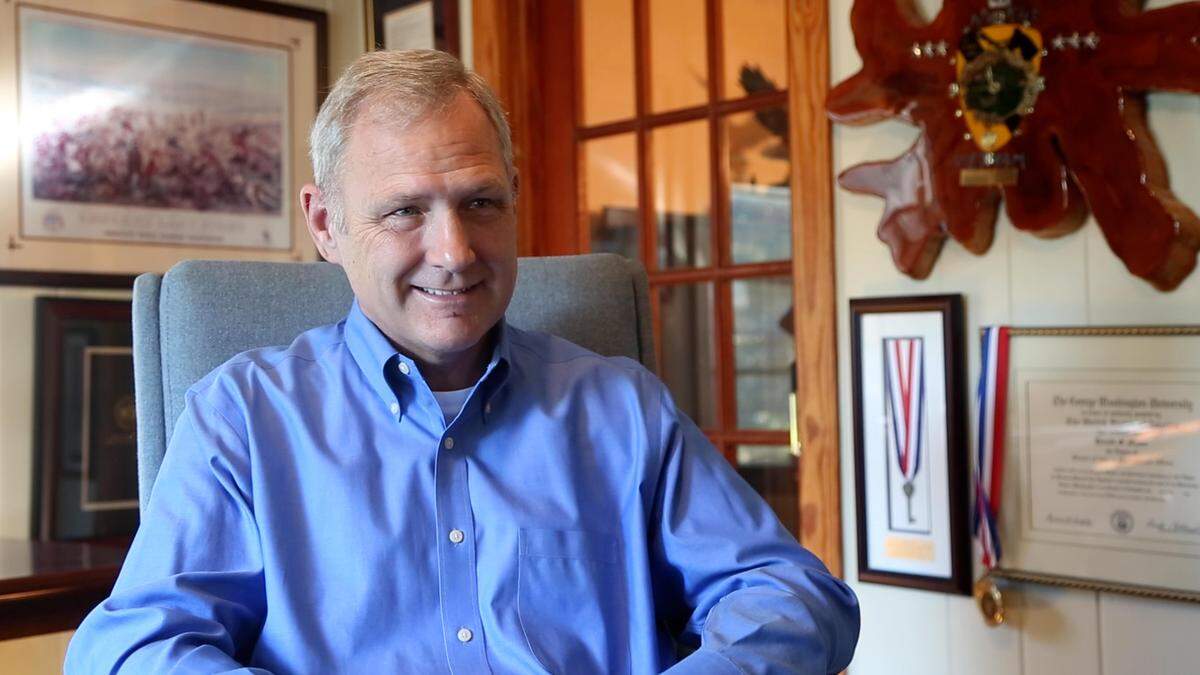
“From birth to passing, she was in the military, Dave said. “I took her for granted, but she was always there. She drove me to Little League. She did all those things that moms do. ... She did what she needed to do to allow my father to be the best he could be.”
In the aftermath of the Ia Drang battle, the U.S. Army had yet to establish a proper system for notifying the next of kin when a soldier was killed. Telegrams were simply given to cab drivers for delivery.
Julie was able to get Western Union to tell her who was receiving death notifications in the Columbus area. She’d arrive not long after the taxis, grieving with the widows and families of the fallen. She attended funerals of the men who served under her husband’s command, Dave said.
The complaints from her and other Fort Benning spouses eventually brought about the Army’s modern death notification system. To this day, a uniformed officer and a chaplain deliver the news. The Army established the Julia Compton Moore Award in 2005 to recognize civilian spouses of soldiers for outstanding contributions at Fort Benning.
“Her second career was the Army,” Dave said. “When you look at her body of work, she’s not going to be standing in front of an Army formation, getting a medal. But she deserves one.”
Why Fort Moore, and what is next?
Fort Benning has played a major role in the lives of the Moore family.
Dave’s grandparents are buried there. Both Hal and Julie are buried at the Fort Benning Main Post Cemetery, surrounded by the soldiers who died at Ia Drang — Hal’s last wish was to be buried among his men. Hal and Dave trained at Fort Benning after leaving West Point, and Dave currently works there as a contractor.
Both Hal and Julie Moore represent values the Army should rally around, Dave said. The pair operated as a command team, one unit moving towards a common goal. While Hal is widely celebrated for his military accolades, the Moore family hopes their proposal celebrates Julie’s legacy, bringing her into the fold as an equal partner.
“You don’t see Army spouses in front of formations getting awards and things of that sort for the most part. ...You see the person in the military getting the accolade, but that actually came as a result of the sacrifice and commitment of others,” Dave said.
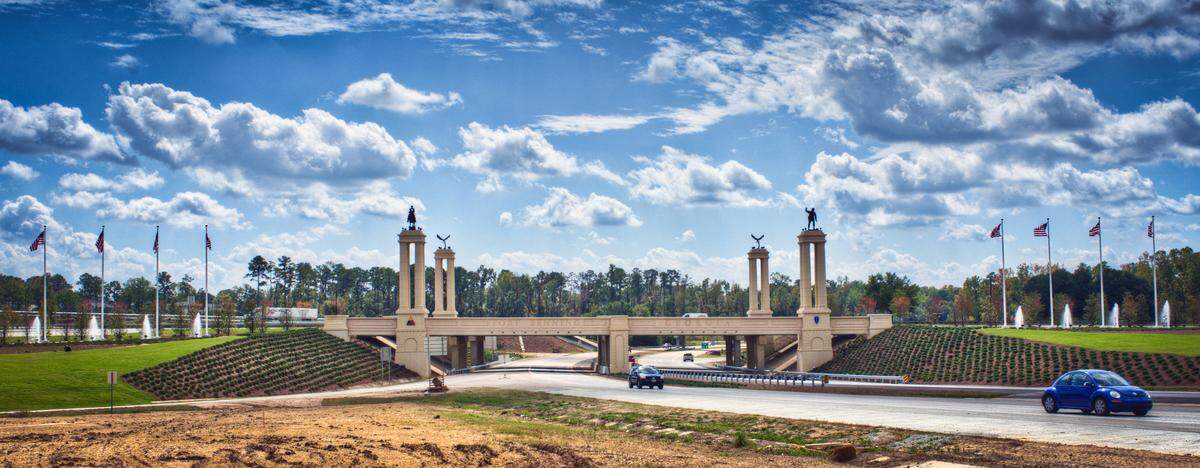
The final decision on Benning’s new name will happen outside the post.
The Naming Commission, a body created by Congressional mandate and composed of eight appointed members, is tasked with assigning, modifying or removing anything that commemorates the Confederate States of America. The initial focus is on nine military installations named for Confederate service members.
Commission representatives visited Fort Benning to speak with installation leadership and local stakeholders in late July to incorporate local input into the process. Mayor Skip Henderson and State Rep. Calvin Smyre were among those in attendance.
Smyre said state senators and representatives who serve the Columbus area would draft a resolution of support in favor of whatever name the public rallies behind. Henderson said the city council planned to do the same.
It’s unclear how the public will voice their opinions to local leaders. It’s possible the Greater Columbus Chamber of Commerce could host public forums regarding the name change, Henderson said. In July, the chamber began emailing out a federal base renaming survey.
The Naming Commission is also allowing members of the public to submit recommended names for Fort Benning and other military assets with Confederacy-affiliated names.
The commission will brief the House and Senate Armed Services Committees on its progress by Oct. 1. A year later, on Oct. 1, 2022, the commission will present a final briefing and written report to the bodies.
The Moore family’s proposal has been formally accepted by the commission. The proposal has gained support from several high-profile figures, including former CIA Director Gen. David Petraeus and former National Security Advisor Lt. Gen. H.R. McMaster, Dave Moore said. McMaster served as Fort Benning’s commander from June 2012 to July 2014
In a June interview with the L-E, Fort Benning’s commanding general Maj. Gen. Patrick Donahoe, said Moore was one of several names that local stakeholders have floated as a possibility for the post’s new name. Others included Col. Ralph Puckett, George C. Marshall and the Maneuver Center of Excellence.
For now, Dave Moore waits.
“It’s not just a name and we’ve got to change signposts. We want a name that represents a larger cause that (the Army) and the Columbus community can use for a greater good.”
This story was originally published September 9, 2021 at 9:51 AM.