
Congress Votes to Extend Expiring Law on Warrantless Surveillance for 10 Days
WASHINGTON -- Congress voted on Friday to extend an expiring surveillance law for 10 days, after libertarian-leaning Republicans in the House demanded that they be allowed to vote on adding new privacy limits to any long-term extension.
The law, a major section of the Foreign Intelligence Surveillance Act, or FISA, is set to expire Monday. The short-term extension bill, approved by the House shortly after 2 a.m., pushes that off until April 30, creating more time for negotiations.
Late Friday morning, Sen. John Thune, the Republican majority leader, called up the bill for passage and no Democratic senator objected, sending the measure to President Donald Trump's desk.
Before that voice vote, Sen. Ron Wyden, D-Ore., who supports limiting surveillance, said that he had consulted several of the House Republicans who blocked the bill overnight and that they asked him to allow the extension to give them negotiating leverage. The stopgap, he said, "makes reform more likely and expiration makes reform less likely."
The overnight drama, which dragged into the Senate after most lawmakers had already left town for the weekend, made clear that significant headwinds remained for both chambers when members return and try to reach an agreement on a more durable path forward for the contentious provision, known as Section 702.
Trump has been pressuring Republicans to pass an 18-month reauthorization of Section 702 without any changes.
Speaker Mike Johnson has been attempting to comply, but he needs the backing of nearly every GOP member in the House to proceed. Twenty balked early Friday, making it impossible to move forward even though four Democrats crossed party lines to try to help him bring the matter up for a vote.
Trump had urged Republicans on Wednesday to "unify" behind Johnson and extend the law without any new limits.
"I am willing to risk the giving up of my Rights and Privileges as a Citizen for our Great Military and Country!" Trump declared on social media, portraying the section as crucial to protecting troops abroad and preventing terrorist attacks.
But that characterization did little to allay the concerns of some Republicans associated with the libertarian-leaning Freedom Caucus. The debate has scrambled the usual polarized party lines: Privacy and civil liberties-focused lawmakers in both parties have allied to press for greater limits, while centrists and national security hawks in both parties are working together to try to extend the surveillance law without changes.
Section 702 allows the government to collect -- on domestic soil and without a warrant -- the communications of foreigners abroad, including when those people are interacting with Americans. Under the law, the National Security Agency can order email services like Google and network operators like AT&T to turn over copies of messages of targeted foreigners.
The provision legalized a form of the Stellarwind program, the once-secret warrantless wiretapping program that the Bush administration launched after the Sept. 11, 2001, attacks. When Congress enacted Section 702 in 2008, it added a "sunset" deadline to ensure that lawmakers would periodically review -- and potentially modify -- the program.
Privacy-minded lawmakers want to require a court order to access information about and the private messages of Americans swept up in the program. They have also proposed using the bill to bar the government from purchasing data about Americans from data brokers if it would need a warrant to collect the information directly.
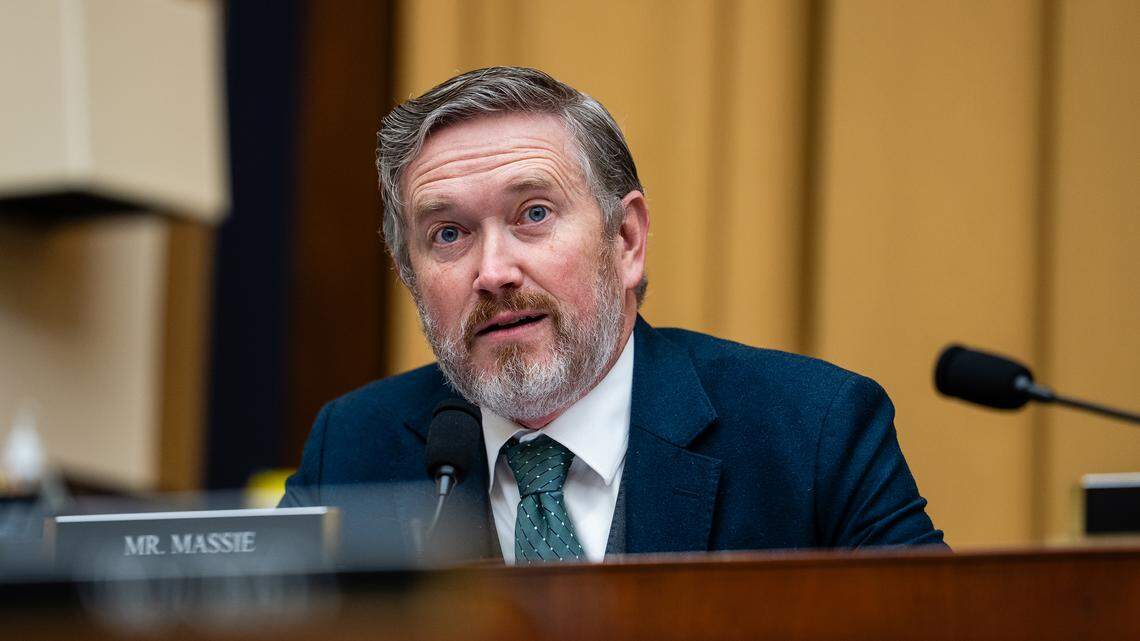
"I will be voting NO on final passage of the FISA 702 Reauthorization Bill if it does not include a warrant provision and other reforms to protect US citizens' right to privacy," Rep. Thomas Massie, R-Ky., wrote on social media shortly after Trump's post.
Before blocking an up-or-down vote on the 18-month extension bill early Friday, the House also blocked a proposal that would have extended Section 702 by five years. That version would have made what appeared to be largely superficial changes, like enhancing criminal penalties for misusing the program.
Proponents of Section 702 have warned that any lapse would gravely threaten national security, but the program has a temporary safety net. Because an intelligence court recertified the program last month, intelligence agencies can legally continue to operate the program through March 2027 even if the underlying statute has expired in the meantime.
Still, during the last cycle of debate over reauthorizing the law, in 2024, the Biden administration warned that a lapse could lead some tech companies to stop cooperating anyway, creating gaps in data collection until the government could get court orders compelling compliance.
Trump's full-throated endorsement of the surveillance tool marked a sharp pivot. For years, he has railed against the FBI's use of a different part of FISA during the investigation into Russia and his 2016 campaign, and only grudgingly acceded to Section 702 extensions.
This article originally appeared in The New York Times.
Copyright 2026 The New York Times Company
This story was originally published April 17, 2026 at 10:50 AM.