
Columbus could give $10M to nonprofit for affordable housing project. Is it legal?

A housing nonprofit headed by a Muscogee County School Board member could receive more than $10 million from taxpayers to help fund an affordable housing community in south Columbus.
But the looming deal leaves three Columbus Council members at odds with city leadership over the proposal’s legality.
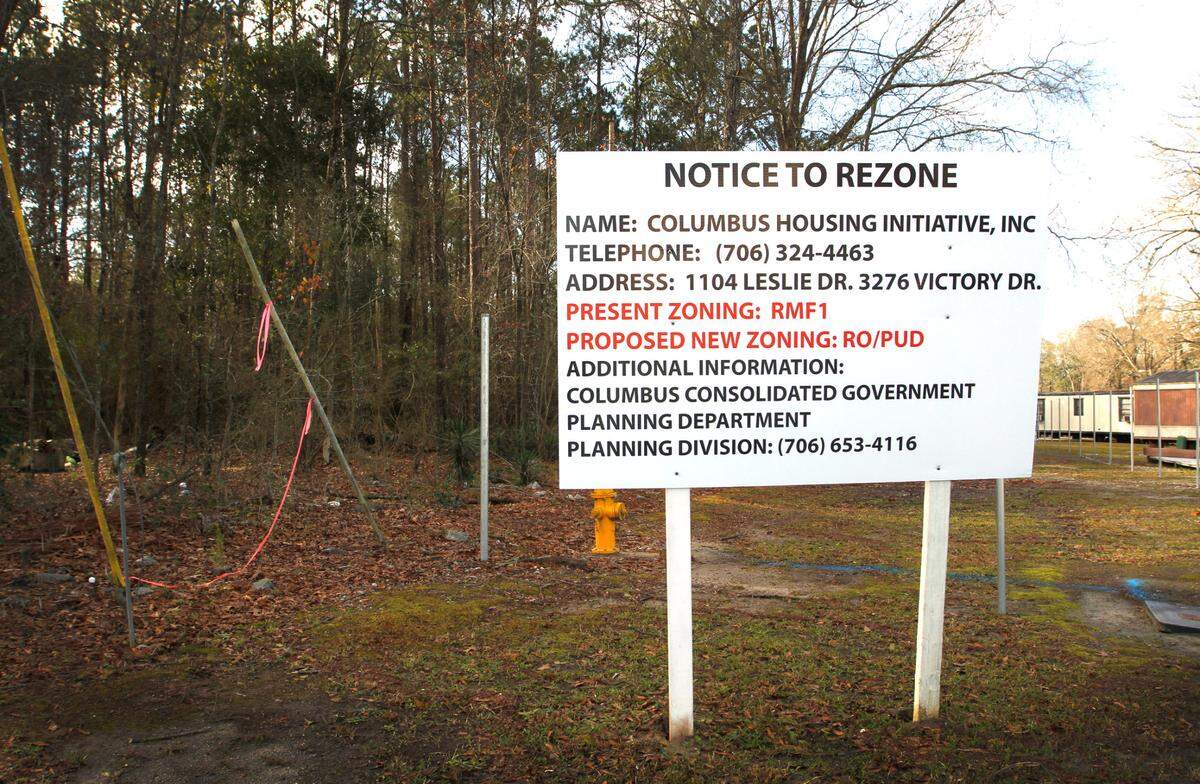
The development project, called Elliott’s Walk, is a partnership between NeighborWorks Columbus and First Baptist Church to create 229 housing units off of Victory Drive. Developers say Tax Allocation District (TAD) funding is a necessary piece of keeping the project low-cost and affordable for future residents.
Councilors Toyia Tucker, Glenn Davis and Charmaine Crabb expressed their support for affordable housing and the mission of NeighborWorks Columbus but said the circumstances surrounding the potential deal were “cloudy.”
The vote, they said, was rushed. Councilors learned of the proposed million-dollar grant amount two days before the meeting, and city administration did not postpone the vote despite multiple requests.
The councilors say they also want to ensure the deal is legal. State laws governing the use of TAD funds — a financing tool that encourages projects in underdeveloped or blighted areas using public dollars — prevent certain elected officials from being involved in redevelopments.
Columbus City Attorney Clifton Fay and informal guidance from the state attorney general say that NeighborWorks President and CEO Cathy Williams’ school board membership isn’t a conflict of interest that would prevent the Columbus Council from approving the grant.
The state law regarding TAD funds doesn’t apply to the school board, Fay said. Williams told the Ledger-Enquirer that she did what was required and there are no “gray areas” in the deal.
While council did authorize City Manager Isaiah Hugley to negotiate with NeighborWorks during its Jan. 11 meeting, the final project proposal must come back to councilors for approval, Fay told the Ledger-Enquirer.
The city needs more affordable housing, and the Elliott’s Walk project is a perfect example of a development that should receive TAD funds, Williams said. She founded NeighborWorks Columbus in 1999 and began her second stint on the Muscogee County School Board in 2016.
“They are not supposed to be used for high-end commercial rental like out at Midland Commons,” she said. “We are in an affordable housing crisis in Columbus. And we desperately need affordable housing, and nobody else is developing it, especially for homeownership or single family. …There’s not one developer who’s developing affordable housing for the benefit of Columbus except NeighborWorks.”
Why does the project need TAD money?
According to documents filed with council, NeighborWorks Columbus would oversee the building of 43 single-family homes, 130 affordable apartments for residents 55 years and over, and 56 multi-family houses at 1104 Leslie Drive. That area falls into the South Columbus River District TAD.
The property formerly was a trailer park, and Hugley said during the council meeting that it once “looked like a warzone.”
The new homes and apartments range from $120,000-$165,000 in value and will be developed in phases. The TAD funds represent nearly 19% of the project’s total construction cost, according to NeighborWorks and council documents.
“Without the proposed TAD benefit, this project could not be done, due to the extensive infrastructure required for streets, drainage, sewers, etc,” the document reads. “The additional cost required to be added into each lot cost and resulting sales amount would be at least $44,014 per unit, increasing the sales amount for each home to beyond the affordable category.”
-page-001.jpg "proposed-tax-allocation-district-8 (2)-page-001.jpg")
In a Tax Allocation District, a base property tax rate is set. Any revenue collected above the set rate is placed in a fund and can be used for infrastructure needs within the district.
A committee then reviews the TAD proposal. If approved, Columbus Council makes the final decision on whether the TAD is adopted or rejected. The council then seeks the participation and agreement of the school district.
However, the council could create a TAD without participation from Muscogee County schools, according to city planning guidelines.
Developers publicly mentioned plans for Elliott’s Walk in 2019. The project would be financed on a pay-as-you-go basis, and the timetable for TAD funding payout has not been established. As of early 2022, the Tax Allocation District fund has only $2,000.

Is there a conflict of interest?
Concerns about a possible conflict of interest involving Williams and the planned development emerged shortly after the TAD’s approval.
State law prevents an “elected or appointed official or employee of a political subdivision or a board, commission, or redevelopment agency” from acquiring property, contracts or performing other transactions in the district.
At the request of Mayor Skip Henderson and Columbus councilors, Fay sought guidance from the state attorney general in January 2021 on two matters:
Do the state laws governing the use of TAD funding apply to Williams?
If the law applies to Williams, would NeighborWorks be able to acquire property in the TAD and use TAD funding?
In a letter, Fay outlined his opinion that while “there might be some appearance of a conflict,” the state law would not apply to Williams since the school board is an independent body and does not operate under the city government.
The letter does not mention Williams by name. It identifies her only as a school board member and an employee of a nonprofit. It doesn’t say she serves as the nonprofit’s CEO.
Even if Williams were subject to the law, Fay wrote that being an employee or board member of NeighborWorks would not prevent the nonprofit from using TAD funds or acquiring land in the TAD.
Williams, he argued, has no financial interest in the project because her “compensation is not contingent on the success of the project.”
In a February 2021 letter, Assistant Attorney General Zachary Johnson agreed with Fay’s opinion that Williams is not an elected official subject to the TAD law.
“Because the Columbus Consolidated Government is the political subdivision which is exercising redevelopment powers in this instance, it appears that the School Board has no applicable association that would present a possible conflict of interest,” Johnson wrote.
Johnson wrote that it appeared Fay was correct that a single board member or nonprofit employee wouldn’t have the type of control or interest forbidden by state law.
However, Johnson said that Fay’s initial letter did not provide enough information about Williams’ precise role to determine if it would prevent NeighborWorks from being involved in TAD work.
“It appears that you are correct that a single board member or employee of a nonprofit entity is unlikely to have the type of interest or control contemplated by (state law,)” Johnson wrote. “That determination, however, is highly fact-dependent and your letter does not provide sufficient information as to the individual’s precise role in the non-profit.”
In response to the claims from councilors, Williams said that the second portion of the letter from the attorney general’s office is moot because the law doesn’t apply to her. The Columbus Council is held to a different standard because it is the designated redevelopment agency under state law.

Pushback from councilors
Crabb, a former NeighborWorks board member, said she stepped down from the nonprofit after being elected to council in 2018 to avoid potential conflicts of interest.
Before declaring for the race, Crabb said the city attorney advised her that she and her son could not buy or sell property in a Tax Allocation District because she would make a commission on it. Crabb and her son work as real estate agents.
Because of the previous advice, Crabb wanted the vote delayed.
“I want this delayed so we can clear all of the cloudy areas, so I can feel comfortable voting for this,” she said during the council meeting. “Because of the cloudiness of this, I have to vote to deny that. I don’t want to vote to deny this.
“There’s information swirling all around this, and I would just like to get it clarified.”
In interviews with the L-E, Crabb and Tucker said they were concerned about whether the deal was legal or not. If it is, Crabb said she still had ethical questions about the use of TAD funds for the project.
“While there were some questions answered, there was still a level of clarification I needed answered prior to voting on this,” Tucker told the L-E. “While I do overwhelmingly support affordable housing and this project, I wanted to ensure that we were within our (legal boundaries) to approve this project.”

Davis, a hotel owner, says the deal stands against what he’s been told about TADs. The city legal department previously told him elected officials, on the council or the school board, couldn’t be involved in TAD developments, he said.
He’s previously criticized state laws about TADs and elected officials as too restrictive. Still, he maintains that it’s the law, and Williams is an elected official despite Fay’s opinion.
“It’s just not reflecting what I’ve been told since I’ve been trying to work through this matter for years,” he said. “(The school board has) taxing power. They are involved in the (tax allocation district) process. … She’s an elected official. There’s no way around it.”
The concerns from the three councilors did not stop the resolution. During the Jan. 11 meeting, Fay said it was unlikely that the attorney general would add additional information, and there was no evidence that the city needed to change its legal opinion.
Hugley defended Fay’s opinion and the guidance from the state attorney general during the meeting.
“I’ve got a city attorney who has a legal opinion, the attorney general and his opinion, and I’ve got a deputy city manager of finance saying no issue, this is exactly what these dollars are supposed to be used for,” he said. “That’s why I strongly recommend it.”
Williams said she disclosed her involvement throughout the TAD process and recused herself from school board debates about the tax district. The legal opinions, she said, are clear that there is no conflict.
“We followed not only the intent but the letter of the law to make absolutely certain that what happened last week wouldn’t happen,” she said. “The school board is not (the redevelopment agency.) No matter how many times Glenn wants to twist himself into a pretzel, he can’t make the school board fit that description.”
What’s next?
The school board is not required to take further action, their attorney Greg Ellington told the Ledger-Enquirer. The school board agreed to participate in the Tax Allocation District in September. Williams abstained from the vote.
During the project’s TAD committee hearing, the two school board members who served on that committee did not vote, citing a possible conflict of interest with Williams.
It’s unclear when the final deal could come before council for approval. In the meantime, Davis said he plans to use his own money to seek an outside legal opinion to answer the questions he still has about the deal, including the state law regarding TAD funds and the flow of money.
He said he hopes the opinion confirms that the deal is legal and makes him feel more confident in the project. Davis said he would inform the city of the outside opinion.
“With all these differing opinions out there, it seems like the perfect scenario for a court challenge,” he said. “I don’t want a lawsuit. If it was found improper, it would hamper this project. I don’t want that to happen.”
This story was originally published January 21, 2022 at 6:00 AM.