
Did a judge side with Columbus Water Works over fecal bacteria limit in Chattahoochee River?
A Muscogee County Superior Court judge sympathized with Columbus’ water utility, but she ultimately upheld a state judge’s decision to impose stricter limits on fecal bacteria discharged from the city’s sewers into the Chattahoochee River.
Judge Maureen Gottfried issued the ruling Wednesday in favor of the Georgia Environmental Protection Division and nonprofit Chattahoochee Riverkeeper Inc. The state agency has been locked in a years-long battle with Columbus Water Works, an executive department of the Columbus Consolidated Government that is not funded by taxpayer dollars, over the stricter permit. The new permit allows the city’s combined sewer system to operate.
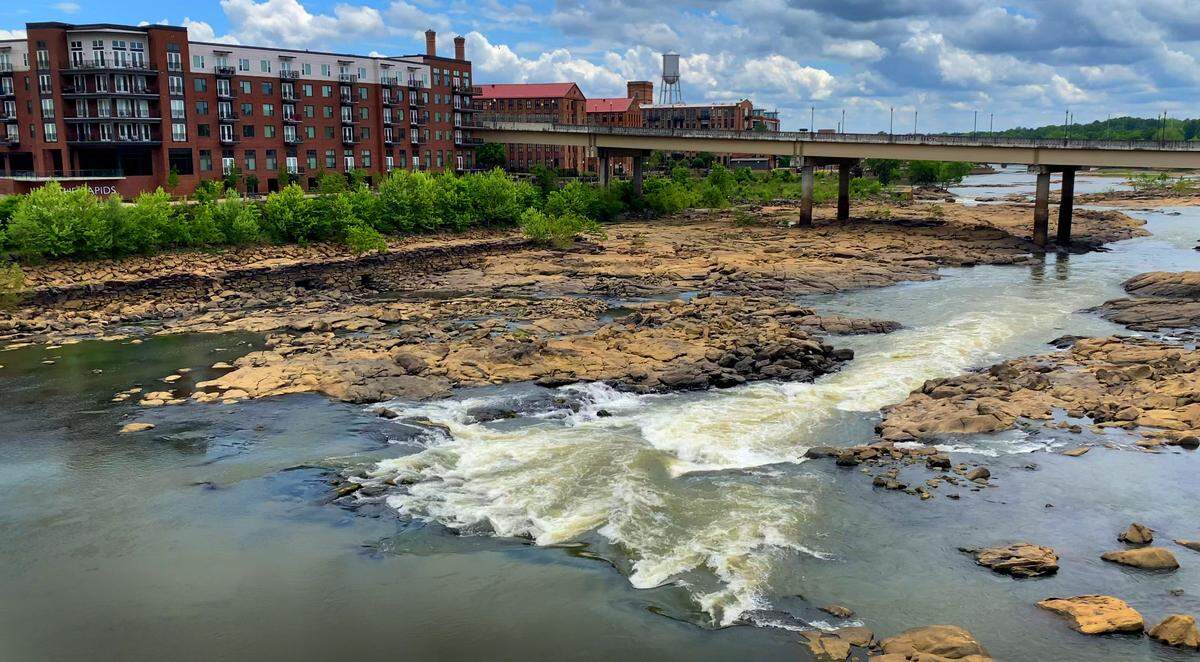
Georgia EPD and the Chattahoochee Riverkeeper said in court filings that Columbus’ combined sewer system — one that handles waste and stormwater in the same pipe — could cause future harm to the river. Heavy rains push untreated sewage out of the system and into the city’s popular whitewater course.
Officials at Columbus Water Works estimate that the city will need to spend more than $10 million on sewer system improvements so water coming out of the pipes and into the river will meet the new limits. The utility is considering whether it will take the case before the Georgia Court of Appeals, Columbus Water Works Vice President Vic Burchfield told the Ledger-Enquirer in an email.
In her conclusion, Gottfried called Georgia EPD’s legal arguments “inconsistent” at best, but the judge could only take limited action in the case. She found that a state court did not make a legal error when it ruled in favor of the state agency without a trial last year.
“This Court is very aware of, and concerned with, the fact that the changes now being required apparently should have been a requirement ... from the beginning,” she wrote.” The Court is aware that the ‘mistake’ of the EPD in not requiring Columbus to have (a mechanism) in place from the start will cost Columbus, and its ratepayers, a significant amount of money.
“It is a mistake that may now be costing the utility tens of millions of dollars. The Court finds this more than a little bit concerning,” she added.
The case
The saga dates back to 2015 when the utility’s permit expired but was administratively extended by state officials.
The dispute came before the Office of State Administrative Hearings, an administrative court that resolves disputes between the public and state agencies, heard the case, and an administrative law judge ruled against Columbus Water Works last year without a full trial. Both parties requested the ruling.
Columbus Water Works sought an appeal of that judge’s ruling so it would have a chance to present its evidence at a hearing. The appeal came before the Muscogee County Superior Court last month.
In previous court filings, Columbus Water Works has argued that the limit is too restrictive under federal water guidelines. Previous permits required a midstream measurement, not an end-of-pipe limit for fecal coliform.
The utility argues that the city overhauled its combined sewer system in the 1990s as part of the EPA’s efforts to upgrade those systems nationwide. EPD approved those changes. Further, Georgia EPD granted Columbus two permits — one in 1998 and another in 2010 — with no issue regarding end-of-pipe limits.
Columbus Water Works says the change is not necessary to protect the river’s water quality based on more than two decades of data.
Georgia EPD admitted that it made errors by issuing permits to the utility in 1998 and 2010 without properly accounting for the sewer system’s reasonable potential to cause harm. The new permit, they said, is correcting this mistake.
EPD conducted a required reasonable potential analysis and determined the sewer system posed a future risk to the river’s water quality. The agency said it has no choice but to establish a stricter limit.
In a statement to the Ledger-Enquirer, Chattahoochee Riverkeeper attorney Hutton Brown said his group was happy with the ruling.
“We are thrilled that the Georgia Environmental Protection Division, the Georgia Office of State Administrative Hearings, and now the Muscogee County Superior Court have all agreed that a stronger permit is necessary for our state’s largest river system. We think this permit will ensure that the water quality in Columbus will be fully protected.”
Burchfield, the utility’s senior vice president, said in a statement that Columbus Water Works was disappointed by the ruling but appreciated Gottfried’s acknowledgment that the sewer system is working without fail.
“We are heartened that the ruling recognizes the ‘lack of fairness and transparency on the part of EPD’ as the agency asserts it made a ‘mistake’ that may now cost Columbus Water Works customers tens of millions of dollars,” he said. “EPD’s new requirements are simply unfair and unlawful. This is not about protecting the river. Columbus’ stretch of the Chattahoochee River is clean. CWW’s system is working to protect water quality. Years of data demonstrate this.”
This story was originally published April 28, 2022 at 6:50 AM.