
Q&A: Stacey Abrams on her rematch with Brian Kemp, Donald Trump and abortion
Stacey Abrams officially became the Democratic nominee for Georgia governor late last month, but the election was only a formality.
Abrams ran unopposed in May’s primary — a testament to the political power and base of supporters she’s built since her narrow 2018 loss to Brian Kemp and in the years that followed.
Pundits conjectured about her political future. She opted not to run for U.S. Senate, and Abrams was not Joe Biden’s pick for a running mate in the 2020 presidential election.
Four years later, Abrams faces Kemp once again to determine who will hold the highest office in this battleground state.
During a visit to Columbus, the Ledger-Enquirer spoke with Abrams about the election, Kemp and former President Donald Trump. The questions and responses have been lightly edited for clarity and length.
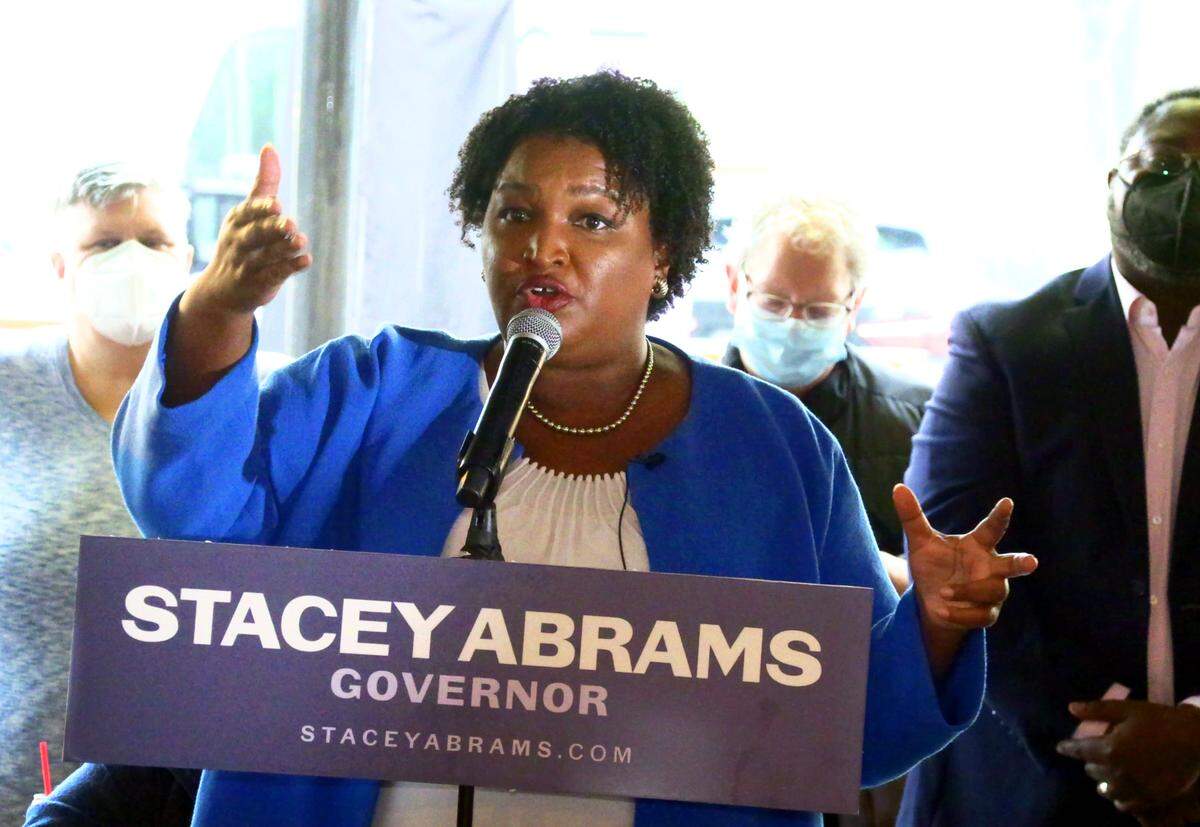
Kemp vs. Abrams
Q: This is a rematch from 2018. But Georgia’s political scene has completely changed since then. What lessons do you think that you have learned from 2018 that you plan to use in this election?
Abrams: We are going to build on what we started in ‘18 and expanded in ‘20 and 2021, which is that this is about reaching voters where they are. It’s about making sure we expand who believes that they can participate in our elections, but it’s also about making sure we are responding to the moment.
People are still reeling from the pandemic. They are still grappling with the implications for criminal justice and for public safety, and they want to know that someone is looking out for them.
This is a hyper-local election where we are going to build a multi-racial, multi-ethnic, multi-generational coalition in all 159 counties, and the work we do in this election will be to reach every voter where they are with plans for their success.
Midterm challenges
Q: There’s everything that’s gone on in Georgia. But there’s also a national element to this. Midterms traditionally don’t go well for the president’s party.
A lot of folks are predicting that the Republicans are going to take the House of Representatives, and the Senate’s up for grabs in November. What makes it possible for Georgia to maybe buck the trends and send you to the governor’s mansion and Raphael Warnock back to the Senate?
Abrams: We have been working since 2018 to build a coalition of voters who are typically not participating in elections.
Republicans spent 20 years maximizing their numbers. Democrats have not spent 20 years doing the same. And so part one is what we’re seeing in the turnout even at the primary level. We did not have competitive elections at the top of the ticket, and yet we increased our participation rate dramatically. Those are among voters who did not have a reason to turn out in a midterm primary.
We know that the very local issues are going to be incredibly salient. We know that the governor’s failure on the issue of gun violence is going to be top of mind. We know that his banning of abortion is going to matter to women across the state and across political persuasion.
We know that there are too many families that are still dealing with the economic impact of COVID that (Kemp) has refused to help by canceling and refusing to accept money to help kids who are going to be struggling to eat this summer.
We know that he’s refused to deploy resources for rental assistance. These are all very top-of-mind issues for voters who are typically overlooked and who will be engaged and — I believe — will be enraged by the failure of this governor to serve their needs.
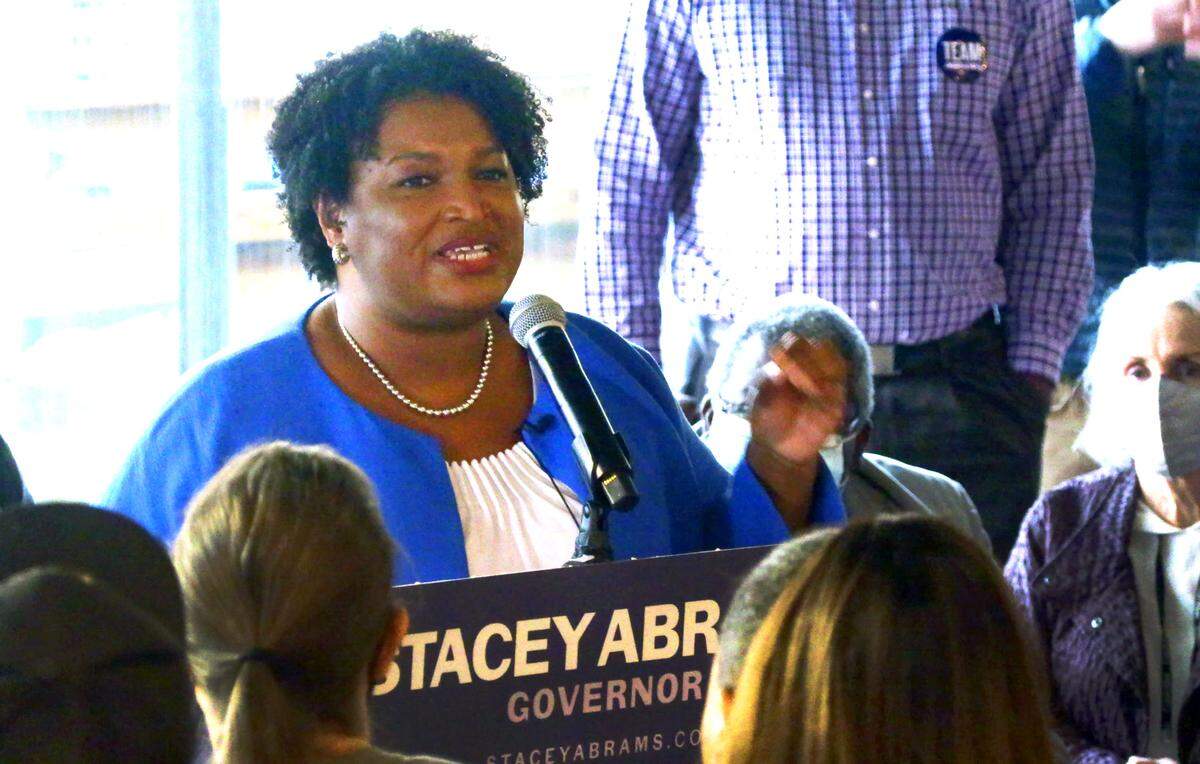
On Donald Trump
Q:Former President Donald Trump sent out a news release last week promoting an article in which the author alleges Georgia’s GOP primaries were rigged against pro-Trump candidates.
What are your thoughts on the former president continuing to push election conspiracy theories?
Abrams: I give absolutely no thought to the former president.
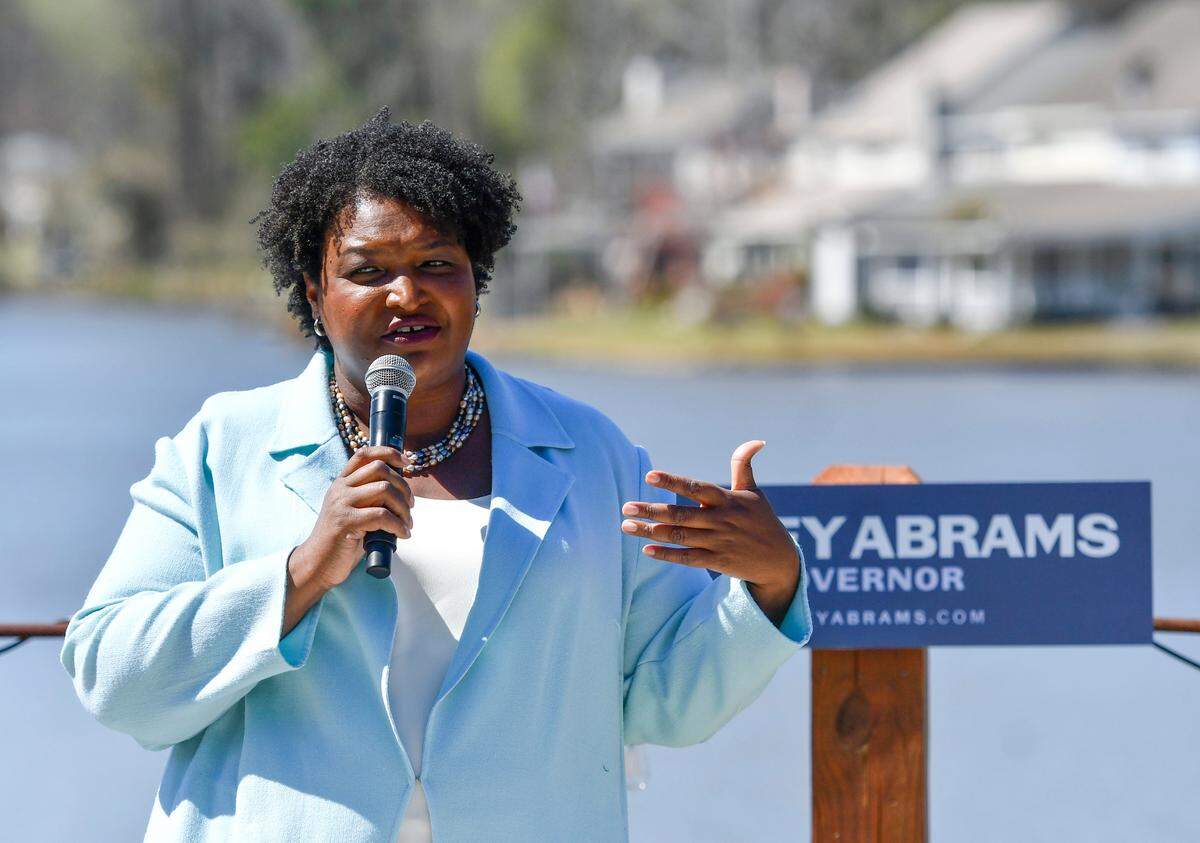
Conceding the 2018 election
Q: We’ve seen folks like Secretary of State Brad Raffensperger and Gabe Sterling in his office compare your refusal to concede and your claims of voter suppression in 2018 to the things that Donald Trump said about the 2020 election.
What is different between what you did and what former President Trump did?
Abrams: In 2018, I protested the refusal of the state of Georgia to allow every person who was eligible to vote to cast a ballot.
We have filed suit through Fair Fight to ensure that every person who’s eligible to vote can cast a ballot and that those ballots be counted.
I have never once sought to overturn the election, to change the outcome in my favor, or to even question whether the outcome should have elected me or someone else through legal means. What I have said is that every vote should count.
The contrast is that his initiative has been to reject voters, to refuse to allow voters who are legally eligible to be included and to overturn the election system. I’m not trying to overturn anything.
I want to improve it so that every voter has access. I’m not entitled to victory. I wasn’t entitled to win in 2018. I’m not entitled to win in 2022. But as a Georgia citizen, I am entitled, and I am obliged to ensure that every vote can be cast and every vote can be counted. That is a sharp contrast.
It is both disingenuous and intentionally misleading when Secretary of State Raffensperger lies to Georgia about what I have done and about what he has been complicit in when it comes to voter suppression.
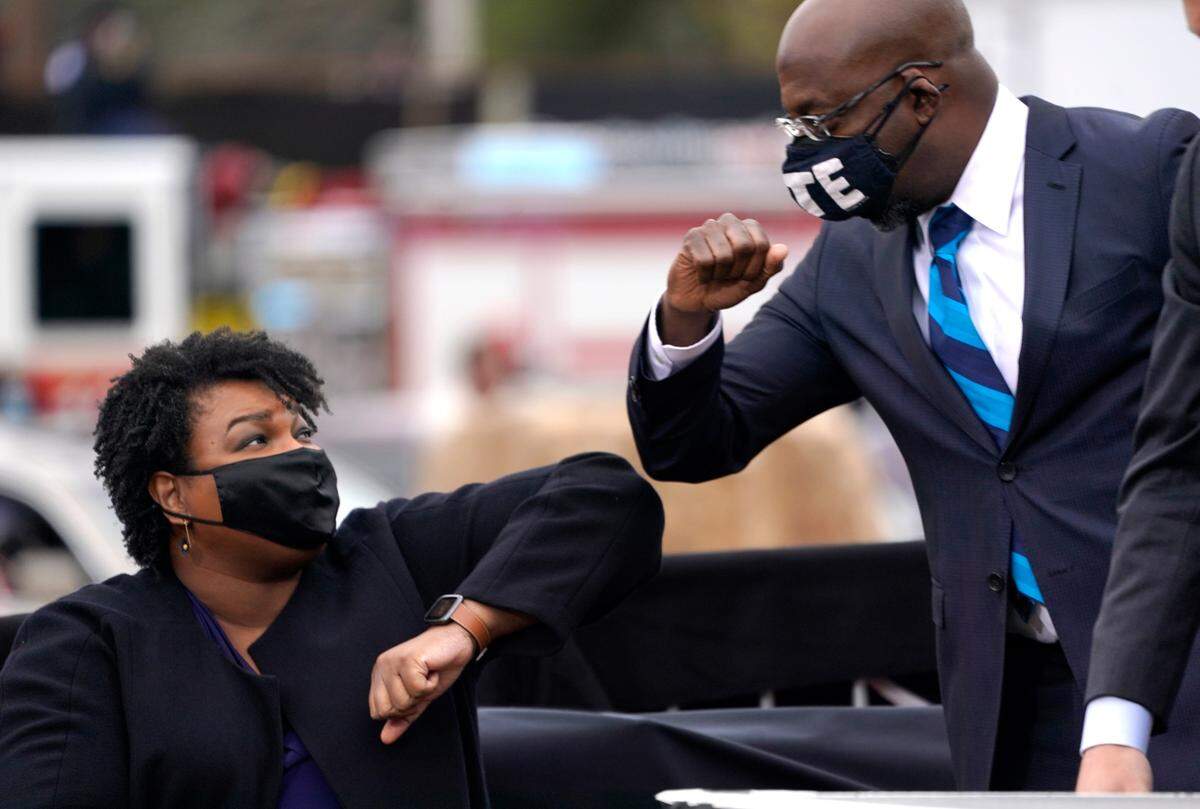
‘Jim Crow 2.0’
Q: You’ve previously called Georgia’s Election Integrity Act “Jim Crow 2.0.” We saw record primary turnout in May. Raffensperger said after the primaries that the turnout proved the law struck a good balance between the ‘guardrails of access and security.” What’s your response to his statement? Have your thoughts changed on that law?
Abrams: Not at all. Let’s be clear about what voter suppression is. This notion that you can reduce voter suppression to one single statistic is both willfully ignorant and intentionally misleading.
The fact that voter suppression is about systemic barriers to access is not disproven by people who show up. The issue is who didn’t make it through and who was precluded from participating. We know that absentee ballot applications received double the denial rate that we had in 2020.
That is the direct result of this new law. When you can’t even apply for an absentee ballot without your rejection rate going up, it is proof that there are challenges to our voting laws.
We have not yet seen the statewide application but we have seen different pieces of this. We have seen Spalding County shut down Sunday voting in response to the number of Black voters who were participating. We’ve seen other counties try to eliminate polling places, and we have had to have support to make certain citizens still have access to those polling places.
Voter suppression exists from election to election and in between elections. My contention remains that the intention of SB202 was to deny access to the right to vote to voters who were considered inconvenient, and that is not right.
Voter suppression does not mean that people don’t turn out. It means we make it more difficult for them to participate.
Roe v. Wade
Q: Let’s talk about abortion and gun control. You’ve talked about red flag laws.
If Roe v. Wade is overturned as expected, Georgia’s abortion ban would likely be enforced. The law bans abortion once cardiac activity has been detected in an embryo with certain exceptions.
What policies would you implement regarding abortion and gun control in Georgia if elected?
Abrams: On the abortion ban, I would work with the legislature to immediately repeal it. We know that it narrowly passed in 2019. It passed with, I think, the understanding of a number of people that it would be forestalled in the courts.
The overturning of Roe v. Wade is going to create a very different legal dynamic in the state of Georgia, and I believe that the legislature — especially the legislature elected in 2022 — would take action to roll back that ban.
We have to protect the right of doctors to actually provide medical services to people in the state, and I don’t think many Georgians recognize that doctors face up to 10 years in prison for helping pregnant women.
That is dangerous, not only to those women who are seeking abortions but to any woman who is in the midst of pregnancy. We have to fix that, and I would make it my mission as the next governor of Georgia to roll that back immediately and to look at other states to figure out what additional actions we could take.
On gun safety, I would make certain that we immediately repeal the expansion of “Guns Everywhere,” the bill that passed in 2014.
I think the murders that we have seen happen across this country have put people into a place where they would be willing to put in place restrictions on where weapons can be carried and the type of weapons that can be purchased. We should restore to law enforcement the ability to monitor what is happening in our communities.
We also need to repeal immediately the “criminal carry” law that allows unpermitted, loaded weapons to be carried around the state, and 70% of Georgians agree with me. I intend to make certain that the state legislature follows the will of the people.
Divided government
Q: Speaking of the legislature: If you’re elected, you’re gonna be walking in a situation where the state House and Senate are gonna be controlled by Republicans. That’s setting the stage for a lot of political gridlock. How do you plan on working around that or working with the legislature?
Abrams: I spent seven years as the Democratic leader (in the Georgia House.) My job was to navigate and work with Republicans. There was nothing I could do as a legislator as a leader of my caucus without working with Republicans, and I was incredibly successful at it. I was so successful that at one point I got an A rating from the Georgia Chamber of Commerce and I got the Friend of Labor Award from the labor unions in the same year.
The responsibility that we have is to solve the immediate problems facing Georgians. I think that if we are having thoughtful conversations and actually letting legislators vote their communities and their conscience instead of voting their political leadership, we will see Medicaid expansion pass. We will see the protection of the right reproductive choice in the state of Georgia. We will see smarter gun laws.
Because I’ve watched these very same legislators do their best to try to avoid those votes. But when it came down to it, they had to vote with their leadership. My intention is to make certain this time that they can vote their conscience and they can vote their communities. I believe that can lead to some important progress in the state.
Kemp’s record
Q: I wanted to ask you about that “Georgia is the worst state to live in” line from a couple of weeks ago that’s gotten a lot of media attention. You said someone would “Politifact” you, and they did.
They said on nearly every single data point that you mentioned — mental health, the uninsured, maternal mortality, new HIV cases and gun violence — your data “generally holds up.”
Why have Republicans seized on your statements for attack ads? What did what are you gonna do as governor to fix those statistics?
(Note: Politifact said some of Abrams’ numbers are slightly off, or different studies found slightly different rankings. Due to the complexity of the claim, the outlet did not issue a Truth-O-Meter ranking.)
Abrams: One of the tendencies in politics is to cherry-pick language that your opponent uses and try to weaponize it. I don’t do that.
I think you look at a person’s record and that you look at what they intended with what they said. With Brian Kemp, you don’t have to cherry-pick his language. You can just point to his record. They would prefer to focus on my rhetoric than their record because they know their record has failed Georgia.
105 rural counties in the state suffer at near or at the very bottom on almost every one of those metrics, and they are doing nothing to serve those communities.
My intention is to not get distracted by the flailing of Republicans trying to disprove what they know to be true. But instead to talk directly to Georgia so they can see what is possible when I’m the next governor of the state.
This story was originally published June 8, 2022 at 12:18 PM.