A growing list of groups oppose mining at Okefenokee Swamp. Will Columbus be next?

Will Columbus add its name to the long list of Georgia cities, counties, and organizations that support the protection of Okefenokee Swamp through a state bill?
The 438,000-acre Okefenokee Swamp (three times the size of Muscogee County) that reigns Southeast Georgia has been on the minds of the Georgia legislature, environmentalists, residents of Charlton County, and titanium mining companies for the last several years.
Now, it’s reached the hearts and minds of the local Columbus church group, St. Thomas Episcopal Creation Keepers. On Tuesday, Mick Etchison and Art France asked council to send a resolution to Governor Brian Kemp expressing its support for House Bill 71 to protect Okefenokee Swamp from mining operations that extract titanium dioxide.
“They will extract water and the area is very susceptible to drought and relies it on rainfall. This leads to wildfire threat. The peat moss that makes up the swamp, when dried, becomes highly flammable,” France said.
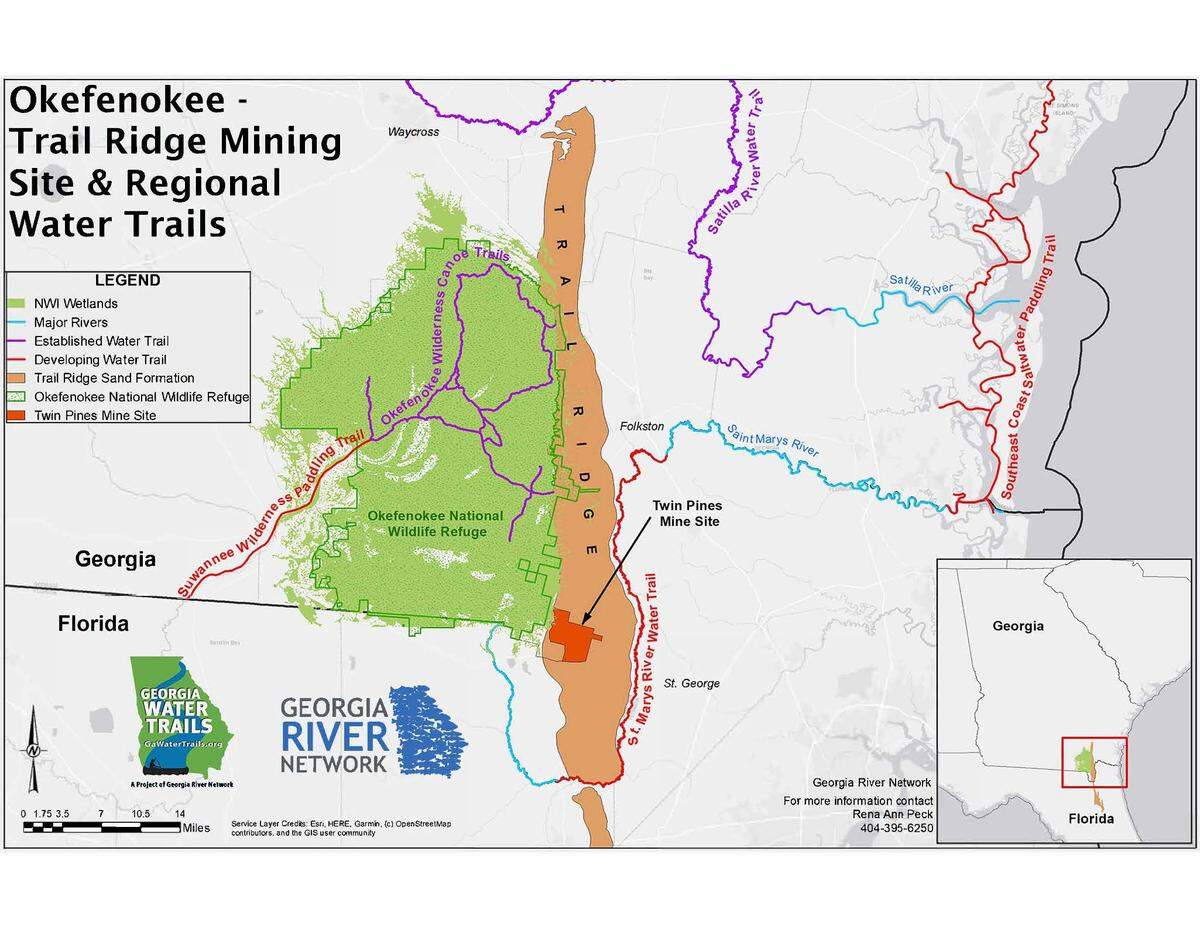
The ‘wild heart of Georgia’ has a rich deposit of titanium that scientists and environmental groups warn, if mined, could dewater portions of the swamp affecting headwaters of the St. Marys River and threaten drought to the swamp.
Altogether it increases risks to ecological health, and poses further risks to climate change from the carbon that a potential wildfire would release.
“There is only 15 feet of difference in elevation and [Twin Pines LLC] wants to dig 50 feet down,” Sam Collier, chair of the Sierra Club Georgia Chapter’s Committee to Protect the Okefenokee said. “The water could migrate out of the swamp. What is at stake is not just the demonstration mine but the whole span of the ridge, up to tens of thousands of acres.”
In 2023 the bill had a hearing in a sub-committee but no vote occurred. The Macon Telegraph followed the movement of HB-71 very closely in 2023. For details on its path last year see this article.
Twins Pines LLC, an Alabama-based mining company has it’s eyes set on an area known as Trail Ridge, just bordering the National Wildlife Refuge. Right now they have a ‘demonstration mine’ area that is excluded within the permit of HB 71.
“Trail Ridge is 140 feet above sea level and the swamp is 125 feet above sea level,” Collier said.
Additional support from cities like Columbus could strengthen HB 71’s likelihood of passing beyond the house and by Kemp.
“This bill is critical for long-term protection of the Refuge, [especially] with no pending permit open for comment at EPD and only 30+ days left in the legislative session,” Jennette Gayer, director of Environment Georgia said in an email.
Natural Resources Committee chair, Rep. Lynn Smith (R-Newnan), has the power to decide when to bring this to a vote.
Representative Debbie Buckner (D-Columbus) told the Ledger-Enquirer that the Natural Resources Committee has its first meeting of the 2024 session on January 25th, and discussions about HB-71 will likely take place.
“Lynn Smith could and should schedule a vote,” Collier said. “It would pass because over half the house has already co-sponsored it. If Columbus joined other counties and cities it tells the governor, this is popular you can pass and support this bill.”
For Collier, a mining operation at Okefenokee is all too familiar to what happened with DuPont in the 1990s.
“There was a tremendous outcry, but we never followed up to make sure the land was protected all the way,” he said. “This can happen again and again if we don’t permanently send a signal that this is a terrible place to mine.”
Right now other signals of support are coming in the form of resolutions from cities and counties across the state to support the passing of HB-71. Among those are:
Muscogee Creek Nation
Ware County
Clinch County
Echols County
DeKalb County
City of Valdosta
City of Jesup
City of La Grange
Additionally, Georgia U.S. Senator Jon Ossoff and US Department of Interior Secretary Deb Haaland oppose the titanium mine.
Hometown support vs EPD
The mining company will alter water flows and lead to water levels dropping in the swamp, which relies heavily on rainwater.
On Wednesday, Twin Pines were fined by the Georgia Environmental Protection Division for drilling boreholes without the supervision of an engineer or geologist in its ‘demonstration mine’. They didn’t shut the permit down once and for all which Josh Marks, an environmental attorney said they will move forward with an issuance of the draft permit very soon.
John Corbett R - Lake Park District 174 has faith in the EPD and believes their decision holds the most weight. He is more interested in the EPD’s opinion than constituents and resolutions from cities.
“My constituents are the ones who stand to gain or lose the most, those in Charlton County have a resolution in support of the mining,” he said. “This could be 300 jobs with a median salary of $60,000, which in an area that makes $30,000 annually is significant.”
According to Georgia Rivers Network, Okefenokee hosts 650,000 annual visitors, creates 825 local jobs, and has a total annual economic output of $64.7 million in four counties surrounding the swamp.

Columbus Mayor Skip Henderson said next week when council meets the resolution could go forward if a council member wants to sponsor it.
This story was originally published January 26, 2024 at 5:00 AM.