Could Columbus outsource business licenses? City looks at options after tax money was lost
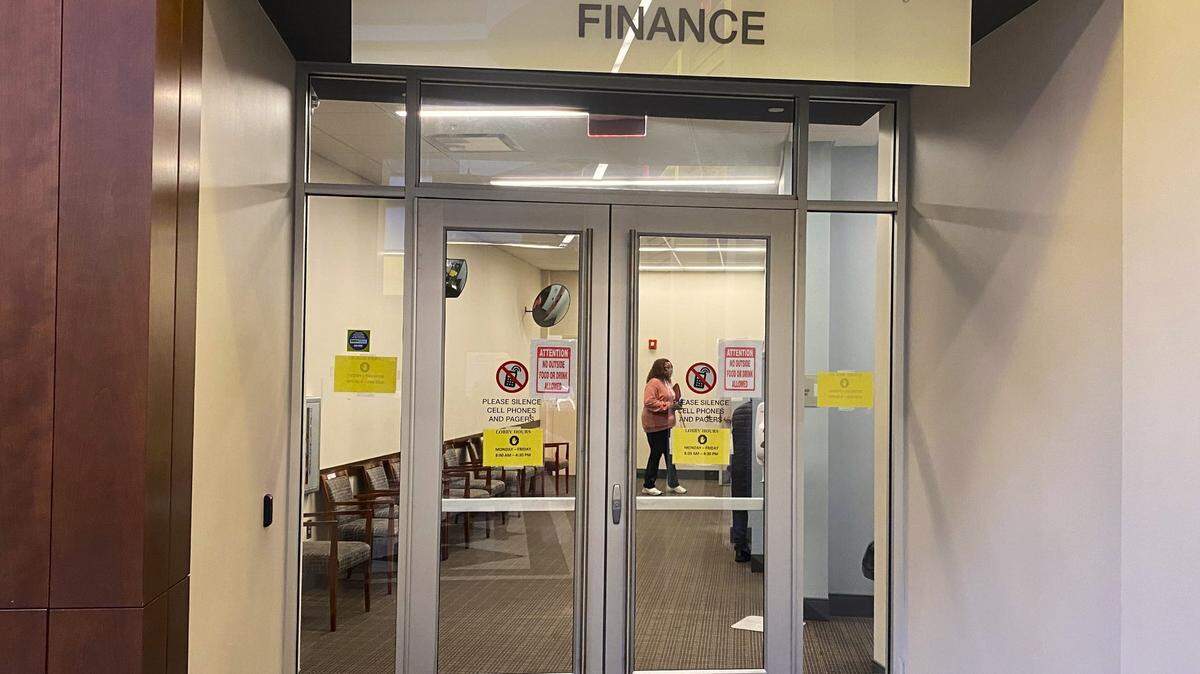
Columbus officials are considering outsourcing the city’s occupational tax department to solve longstanding problems with the government’s ability to process business and alcohol licenses. A follow-up audit looking into the backlog of processing business and alcohol licenses showed continued concerns despite the department making some progress, officials learned at a Nov. 19 city council meeting.
Problems with revenue collection in the city began last summer when the council requested a finance department audit brought on by reports of a backlog in processing business and alcohol licenses.
The initial audit found that the office space for the occupational tax department, which handles business and alcohol licenses, was unorganized. Unattended stacks and boxes of license applications and returned mail were piling up.
The occupational tax department has processed most of the applications that hadn’t been processed at the time of the last report, Pamela Hefner, a manager from the Atlanta-based forensic accounting firm Acuitas, Inc, told councilors. The last report was from January, and included data up to Sept. 25, 2023. The latest update contained information through Oct. 7.
The office is organized now with better procedures in place, she said.
“Based on our interviews (with employees), the number of daily ‘problem calls’ from customers has decreased considerably,” she said. “And technicians have received positive feedback from customers visiting the tax department window on the improvements that have been put into place.”
But council still had concerns. Utilizing automation, staffing and questions about how much revenue is likely to be collected were the primary concerns for the Columbus Council during the Nov. 19 presentation.
“I don’t have confidence that (Columbus Consolidated Government) can handle the finance department and the incoming business licenses to a point where we can get ahead and become a functioning government and be a place where businesses want to come in and do business in Columbus, Georgia,” councilor Joanne Cogle said during the meeting.

Latest in criminal investigation
The issues surrounding these taxes have become potentially criminal. An investigation into city officials was assigned to Towaliga Circuit District Attorney Jonathan Adams after Chattahoochee Judicial Circuit District Attorney Don Kelly recused himself, Kelly and Adams both confirmed to the Ledger-Enquirer.
A letter from Kelly asking to be recused showed the investigation is looking into “possible criminal acts” of the finance director, the human resources director and a deputy city manager. Kelly and Adams declined to identify city officials any further.
Human Resources Director Reather Hollowell refuted possible criminal allegations after her title was named in the letter, and her lawyer said in a previous statement that he was confident her name would be cleared.
How does the backlog cost the city?
Early estimates of how much the backlog cost the city varied.
The city’s internal auditor initially estimated the backlog in revenue collections cost the city up to $45.1 million, while Finance Director Angelica Alexander previously told the council the backlog came to $2.5 million from about 500 delinquent accounts.
In its first report, Acuitas reported there were 8,771 delinquent businesses from 2017 through 2023, with an average estimated cost of about $5 million. In an effort to estimate the total cost for the city, Acuitas found a high estimate and a low estimate, and then found an average in the middle, meaning the $5 million is an estimate of the city’s total cost.
In their update, the number of delinquent businesses decreased to 4,659 primarily because of processing previously received license applications, Hefner said in the meeting.
“For license years 2019 to 2024, there were about 750 license applications that had been received by the tax department but had not been processed as of Sept. 25, 2023,” Hefner said. “As of our site visit, that number was down to 83.”
The backlog’s updated cost is an average estimate of about $1.9 million, she said, much lower than the $5 million previously reported.
Acuitas calculated the numbers by assuming revenue from active businesses would be collected and revenue from closed businesses would be a permanent loss. This methodology raised questions from council.
Councilor Charmaine Crabb was looking for a more concrete number to be delivered.
“I would like this report to based on facts (and) what has actually happened,” Crabb said. “Not assumptions, not estimates.”

Hefner explained that because each business has a unique situation, there’s no way to know exactly how much revenue could be collected. To work around this problem, they used averages based on what was collected in the past.
Councilor Glenn Davis was concerned about how the statute of limitations would affect the revenue that could be collected. The city can only go back four years to collect taxes, he said.
“We will never know what that amount of money is,” he said. “It’s gone. You will not collect it, and it’s really not going to reflect in those numbers.”
As 2025 approaches, Davis said, another year of revenue is gone and can’t be collected.
“My question would be, is there some point in time that we just need to clean the books,” he said. “Get it all out and start over because those numbers are really confusing to the public. And the truth of it is, a majority of that you won’t ever collect.”
‘We need employees’
A staffing shortage was a primary cause of the initial backlog, Hefner said. In the update, it remained a problem because of turnover.
From Dec. 2023 through June 2024, Acuitas’ report stated the department operated with three permanent technicians, three temporary technicians and a temporary administrative assistant.
But at the last site visit in October, the department had two permanent technicians, one temporary technician, the temporary administrative assistant, a supervisor and two auditors who had just begun working there.
Not receiving authorization to transition temporary positions to permanent contributed to the turnover, Hefner said.
This turnover is not solely because there isn’t enough people authorized to work in the department, Davis said in the meeting, but also because there was trouble hiring and retaining employees.
There are reoccurring staffing issues pointing to a greater issue, he said, and it comes under management.
“Temporaries were brought in because we couldn’t fill positions,” Davis said. “We brought them in as a way to start getting ahead of the game and solve some of the crises and filling those needs.”

Seven positions for the finance department were put forward to be included in the mayor’s budget, City Manager Isaiah Hugley said, but these positions were taken out of the budget until the council could get the follow-up report on the department.
Those positions, after reassessing, will be suggested again for the budget, he said.
“I think the report is indicating that we need employees,” Hugley said.
Automating this work
Although some progress was made to automate the business and alcohol licensing renewal process, councilmembers remained disappointed in what had been done so far.
Implementing automation had made the least amount of progress of all the recommendations that were included in the initial report, Hefner said.
The occupational tax department is about to launch a pilot for online filing of mixed drinks and short-term rentals excise taxes as a test before expanding to other categories. This would be done using the software application, Energov, which is used by some other government agencies to manage permitting, inspections and code enforcement.
Within the report, Crabb had concerns about Energov’s capabilities and a lack of support if there are technical issues.
“It doesn’t sound to me like Energov is where we should be launching a pilot,” she said. “I think we could look into outsourcing. There might be an organization or company out there that already provides these types of services for other cities that pay online.”
Is outsourcing a real option for Columbus?
Outsourcing could solve a combination of problems and speed up getting everything back to normal, Crabb said.
Cogle made a motion for a resolution to look into outsourcing the occupational tax department after sharing her lack of confidence that the problems could be solved by the finance department.
Davis requested Hugley, as city manager, find out what the transition would look like through a request for proposals to outsource this department.
“What I’m seeing is there’s a continuous exhaustion of our work capabilities, our employees and our human resources capabilities to do this,” Davis said. “There are several entities involved here, and it looks like it’s going to continue.”
Not only is trying to collect revenue from delinquent businesses a strain on the finance department, but it’s also a strain on other departments. Inspections and Code collaborate with the City Attorney’s Office to implement steps to enforce compliance from delinquent businesses.
Enforcing compliance becomes a drain on resources, Hugley said, especially with repeat delinquent businesses. The city has had to go to court with Chuck-E-Cheese four times because the business wouldn’t get its license, he said.
Hugley agreed with the idea of looking into outsourcing this work. With the holidays approaching there will be some delay, but he believes his office can create a request for proposals well before the end of the first quarter.
“What (Code Enforcement Officers) are doing in their spare time is knocking on the door of Chuck-E-Cheese and others,” Hugley said. “They’re going to court, spending time in court, when they ought to be out enforcing some of the things I hear about overgrown grass and junk vehicles and everything else.”