Columbus Council debates opting out of new tax law. What’s at stake for taxpayers, city
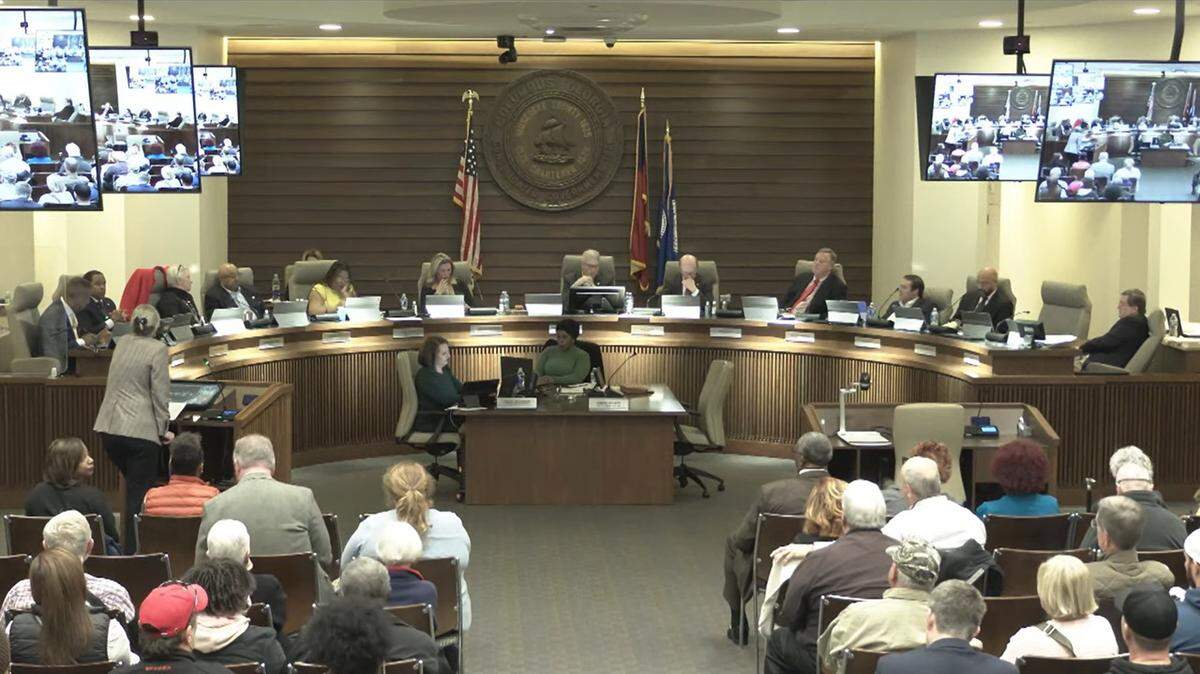
Columbus Council is debating whether to opt out of a new state law capping home property taxes, which received a majority of the vote in Muscogee County.
House Bill 581, which creates a statewide floating homestead exemption, overwhelmingly passed in Georgia and won 61.5% of the vote in Muscogee County. As part of the bill, local governments may opt out of participating in the floating exemption by passing a resolution and holding three public meetings before March 1.
The public meetings to learn more about the floating homestead exemption will be held in the Council Chambers in the City Services Center at 3111 Citizens Way and are scheduled for:
Feb. 10 at 9 a.m.
Feb. 10 at 6 a.m.
Feb. 11 at 9 a.m.
About 85-90% of school districts in the state will opt out, Columbus Consolidated Government chief appraiser Suzanne Widenhouse told the council, and about half of the state’s counties and municipalities are estimated to opt out.
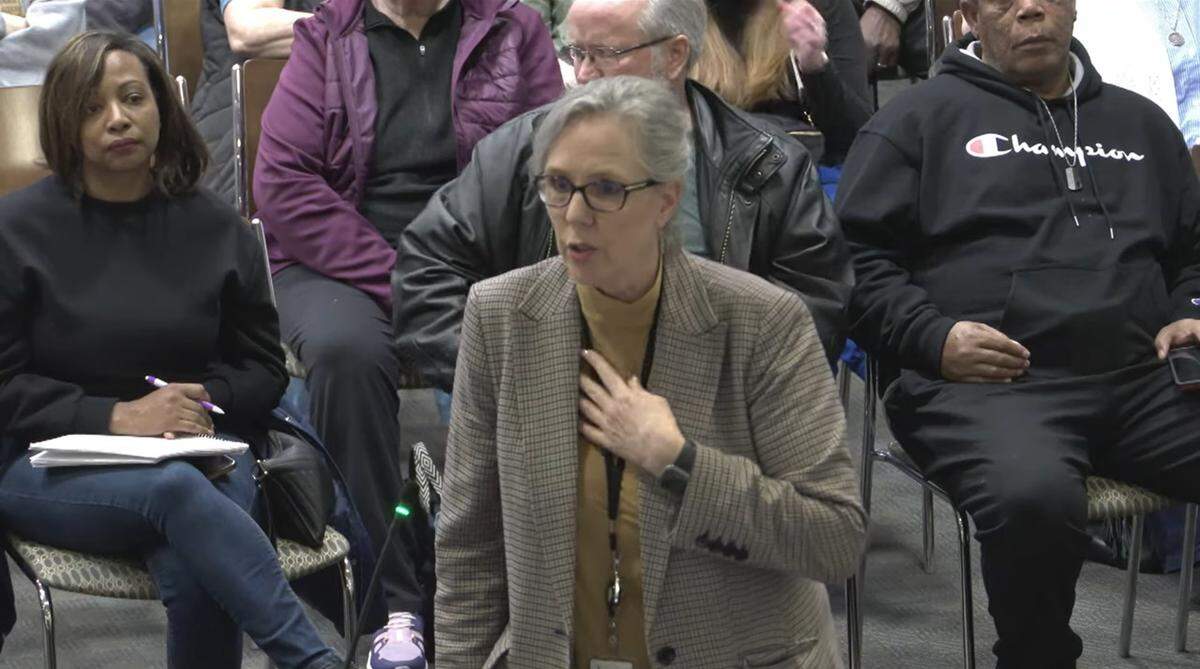
If one tax authority opts out, it does not require anotherone in the same jurisdiction to also opt out, Widenhouse said. So, the school district can opt out, while the city council does not.
The Muscogee County School Board already announced plans to opt out of the new law, but members of the Columbus Council are weighing potential complications caused by the law that could affect the city’s revenue against the will of voters.
This means if the floating homestead is more beneficial for someone, Widenhouse said, that’s what they would get on the city side. But they would still get the frozen homestead exemption for the school board.
“It has the potential to become very, very complex very, very quickly,” Widenhouse said.
Floating vs. Frozen Homestead
In counties with existing floating or frozen exemptions, taxpayers will receive whichever valuation is more beneficial, Widenhouse said.
HB 581 will not adversely affect Muscogee County’s local homestead assessment freeze, city attorney Clifton Fay said. So, whichever exemption is better for the taxpayer would be what’s selected.
A frozen homestead exemption means a property’s value is locked into place the year it becomes a homestead, with the assessed value being 40% of the fair market value of that year.
A floating homestead exemption means there will be a base year value, or the assessed value from the previous tax year, that can go up or down based on inflation in the housing market.
For example, a homestead could have been placed on a property in 2019. If the property had a value of $280,000 in 2019, its local value, or assessed value, was $112,000.
That means this $112,000 was locked in with the frozen homestead. It would increase only if significant additions were made to the property.
Under the floating homestead, the base year would be based on the property’s assessed value in 2024. So, the base value would be $160,000. This value may increase or decrease based on the inflationary index.
The floating homestead could benefit people with significant property damage because of a fire, storm or demolition. While the frozen homestead would not change, the floating homestead value could decrease to reflect a lower property value for one year.
Essentially, if someone’s property value collapses, they could pay more taxes under a frozen homestead than a floating homestead.
This scenario currently would apply to about 1,100 properties in Columbus, Widenhouse said.
Complex and complicated
One reason the statewide floating homestead exemption would be complex in Muscogee County is because Columbus’ existing homestead tops out at two acres, Widenhouse said.
Properties that have more than two acres are called “H-accounts.” They receive the homestead freeze on the first two acres, she said, but everything above that is subject to fair market value.
“Under this (law), they would potentially have the floating homestead for the full acreage,” Widenhouse said.
There are also expenses involved in implementing the law, she said.
The software and programming the city uses to process homestead exemptions must be changed to account for how the frozen and floating homestead deal with the acreage cap differently and the potential tax district split. The ability to determine which homestead is better for taxpayers must also be added to the programming.
These changes could cost a significant amount of money, Widenhouse said.
Tyler Technologies (iasWorld), the company the city uses for this, has not been able to provide an estimate for the changes. The company is working to figure out how to make these changes, Widenhouse said.
“They’re going to do it,” she said. “But they don’t know how yet.”
Not opting out of the law will also mean more personnel will be needed. At least two additional appraisal technicians will need to be hired because homesteads that are not simple assessments will need to be manually reviewed, Widenhouse said.
Another aspect of this law people should consider is that the inflationary index used to determine the floating homestead is set by the state, she said, and officials are suggesting that a national index be used.
“It won’t even be specific to the state or Georgia,” Widenhouse said. “It’s going to be a national (Consumer Price Index) as opposed to something that’s local and regional.”
Since this is a statewide law, that means control of the floating homestead goes to the state and not Muscogee County.
“They can change it,” she said. “They can tweak it. They can do whatever they want with it.”
There’s already some proposed legislation for the 2025 legislative session that could change the bill, she said. Opting out does not mean there will be no opportunity for a floating homestead in Columbus, Widenhouse said.
The council could petition for its own floating homestead controlled by the local government. But there will be no option to opt out later if it isn’t done now, she said.
“By opting out, we free up Muscogee County, to do what’s in Muscogee County’s best interest,” Widenhouse said.
Risk to revenue
One way for valuations to fall on homesteads is through property damage, but this could also occur if there’s an economic downturn similar to the Great Recession.
The Great Recession, which lasted from December 2007 to June 2009, was largely caused by a crisis in the housing market.
A statewide floating homestead exemption may leave Columbus vulnerable if there is another downturn in the market.
“One thing about opting out, it reduces the risks to tax revenue if we have an economic downturn, crash in the market or anything like that,” Widenhouse said.
The frozen homestead would keep revenue stable in the wake of dramatic economic fluctuations, she said.
Councilor Glenn Davis of District 2 expressed concern during the Jan. 28 council meeting. The city needs tax revenue to ensure continuity of its operations, he said.
During the Great Recession, Columbus was limited on its reserves and had to make significant cuts, including laying off around 150 people from the government, said city manager Isaiah Hugley.
“I know because I was in business,” Davis said. “I was scared. I couldn’t sleep at night …because I didn’t know where the next dollar was going to come from. I thought we were going bankrupt.”
Retail sales make up a large portion of the economic foundation in Columbus, he said. And in an economic downturn, people will not spend as much. The frozen homestead provides stability.
Additionally, although the idea of paying less taxes sounds appealing, this may not be the end result, Davis said.
While the valuations may be lower with a floating homestead, he said, the millage rates can be increased by the council to get tax revenue where it needs to be. The tax district also could be expanded into Midland to generate new revenue, he said.
“This stuff was not clear when the referendum went out,” Davis said. “The referendum is confusing.”
Another factor that places Columbus at a bigger risk than other Georgia communities is that a measure in the law to protect against not generating enough revenue would not be available to Columbus, Mayor Skip Henderson said at the council meeting.
The law includes an optional sales tax for property tax relief that could be enacted when valuations go down, he said. Consolidated governments are allowed only two local option sales taxes, he said, and the city already is at the limit.
“That’s one of the major differences between Columbus and some of these other communities,” Henderson said.
Public meetings
During the Jan. 28 council meeting, Councilor Toyia Tucker of District 4 wanted it to be clear that, unlike the school board, the city council has not decided on opting out.
Tucker and Councilor Charmaine Crabb of District 5 said the public meetings about this decision will be an important part of their consideration.
“I don’t have a problem having these three meetings because I want their input,” Crabb said.
People may have been confused or unclear about what they were voting for, she said, and the meetings provide an opportunity for citizens to get a better understanding of the issue and offer their opinions.
Tucker is hesitant to opt out because a clear majority of the county voted for HB 581, she told the Ledger-Enquirer. Information about the homestead exemption was available before the November election, she said, providing citizens an opportunity to learn more about it.
“It’s really hard when citizens vote a certain way for me to go against their vote,” Tucker said. “But I will see what is said at the public meetings.”