Georgia leaders have strong words day after Fort Moore is changed back to Fort Benning
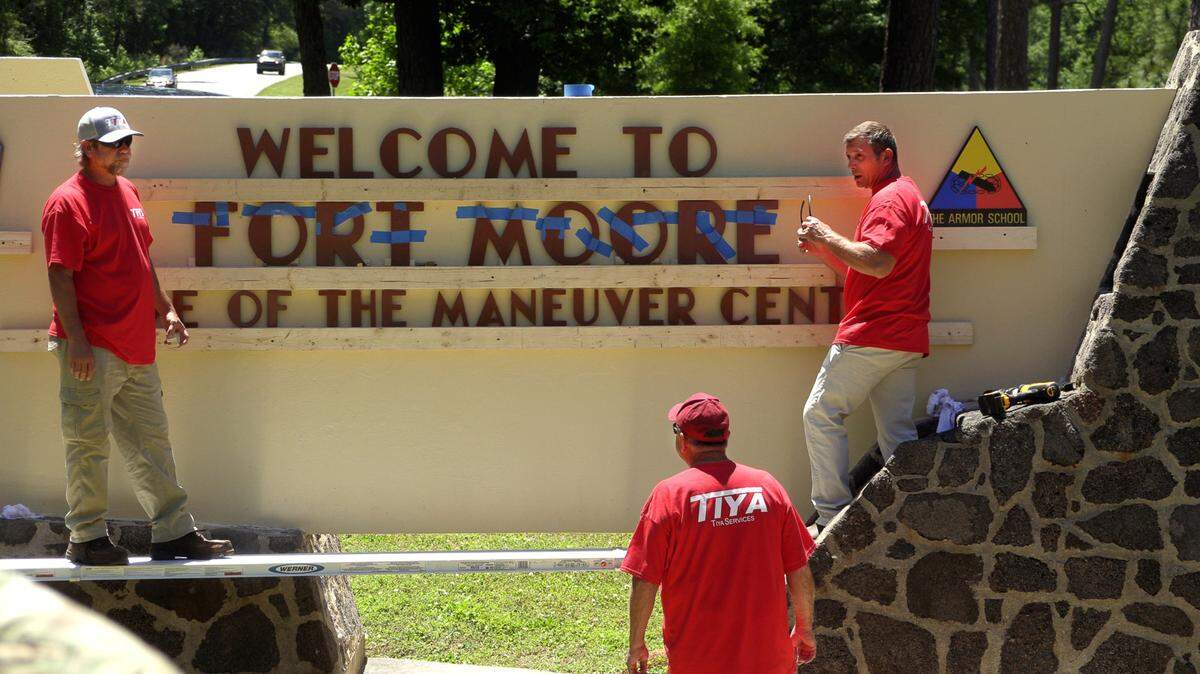
The day after the announcement of U.S. Secretary of Defense Pete Hegseth’s decision to rename Fort Moore back to Fort Benning has left several questions. Among them:
- What is the legal basis for this decision without Congressional approval?
- Did Hegseth consult with anyone associated with the U.S. Army post next to Columbus before making this decision?
- Why did the renaming take effect immediately?
- What are the logistics and costs of the renaming, in terms of time and money?
When asked these questions, Fort Benning public affairs officials referred them to the Department of Defense. An unidentified DoD spokesman told the Ledger-Enquirer in an email Tuesday, “We do not have anything to provide beyond the memo and statement.”
Three federal officials representing Georgia and the Columbus mayor gave the Ledger-Enquirer their thoughts about the name change.
U.S. Rep. Sanford Bishop (D-Albany), representing the southern part of the Columbus area in Georgia’s 2nd Congressional District, and U.S. Sen. Jon Ossoff (D-Ga.) and U.S. Sen. Raphael Warnock (D-Ga.) blasted the decision.
Bishop, in a news release, said, “To have the new Secretary of Defense unilaterally reject the Moores’ combined service to the Army, our military families, and our nation, after being recommended by the naming commission and implemented by the Defense Department, is disrespectful, at best, and spiteful, at worst. It is a rejection of the values and symbolism that Hal and Julia Moore embodied.”
Ossoff, in an email from his press office, said, “The Trump Administration is attempting by sleight of hand to restore a name that honors the Confederacy. Georgians do not wish to honor those who fought to preserve slavery. We want to move forward. This is a cynical attempt to take us backwards and to stoke division.”
Warnock, in an email from his press office, said, “I condemn these thinly veiled attempts at bringing back Confederate namesakes for U.S military installations. Those who lack vision traffic in division, and this effort is designed to divide us and take our nation backwards.
“Lieutenant General Hal Moore and his wife Julia Moore were American patriots in every sense of the word. The community embraced these two heroes as their new namesake, and this decision to change it with no consultation from the community does not inspire confidence in new Defense Department leadership’s willingness to listen to or work with Georgia’s military base communities.
“This latest decision to rename Fort Moore, the Moores’ final resting place, is disrespectful to their legacy and those who valiantly serve our nation at a time when our servicemembers around the country and Georgia are dealing with a lack of access to nutritious food, lack of access to basic mental health services, and crumbling and dangerous housing on bases. We need a Defense Department focused on taking care of our service members and defending our country, not divisive distractions.”
Columbus Mayor Skip Henderson, in an emailed interview with the Ledger-Enquirer, declined to disclose whether he agrees with the renaming.
“I don’t think anyone in Washington is going to be too concerned about whether I agree or not,” he said. “I am in Columbus, today, because my Dad was stationed at Fort Benning when I was born. My Dad’s last assignment was at Benning before retiring here, in Columbus. So, we have a lot of history with Fort Benning.
“I am sorry the Moore family is going through this. They didn’t ask for the renaming, but they were an excellent and most deserving choice. Hal and Julia Moore epitomized the integrity that soldiers and civilians, alike, should aspire to. With Mrs Moore’s contributions, they also symbolized the significant importance of the military family as a unit.”
Despite the attention this news is focusing on Columbus, Henderson said he doesn’t think the renaming will affect the city “very much.”
“We had not begun changing street names or signs, so there won’t be much financial impact.” he said. “We will likely assist in removing the letters from the bridge leading into the base.”
Henderson said he wasn’t consulted or given advance warning about the renaming, but Maj. Gen. Colin Tuley, the fort’s commander, called him “shortly after being notified.”
Regardless of the fort’s name, Henderson added, “People should know Columbus appreciates and is committed to supporting the soldiers and their families.”
When Fort Benning was previously renamed Fort Moore, the Naming Commission in its August 2022 report estimated it would cost $4.9 million. But it’s unclear how much it would cost to rename it back to Fort Benning, PBS News reported.
Who is honored by Fort Benning?
Instead of paying homage to a Confederate officer, as Fort Benning previously did, the new name pays tribute to U.S. Army Cpl. Fred G. Benning, who was awarded the Distinguished Service Cross for his “extraordinary heroism in action during World War I with the U.S. Army in France in 1918,” the department’s news release says.
“This change underscores the installation’s storied history of service to the United States of America, honors the warfighter ethos, and recognizes the heroes who have trained at the installation for decades and will continue to train on its storied ranges,” the news release says.
During his remarks in January when he arrived at the Pentagon as the new defense secretary, Hegseth referred to Fort Moore and Fort Liberty as Fort Benning and Fort Bragg.
These were the names of the bases which were renamed following the 2021 National Defense Authorization Act. The act called for the renaming of Department of Defense-owned assets that honored the Confederacy.
Fort Benning originally was named for Henry Lewis Benning, a lawyer, politician, secessionist and Confederate general.
The post was renamed Fort Moore in honor of U.S. Army Lt. Gen. Hal Moore and his wife, Julia.
Moore’s three-decade military career is highlighted by his heroism as commander at the Battle of Ia Drang during the Vietnam War. The battle was documented in the 1992 bestselling book “We Were Soldiers Once… and Young” and the 2002 movie “We Were Soldiers.”
Julia Moore, also known as Julie, also was honored in the renaming for her legacy of providing support to soldier families, especially the ones who lost a loved one in battle.
This story was originally published March 4, 2025 at 10:46 AM.