‘Criminalizing homelessness.’ Columbus Council considers controversial ordinance
The Columbus Council is considering an ordinance prohibiting camping on public property, which critics worry would criminalize homelessness.
This ordinance, which was up for the first reading during Tuesday’s council meeting, would make it unlawful for anyone to camp or store personal property on public property. It also would make it illegal for people to sit, stand, lie down or use personal property in a way that would interfere with individuals entering or exiting buildings, driveways, streets, alleys or any other property that has a limited number of entrances or exits, no matter if it is owned by the city, public property or privately owned.
Individuals must have received an oral or written warning before they can be arrested for violating the ordinance. If someone fails to comply with the warning within one hour, then they may be arrested.
Violators could face a fine of no more than $1,000 or imprisonment for a term of 90 days or less.
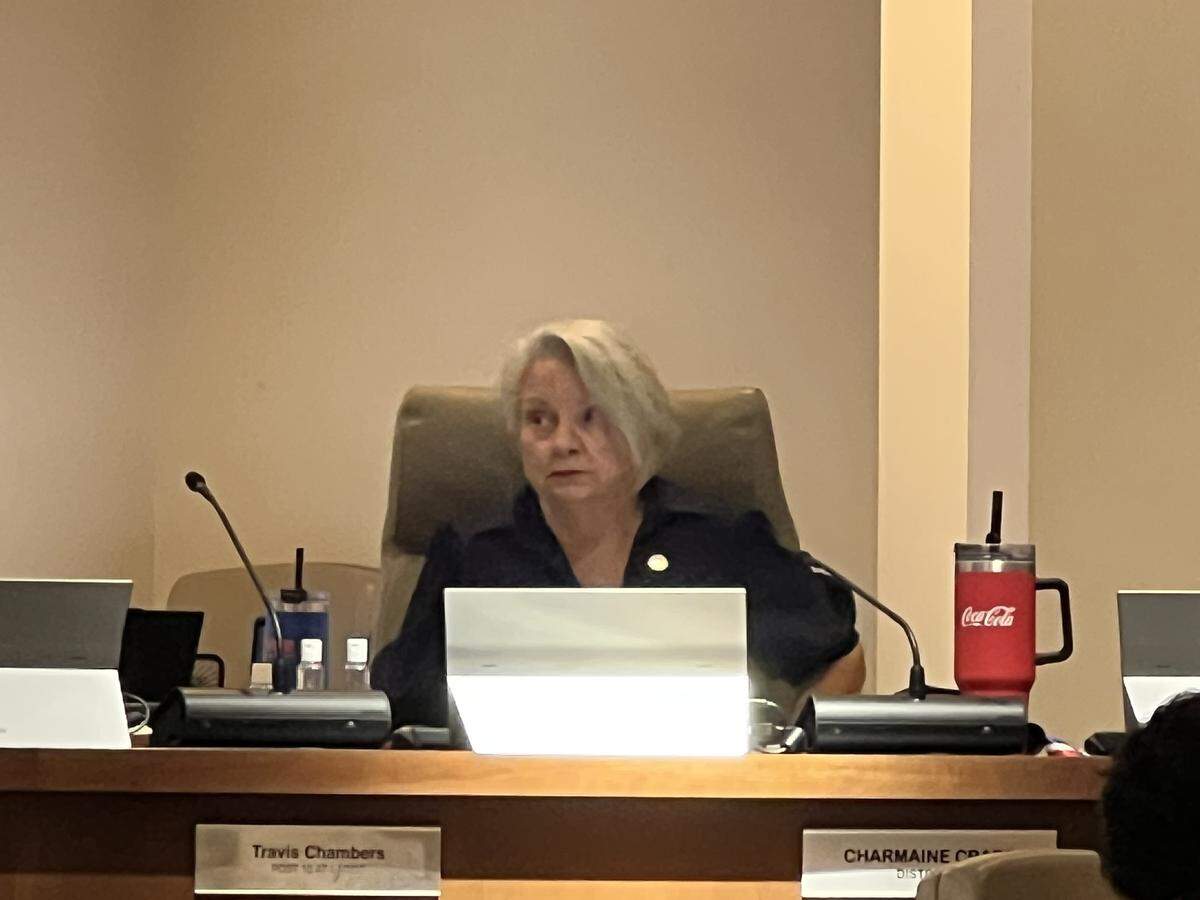
The ordinance was proposed by Councilor Charmaine Crabb of District 5. It was discussed with public safety, public works and Muscogee County School Board District 7 representative Pat Frey, who works with Home for Good, city attorney Clifton Fay said during the July 22 meeting.
Last year, the United States Supreme Court upheld an Oregon city’s ordinance prohibiting people who are homeless from using blankets, pillows or cardboard boxes for protection while sleeping within city limits.
The court voted 6-3 to uphold the ordinance with ordinance, with Justices Sonia Sotomayor, Elena Kagan and Ketanji Brown dissenting.
“This type of ordinance is being passed and considered all across the country now,” Fay said.
Criticism from residents
Several Columbus residents who attended Tuesday’s meeting spoke against the ordinance,
Columbus resident Theresa El-Amin, representing the Southern Anit-Racism Network, was the first person to speak against the ordinance.
“I just really feel that Columbus is better than this because this ordinance is making it harder for people to survive in the open air,” El-Amin said. “What the unhoused are starting to do is going into all of these abandoned houses.”
El-Amin said squatting is already dangerous, but this ordinance would make it where people who have nowhere to go can’t be outside. She also argued that not enough has been done to provide adequate housing and reduce poverty.
Columbus Council District 1 candidate Simi Barnes, daughter of the late Councilor Jerry “Pops” Barnes, also spoke against the ordinance.
“I just feel like this ordinance is a step towards criminalizing homelessness or being unhoused,” Barnes said. “I agree with the prior speakers and urge you guys to vote no on this ordinance. We as a community can’t say we care about unhoused individuals and then support something like this.”

Mayor Skip Henderson argued during the meeting that the goal of the ordinance is not to criminalize homelessness and stressed that the city was working with organizations to help provide resources for people who are unhoused.
“I understand the concerns that were brought up, that the proposed ordinance appears to criminalize the behavior of people who are experiencing homelessness and lacks compassionate solutions,” Crabb told the Ledger-Enquirer in a text message. “I remain focused on long-term, compassionate solutions like expanded shelter space, supportive housing, and mental health services and supporting the agencies that are already providing these services to the homeless of our city. There is nothing in this ordinance that changes that.”
Criminal defense attorney Anthony Johnson hadn’t intended to speak at all during the meeting, he told the Ledger-Enquirer. He just wanted to attend and listen to be an “informed citizen.”
But as Johnson listened to the debate, he felt he had to speak because of his history working with people who are unhoused. Red flags went up when he heard officials saying the intent is not to criminalize homelessness, Johnson said, adding he believes that could be true.
“But what you hear and what you see on paper — a lot of people don’t know how that comes out in practice,” Johnson said.
He works with people who are unhoused every week as part of his job in criminal defense, Johnson said, and this ordinance isn’t the best way to solve these problems. The city hasn’t exhausted all other avenues before doing this, he told the Ledger-Enquirer.
SafeHouse Ministries announced this week they are closing their day center at the end of this month. Johnson asked the council what is being done to fill the gap left by the organization.
“Your effect, especially long-term, you’re absolutely, positively, criminalizing homelessness,” Johnson told the council. “Whether you want to or whether that’s in your intention or not.”
Need for the ordinance and next steps
The first reading of the ordinance accomplished what Crabb was looking for, she said in her text message.
Crabb wanted to hear the concerns about the ordinance and gather feedback from residents, she said. While she understands the worries about how this could impact people who are unhoused, Crabb said, there are other considerations.
“At the same time, we are hearing from residents and property owners who are deeply frustrated with the impacts of encampments throughout the city, including garbage, safety concerns, and damage to public and private property,” she said. “These citizens pay taxes and deserve to see their parks, sidewalks, and neighborhoods clean, safe, and accessible to all. Their rights and concerns are also valid and must be addressed.”
Councilor Joanne Cogle of District 7 said, over the next few weeks, there can be more discussions about the ordinance. She argued during the meeting the city could look at “being more creative” with the Community Care Funds to address the issue, rather than moving forward with the ordinance as it is.
The second reading of the ordinance is expected in three weeks, Fay said.
“My role is to find a path that respects both the dignity of unhoused individuals and the rights of the broader community,” Crabb said in the text message.
This story was originally published July 24, 2025 at 3:21 PM.